Written by: Luis Teran, Co-founder, CEO, TenantEvaluation
Key Takeaways for Florida CAMs and Boards
- Disconnected spreadsheets and email chains create blind spots, compliance risk, and administrative drag for Florida CAMs managing 50–500+ unit portfolios.
- Centralized lease tracking platforms connect resident onboarding, approvals, and documentation in one searchable, real-time environment.
- Modern lease tracking automates document collection, provides real-time status visibility, and eliminates manual follow-ups across the lease lifecycle.
- Boards gain direct access to occupancy data while CAMs reduce time spent searching for documents and updating expiration records.
- Replace spreadsheets with TenantEvaluation’s Lease Tracking for audit-ready records and centralized visibility, and explore TenantEvaluation’s Lease Tracking.
The Problem: Disconnected Lease Data in Community Associations
Florida CAMs managing mid-to-large HOA and condo portfolios face a recurring operational problem: lease data lives everywhere except where it needs to be. Lease copies sit in shared drives, personal inboxes, and physical folders. Expiration dates live in spreadsheets that go stale the moment a renewal is missed. Occupancy status often gets confirmed through email threads that no one can search reliably.
The consequences compound quickly. A missing lease copy delays a board approval. An untracked expiration creates an unauthorized occupancy situation. A scattered email chain means no one can confirm whether a unit’s current resident is the approved applicant or a subletter. For a CAM managing 200+ units, these are not edge cases. They are weekly occurrences.
The root issue is structural: lease data is disconnected from the onboarding process itself. When applications, approvals, and lease documentation live in separate systems, operational blind spots become inevitable. Manual follow-ups multiply. Boards lose visibility. Compliance readiness weakens because records are incomplete or unverifiable.
The Solution: Centralized, Real-Time Lease Tracking for HOAs and Condos
Centralized lease tracking platforms replace fragmented workflows with a single operational environment that connects resident onboarding, unit data, approvals, and lease documentation. The defining characteristic of this category is continuity. Every step from application submission through occupancy stays recorded, searchable, and visible in real time.
TenantEvaluation’s Lease Tracking is built directly into its all-in-one resident screening and onboarding platform, purpose-built for Florida community associations. TenantEvaluation’s Lease Tracking connects every stage from application through occupancy in one platform, eliminating the manual follow-ups and scattered records that slow teams.
See Lease Tracking in action inside a live community association workflow.
Core Capabilities of Modern Lease Tracking Platforms
Effective lease tracking platforms share a defined set of operational capabilities. The sections below describe each capability in the context of Florida HOA and condo management.
Lease Tracking Template vs. Purpose-Built Platform
A lease tracking template, typically a spreadsheet with columns for unit number, tenant name, start date, end date, and document status, is a starting point, not a system. Templates require manual updates and offer no automated alerts. They break down as portfolio size increases.
A purpose-built platform automates document collection, updates lease status in real time, and connects lease records to the broader onboarding workflow. For CAMs managing more than 50 units, the operational gap between a template and a platform becomes significant.
“Free” Lease Tracking and the Real Cost to Property Managers
Free spreadsheet tools and generic document folders carry a hidden cost: staff time. Every manual update, every search through an inbox for a lease copy, and every follow-up call to confirm occupancy status represents administrative overhead that scales with portfolio size.
Free tools also lack audit trails, automated status updates, and integration with application and approval workflows. These missing capabilities directly affect compliance readiness and day-to-day efficiency.
Lease Expiration Tracking Risks for HOAs
Lease expiration tracking is one of the highest-risk manual processes in HOA management. An untracked expiration can result in an unauthorized occupancy, a lapsed background check cycle, or a board approval gap.
TenantEvaluation’s Lease Tracking provides real-time lease status visibility at the unit level, with clear labels such as active, pending, expired, or missing. CAMs and boards see expiration risk before it becomes an operational problem.
Operational Impact on CAMs, Boards, and Residents
Centralized lease tracking reduces the time CAMs and property management teams spend searching for documents, following up on missing leases, and manually updating expiration records. Administrative workflows that previously required cross-referencing multiple systems consolidate into one searchable platform.
Boards gain a clearer operational picture of occupancy and resident activity across communities. Instead of requesting status updates from management, board members access current lease data directly. That access supports faster, more informed decisions.
Residents and applicants experience fewer administrative delays, which creates smoother onboarding and less back-and-forth communication during the move-in process.
Risk Reduction and Compliance-Readiness Advantages
Audit-ready records are a practical requirement for Florida community associations. When a dispute arises over occupancy status, lease terms, or approval history, the ability to produce organized, timestamped documentation matters.
TenantEvaluation’s Lease Tracking maintains a searchable digital history of lease records, resident activity, and document trails. Records stay organized and accessible without manual reconstruction.
Incomplete or disconnected records increase the risk exposure tied to audits, resident disputes, and board liability reviews. Centralized lease documentation reduces that exposure by keeping records structured and verifiable from the point of application through the full occupancy period. TenantEvaluation does not guarantee compliance outcomes, but organized, audit-ready digital records support compliance readiness in a way that spreadsheets cannot.
See audit-ready lease records in action with TenantEvaluation.
Comparing Tools: Spreadsheets, Generic PM Software, and TenantEvaluation
| Attribute | Manual / Spreadsheet | Generic PM Software | TenantEvaluation Lease Tracking |
|---|---|---|---|
| Lease status visibility | Manual, updated by staff | Partial, not HOA-specific | Real-time: active, pending, expired, or missing |
| Document collection | Email attachments, folders | Upload-only, not connected to onboarding | Automated during resident onboarding |
| Onboarding connection | None, separate process | Limited integration | Fully connected from application through occupancy |
| Audit-ready records | No, manual reconstruction required | Partial, not HOA-workflow-aligned | Searchable digital history, audit-ready |
End-to-End Workflow: Intake, Approval, and Record Retention
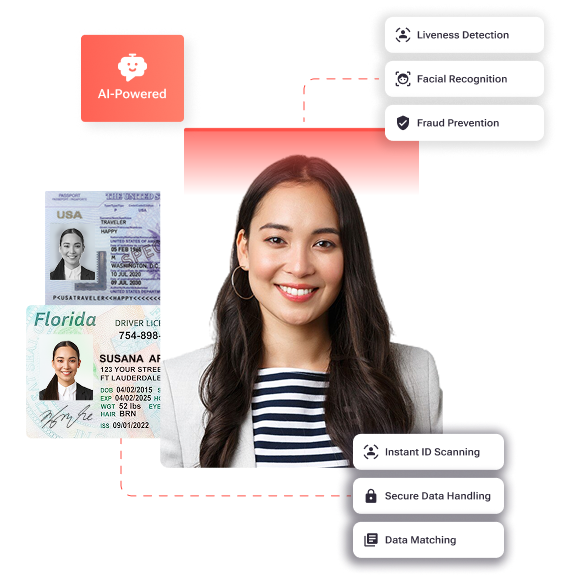
TenantEvaluation’s Lease Tracking follows the resident lifecycle without gaps. At application intake, the platform collects lease documentation alongside identity verification via IDVerify and screening data.
During the approval stage, QuickApprove moves the application through board review with real-time tracking and automated communication. Upon approval, lease records store at the unit level with status assigned automatically.
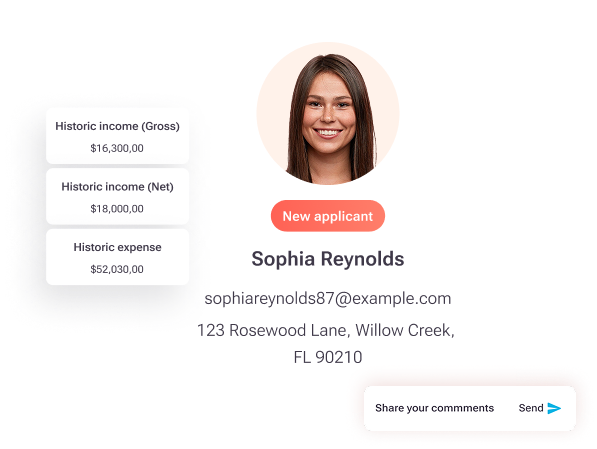
Throughout occupancy, CAMs monitor lease status, track expirations, and access historical records without leaving the platform. At the end of the lease term, documentation remains in a searchable digital archive, so no manual filing is required.
Evaluation Criteria for Lease Tracking Platforms
CAMs and property management teams evaluating lease tracking platforms should assess the following criteria:
1. Integration with applications and approvals: Lease tracking that operates separately from the application and approval workflow creates the same disconnection problem as spreadsheets. The platform should connect all stages.
2. Board-ready visibility: Boards need direct access to occupancy and lease status without requesting reports from management. Look for a platform with a dedicated board-facing view.
3. Audit trails: Every document upload, status change, and approval action should be timestamped and retrievable. This requirement is non-negotiable for compliance readiness.
4. Configurability per community: Florida HOAs and condos operate under different governing documents and screening criteria. The platform should accommodate community-specific rules, including 55+ Communities Verification requirements where applicable.

5. Time-to-value: Implementation complexity should not delay operational benefit. Platforms built specifically for community associations, rather than adapted from generic property management software, typically reach operational readiness faster.
Frequently Asked Questions
How long does it take to implement TenantEvaluation’s Lease Tracking for an existing portfolio?
TenantEvaluation is built specifically for Florida community associations, so the setup process aligns with HOA and condo workflows rather than generic rental management. Implementation timelines vary by portfolio size and existing record organization. The platform is designed to reach operational readiness without extended onboarding periods.
CAMs can begin tracking lease status, uploading documentation, and connecting unit records as soon as the community profile is configured.
How does TenantEvaluation handle data security for lease documents and resident records?
TenantEvaluation operates at PCI Level 1 compliance with end-to-end encryption and automatic redaction of sensitive personal information. Lease documents and resident records stay within a secure digital environment that removes the exposure risk associated with shared drives, email attachments, and physical folders.
Sensitive data uses the same security infrastructure that protects background check and identity verification data across the platform.
What happens to existing lease records when a community switches from spreadsheets to TenantEvaluation?
Existing lease records can be migrated into TenantEvaluation’s centralized platform, where they become part of the searchable digital history alongside new onboarding records. The transition from spreadsheets to a centralized system does not require discarding historical documentation.
The platform organizes historical records into a format that is accessible, searchable, and audit-ready going forward.
Does TenantEvaluation’s Lease Tracking work for communities with complex approval requirements, such as age-restricted 55+ communities?
Yes. TenantEvaluation includes built-in support for age-restricted communities through its 55+ Communities Verification capability, which standardizes how age-restricted application requirements are handled across applications.
Lease Tracking operates within the same platform, so documentation consistency and unit-level occupancy records stay aligned across all community types, including those with additional eligibility requirements.
Conclusion: Moving Beyond Spreadsheets for Florida Associations
Spreadsheets and disconnected tools are not a sustainable operating model for Florida CAMs and community associations managing 50–500+ unit portfolios. Missing leases, manual expiration tracking, and fragmented communication create operational blind spots that slow teams, expose communities to compliance risk, and undermine board confidence in occupancy data.
TenantEvaluation’s Lease Tracking delivers the centralized visibility described throughout this article. It connects resident onboarding, unit data, approvals, and lease documentation into one streamlined, audit-ready workflow that eliminates the administrative overhead that comes with disconnected tools and scales with portfolio growth without adding operational complexity.
Founded in 2007 and purpose-built for Florida community associations, TenantEvaluation has processed 100,000+ applications annually across 5,000+ communities. Lease Tracking is one component of a complete resident onboarding platform that includes IDVerify, QuickApprove, and 55+ Communities Verification, all inside one connected platform with FCRA compliance as the foundation, not an afterthought.
Replace your spreadsheets with centralized lease visibility built for Florida HOAs and condos.
