
Key Takeaways
- Identity fraud creates serious risk for Florida HOAs, so secure verification must combine ID scanning, biometrics, and database checks to protect communities.
- Follow a clear 7-step process: request government IDs, perform visual inspection, use digital scanning, verify SSN, run biometric liveness, cross-check databases, and keep audit trails.
- Biometric tools outperform manual checks by spotting synthetic identities, altered documents, and impersonation through AI facial recognition and liveness detection.
- FCRA compliance requires written consent, consistent criteria, and detailed records, and TenantEvaluation supports this with direct bureau partnerships and automated workflows.
- TenantEvaluation’s IDVerify+ delivers native biometrics, 70% time savings, and HOA-focused dashboards, so get started today for fraud-resistant screening.
How Tenant Identity Verification Protects Your Community
Tenant identity verification uses several layers of checks to confirm an applicant’s identity matches their documents through ID scanning, biometric validation, and Social Security Number verification. This structured process goes beyond basic document review and confirms physical presence and authentic identity before any approval decision.
The process usually starts with requesting government-issued identification documents, which landlords can legally require as part of rental applications. Florida regulations and FCRA rules require written consent before running identity verification as part of tenant screening. This consent creates the permissible purpose under FCRA guidelines and supports any later background checks and credit reports.
Modern systems combine document authenticity checks, facial recognition, and liveness detection to block fraud attempts. These tools address increasingly sophisticated identity schemes while staying aligned with privacy regulations and fair housing requirements.
Streamline everything with TenantEvaluation’s all-in-one platform. Schedule a demo today.
Identity Fraud Red Flags in Tenant Applications
Identity fraud in tenant applications has surged, with 2025 showing more synthetic identities, fake pay stubs, and stolen identities. Common red flags include:
- Impersonation attempts using stolen or borrowed identification documents
- Synthetic identities that mix real and fabricated personal information
- Altered or counterfeit government-issued IDs with changed photos or data
- Mismatched appearance compared to ID photos during virtual or in-person meetings
- Inconsistent personal information across forms, documents, and verbal answers
HOA boards and community associations carry added liability when fraudulent applicants gain access to properties. These incidents can weaken community security and trigger legal disputes. Manual document review alone cannot reliably catch advanced fraud that slips past traditional checks.
Seven-Step Process for Secure Tenant ID Verification
Secure tenant identity verification follows a clear, repeatable process that layers multiple checks for stronger protection.
1. Request Government-Issued Identification
Collect valid government-issued photo identification such as driver’s licenses, state ID cards, or passports. Confirm that documents are current, unexpired, and display clear, readable text and photos.
2. Conduct Visual Document Inspection
Review physical or digital copies for signs of tampering, alteration, or counterfeiting. Compare security features, fonts, and formatting against known authentic document standards.
3. Use Digital ID Scanning
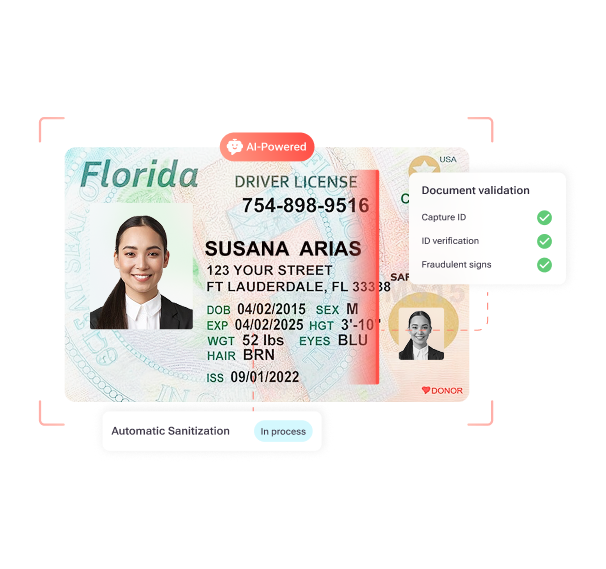
Apply automated scanning technology to extract and verify information from identification documents. Digital scanning flags altered text, inconsistent formatting, and other fraud indicators that manual review often misses.
4. Verify Social Security Number
Cross-check the provided SSN with national databases to confirm validity and detect possible synthetic identity fraud. Confirm that the SSN aligns with the applicant’s stated personal information.
5. Run Biometric Liveness Detection
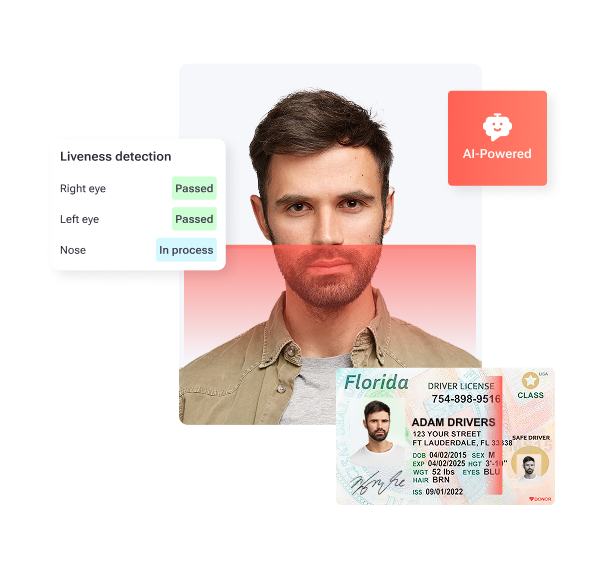
AI-powered identity verification including facial recognition matches applicants to their government-issued photo ID. This step prevents rental fraud through biometric comparison and liveness checks that confirm a real person is present.
6. Conduct Database Cross-Verification
Compare applicant information against multiple databases such as credit bureaus, public records, and fraud detection systems. Look for discrepancies or red flags that suggest identity risk.
7. Maintain a Detailed Audit Trail
Record every verification step, result, and decision to support FCRA compliance. These records create defensible documentation for any disputes or legal challenges.
Activate IDVerify+ to add automated biometrics to your existing workflow. Schedule a demo today.
Manual Checks Compared to Biometric Verification Tools
Manual verification relies on visual document review and basic database checks, yet these methods rarely detect sophisticated fraud. They take more staff time, introduce human error, and lack the depth needed for modern fraud prevention.
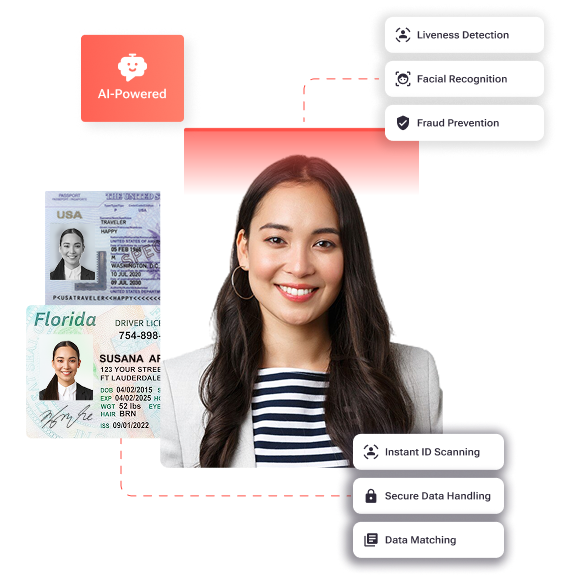
Biometric verification tools strengthen fraud detection through several independent validation layers. Biometric liveness detection using a live selfie compared to a government ID confirms liveness and ownership, creating a forensic trail that fraudsters struggle to dispute. These tools replace subjective judgment with objective, automated checks.
Advanced biometric solutions combine facial recognition, liveness detection, and document authentication in one smooth workflow. Native biometric integration keeps applicants inside the same system instead of redirecting them to external portals, which preserves continuity and reduces drop-off.
Modern verification platforms also pair ID scanning with AI analysis that detects altered documents, synthetic identities, and impersonation attempts that humans often overlook. These tools deliver instant results and maintain detailed audit trails for compliance.
Tool Comparison for HOA-Focused Identity Verification
|
Feature |
TenantEvaluation IDVerify+ |
Snappt |
LeaseRunner |
Plaid |
|
Native Biometrics/No Redirect |
Yes |
No |
No |
Redirects |
|
FCRA Reseller/HOA Dashboard |
Yes |
Partial |
No |
No |
|
Time Savings/Scale |
70%, 100k apps |
Moderate |
Moderate |
Variable |
|
Florida HOA Focus |
Yes (5k+ communities) |
No |
No |
No |
TenantEvaluation’s IDVerify+ delivers native biometric verification without external redirects, which keeps your workflow consistent while strengthening fraud protection. The platform processes about 100,000 applications each year across more than 5,000 communities, showing proven scale and reliability.
Review the QuickApprove dashboard for streamlined board approvals. Schedule a demo today.
FCRA Rules and Florida HOA Identity Verification Practices
FCRA compliance for tenant identity verification depends on clear procedures and accurate documentation. Landlords must obtain written consent before running any screening reports, including identity verification, and must apply consistent criteria to every applicant. Disclosures also need to explain which reports will be used and any estimated costs.
Florida HOAs and community associations must keep full audit trails for all identity verification activity. These records should include timestamps for each verification attempt, results, and any adverse actions based on those results. Automated systems handle this recordkeeping more reliably than manual processes.
Data encryption and secure storage rules require that all personal information collected during verification stays protected with bank-level security. Tenant screening platforms can support FCRA compliance when running credit and background checks, including the identity verification steps that establish permissible purpose.
TenantEvaluation’s platform includes built-in FCRA support through direct credit bureau reseller relationships and automated adverse action workflows. The system keeps decision-making authority with associations while TenantEvaluation provides data and tools, which preserves compliance and improves efficiency.
Next Steps for Stronger Tenant Identity Security
Secure tenant identity verification works best as a structured process that blends document checks, biometric confirmation, and broad database verification. The seven-step framework above gives Florida HOAs and community associations a practical path toward fraud-resistant screening.
Moving from manual checks to biometric-enabled systems creates a major upgrade in community security and day-to-day efficiency. TenantEvaluation’s platform supports Florida CAMs and boards by combining IDVerify+ biometric verification with QuickApprove board dashboards and documented ROI of $150 million generated across more than 5,000 communities.
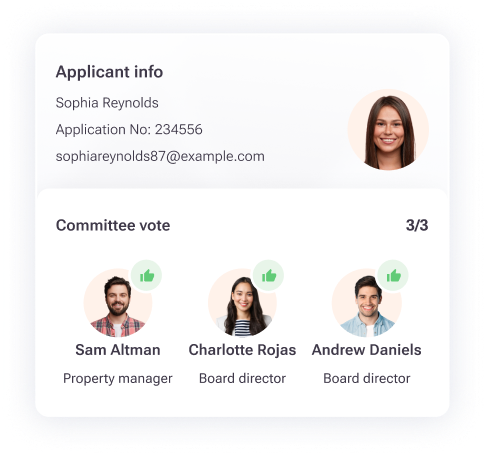
The platform’s 70% time savings and strong fraud protection give associations a practical way to modernize verification while staying FCRA compliant and reducing liability.
Begin with TenantEvaluation now. Schedule a demo today.
Frequently Asked Questions
How do landlords verify documents securely?
Landlords verify documents securely by following a seven-step process that uses government-issued IDs, visual inspections, digital scanning, SSN checks, biometric liveness detection, database cross-verification, and detailed audit trails. Modern verification layers these methods to uncover fraud attempts that simple manual review cannot catch.
What is biometric tenant screening?
Biometric tenant screening uses facial recognition, liveness detection, and document authentication to confirm that applicants physically match their identification documents. This approach blocks impersonation fraud by confirming that the person submitting the application is the same individual shown on the government ID. Biometric screening provides objective evidence instead of relying only on human judgment.
Is IDVerify+ FCRA compliant?
Yes, IDVerify+ is fully FCRA compliant as part of TenantEvaluation’s screening platform. The system maintains direct credit bureau reseller relationships with TransUnion and Equifax, supports automated adverse action workflows, and separates decision-making from data provision. Every verification activity includes a full audit trail and aligns with permissible purpose rules under FCRA.
What are Florida-specific identity verification requirements for HOAs?
Florida HOAs must obtain written consent before running identity verification, keep detailed audit trails of all verification steps, and store personal information securely with encryption. Community associations must apply the same verification criteria to every applicant and clearly disclose verification procedures. Florida’s regulatory environment favors platforms with specialized HOA compliance experience rather than generic tools.
What are the risks of manual identity verification versus automated systems?
Manual identity verification increases exposure to fraud, compliance issues, and operational delays. Manual checks struggle to detect synthetic identities or altered documents, which can lead to security incidents and higher liability. Automated systems deliver about 70% time savings, stronger fraud detection, and built-in compliance features that reduce human error in critical verification decisions.