
Key Takeaways for Florida Community Associations
- Florida HOAs and condos face surging identity fraud, and biometric ID verification with liveness detection can reduce fraud by up to 95%.
- Screen ultimate beneficial owners (UBOs) and run AML and watchlist checks to uncover hidden risks and sanctioned individuals.
- Protect your association from FCRA lawsuits by using direct credit bureau resellers, proper disclosures, and automated adverse action workflows.
- Use secure storage with auto-redaction, adverse media scans, and automated audits to keep your compliance program complete and defensible.
- Connect all 9 KYC best practices in one workflow with TenantEvaluation to fraud-proof your community association screening.
1. Stop ID Fraud with Biometric Government ID Checks
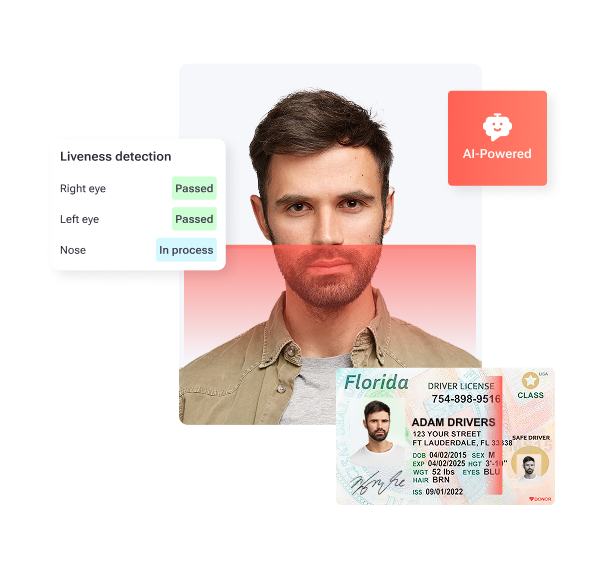
Biometric ID checks close the gaps that document-only verification leaves open. Identity fraud in multifamily applications involves stolen SSNs, synthetic identifiers, and fabricated personas that slip past manual review. Biometric verification pairs government ID validation with AI-powered liveness detection and facial matching to confirm that the real applicant is present.
The biometric identity verification market grows at 14.9% CAGR, driven by KYC compliance in financial services. Property managers using biometric verification report up to 95% less fraud compared with document-only processes.
Implementation Checklist:
- Require government-issued ID upload with automated authenticity validation
- Use liveness detection to confirm physical presence during capture
- Run facial biometric comparison between selfie and ID photo
- Embed verification directly into the online application workflow
- Store redacted ID copies for compliance documentation
2. Reveal True Owners with UBO Screening for Purchasers
UBO screening uncovers the real people behind LLCs and corporations that purchase units. Ultimate Beneficial Owner (UBO) checks focus on individuals with 25% or greater ownership or control in purchasing entities. Financial institutions must verify UBOs using shareholding structure diagrams and board resolutions to expose layered ownership structures used by criminals.
Florida condos and HOAs face elevated risk from shell companies that buy units for money laundering or other illicit activity. UBO verification brings transparency to ownership structures and supports anti-money laundering compliance expectations for community associations.
Implementation Checklist:
- Collect signed UBO declarations for all business purchasers
- Verify identity documents for each individual with 25% or more ownership
- Review shareholding structure diagrams and corporate records
- Screen all UBOs against watchlists and sanctions databases
- Record each verification step to maintain a clear audit trail
3. Block High-Risk Applicants with Watchlist and AML Checks
Watchlist and AML screening help keep sanctioned individuals and politically exposed persons out of your community. AML screening includes adverse media, sanctions, and PEP list checks as part of risk-based compliance programs used worldwide.
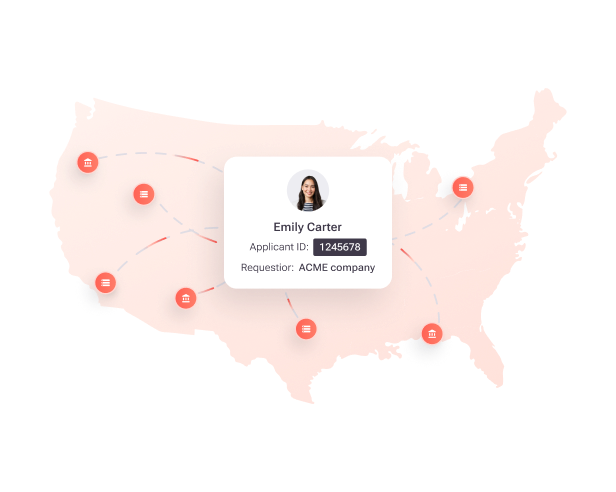
Automated watchlist tools compare applicants against OFAC sanctions lists, FBI Most Wanted databases, and international enforcement sources in real time. These checks run during application processing and stop high-risk individuals before they gain access to the property.
Implementation Checklist:
- Screen every applicant against OFAC and other key sanctions databases
- Check PEP lists for politically exposed persons and related parties
- Review adverse media for signs of criminal or regulatory issues
- Turn on continuous monitoring so new list updates trigger alerts
- Store screening results with timestamps for future reviews
4. Protect Your Community with Realtor Due Diligence
Realtor due diligence reduces the chance that fraudulent agents will push illegitimate applications through your process. This review includes license verification, background checks, and transaction history analysis. Strong vendor vetting shields associations from liability and supports honest representation during approvals.
Florida’s high-value real estate market attracts bad actors who may use synthetic identities or misrepresent buyer qualifications. A structured vendor review program adds a control layer before you even start processing applications.
Implementation Checklist:
- Verify realtor licenses using official state licensing databases
- Run background checks on all representing agents
- Review transaction history and request client references when needed
- Maintain an internal list of approved realtors and brokerages
- Require updated credentials and license checks each year
5. Reduce Legal Risk with FCRA-Compliant Screening
FCRA-compliant screening protects your association from lawsuits and regulatory penalties. FCRA litigation continues rising despite declining CFPB enforcement in 2026, so community associations remain exposed if they cut corners.
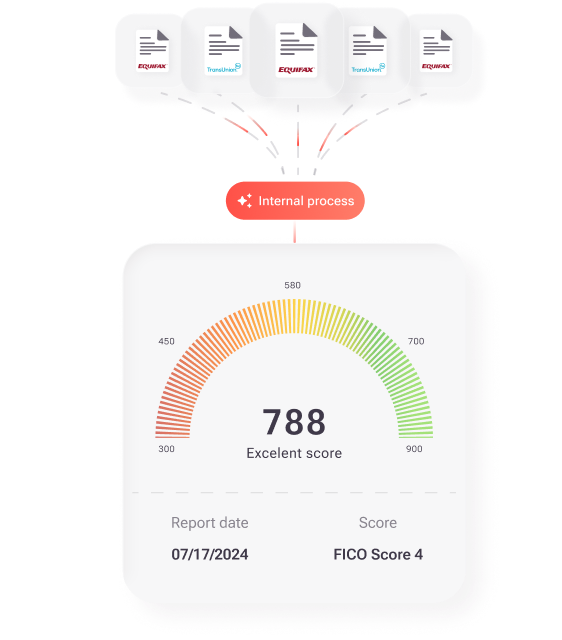
FCRA file-disclosure fee caps increase to $16 effective January 1, 2026, which affects background screening costs and budgeting. Direct credit bureau reseller relationships give you legitimate data access under strict bureau rules and reduce reliance on risky data aggregators.
Implementation Checklist:
- Work only with direct credit bureau resellers, not data scrapers
- Use automated adverse action workflows for denials or conditional approvals
- Keep a clear separation between screening providers and board decisions
- Document permissible purpose for every consumer report you order
- Provide all required FCRA disclosures and obtain written consent
6. Guard Sensitive Data with Secure Storage and Auto-Redaction
Secure storage with automatic redaction keeps Social Security numbers and banking details out of the wrong hands. PCI Level 1 compliant systems and end-to-end encryption protect personally identifiable information from breaches and internal misuse.
Automated redaction removes the need for staff to manually block out sensitive fields. The technology detects and masks PII while keeping documents readable for verification and audits.
Implementation Checklist:
- Adopt PCI Level 1 compliant storage for all sensitive records
- Encrypt data during transmission and at rest
- Deploy automated PII redaction for uploaded documents
- Maintain detailed audit logs for every data access event
- Define clear data retention timelines and secure disposal methods
7. Catch Hidden Risks with Adverse Media Scans
Adverse media scans reveal red flags that standard background checks may miss. These scans review news coverage, court filings, and regulatory actions to highlight criminal ties and reputational risks.
AI-driven tools can search thousands of sources in multiple languages and surface only relevant matches. Smart filtering reduces false positives so managers can focus on meaningful issues instead of manual research.
Implementation Checklist:
- Search news databases for reports of criminal or civil misconduct
- Review court records and regulatory enforcement actions
- Check public social media activity for clear risk indicators
- Use AI-based tools to minimize false positives and noise
- Document adverse findings and keep links or copies of sources
8. Keep Compliance Current with Automated Audits and Updates
Automated audits keep your documentation organized and ready for any review. These systems track each verification step, apply timestamps, and generate reports that show exactly how decisions were made.
Regular automated updates keep your screening rules and databases aligned with new sanctions, watchlists, and regulations. This approach removes manual tracking and still preserves a complete audit trail.
Implementation Checklist:
- Turn on automated audit trail creation for every application
- Schedule frequent database and watchlist updates
- Use dashboards that summarize compliance metrics and gaps
- Monitor regulatory changes through automated alerts
- Store historical records to support investigations or disputes
9. Speed Decisions with Board Approval Dashboards
Board dashboards give directors a clear, organized view of every application. QuickApprove offers real-time visibility, AI-generated summaries, and voting tools in a single interface tailored to board members.
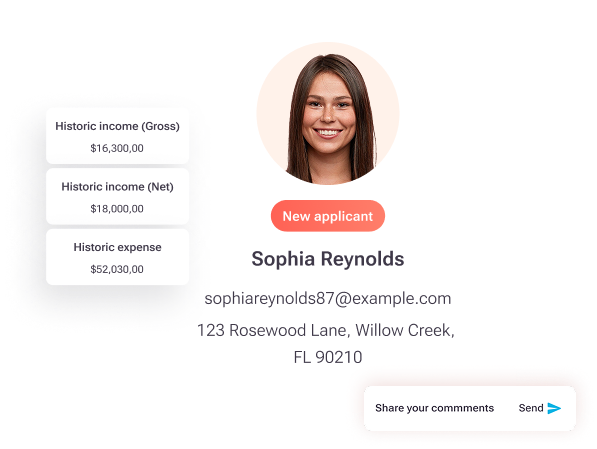
Centralized dashboards replace scattered email threads and unsecured document sharing. They also create a reliable audit trail for each decision, which supports faster approvals and stronger governance.
Implementation Checklist:
- Deploy board-only approval dashboards with secure access
- Provide AI-generated summaries that highlight key risk factors
- Enable electronic voting with recorded timestamps and outcomes
- Show real-time status updates for every application
- Store decision records and notes automatically for future reference
Florida KYC and Ethics Checklist for Community Managers
Florida community associations must align KYC practices with state rules and the Community Associations Institute (CAI) Professional Manager Code of Ethics. CAI-credentialed managers must follow current bylaws, act in the client’s best interest, and deliver diligent service while avoiding conflicts of interest.
FCRA reseller relationships with TransUnion and Equifax provide compliant access to consumer data under strict bureau standards. TenantEvaluation holds direct reseller status and gives associations a documented, defensible screening process. Automated workflows and audit trails offer a level of compliance that manual processes rarely match.
Schedule a demo today to roll out Florida-ready KYC automation for your community association.
Top KYC Tools for Florida HOAs and Condos
TenantEvaluation delivers a full KYC stack for Florida community associations by combining biometric verification, FCRA-compliant screening, and board workflows in one platform. Competing tools such as ApplyCheck and Verify Screening Solutions do not offer native biometrics, board dashboards, or direct credit bureau relationships in a single solution.
|
Feature |
TenantEvaluation |
ApplyCheck |
Verify Screening |
|
Biometric Verification |
Yes (IDVerify+) |
No |
No |
|
Board Dashboard |
Yes (QuickApprove) |
No |
No |
|
FCRA Reseller |
Direct |
Third-party |
Third-party |
Frequently Asked Questions
What is KYC for HOAs and community associations?
KYC for community associations means verifying the identity, background, and financial qualifications of prospective residents, purchasers, and tenants. This process covers government ID checks, background screening, financial verification, and strict FCRA compliance. Strong KYC protects communities from fraud, supports regulatory obligations, and helps boards maintain community standards.
How do CAI ethics requirements connect to KYC best practices?
The Community Associations Institute Professional Manager Code of Ethics requires managers to act in the client’s best interest, follow all laws, and provide diligent service. KYC best practices help managers meet these duties by enforcing thorough screening, preserving documentation, and reducing fraud and liability. CAI-credentialed managers should use KYC workflows that align with both legal and professional standards.
What advantages does biometric KYC have over document review alone?
Biometric KYC adds multiple layers of fraud prevention through government ID validation, liveness detection, and facial matching. These controls can cut fraud by up to 95% compared with document-only review. Traditional document checks struggle to detect synthetic identities, stolen IDs, and impersonation attempts, while biometric tools confirm physical presence and identity authenticity in real time.
How does FCRA compliance affect community association managers?
FCRA rules require community association managers to use legitimate credit bureau resellers, obtain written consent, provide disclosures, and follow adverse action steps when denying or conditioning applications based on reports. Managers must separate the screening provider’s role from the board’s decision-making, document permissible purpose, and maintain audit trails. Direct bureau relationships lower litigation risk compared with unvetted third-party data sources.
What technology integrations support complete KYC programs?
Complete KYC programs rely on integrated platforms that combine biometric verification, automated background checks, board dashboards, and compliance documentation. A single system prevents data silos, reduces manual work, and preserves consistent audit trails. Key integrations include real-time watchlist screening, automated adverse action letters, secure document storage with redaction, and board-specific approval interfaces that keep governance intact.
Conclusion: Turn KYC into a Fraud Shield for Your Community
These nine KYC best practices give Florida community association managers a clear framework for fraud prevention and compliance. Biometric verification, UBO screening, automated audits, and board dashboards convert manual, risky processes into secure and efficient workflows. TenantEvaluation unites all nine practices with Florida-specific compliance support, direct credit bureau relationships, and proven performance across more than 5,000 communities. Schedule a demo today to build a fraud-resistant KYC program for your association.