Written by: Luis Teran, Co-founder, CEO, TenantEvaluation | Last updated: July 16, 2026
Key Takeaways
- Integrated proptech platforms connect application intake, screening, approvals, accounting, maintenance, compliance, and lease management in one system, which removes data silos across vendors.
- The 2026 proptech market is projected to reach USD 230.4 billion by 2036, with platforms holding 55% of the solutions segment because they close operational gaps that generic suites leave for Florida community associations.
- Generic HOA management platforms cover core functions such as accounting and maintenance but usually lack FCRA-first screening design, biometric identity verification, built-in adverse action workflows, and standardized 55+ documentation processes.
- TenantEvaluation closes these gaps with specialized capabilities including IDVerify biometric verification, QuickApprove board workflows, 55+ Communities Verification, and centralized Lease Tracking, all inside one connected platform.
- Schedule a demo today to see how TenantEvaluation completes the integrated proptech stack for Florida community associations at TenantEvaluation.
Core HOA Management Software Modules and Gaps
HOA management software combines operational modules that support the administrative, financial, and compliance work of a community association. Industry experts group these into Governance and Administration, Accounting and Financial Management, Resident Experience, and Enforcement and Compliance. Leading generic platforms such as AppFolio, Vantaca, Buildium, and DoorLoop cover most of these dimensions at a portfolio level.
A complete HOA management platform must address eight operational dimensions. The first five form the administrative backbone that generic suites usually handle well:
- Dues billing, reserve fund management, and financial reporting
- Maintenance request tracking and vendor coordination
- Document management and governing document storage
- Violation tracking with audit trails
- Homeowner portals and communication tools
The remaining three modules reveal where most platforms fall short for Florida communities:
- Board voting and governance workflows
- Resident screening, application intake, and approval workflows
- Lease tracking and occupancy management
This gap is especially acute for Florida CAMs managing FCRA obligations, biometric fraud risk, and 55+ documentation requirements.
HOA Accounting Integration and Revenue Model
The accrual basis of accounting is the standard for HOA financial management because it records income when earned and expenses when incurred. This method gives boards and managers a clear view of financial position regardless of cash flow timing. Many HOA financial problems stem from fragmented tools, delayed reconciliations, and limited visibility into dues collection and expenses.
Community managers often run accounting in one system, dues collection in another portal, and maintenance tracking in a third tool. These systems rarely sync cleanly, so teams export data into spreadsheets every month for reconciliation. HOA leaders in one webinar named accounting integration as the single feature that would make online payments worthwhile, because non-integrated payment and accounting systems force manual re-entry of every transaction.
Integrated proptech platforms address this by tying accounting directly to application fees, approval workflows, and occupancy records. TenantEvaluation’s revenue-sharing model turns application processing into a controlled income stream, deducting its service fee from collected application fees and rebating the remainder to the association with no upfront subscription cost.
Beyond accounting integration, Florida associations face specialized compliance challenges that generic platforms do not solve. One of the most complex areas involves age-restricted community management.
Standardizing Florida 55+ Community Workflows
Florida condos and HOAs that operate as age-restricted communities under the Housing for Older Persons Act face documentation requirements that generic platforms do not standardize. Manual processes that rely on emails, PDFs, and follow-up calls create inconsistent records and operational exposure during audits or disputes.
55+ Communities Verification is a built-in capability within TenantEvaluation that standardizes how age-restricted requirements are handled across applications. It is built for Florida condos and HOAs, designed around CAM workflows, and aligned with the real approval steps Florida associations follow.

The result is reduced manual work, more consistent documentation, and stronger operational control. This capability supports workflow standardization and internal governance, and it complements rather than replaces legal guidance from association counsel.
Operational benefits for CAMs and boards include:
- Standardized application handling for all 55+ applicants
- More consistent documentation with fewer gaps or missing records
- Less repetitive manual handling of eligibility requirements
- Scalable processes that absorb higher application volume without added complexity
- Stronger internal controls for communities with complex onboarding rules
Resident Screening for HOAs
FCRA compliance forms the legal foundation for any HOA or condo association that conducts resident screening in Florida. The FCRA sets procedures for using consumer reports, including adverse action notices when denials rely on those reports. Federal law also requires written authorization before requesting background checks and mandates proper disposal of credit reports after use.
Identity fraud now represents a major operational risk. The National Apartment Association estimates that fraud and eviction risk cost the U.S. multifamily industry $16 billion annually. These losses include synthetic identity fraud, income falsification, identity theft, and organized application fraud rings. One property management company overseeing 2,000 units cut application fraud from 99.8% to 0.2% after implementing digital ID verification.
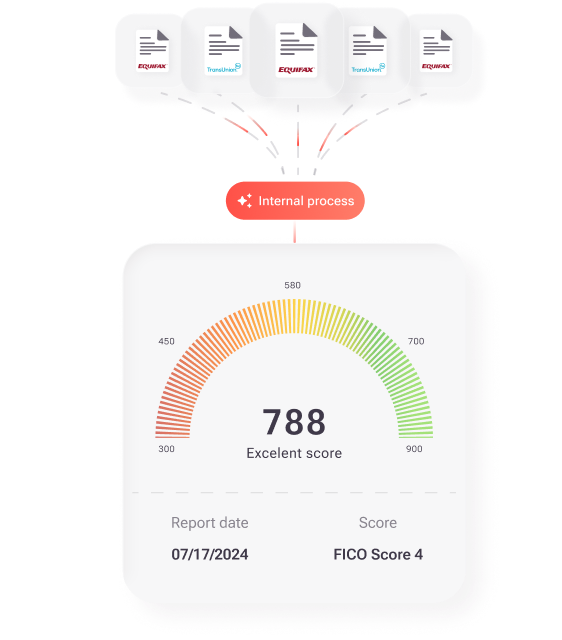
TenantEvaluation is built for community associations and management companies with FCRA compliance as the starting point. As a direct reseller of TransUnion and Equifax data, TenantEvaluation accesses credit data under strict bureau rules with regular compliance reviews, no gray-market sources, and built-in adverse action workflows. Comprehensive screening combines nationwide criminal records, employment and income verification, credit checks, eviction history, reference verification, and biometric identity confirmation through IDVerify.
Once an applicant is screened and approved, the operational focus shifts to lease lifecycle management. Most platforms still treat this as basic document storage instead of a source of real-time visibility and control.
Lease Tracking for Community Associations
Lease management in many community associations remains fragmented and manual. Managers often deal with missing or outdated lease copies, manual expiration tracking, disconnected spreadsheets, and no centralized lease visibility. These gaps create blind spots that slow teams and increase compliance risk tied to incomplete records.
TenantEvaluation’s Lease Tracking provides a centralized operational capability inside the same platform used for screening and approvals. It connects resident onboarding, unit data, approvals, and lease documentation into one streamlined, real-time workflow.
- Centralized lease records that replace folders, inboxes, and spreadsheets
- Real-time lease status visibility for active, pending, expired, or missing leases
- Automated lease document collection during onboarding
- Unit-level tracking connected to occupancy records
- Searchable digital history of leases, resident activity, and document trails
- Audit-ready digital records that support compliance readiness
Schedule a demo today to see Lease Tracking in action across your community portfolio.
Capabilities Comparison: Generic Suites vs TenantEvaluation
The following table highlights where generic HOA management platforms provide adequate coverage and where TenantEvaluation fills critical operational gaps, especially in FCRA compliance, biometric verification, and Florida-specific requirements.
| Capability | Generic Suites (AppFolio, Vantaca, Buildium) | TenantEvaluation |
|---|---|---|
| Accounting & Financial Management | Core module present, accrual and cash basis supported | Integrated with application fees and revenue-sharing model |
| Maintenance Tracking | Core module present in most platforms | Not a primary module, integrates with partner platforms |
| Compliance & Document Management | Present, depth varies by platform | FCRA-first design, built-in audit trails, PCI Level 1, auto-redaction of PII |
| Resident Screening | Basic background checks, limited FCRA workflow depth | FCRA-first, direct TransUnion and Equifax reseller, adverse action automation, 360° screening |
| Biometric Identity Verification | Not available in standard offerings | IDVerify with AI liveness detection, government ID validation, biometric selfie-to-ID matching, native to platform |
| Board Voting Dashboard | Limited or absent, approval handled through email chains | QuickApprove with a dedicated board review panel, real-time voting, and summarized applicant reports |
| Florida 55+ Standardization | Not purpose-built, manual workarounds required | 55+ Communities Verification for Florida condos and HOAs with a standardized documentation workflow |
| Real-Time Lease Visibility | Basic lease storage, limited lifecycle tracking | Centralized, real-time lease status with unit-level tracking and audit-ready records |
From Document-Based to Biometric Identity Verification
Traditional screening workflows relied on applicants uploading copies of government-issued IDs while managers performed manual document review. The most effective fraud prevention programs embed digital identity verification directly into the tenant application flow. Biometric-linked document authentication ties facial liveness to passports or driver’s licenses, turning validation into a dynamic process instead of a static one-off check.
IDVerify adds this biometric layer inside TenantEvaluation without external portals or workflow disruption. Before IDVerify, communities relied on document uploads with no biometric confirmation and heavy manual oversight to catch fraud. After IDVerify, automated ID authenticity validation, AI-powered liveness detection, facial landmark biometric mapping, and selfie-to-ID comparison run inside the same screening workflow. TenantEvaluation clients report up to 70% faster approvals and teams reclaiming as much as 50 hours per day that previously went to manual follow-up and document review.

QuickApprove Workflow for Board Decisions
QuickApprove is TenantEvaluation’s accelerated approval workflow for CAMs, boards, and property management teams. It moves resident applications from submission to decision faster inside one connected platform while preserving control, compliance, and visibility.
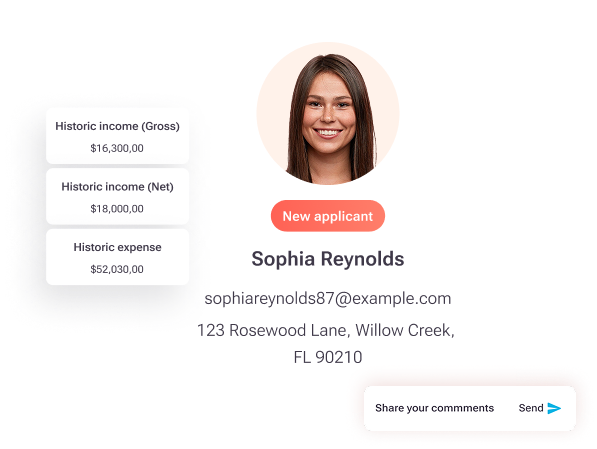
The workflow replaces email chains and spreadsheets with a connected approval process. Real-time application tracking gives managers, boards, and applicants shared visibility into status. That status feeds into a board-ready review and voting panel that removes email-based decision loops.
As decisions move forward, automated communication support reduces manual follow-ups by triggering status updates at each stage. Once an application is approved, the system generates customized approval letters and a personalized welcome package without manual document assembly. This end-to-end automation keeps onboarding consistent even during high-volume seasons and complex application cycles.
QuickApprove is built for communities with heavy application volume and detailed onboarding rules. Board members retain full decision-making authority throughout the process. The workflow accelerates visibility and communication while preserving oversight.
Lease Tracking in Daily CAM Operations
For CAMs managing portfolios across multiple communities, lease data has often lived in folders, inboxes, and spreadsheets with no direct link to the onboarding process. TenantEvaluation’s Lease Tracking solves this by connecting resident onboarding, unit data, approvals, and lease documentation in one centralized, real-time workflow.
In daily operations, CAMs use Lease Tracking to confirm occupancy status instantly, track lease expirations before they lapse, and access historical lease records without searching across systems. Boards gain a clearer picture of occupancy and resident activity across communities.
Physical document storage in filing cabinets also creates compliance risk. Florida’s House Bill 1203, effective January 1, 2025, requires HOAs with 100 or more parcels to maintain a website or application that makes certain official records available to parcel owners. Centralized digital lease records directly support this requirement.
Evaluation Framework for Integrated Proptech Platforms
A structured evaluation process for HOA software includes documenting pain points by operational dimension, defining binary non-negotiables, running scenario-based demos, speaking with references that match the community’s size and management model, and conducting a 30-day pilot. For integrated proptech platforms that support condo and HOA management, several criteria build on each other.
The legal foundation starts with Compliance Readiness. The platform should carry FCRA-first design, built-in adverse action workflows, direct credit bureau reseller relationships, and full audit trails. After the RealPage and Greystar settlement, screening logic and AI transparency became legal exposure points that require documented algorithms and Fair Housing safeguards.
This foundation enables Operational Efficiency by removing manual data entry, duplicate exports, and reconciliation breaks between disconnected tools. Property managers using automation tools report significant time savings on administrative work, which frees staff to focus on resident service and board support.
Efficiency gains remain sustainable only when the platform delivers Transparency. Boards and managers need real-time visibility into application status, lease records, and occupancy data without relying on email chains or offline spreadsheets.
As portfolios grow, Scalability determines whether teams can absorb more associations without proportional headcount increases. Managers using traditional siloed HOA platforms often must hire more community managers as they add 50 or more associations. An integrated platform should change that ratio.
Throughout this growth, Auditability ensures that every action is timestamped, exportable, and defensible during Fair Housing complaints, FCRA disputes, or board transitions. Finally, Risk Controls such as biometric identity verification, PII auto-redaction, PCI Level 1 compliance, and end-to-end encryption should come as standard features, not optional add-ons.
Frequently Asked Questions
What compliance gaps do generic HOA management platforms typically leave for Florida community associations?
Generic platforms handle core operations such as accounting, maintenance, and document storage but usually lack FCRA-first screening design, built-in adverse action workflows, and direct credit bureau reseller relationships. Florida associations also face specific data redaction requirements under Florida Statute §718.111(12)(g) for condos and §720.303 for HOAs, which require redaction of Social Security numbers, driver’s license numbers, and other restricted personal data from documents posted online. Generic platforms rarely automate this redaction. Florida’s 55+ documentation requirements and growing exposure to identity fraud through synthetic identities and impersonation attempts also demand purpose-built capabilities that standard property management suites do not include.
How deeply does TenantEvaluation integrate with existing HOA management platforms?
TenantEvaluation functions as a specialized screening, approval, and lease-visibility layer that completes the operational stack rather than replacing it. It handles application intake, biometric identity verification through IDVerify, FCRA-compliant background screening, board-ready approval workflows through QuickApprove, 55+ documentation standardization, and centralized lease tracking inside one connected platform. Communities that use generic suites for accounting and maintenance can add TenantEvaluation as the resident onboarding and lease lifecycle layer without disrupting existing financial or maintenance workflows. TenantEvaluation has processed more than 100,000 applications annually across over 5,000 communities, using a revenue-sharing model that requires no upfront subscription fees.
How does TenantEvaluation’s revenue model work for community associations?
TenantEvaluation operates on a pay-per-application model with no upfront fees or monthly subscriptions. The system collects application fees from applicants during online submission. TenantEvaluation deducts its service fee from the collected amount and rebates the remainder to the association or management company. This revenue-sharing structure turns the application process into a compliant, controlled income stream for the community. TenantEvaluation has already generated $150 million for communities through this model, which makes it cost-neutral or revenue-generating compared with platforms that charge fixed monthly subscriptions regardless of application volume.
What makes biometric identity verification necessary for HOA and condo screening in 2026?
Traditional document-based screening, where applicants upload copies of government-issued IDs, cannot reliably detect synthetic identities, impersonation attempts, or stolen credentials. Fraud has become industrialized, with identity-as-a-service offerings that provide persona kits, animated deepfake faces, and behavioral templates that lower the barrier for attackers. The $16 billion industry-wide fraud cost mentioned earlier translates into direct community association risk. Each fraudulent occupant can create eviction costs, legal exposure, and reputational damage for the board.
IDVerify addresses this risk by combining government ID authenticity validation, AI-powered liveness detection, and biometric selfie-to-ID facial matching. All checks run natively inside TenantEvaluation without redirecting applicants to external portals. This shift moves communities from document-based review to verified physical identity confirmation before boards make approval decisions.
Conclusion
Generic proptech suites provide the operational foundation that condo and HOA associations need, including accounting, maintenance, document management, and communication tools. They do not provide the specialized screening, approval, and lease-visibility layer that Florida CAMs, boards, and property management companies require to operate with FCRA compliance, biometric fraud protection, 55+ documentation consistency, and real-time lease lifecycle control.
TenantEvaluation fills that gap. Built for community associations and management companies since 2007, with FCRA compliance as the foundation, TenantEvaluation delivers IDVerify biometric identity verification, QuickApprove board-ready approval workflows, 55+ Communities Verification for Florida age-restricted communities, and centralized Lease Tracking. All of these capabilities live inside one connected platform that replaces spreadsheets, email chains, and operational guesswork from application through occupancy.
Schedule a demo today and see how TenantEvaluation completes the integrated proptech stack for your Florida community association portfolio.
