
Key Takeaways for Florida HOA KYC in 2026
- Florida HOAs now face rising synthetic identity fraud, and FinCEN’s Real Estate Rule requires strong KYC programs to stay compliant.
- Modern KYC uses biometric verification, AI liveness checks, and facial matching to stop fraud that slips past manual document review.
- Follow a 7-step rollout: policy framework, smart forms, biometric ID verification, due diligence, board workflows, monitoring, and staff training.
- Automation can cut processing time by 70%, save 50 or more staff hours each week, and reduce annual costs by up to $240,000.
- Protect your community with TenantEvaluation’s IDVerify platform, and schedule a demo today for fraud-resistant KYC.
How KYC Works in Property Management
KYC (Know Your Customer) in property management uses Customer Identification Programs (CIP) to verify applicant identities with government ID validation, biometric matching, and risk assessment. Modern KYC goes beyond document uploads and integrates AI liveness detection and facial recognition to confirm physical presence and block synthetic identities.
Florida community associations now need KYC to comply with annual license audits and regulatory requirements while defending against impersonation schemes that target HOA and condo properties. Effective KYC combines identity checks with ongoing due diligence across the entire tenant lifecycle.
Why Florida HOAs Need KYC Immediately
Identity fraud surged in 2026, with synthetic account fraud attempts increasing 153% from late 2023 to early 2024. Florida community associations now face an estimated $3.3 billion in synthetic identity exposure, while manual verification adds liability risk and consumes more than 50 staff hours each day.
TenantEvaluation tackles these issues with automated KYC workflows that cut approval times by 70% and save up to $240,000 per year. More than 5,000 communities process over 100,000 applications annually on the platform and maintain a 4.8 out of 5 Google rating, showing consistent ROI with FCRA compliance built into every step.
7 Steps to Implement KYC in Property Management
1. Build a Florida-Specific KYC Policy Framework
Start with clear KYC policies that align with Florida regulations and FCRA rules. Your framework should include:
- Defined risk levels for low, medium, and high-risk applicants
- Customer segmentation rules based on transaction types and amounts
- Document standards for identity verification
- Escalation steps for suspicious or incomplete applications
- Record retention rules that support audits and inspections
TenantEvaluation configures each community’s governing documents, screening criteria, and association workflows inside the platform to support Florida-specific compliance.
2. Use Smart Application Forms for Every Applicant Type
Smart application forms keep data collection accurate and consistent for every applicant. Intelligent logic adapts to applicant type and community rules, requests the right documents, checks completeness, and blocks incomplete submissions before staff review.
TenantEvaluation’s dynamic forms separate tenant and purchaser workflows, which improves data quality and reduces back-and-forth with applicants.
3. Add Biometric Identity Verification as Your First Defense
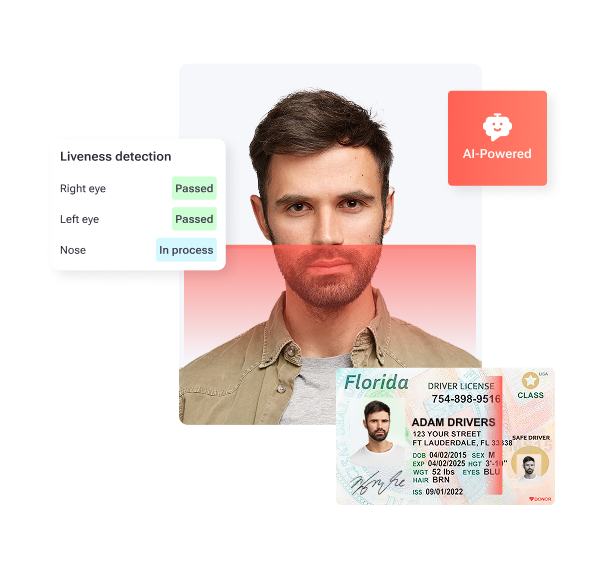
Biometric identity verification should serve as the primary fraud barrier in your KYC process. IDVerify+ combines:
- Government-issued ID authentication and validation
- AI liveness detection to confirm a real person is present
- Facial landmark recognition and biometric matching
- Selfie-to-ID comparison to confirm identity
IDVerify+ runs inside the TenantEvaluation platform without external redirects, which keeps the workflow smooth and supports applicant trust.
4. Apply CDD and EDD with a Risk-Based Approach
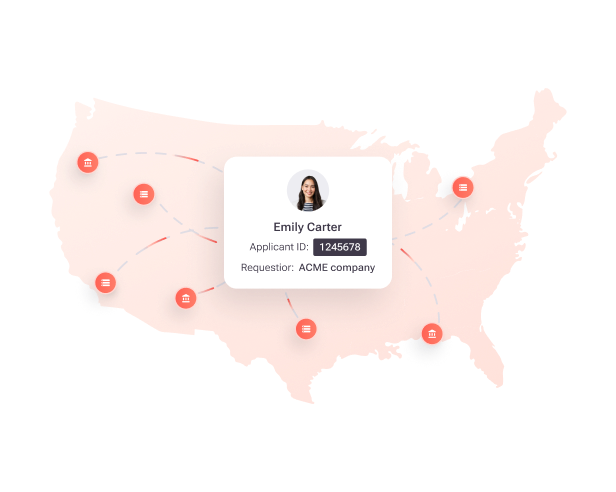
Customer Due Diligence (CDD) and Enhanced Due Diligence (EDD) should scale based on risk. Standard CDD covers typical applicants, while EDD adds deeper checks for high-risk profiles, large transactions, or unusual patterns, following a risk-based due diligence approach.
TenantEvaluation’s SafeCheck+ and IncomeEv tools automate background checks and income validation, which delivers thorough due diligence without manual data chasing.
5. Streamline Board Review with Digital Approval Workflows
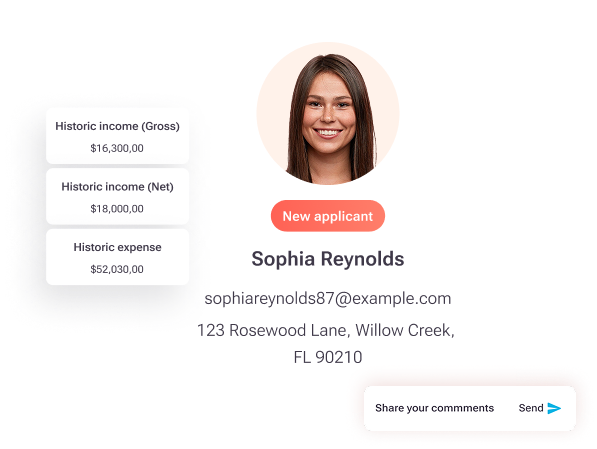
Board members need a clear, centralized view of each application. The QuickApprove dashboard gives real-time access to verification results, AI-generated summaries, and simple voting tools.
Board users can see biometric verification status, identity confirmation results, and risk scores in one interface, which removes email chains and speeds up decisions.
6. Maintain Ongoing Monitoring and Audit-Ready Records
Ongoing monitoring protects the community after initial approval. Automated systems track behavior, flag suspicious activity, and keep detailed logs of every verification step, board decision, and compliance action.
TenantEvaluation creates audit-ready records with timestamps, verification outcomes, and decision notes so Florida HOAs can respond quickly to regulators and auditors.
7. Train Your Team and Track KYC ROI
Training keeps your KYC program consistent and defensible. Community managers and board members should learn platform workflows, fraud red flags, and escalation paths.
TenantEvaluation clients often save more than 50 hours each day and shorten approval cycles by 70%, which produces measurable ROI through lower labor costs and faster move-ins.
Strengthen your KYC program with TenantEvaluation’s integrated platform. Schedule a demo today to see how IDVerify reduces identity fraud while simplifying approvals.
Common KYC Roadblocks and How TenantEvaluation Solves Them
Many property managers struggle with KYC because manual document review slows approvals and increases errors. Fragmented tools also raise compliance risk and drive up operating costs.
TenantEvaluation addresses these issues with end-to-end automation, automatic PII redaction, and PCI Level 1 security. Unlike competitors that rely on third-party tools, TenantEvaluation delivers native biometric verification and revenue-sharing models that remove large upfront expenses.
|
Feature |
TenantEvaluation |
ApplyCheck/Verify |
|
Biometric KYC |
Native IDVerify |
None |
|
FCRA Reseller |
Direct TransUnion/Equifax |
Third-party TazWorks |
|
HOA Dashboard |
No |
|
|
Time Savings |
70% reduction |
Manual-heavy |
Florida HOA KYC Checklist and Templates
A clear KYC checklist keeps every application consistent and audit-ready. Core checklist items include:
- Collection of government-issued ID and biometric verification
- Proof of income and employment validation
- Risk scoring based on transaction patterns and applicant profiles
- Enhanced due diligence triggers for high-risk applications
- Board approval workflows with documented decision reasons
- Ongoing monitoring and complete audit trail storage
TenantEvaluation supports Florida-specific configurations that connect directly with IDVerify+ biometric verification, which keeps KYC both compliant and efficient.
Begin your fraud-resistant KYC rollout with TenantEvaluation’s automated platform. Schedule a demo today to remove manual verification and maintain FCRA compliance.
FAQ
What is a KYC checklist for property management?
A KYC checklist for property management outlines Customer Identification Program (CIP) steps, document requirements, risk criteria, and Enhanced Due Diligence (EDD) triggers. Key items include government ID verification, biometric confirmation, income validation, background screening, and ongoing monitoring rules. The checklist keeps verification standards consistent and supports audit trails for regulators. TenantEvaluation automates this checklist with workflows that adapt to each community’s rules and risk tolerance.
How does biometric KYC work for tenants?
Biometric KYC for tenants combines government ID checks with AI-based identity confirmation. IDVerify+ walks applicants through uploading a government ID, completing liveness detection, and taking a selfie for biometric matching against the ID photo.
The system validates the ID, detects tampering, and confirms the applicant matches the document. All steps occur inside the TenantEvaluation platform, which creates a smooth user experience and blocks synthetic identities and impersonation attempts.
Is TenantEvaluation FCRA compliant for Florida HOAs?
TenantEvaluation operates with FCRA compliance as a core design principle. As a direct credit bureau reseller for TransUnion and Equifax, the platform follows strict bureau rules and undergoes regular compliance audits.
Built-in adverse action workflows, automated audit trails, and clear separation between data supply and decision-making help protect Florida HOAs from liability. This compliance-first structure supports reliable documentation and reporting for every screening decision.
What is KYC in property?
KYC in property management means verifying the identity, background, and financial strength of tenants, buyers, or residents before approval. The process includes government ID collection, biometric confirmation of physical presence, financial qualification checks, and risk-based due diligence.
KYC shields communities from fraud, supports regulatory compliance, and creates a documented process for audits. Modern KYC combines automated biometric tools with traditional background screening to build a complete applicant profile.
How do you implement KYC for HOA tenant screening?
KYC for HOA tenant screening follows a structured seven-step plan. You define risk-based policies, roll out smart forms, add biometric identity verification, and perform customer due diligence. You then enable digital board review, set up ongoing monitoring, and train staff while tracking ROI.
The program starts with a clear policy framework and continues with automated tools like IDVerify+ for biometric checks. Board members access verification results through dedicated dashboards, and ongoing monitoring maintains compliance and fraud protection throughout each resident’s time in the community.