Written by: Luis Teran, Co-founder, CEO, TenantEvaluation | Last updated: August 3, 2026
Key Takeaways for Florida Condo and HOA Teams
- Manual Florida condo and HOA tenant evaluations often take 1 to 4 weeks. A connected digital workflow can shrink that cycle to a few days.
- Centralized online intake with smart validation eliminates incomplete files and prevents month-long delays caused by missed board meetings.
- Automated screening, biometric IDVerify, and simultaneous credit, criminal, and eviction checks replace sequential manual steps and reduce staff workload.
- QuickApprove dashboards let boards review AI summaries, vote, and trigger automated approvals, which cuts email chains and approval bottlenecks.
- Lease Tracking, TEpayments by Zinc, and FCRA-first audit trails keep every record audit-ready. TenantEvaluation delivers this end-to-end platform. See how the full workflow runs and request a personalized walkthrough.
Step 1: Centralize Intake for Complete Applications
Before: Applicants email PDFs to managers, who chase missing items across inboxes. Incomplete files can delay condo approvals, and missing items in a Miami condo association application package restart the approval clock. If a board meets monthly, missing one meeting can add a full month to the process.
After: A 100% online application portal with intelligent form logic collects the written application, occupant list, income and employment details, government ID, executed lease, and background screening consent in one submission. Smart logic rejects incomplete packages before they reach the manager’s queue.
Florida-specific consideration: Florida law does not impose a single statewide approval deadline, and each association enforces its own written procedures. Centralizing intake ensures every application meets community-specific document requirements before review begins.
TenantEvaluation is the only purpose-built platform designed exclusively for Florida Condos and HOAs. Its intake workflow combines community-specific form logic with automated document validation, which ensures every application meets requirements before it reaches the manager’s queue. Multilingual support in 11 languages removes language barriers, while PCI Level 1 encrypted storage protects sensitive data throughout the process. Together these capabilities create a complete intake system that handles validation, accessibility, and security in one connected workflow.
See how centralized intake works and request a personalized walkthrough.
Step 2: Automate Screening and IDVerify for Faster Decisions
Manual screening creates a hidden bottleneck because each check runs in sequence and staff must wait between steps. Simultaneous screening collapses that timeline by running all checks at once and freeing managers to focus on exceptions.
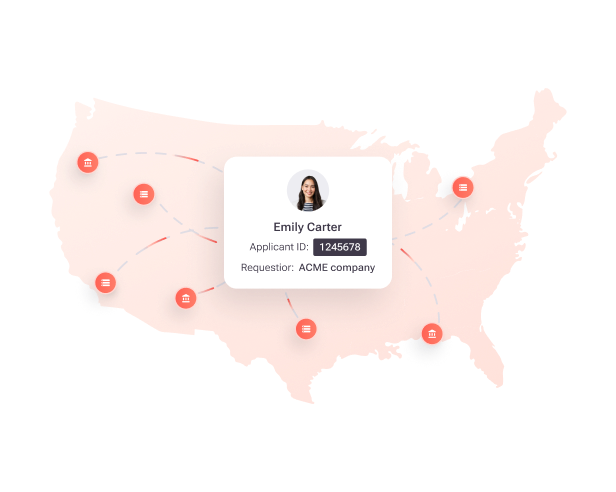
Before: Managers manually order background checks, verify IDs by eye, and wait for sequential results. Manual tenant screening averages 1 to 3 business days per applicant. Staff time per application is significantly higher when done manually versus with automation.
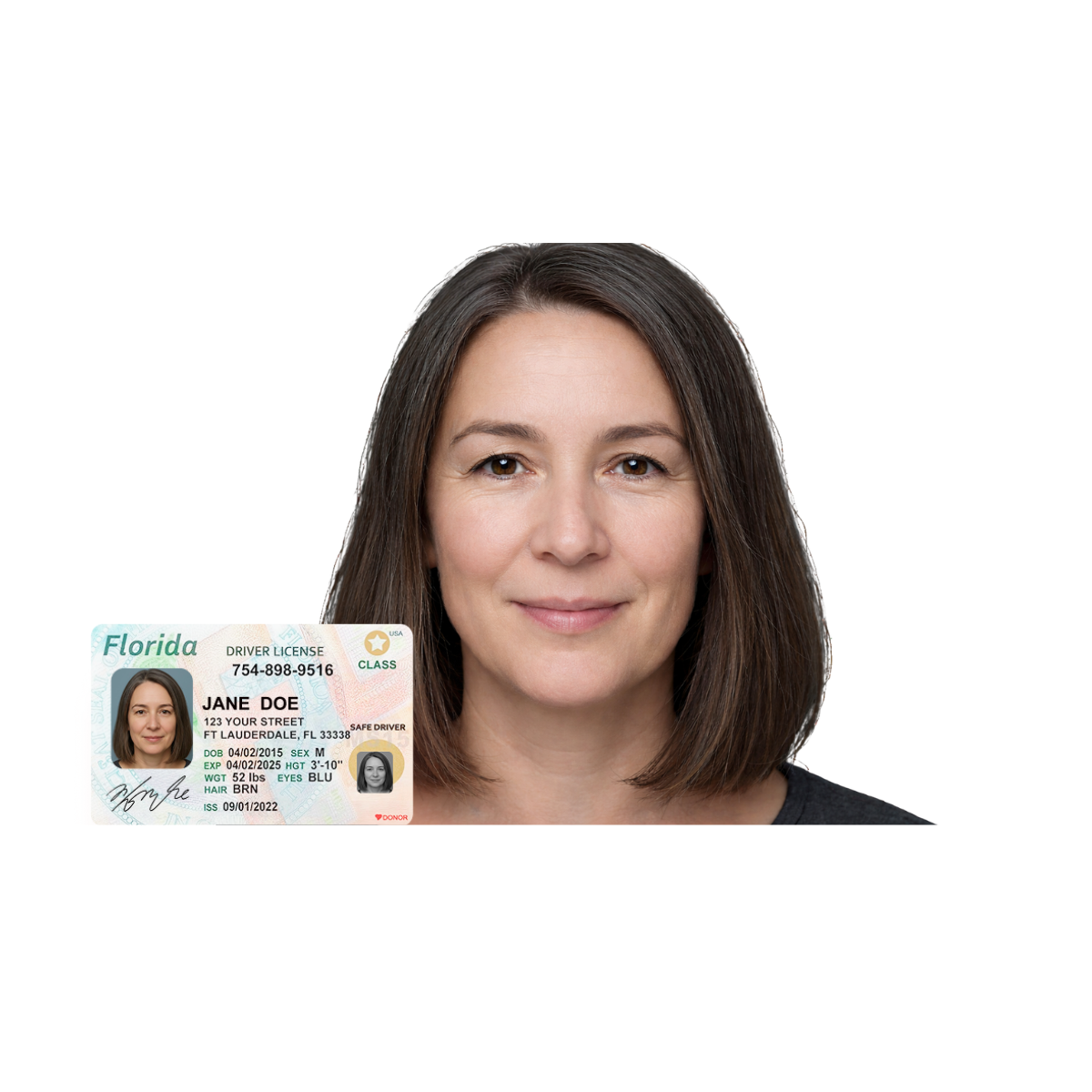
After: TenantEvaluation runs credit, criminal, eviction, income, and reference checks simultaneously through its SafeCheck+ and IncomeEV solutions. IDVerify adds a biometric layer with government ID validation, AI-powered liveness detection, and selfie-to-ID facial comparison directly inside the screening workflow. No external portals and no workflow disruption.
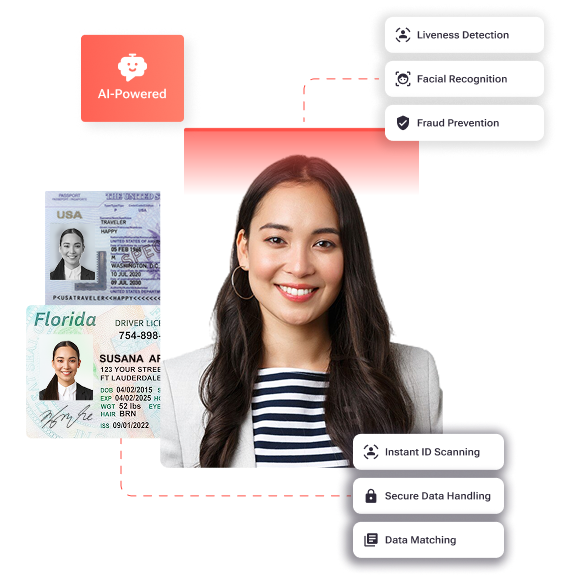
Florida-specific consideration: Florida HOAs must apply tenant screening policies consistently and avoid discriminatory practices that violate fair housing laws. Automation applies criteria uniformly and can help reduce human bias in screening decisions.
TenantEvaluation is a direct reseller of TransUnion and Equifax data, not a third-party scraper, with strict permissible purpose controls and automated adverse action workflows built in. IDVerify reduces manual work and standardizes application handling for Florida Condos and HOAs while preserving control, compliance, and visibility. AI-powered liveness detection is a key 2026 market trend that strengthens authentication by detecting spoofing attempts using photos, videos, or deepfakes, and that capability sits natively inside TenantEvaluation’s workflow.
Step 3: Use a Board Dashboard and QuickApprove Voting
Before: Board members receive application summaries by email, reply inconsistently, and create approval bottlenecks. Reliance on email chains for board approvals can create delays.
After: QuickApprove gives boards a dedicated review and voting dashboard inside TenantEvaluation. Board members see AI-generated applicant summaries, cast votes, and trigger automated approval letters and personalized welcome packages from one connected platform. Automated board approval workflows with reminders can reduce approval cycle times significantly.
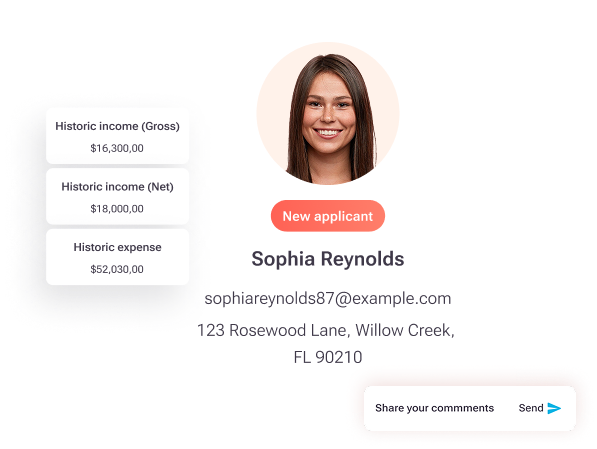
Florida-specific consideration: Florida law requires timely processing of rental applications from qualifying servicemembers. A board-ready dashboard with real-time tracking supports that requirement without manual coordination.
QuickApprove accelerates resident approvals, supports CAMs, Boards, and property management teams, and delivers real-time application tracking with automated communication support. Approvals become faster, clearer, more consistent, and easier to manage during high-volume seasons and complex onboarding requirements.
See the board dashboard in action and book a QuickApprove demo for your team.
Before moving to the post-approval workflow, teams benefit from understanding how TenantEvaluation’s board-centric design compares to general property management platforms, because not all software handles HOA approvals the same way.
Platform Comparison: TenantEvaluation vs. Alternatives
The following table highlights five capabilities that distinguish TenantEvaluation’s board-centric workflow from general property management platforms and generic screening vendors. These differences show how purpose-built tools support faster, more controlled approvals than adapted software.
| Feature | TenantEvaluation | AppFolio | Buildium | Generic Screening Vendors |
|---|---|---|---|---|
| Board voting dashboard | Yes, dedicated QuickApprove panel with AI summaries and voting workflow | No dedicated board voting panel | No dedicated board voting panel | No |
| Biometric identity verification | Yes, IDVerify with liveness detection and selfie-to-ID biometric match | Not natively embedded | Not natively embedded | Varies, typically external redirect |
| 55+ community standardization | Yes, 55+ Communities Verification module with automated age verification and 80% occupancy tracking | No dedicated 55+ module | No dedicated 55+ module | No |
| FCRA reseller status | Yes, direct TransUnion and Equifax reseller with permissible purpose controls | Uses third-party screening integrations | Uses third-party screening integrations | Varies, many use aggregated or third-party data |
| Connected payment workflow | Yes, TEpayments by Zinc with funds sent directly to the Association’s designated account | Separate payments module, not HOA-onboarding native | Separate payments module, not HOA-onboarding native | No |
Feature descriptions for TenantEvaluation are drawn from TenantEvaluation product documentation. AppFolio and Buildium feature characterizations reflect publicly available product positioning as of August 2026, and neither platform markets a purpose-built board voting panel, native biometric verification, or 55+ community standardization workflow for Florida community associations.
With board approval complete, the workflow shifts to post-approval lifecycle management, which means tracking the lease from approval through occupancy and eventual expiration.
Step 4: Track the Lease Lifecycle in One System
Before: Lease copies sit across folders, inboxes, and spreadsheets. Condominiums without centralized lease tracking face the same meeting-driven delays described earlier. Tracking move-ins, move-outs, and lease expirations across spreadsheets is error-prone and time-consuming.
After: TenantEvaluation’s Lease Tracking connects resident onboarding, unit data, approvals, and lease documentation into one streamlined, audit-ready workflow. Real-time lease status, including active, pending, expired, or missing, is visible at the unit level. Automated lease document collection during onboarding eliminates manual follow-ups and continues the manual-work reduction theme from earlier steps.
Florida-specific consideration: Florida Statute 718.111 requires condominium associations to make official records available within 10 working days after a written request, with failure to provide them within 10 working days creating a rebuttable presumption of willful noncompliance. Searchable, audit-ready digital lease records inside TenantEvaluation support that operational requirement.
Lease Tracking supports CAMs, Boards, Property Management Companies, and community operations teams by reducing manual follow-ups, spreadsheets, and scattered email chains from application to occupancy inside one platform.
Step 5: Connect Payments with TEpayments by Zinc
Before: Managers chase payment confirmations by email and phone. Fees and deposits are tracked in disconnected spreadsheets. Applicants feel unsure about what to pay, when to pay, and where to pay. Under Florida Statute 718.112, Miami condo associations may charge a transfer or application fee for leases and purchases, yet collecting and documenting that fee manually creates inconsistency across properties.
After: TEpayments by Zinc provides a connected payment workflow inside TenantEvaluation. Application fees, deposits, and other required resident payments are collected within the onboarding process associations already use. Each Association defines what is collected and at which stage. Payments go directly from the applicant to the Association’s designated account, and TenantEvaluation never holds the funds.
Florida-specific consideration: Boards need traceable records and confidence around where funds go. TEpayments by Zinc provides operational clarity and traceable payment records, and the capability adapts to each property’s process rather than forcing a universal sequence. One workflow replaces payment chasing.
Step 6: Build Compliance Audit Trails that Stand Up to Review
Before: Adverse action notices are generated manually, and those manually generated notices can contain compliance-risking errors. The NFHA’s 2025 Fair Housing Trends Report (covering 2024 data) recorded 32,321 total housing discrimination complaints nationwide, down from 34,150 in 2023, with no information on rental subcategory trends or defense costs.
After: TenantEvaluation maintains a timestamped audit trail for every application action, including consent collection, screening results, board votes, adverse action notices, and document history. Automated adverse action workflows eliminate manual notice errors. Auto-redaction of sensitive PII and end-to-end encryption protect applicant data throughout.
Florida-specific consideration: Under the FCRA, landlords and property managers must obtain written consent before pulling a consumer report and must maintain records including the signed consent form, the consumer report received, and copies of all adverse action notices sent. TenantEvaluation’s audit trail acts as the operational-control layer that keeps every record organized, defensible, and accessible without manual assembly.
The platform’s FCRA-first design starts with compliance as the foundation, not an afterthought. That foundation is strengthened by the same direct reseller status mentioned earlier, which supports data accuracy and permissible purpose controls. Built-in adverse action workflows then automate the final compliance step and eliminate manual notice errors, creating a compliance chain that covers consent, data sourcing, and applicant notification in one connected system.
Step 7: Measure ROI from Your Tenant Evaluation Workflow
Without measurement, workflow improvements remain anecdotal, and teams know they feel faster but cannot quantify the gain or justify the investment. Centralized analytics turn operational improvement into defensible numbers that boards can review and trust.
Before: Time savings and cost reductions stay invisible because data lives across email, spreadsheets, and disconnected tools. Leasing teams spend considerable time per application on manual collection, follow-up, and decision communication.
After: TenantEvaluation’s community analytics surface application volume, approval cycle times, demographic trends, and revenue generated, which gives CAMs and boards the data to measure operational improvement. The platform has already generated $150M for communities, processes 100,000+ applications annually across 5,000+ communities, and delivers significant reduction in processing time.
Florida-specific consideration: Management companies switching to automated screening can achieve substantial annual net savings after accounting for automation platform costs, driven by reduced staff time, fewer bad placements, and lower vacancy loss. One TenantEvaluation client freed up 50 hours a day for their team, cut processing time by 50%, and saved $240,000 annually.
The seven-step workflow of centralized intake, automated screening with IDVerify, board dashboard with QuickApprove, lease tracking, connected payments, compliance audit trails, and ROI measurement remains the only end-to-end workflow purpose-built for Florida community associations.
Measure your community’s ROI potential and schedule a savings analysis call.
Frequently Asked Questions
How long does tenant evaluation take in a Florida condo or HOA?
Through a manual process, Florida condo and HOA tenant evaluation typically takes one to four weeks. Professionally managed buildings with complete application packages often complete the process in one to two weeks, while communities requiring a full board vote can take three to four weeks or longer, especially if a meeting is missed. With TenantEvaluation’s connected workflow, the same process can often be completed within a few days by running screening steps simultaneously, automating board review through QuickApprove, and removing manual follow-ups at every stage.
What does a Florida condo HOA tenant screening workflow need to include to stay FCRA-compliant?
A compliant Florida condo or HOA tenant screening workflow must include written applicant consent before pulling a consumer report, a standalone FCRA disclosure, a summary of applicant rights, and an adverse action notice if the application is denied, a co-signer is required, or a higher deposit is charged. The notice must identify the screening company, state that the company did not make the rental decision, and inform the applicant of their right to a free copy of the report. Records, including the signed consent, the consumer report, and all adverse action notices, must be retained and accessible. TenantEvaluation automates each of these steps as a direct reseller of TransUnion and Equifax data, with built-in adverse action workflows and timestamped audit trails for every application.
How does a 55+ community in Florida handle age verification during tenant evaluation?
Under the federal Housing for Older Persons Act and Florida’s fair housing statute, a 55+ community must maintain at least 80% of occupied units with one resident aged 55 or older and must update occupancy records at least once every two years using reliable documents such as a driver’s license or signed certification. Florida no longer requires 55+ communities to register with the state, but the substantive age-verification and 80% occupancy requirements remain in effect. Manual handling of these requirements across email, PDFs, and follow-ups creates inconsistent documentation and operational risk. TenantEvaluation’s 55+ Communities Verification reduces manual work, standardizes application handling, supports documentation consistency, and is built for Florida Condos and HOAs, which improves operational efficiency and strengthens internal processes without replacing legal guidance.
What is the difference between a board dashboard and a standard property management view in tenant evaluation software?
A standard property management view gives CAMs and LCAMs operational visibility, including application status, document completeness, screening results, and communication history. A board dashboard is purpose-built for Board Members who need to review summarized applicant reports, cast approval votes, and track what requires their attention without navigating the full operational interface. TenantEvaluation’s QuickApprove includes a dedicated board review and voting panel that gives Board Members direct, real-time access to application status, AI-generated summaries, and a voting workflow inside one connected platform. This setup replaces email chains and spreadsheets with a board-ready approval process that maintains control, compliance, and visibility at every step.
How does lease tracking connect to the tenant evaluation workflow in a Florida community association?
In most Florida community associations, lease management stays disconnected from the application and approval process. Leases are stored in separate folders or spreadsheets, expirations are tracked manually, and there is no direct link between an approved application and an active lease record. TenantEvaluation’s Lease Tracking connects resident onboarding, unit data, approvals, and lease documentation into one centralized, real-time workflow. From the moment an application is submitted through occupancy, every lease is connected, searchable, trackable, and audit-ready. CAMs see real-time lease status, including active, pending, expired, or missing, at the unit level. Boards get a clearer operational picture of occupancy across communities. Automated lease document collection during onboarding eliminates the manual follow-ups that create delays and documentation gaps.
Conclusion
Florida CAMs, LCAMs, and condo and HOA boards managing tenant evaluation through email chains, spreadsheets, and fragmented tools face compounding delays, compliance exposure, and administrative burden that a connected platform removes. The seven-step workflow of centralized intake, automated screening with biometric IDVerify, board-ready QuickApprove voting, real-time Lease Tracking, connected TEpayments by Zinc, FCRA-first audit trails, and measurable ROI replaces every manual handoff with one audit-ready, purpose-built platform.
TenantEvaluation serves the same 5,000+ community base mentioned earlier, with the same application volume and revenue impact, and keeps FCRA compliance as the foundation rather than an afterthought. No other platform combines a board voting dashboard, biometric identity verification, 55+ Communities Verification, and the direct credit bureau relationship described above with TEpayments by Zinc in one connected, Florida-specific workflow.
Replace your manual workflow with one connected platform and start your implementation today.
