Written by: Luis Teran, Co-founder, CEO, TenantEvaluation | Last updated: July 26, 2026
Key Takeaways for Florida Associations
- FCRA-compliant background checks for Florida condo and HOA screening typically take 1 to 5 business days. County criminal searches usually take the longest.
- A 24- to 48-hour turnaround is realistic when authorization forms are complete, identity is confirmed upfront, and counties use electronic court access.
- Delays beyond 5 business days usually stem from incomplete forms, court backlogs, identity mismatches, frozen credit files, or unresponsive employers.
- The FCRA adverse action process can extend total timelines to 10 to 14 business days when disputes arise, because of documentation and waiting-period requirements.
- TenantEvaluation’s SafeCheck+, IDVerify, and QuickApprove platform streamlines these steps for Florida communities while maintaining full FCRA compliance. See how these tools accelerate your workflow.
Typical Timelines by Screening Component
The table below reflects published industry data for FCRA-compliant resident screening packages. Florida-specific notes highlight how the state’s electronic court infrastructure affects timing.
| Component | Typical Turnaround | Florida-Specific Note |
|---|---|---|
| Identity verification (SSN trace) | Typically under 1 business day | Instant via national databases, biometric acceleration with IDVerify+ reduces manual review |
| County criminal court search | 1 to 5 business days | Florida’s electronic infrastructure can enable faster results in many counties |
| State criminal database | Typically 1 to 5 business days | Electronic access in Florida can accelerate state criminal database searches |
| Eviction history | Often same day to 24 hours, though varies by provider | Specialized databases return results quickly statewide |
| Credit report | Typically same day to a few business days | TenantEvaluation accesses TransUnion and Equifax data, which avoids third-party scraping delays |
| Employment verification | The majority of employment verifications can be completed in less than 72 hours, though some take longer | Timing depends on employer responsiveness, automated Work Number queries speed this step |
These ranges describe typical performance, and they help CAMs and boards benchmark their current screening timelines.
When a Background Check Can Finish in 2 Days
A 24- to 48-hour turnaround is achievable under specific conditions for Florida condo and HOA applications. Basic components such as identity verification and national database searches often close within that window for a clean file in a county with digitized records.
Many standard Florida packages complete in 1 to 3 business days when each step starts with accurate data. The conditions that enable a 48-hour result include:
- A complete, error-free authorization form submitted at intake
- No frozen credit file requiring bureau intervention
- A county with fully digitized court records
- No employment verification component requiring direct employer outreach
- Biometric identity confirmation completed before the screening order is placed
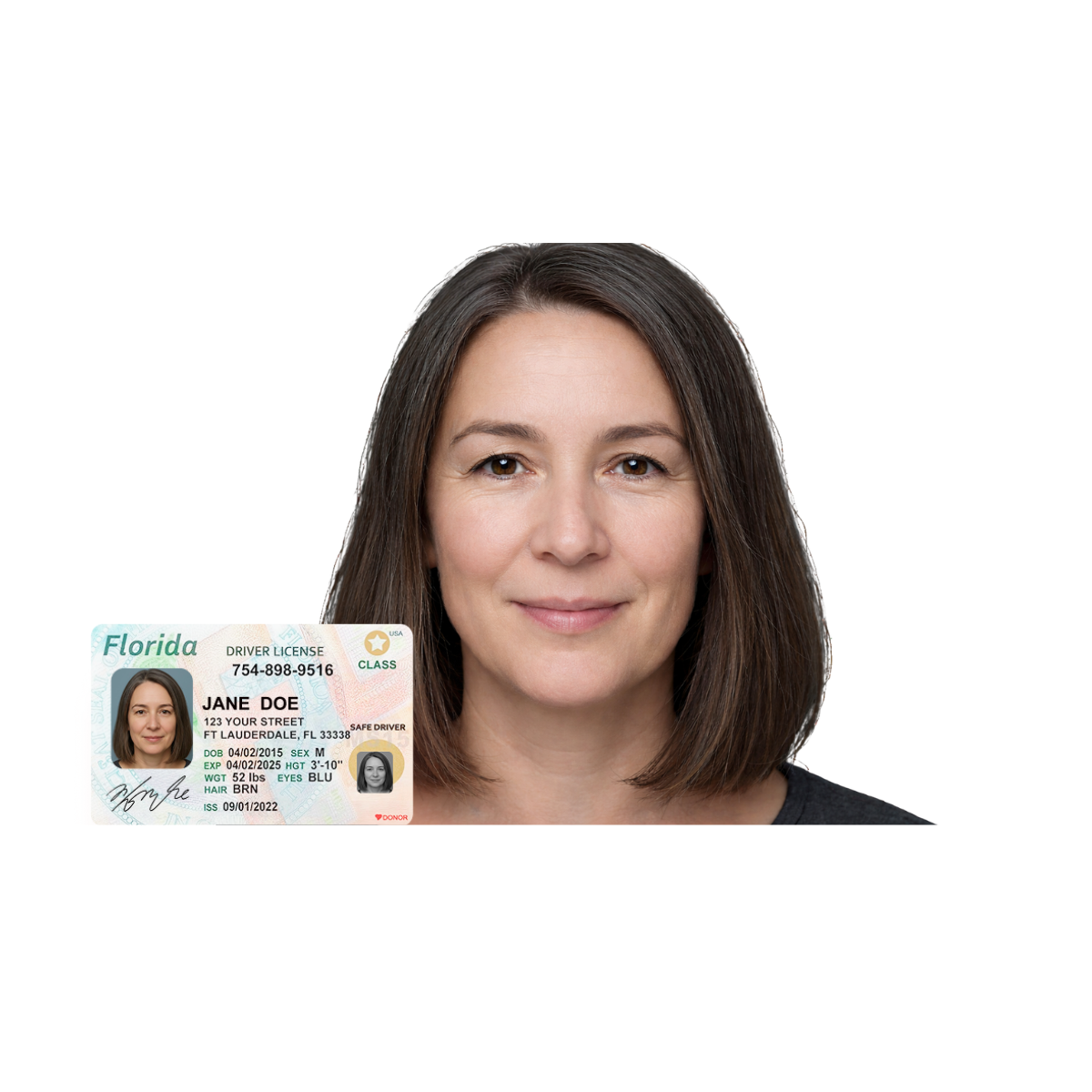
TenantEvaluation’s IDVerify uses AI-powered liveness detection, government ID authentication, and biometric facial matching to confirm applicant identity before the screening workflow begins. This approach removes identity-mismatch delays that commonly push timelines past 48 hours and strengthens the permissible-purpose validation required under FCRA.

Maximum Reasonable Background Check Timelines
A background check exceeding 10 business days typically warrants a follow-up inquiry, because most procedural delays resolve within that window.
The FCRA imposes a separate timing obligation once a screening result triggers a potential adverse decision. The widely accepted best practice is to wait at least five business days after sending the pre-adverse action notice before finalizing an adverse decision, which gives the applicant time to dispute inaccuracies with the consumer reporting agency. If the applicant files a dispute during that window, the clock pauses while the reinvestigation is completed.
For Florida CAMs and boards, the total timeline from application submission to a final adverse decision can span 10 to 14 business days when disputes arise. This window must be tracked with a complete audit trail. TenantEvaluation’s SafeCheck+ automates adverse action workflows and maintains timestamped records for every step, which reduces liability exposure for community associations.
Actions to Take When a Background Check Feels Stalled
Delays beyond 5 business days almost always trace back to a small set of root causes. The most common triggers include:
- Incomplete or unsigned authorization forms: Incomplete consent forms are the most common delay cause and often add a full day or more to the process.
- County court backlogs: Court closures, staffing shortages, civil jury terms, and post-COVID backlogs in county courts significantly extend turnaround times for manual record pulls.
- Identity mismatches or common names: Applicants with common names or multi-jurisdiction address histories require additional identity confirmation or separate searches in each county or state.
- Frozen credit files: A frozen credit file adds 2 to 3 days while the applicant lifts the freeze with a credit bureau.
- Unresponsive employers: Unresponsive past employers add 5 to 10 business days on average for employment verification.
When delays extend beyond the typical 5-business-day window, targeted checks help identify which of these causes applies to a specific application. Immediate steps for applicants, CAMs, and boards include:
- Confirm the authorization form is fully executed and submitted
- Verify the applicant’s legal name, date of birth, and address history are accurate in the system
- Ask the screening provider which specific component is pending
- Request a status update directly from the consumer reporting agency if the check exceeds 7 business days
- Confirm no credit freeze is active on the applicant’s file
County Court Search Timelines in Florida
County criminal court searches usually take the longest because many local courts still depend on paper-based records, manual retrieval, clerk availability, and backlogs.
Many U.S. counties still lack fully digitized court records and require a physical courthouse search that can take several business days. That window can extend further because of backlogs or local holidays. In digitized counties, the same search often returns in 24 hours or less.
Florida’s position is favorable. Many of Florida’s counties provide electronic court access, which places the state in a strong position nationally for county-level criminal searches. Variability still exists across rural counties and in jurisdictions experiencing staffing shortages.
TenantEvaluation’s SafeCheck+ uses automated court connections to query digitized Florida county records directly. This approach reduces manual retrieval steps and shortens county search timelines for community association screening packages.
FCRA Compliance Checklist for Florida Community Associations
Florida CAMs and boards running resident screening programs must stay aligned with these core FCRA obligations:
- Permissible purpose: Screening must occur only for a permissible purpose under FCRA Section 604. Resident screening for community associations qualifies when properly documented.
- Written authorization: Applicants must provide written consent before a background screening is ordered.
- Pre-adverse action notice: Before any adverse decision based on a screening report, the applicant must receive a copy of the report and the FCRA Summary of Rights.
- Reasonable waiting period: Most organizations allow at least 5 business days between the pre-adverse action notice and the final decision.
- Final adverse action notice: This notice must include the CRA’s contact information, a statement that the CRA did not make the decision, and notice of the applicant’s right to a free report copy within 60 days.
- Audit trail: Every step, including authorization, report delivery, and notices sent, must be documented and retained.
- Dispute handling: If an applicant disputes a finding, the reinvestigation must finish before a final adverse decision is issued.
How TenantEvaluation Speeds Screening While Staying Compliant
Generic consumer reporting agencies deliver FCRA-compliant checks in a few business days on average, but they rarely address Florida-specific needs, biometric identity layers, or board-ready approval workflows. TenantEvaluation is built specifically for community associations and management companies, with FCRA compliance as the foundation, not an afterthought.
SafeCheck+ delivers FCRA-compliant background checks with automated adverse action workflows, access to TransUnion and Equifax data, and built-in audit trails for every application. No gray-market data sources and no third-party scraping delays.
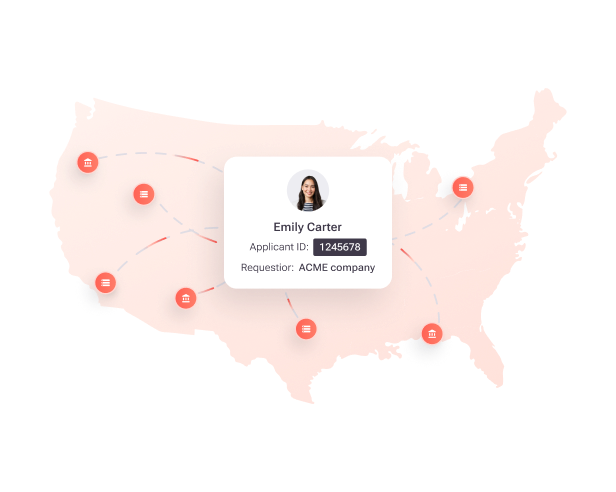
IDVerify introduces biometric identity verification directly inside the TenantEvaluation workflow. It combines government ID validation, AI-powered liveness detection, and biometric facial matching. Identity confirmation occurs before the screening order is placed, which removes identity-mismatch delays and strengthens FCRA permissible-purpose documentation. Automated screening platforms complete checks faster than manual processes.
QuickApprove accelerates resident approvals from submission to decision inside one connected platform. It gives CAMs, boards, and property management teams real-time application tracking, automated communication support, customized approval letters, a personalized welcome package, and a board-ready approval process. It supports high-volume seasons and communities with complex onboarding requirements.

Together, these three capabilities replace fragmented, manual workflows that stretch timelines and create compliance gaps in Florida condo and HOA screening.
See SafeCheck+, IDVerify, and QuickApprove in action for your community.
Next Steps for CAMs and Boards in Florida
Florida community associations that manage resident screening manually, or through generic background check vendors, face compounding risk. Slower timelines, incomplete audit trails, and FCRA adverse action workflows that require manual tracking all increase exposure.
A review of current screening workflows against the component timeline table above will reveal where delays occur and which steps lack documented compliance records. TenantEvaluation’s platform replaces those gaps with an end-to-end, FCRA-first workflow built for Florida community associations.
Frequently Asked Questions
How long do FCRA background checks usually take for Florida condo and HOA resident screening?
A complete FCRA-compliant resident screening package, including criminal records, credit, eviction history, and identity verification, typically takes a few business days nationally. In Florida, where many counties provide electronic court access, standard packages often complete in 1 to 3 business days. Employment verification is the component most likely to extend that timeline, because it depends on employer responsiveness. TenantEvaluation’s SafeCheck+ and IDVerify+ workflow is designed to compress these timelines for Florida community associations while maintaining full audit trails.
Can a background check come back in 2 days for a Florida HOA or condo application?
A 24- to 48-hour result is achievable when the authorization form is complete, the applicant’s identity is confirmed upfront, no credit freeze is active, and the county of record has electronic court access. Counties with digitized records return results faster. TenantEvaluation’s IDVerify+ biometric verification layer confirms identity before the screening order is placed, which removes one of the most common causes of delay.
What is the longest a background check should take before a CAM or board follows up?
A background check exceeding 10 business days typically warrants a direct inquiry to the screening provider. Most procedural delays, including court backlogs, employer non-response, and identity disambiguation, resolve within that window. If a check is still pending after 10 business days, the CAM or board should request a component-level status update to identify the specific stalled element. TenantEvaluation’s platform provides real-time application tracking so managers and boards can see exactly where each application stands without waiting for manual updates.
How does the FCRA adverse action process affect the overall screening timeline for community associations?
Once a screening result triggers a potential adverse decision, the FCRA requires the association to send a pre-adverse action notice, including a copy of the report and the Summary of Rights, before finalizing any decision. Associations must then wait at least 5 business days before finalizing a decision. When applicants dispute findings during this window, the reinvestigation pause can extend the total process to two weeks or more. TenantEvaluation’s SafeCheck+ automates adverse action workflows and maintains timestamped records for every step, which reduces the administrative burden and liability exposure for Florida associations.
Does TenantEvaluation support 55+ community screening requirements in Florida?
Yes. TenantEvaluation includes 55+ Communities Verification, a built-in capability that helps Florida condos and HOAs standardize how age-restricted application requirements are handled across applications. It reduces manual work, supports documentation consistency, improves operational efficiency, and strengthens internal processes for community association managers and boards. It is designed specifically for Florida condos and HOAs managing age-restricted communities and is not a replacement for legal guidance.
Conclusion: Faster Screening With Full Protection
Delayed background checks create real problems for Florida community associations. They stall move-ins, create administrative backlogs, and increase FCRA compliance exposure when adverse action workflows are tracked manually. Typical background check timelines of a few business days provide a baseline, not a ceiling. County court backlogs, identity mismatches, and incomplete authorizations routinely extend that window, and Florida’s HOA and condo screening environment adds complexity that generic background check vendors rarely address.
TenantEvaluation is built specifically for community associations and management companies, with FCRA compliance as the foundation, not an afterthought. SafeCheck+ delivers compliant checks with full audit trails. IDVerify removes identity-related delays with biometric verification. QuickApprove accelerates resident approvals from submission to decision inside one connected platform, without losing control, compliance, or visibility. With 5,000+ communities and 100,000+ applications processed annually, TenantEvaluation provides a fast, compliant resident screening platform built for Florida.
See how we compress timelines while protecting your community.
