Written by: Luis Teran, Co-founder, CEO, TenantEvaluation
Key Takeaways for Florida 55+ Communities
- HOPA compliance in Florida requires consistent written policies, age verification at move-in, and ongoing re-verification to maintain the 80/20 occupancy rule across all units.
- Associations must document every age verification, exception, and re-verification record in a retrievable format to withstand HUD audits or fair housing investigations.
- Surviving spouse exceptions and caregiver rules must follow written policies, with each case documented to preserve exemption status.
- Manual processes and fragmented records create compliance risk. Centralized, standardized workflows reduce administrative burden and improve audit readiness.
- TenantEvaluation helps Florida 55+ communities standardize age-restricted application handling and strengthen ongoing HOPA compliance.
The Problem: Inconsistent HOPA Processes Increase Risk
Florida has the highest number of 55+ communities in the United States. Many of these communities face daily administrative challenges: incomplete age documentation, long email chains with applicants and realtors, uneven survey responses from unit to unit, and re-verification deadlines tracked by whoever has time that week.
These operational gaps create compounding risk. A community that cannot produce complete, consistent age verification records during a HUD investigation or fair housing complaint may lose its HOPA exemption. Loss of exemption exposes the association to fair housing liability for every age-based occupancy decision it has made.
The impact extends beyond legal exposure. Losing exemption status can change a community’s character, affect property values, and disrupt long-standing resident expectations.
Structured, standardized processes address these risks directly. When every application follows the same documentation workflow, when re-verification happens on a defined schedule, and when records are organized and retrievable, associations are in a stronger position to demonstrate ongoing compliance. The operational benefit is equally significant, with fewer manual follow-ups, less administrative burden, and more consistent outcomes across every unit and every applicant.
Achieving this level of standardization requires tools and workflows built specifically for age-restricted community requirements in Florida.
The Solution: TenantEvaluation’s 55+ Communities Verification
TenantEvaluation’s 55+ Communities Verification is a built-in capability designed for Florida condos and HOAs that manage age-restricted application requirements. This capability treats 55+ documentation as a core requirement and standardizes how age-restricted rules are handled across applications. Associations reduce repetitive manual handling, improve documentation consistency, and gain stronger operational control for CAMs and boards.
TenantEvaluation has processed over 100,000 applications annually across 5,000+ communities and was built from the ground up for Florida-specific association workflows. The platform is not a generic rental screening tool adapted for HOAs. It is purpose-built for community associations, with FCRA compliance as the foundation.
See TenantEvaluation in action and review how it standardizes 55+ application handling for Florida associations.

Step 1: Create and Maintain a Written Intent Policy
HOPA’s first qualification criterion requires a community to publish and follow policies and procedures that show an intent to provide housing for older persons. A written intent policy for 55+ communities in Florida must exist in writing, receive formal adoption, and remain consistently applied.
A compliant written intent policy includes several core elements. The community’s governing documents, such as the declaration, bylaws, or rules and regulations, must clearly state the age restriction and the 80/20 occupancy requirement. Advertising materials, including listings, signage, and digital marketing, must reflect the community’s 55+ status while avoiding language that goes beyond the scope of the HOPA exemption and could be read as discriminatory toward families with children.
Florida associations should also adopt a written occupancy policy that explains how the 80/20 threshold is calculated, how exceptions are handled, and how the community will respond to occupancy changes that affect the ratio. Association counsel should review this policy and update it when governing documents change. The HUD HOPA final rule provides the federal framework that all written policies must follow.
Step 2: Run Age Verification Surveys and Ongoing Re-Verification
HOPA’s second qualification criterion requires that at least 80 percent of occupied units have at least one resident age 55 or older. Communities must follow a formal age verification process to demonstrate this requirement and must maintain ongoing procedures to keep it current. These age verification requirements for 55+ Florida HOAs often become the most demanding part of HOPA compliance.
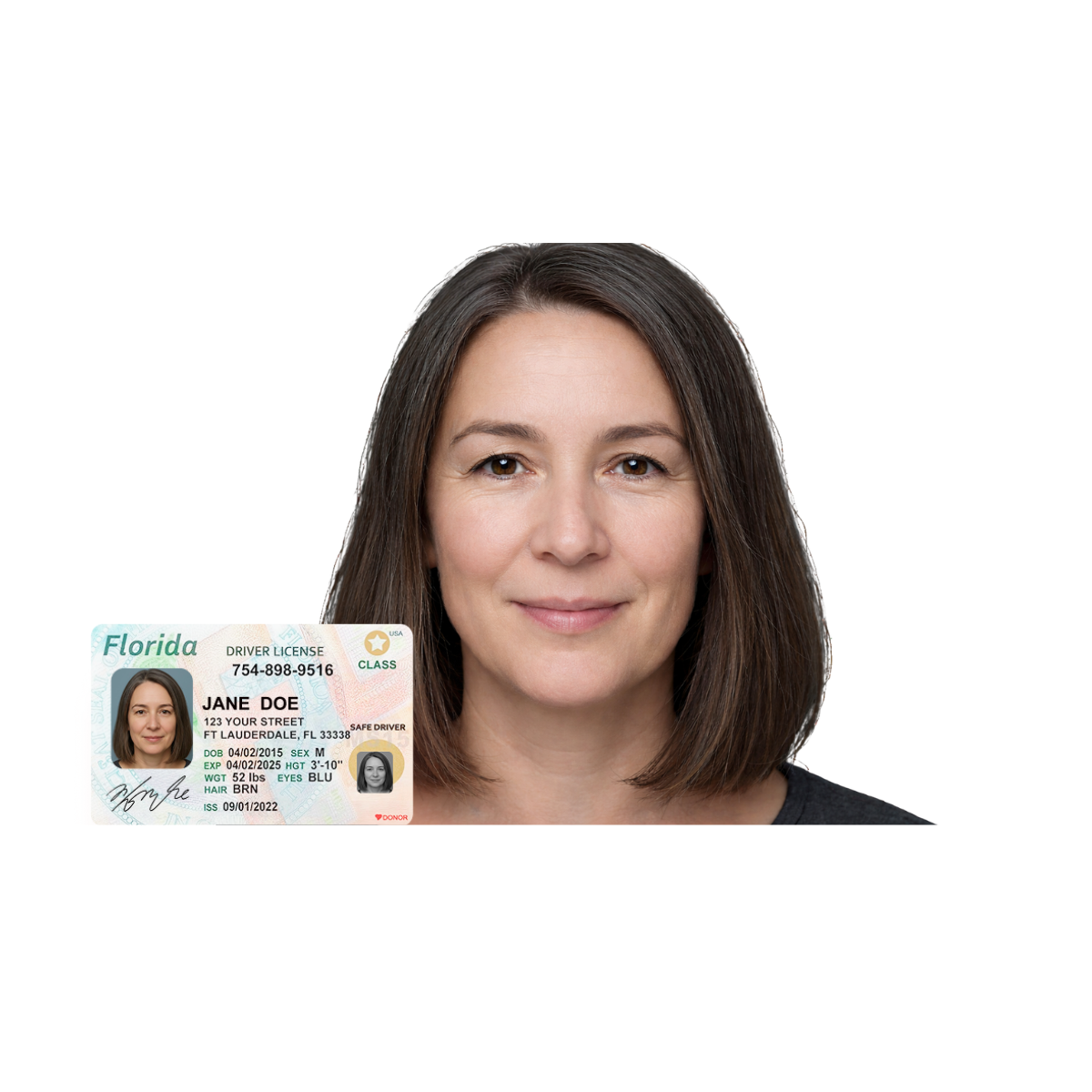
Acceptable documentation for age verification includes:
- Driver’s license or state-issued identification card
- Passport or birth certificate
- Immigration card
- Military identification
- Any other government-issued document showing date of birth
- Sworn affidavit attesting to age when documentary evidence is unavailable
Florida 55+ communities are no longer required by state law to file bi-annual occupancy reports with the Florida Commission on Human Relations. They must still maintain procedures that verify compliance with the 80 percent occupancy rule. The verification process must capture the age of at least one resident per occupied unit and must be documented in a retrievable format. Incomplete, unsigned, or undated survey responses create gaps in the verification record, which become serious issues during audits or fair housing investigations.
A practical re-verification checklist for Florida associations follows a clear sequence. First, send written survey notices to all unit owners and tenants on a regular schedule. As responses arrive, collect and log them with document copies attached so each unit has a complete record.
For units that do not respond, send a second notice with a defined deadline to increase participation before you close the survey window. After the survey cycle ends, calculate the 80/20 ratio using only verified data. Finally, retain all survey records for at least three years so the association remains ready for any future review.
Step 3: Apply Surviving Spouse, Caregiver, and Other Limited Exceptions
Surviving spouse rules in 55+ communities in Florida often create confusion and inconsistent handling. Under HUD’s HOPA guidance, a surviving spouse who does not meet the age requirement may continue to occupy a unit after the qualifying resident’s death if the community’s written policies allow this exception and the surviving spouse lived in the unit at the time of death.
This exception does not automatically cover other family members, caregivers, or later occupants. If a surviving spouse later vacates the unit or transfers ownership, the new occupant must meet the standard age verification requirements. Associations should document each surviving spouse exception in writing, including the date of the qualifying resident’s death, the surviving spouse’s age, and the unit number.
Caregivers who do not meet the age requirement may live in a unit to provide live-in care to a qualifying resident when the community’s policies address this situation. The caregiver’s presence must be documented and connected to the qualifying resident’s continued occupancy. Minor children living in a unit do not disqualify that unit from the 80/20 count when at least one resident in the unit is 55 or older. Associations should maintain written records for every exception category because these records serve as primary evidence of good-faith compliance during any review.
Step 4: Build Audit-Ready Recordkeeping for HOPA Compliance
Florida Statutes § 760.29 states that a housing facility or community qualifies for the 55+ exemption if it meets three criteria. At least 80 percent of occupied units must be occupied by at least one person 55 years of age or older. The facility or community must publish and follow policies and procedures that show an intent to provide housing for persons 55 years of age or older. The facility or community must comply with rules established by the Commission for verifying occupancy.
Audit-ready documentation means the association can produce, for every occupied unit, the age verification document collected at move-in, recent verification records supporting the 80 percent occupancy rule, records of any exceptions granted, and the current 80/20 calculation. Records should be organized by unit number and stored in a format that allows fast retrieval. Paper files stored in multiple filing cabinets rarely meet this standard in practice, even when they technically contain the right information.
Associations that rely on spreadsheets, email chains, and PDF attachments to manage documentation face a structural problem. Records become fragmented, version control breaks down, and retrieval during an audit becomes slow and error-prone. Centralized, digital recordkeeping has become the operational standard that supports real audit readiness.
How TenantEvaluation Streamlines Age-Restricted Application Handling
Florida associations that manage 55+ communities face a documentation challenge that many screening platforms do not address well. TenantEvaluation’s 55+ Communities Verification addresses this challenge by standardizing how age-restricted requirements are handled across applications. Associations reduce manual work, improve documentation consistency, and strengthen internal processes for CAMs and boards.
Other platforms often require managers to collect, organize, and track age documentation outside the screening workflow. TenantEvaluation builds this process into the application itself. Associations gain a more structured process for age-restricted communities that supports internal compliance procedures while still relying on legal counsel for interpretation. CAMs who manage multiple communities benefit from consistent application handling across their entire portfolio instead of community-by-community variation.
TenantEvaluation’s broader platform also includes QuickApprove, an accelerated approval workflow that moves applications from submission to decision faster inside one connected platform. Real-time application tracking, a board-ready approval process, and automated communication support help associations keep applications moving. For 55+ communities processing applications during peak seasons, this capability reduces bottlenecks while maintaining documentation standards. IDVerify adds a biometric identity verification layer that confirms applicant identity using AI-powered liveness detection and government ID validation, which strengthens the overall integrity of the application record.

Request a platform walkthrough to see how TenantEvaluation reduces manual handling across your 55+ community applications.
Frequently Asked Questions
What is the Housing for Older Persons Act?
The Housing for Older Persons Act (HOPA) is a 1995 federal law that amended the Fair Housing Act to create a specific exemption that allows communities to restrict occupancy based on age. Without this exemption, age-based occupancy restrictions would qualify as illegal familial status discrimination under the Fair Housing Act. To qualify, a community must meet three criteria. At least 80 percent of occupied units must have at least one resident age 55 or older. The community must publish and follow policies that show an intent to provide housing for older persons. The community must comply with HUD’s age verification rules. Florida communities that meet all three criteria can lawfully restrict occupancy to persons 55 and older without violating federal fair housing law.
How often must Florida 55+ communities re-verify resident ages?
Florida 55+ communities are no longer required by state law to file bi-annual occupancy reports with the Florida Commission on Human Relations. They must still maintain procedures that verify compliance with the 80 percent occupancy rule. This verification applies to all occupied units and must be documented in a retrievable format. The process must capture the age of at least one resident per unit and must include acceptable age documentation. Communities that cannot produce verification records during an audit or investigation risk losing their HOPA exemption status. Best practice is to begin the verification process at least 90 days before the deadline to allow time for follow-up on non-responses.
What documentation satisfies HOPA age verification requirements?
Acceptable age verification documents under HOPA include government-issued identification that shows date of birth, such as a driver’s license, state ID card, passport, birth certificate, immigration card, or military identification. When documentary evidence is unavailable, a sworn affidavit attesting to the resident’s age may be accepted. Associations should collect and retain copies of these documents for every qualifying resident in every occupied unit. Documents should be organized by unit number and stored in a format that supports fast retrieval. Incomplete or missing documentation, even for a small number of units, can affect the community’s ability to demonstrate the 80/20 threshold during a review.
How do surviving spouse rules work under Florida 55+ community law?
Under HOPA and Florida Statutes § 760.29, a surviving spouse who does not independently meet the age requirement may continue to occupy a unit after the death of the qualifying resident if the community’s written policies permit this exception and the surviving spouse was residing in the unit at the time of the qualifying resident’s death. This exception applies only to the surviving spouse and does not extend to other family members, heirs, or later occupants. Associations must document each surviving spouse exception in writing, including the date of death, the surviving spouse’s age, and the unit number. If the surviving spouse later vacates or transfers the unit, the next occupant must meet standard age verification requirements.
Conclusion: Turning HOPA Rules into Daily Practice
HOPA compliance in Florida functions as an ongoing operational discipline rather than a one-time task. Associations that maintain their 55+ exemption status do so by establishing clear written intent policies, conducting consistent age verification at move-in, completing periodic re-verification surveys, documenting every exception with precision, and retaining audit-ready records across all occupied units.
Manual processes, fragmented documentation, and inconsistent application handling create risk that grows over time. Standardized workflows provide a practical solution, and TenantEvaluation’s 55+ Communities Verification gives Florida condos and HOAs a platform built for that purpose. By reducing manual work, standardizing application handling, supporting documentation consistency, and strengthening internal processes, TenantEvaluation gives CAMs and boards the operational control they need to manage age-restricted communities at scale.
With a proven track record across thousands of Florida communities, TenantEvaluation’s FCRA-first design, direct credit bureau reseller relationships, and Florida-specific workflows make it a strong choice for associations that treat compliance as a priority.
Get started with TenantEvaluation and bring consistent, audit-ready 55+ application handling to your community.
