Written by: Luis Teran, Co-founder, CEO, TenantEvaluation | Last updated: July 11, 2026
Key Takeaways for Florida 55+ HOPA Communities
- HOPA-qualified 55+ communities in Florida must keep at least 80% of occupied units with one resident aged 55 or older and verify ages at least every two years using reliable documentation.
- Fragmented manual processes create serious compliance risk when age-verification records sit in scattered emails and shared drives without centralized tracking.
- Florida CAMs and boards need clear workflows, assigned responsibilities, and audit-ready records to defend the HOPA exemption during HUD reviews or fair housing complaints.
- Bi-annual surveys, new applications, resales, and occupancy changes all require consistent age verification and documentation to meet ongoing HOPA obligations.
- TenantEvaluation streamlines HOPA compliance 55+ screening for Florida associations, and you can see a live demo of how it standardizes workflows and strengthens recordkeeping.
Core HOPA Requirements for 55+ Communities
HOPA compliance 55+ screening is the structured collection and verification of age-related documentation that allows a community to qualify for an exemption from the Fair Housing Act’s familial-status protections. A community must satisfy key requirements on an ongoing basis:
- At least 80% of occupied units must have at least one occupant aged 55 or older.
- The community must publish and follow policies that show intent to operate as 55+ housing, through governing documents, marketing language, signage, and consistent operational posture.
- The community must maintain age-verification procedures and records consistent with HUD’s regulatory framework under 24 CFR 100.307.
HOPA compliance is an ongoing obligation, not a one-time check at purchase or move-in. New purchases, resales, and occupancy changes must be added to age-verification records between biennial survey cycles. Communities that cannot produce current, organized records risk losing the HOPA exemption entirely, which exposes the association to familial-status claims, counsel involvement, and significant operational disruption.
How the 80/20 Rule Works in a 55+ Community
The 80/20 rule under HOPA requires that at least 80% of occupied units, not owned units, have at least one resident who is 55 years of age or older. Vacant units are excluded from the calculation and do not count against the compliance threshold. The remaining 20% of occupied units may be occupied by residents under 55 without jeopardizing the exemption.
For Florida associations, the practical implications are significant:
- The occupancy count must reflect current, verified residents, not ownership records alone.
- A unit transferred to a trust, LLC, or family member requires updated age documentation for the actual occupants.
- Short-term rental activity can affect the HOPA compliance percentage if occupants are not age-verified.
- The community must be able to produce a current roster of occupied units, age-qualified occupants, and notes on vacant units at any time.
Boards frequently overlook practical questions at the intersection of ownership changes and age verification, including what documentation is required when an owner adds a younger family member to a deed. These edge cases require a workflow that captures occupancy changes in real time, not only at the biennial survey.
Operational Definition of HOPA Compliance
HOPA compliance refers to the full set of operational, documentation, and governance obligations a 55+ community must maintain to preserve its exemption from familial-status protections under the Fair Housing Act. It covers the 80/20 occupancy threshold, published intent policies, and ongoing age-verification procedures.
For Florida CAMs and boards, maintaining HOPA compliance is an internal operational responsibility, not a passive legal status. The association bears the burden of proof. If HUD challenges the exemption or a fair housing complaint arises, the community must produce organized, dated, and methodologically documented age-verification records.
Fragmented manual processes create direct exposure. One of the most common vulnerabilities in senior condominium associations is decentralized record storage, with critical documents scattered across board members’ personal files, email accounts, and home offices, with no centralized index or retention schedule.
TenantEvaluation’s 55+ Communities Verification centralizes age-related records, automates key steps, and supports consistent handling of applications and surveys for Florida Condos and HOAs, while still leaving legal guidance and board decisions in place.
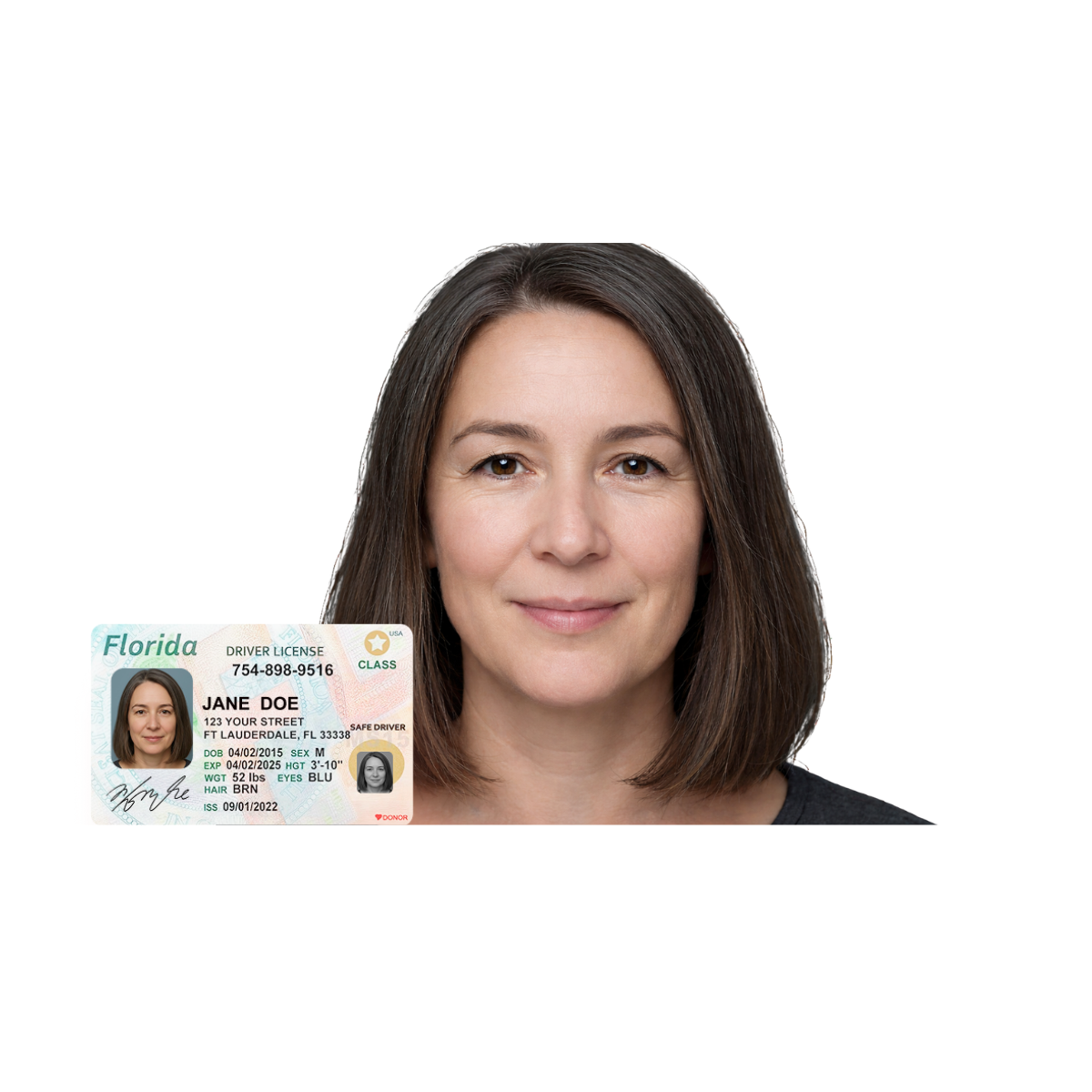
View a walkthrough to see how TenantEvaluation standardizes 55+ screening workflows for Florida associations.
HOPA Age Verification Roles and Responsibilities
Florida communities need a repeatable HOPA age verification process with clearly defined responsibilities across the association, board, manager, applicant, and any supporting third parties. The following framework distinguishes each role:
- Association (Governance Layer): Adopts and maintains written policies that show 55+ intent in governing documents. Establishes a records retention policy that specifies where age-verification documents are stored, who has access, how updates are logged, and how privacy-sensitive information is handled. Designates a records custodian, such as a board member, manager, or outside professional, who maintains retention schedules and responds to requests.
- Board of Directors: Approves the survey calendar and bi-annual verification cycle. Reviews occupancy threshold calculations. Authorizes workflow procedures for new applications, resales, and occupancy changes. Works with legal counsel to develop integrated compliance procedures that address ownership transparency and age-verification obligations.
- Community Association Manager (CAM): Executes the age-verification workflow at the application stage. Sends and tracks bi-annual survey communications. Follows up on incomplete submissions. Maintains organized, dated records with document type and survey methodology noted. Incorporates occupancy changes between survey cycles.
- Applicant / Resident: Submits acceptable age-verification documentation at the time of application. Responds to bi-annual survey requests with updated documentation or signed certification. Provides documentation for any new occupants added to the unit.
- Supporting Third Parties: Legal counsel reviews and updates governing documents and compliance procedures. Management platforms support document collection, recordkeeping, and workflow standardization while leaving legal guidance and board decision-making authority intact.
55+ Community Screening Checklist for CAMs
Reliable documentation must be collected for age verification in 55+ communities, and a clear checklist keeps the process consistent.
The following checklist supports both new-application screening and bi-annual resident surveys:
- Confirm at least one occupant per unit is 55 or older before approval.
- Once confirmed, collect reliable age-verification documentation for that occupant to create an audit trail.
- Record the date of verification, document type reviewed, and collection method so the process can be reconstructed later.
- File the record in a centralized, searchable system, not a personal inbox or shared drive folder, so it remains accessible during staff changes.
- Flag units with pending or missing documentation for follow-up before the survey cycle closes.
- Recalculate the 80% occupancy threshold after each survey cycle using occupied units only.
- Retain all records with methodology notes to support HUD review, lender compliance letters, or fair housing responses.
- Request the most recent survey results as part of every resale document package.
Strong communities establish a records protocol that specifies where age-verification documents are stored, who has access, how updates are logged, and how privacy-sensitive information is handled.
Florida HOA HOPA Compliance Challenges
Florida’s concentration of 55+ communities, in a Southeast region that held the largest share of the U.S. senior living market at 28.35% in 2025, means Florida CAMs and boards handle a higher volume of age-verification workflows than most markets. Common operational challenges include:
- Incomplete submissions: Applicants and residents submit partial documentation or miss the survey entirely, which requires manual follow-up across email chains.
- Manual review burdens: CAMs spend significant time reviewing, organizing, and filing documents that arrive in inconsistent formats.
- Communication gaps: No structured reminder system for bi-annual surveys means cycles pass without full participation.
- Audit readiness: Boards composed primarily of retired volunteers often lack institutional infrastructure, including dedicated compliance staff and familiarity with the regulatory obligations attached to their fiduciary roles.
- Edge-case handling: Units transferred to trusts, LLCs, or family members require updated occupant documentation that manual workflows frequently miss.
TenantEvaluation’s 55+ Communities Verification gives Florida CAMs a single system for applications and surveys, with structured forms, automated reminders, and centralized records that support consistent HOPA workflows across communities.
Watch how Florida CAMs use it to manage 55+ screening at scale.
HOPA Exemption Documentation Standards
Best practices for HOPA exemption documentation focus on governance clarity, workflow consistency, and ongoing review rather than one-time setup.
Transitioning to a digital document management system is essential for meeting modern compliance standards. Boards should prioritize secure access controls, searchable document indexing, audit trail functionality, and the ability to produce records in formats that satisfy state inspection requirements.
The following table compares manual and standardized approaches across key operational dimensions:
| Approach | Documentation Consistency | Manual Work | Audit Readiness |
|---|---|---|---|
| Manual Process | Documents scattered across personal files, email accounts, and home offices with no centralized index | CAMs manually send surveys, track responses, follow up on missing submissions, and file results | Failure to conduct or document biennial surveys prevents proof of compliance if challenged by HUD |
| Standardized Approach (TenantEvaluation 55+ Communities Verification) | Uses consistent forms and workflows so application and survey documentation stays uniform across all units and applicants. | Automates survey distribution, reminders, and intake to cut repetitive handling of age-restricted application requirements. | Creates centralized, searchable records that support faster responses to HUD inquiries, lender requests, and internal audits. |
Additional best practices for HOPA exemption documentation include the following steps:
- Maintain a written record retention policy specifying document types, storage location, access controls, and retention periods.
- Designate a named records custodian responsible for responding to owner requests and HUD inquiries within statutory deadlines.
- Include the most recent age-verification survey results in every resale document package.
- Work with legal counsel to develop procedures for edge cases such as trusts, LLCs, deed additions, and short-term rental activity.
- Conduct a comprehensive audit of current recordkeeping practices at least annually to identify gaps before a formal review occurs.
Bi-Annual Resident Survey Requirements for 55+ Communities
HOPA regulations require communities to re-survey residents at least every two years using reliable methods, with results documented to confirm continued compliance with the 80% threshold. The bi-annual survey is mandatory. Communities that fail to conduct these surveys cannot prove HOPA compliance and cannot defend the exemption if challenged.
A structured bi-annual survey cycle includes:
- Define the survey calendar with specific start and close dates on a two-year cycle.
- Assign responsibility for distributing survey forms and tracking responses.
- Prepare follow-up communications for missing responses with defined escalation steps.
- Collect or reconfirm acceptable age-verification documentation for each qualifying occupant.
- Document the date of verification, document type reviewed, and survey methodology for every unit.
- Recalculate the 80% occupancy threshold using occupied units only upon survey close.
- File all results in a centralized, searchable system with a complete audit trail.
- Retain records for use in lender compliance letters, HUD reviews, and fair housing responses.
TenantEvaluation’s 55+ Communities Verification supports Florida Condos and HOAs that manage this cycle. It aligns application intake and bi-annual surveys in one system so CAMs can track responses, store documents, and produce reports without rebuilding the process for each community.
Frequently Asked Questions
What is the difference between HOPA compliance and Fair Housing Act compliance for a 55+ community?
The Fair Housing Act prohibits housing discrimination based on familial status, which includes families with children under 18. HOPA creates a specific exemption from that prohibition for qualifying 55+ communities. To maintain the exemption, a community must satisfy key requirements on an ongoing basis, including the 80% occupancy threshold, published 55+ intent policies, and ongoing age-verification procedures. A community that loses HOPA qualification becomes subject to familial-status protections and cannot enforce age restrictions against prospective residents with children.
How often must a Florida 55+ community conduct age verification?
HUD requires communities to re-survey residents at least once every two years. This biennial verification cycle must use reliable methods, and results must be documented with the date of verification, document type reviewed, and survey methodology. The bi-annual survey does not replace the obligation to verify age at the time of each new application or occupancy change. Both are required. Communities must incorporate new purchases, resales, and occupancy changes into age-verification records between survey cycles.
Who is responsible for maintaining HOPA age-verification records in a Florida HOA or condo?
The association bears the legal responsibility for maintaining HOPA compliance records. In practice, the board of directors approves the policies and survey calendar, while the Community Association Manager (CAM) executes the workflow, collects documents, tracks survey responses, follows up on incomplete submissions, and maintains organized records. Best practice is to designate a named records custodian, whether a board member, CAM, or outside professional, who is accountable for retention schedules and responding to HUD or owner requests.
What documents are acceptable for HOPA age verification?
Reliable age-verification documentation must be collected to support HOPA compliance. Records must note the document type reviewed and the date of verification to support audit defensibility.
How does TenantEvaluation’s 55+ Communities Verification support Florida CAMs?
TenantEvaluation’s 55+ Communities Verification is a built-in capability within TenantEvaluation’s all-in-one resident screening and onboarding platform. It is built for Florida Condos and HOAs and designed for Community Association Managers. The feature replaces fragmented email chains and PDFs with structured forms, automated reminders, and centralized storage tailored to age-restricted application requirements. It supports internal compliance-related processes while leaving legal guidance and board decision-making authority with the association and its counsel.
Conclusion: Building an Audit-Ready HOPA Workflow
HOPA compliance 55+ screening is an ongoing operational obligation for Florida CAMs and boards, not a one-time setup. Key requirements, including the 80/20 occupancy calculation, the bi-annual survey cycle, and the documentation standards required by 24 CFR 100.307, all require a repeatable, auditable workflow with clearly defined responsibilities and centralized records.
Fragmented manual processes, such as documents in personal inboxes, PDFs in shared drives, and follow-ups through email chains, create the exact gaps that surface during HUD reviews, lender audits, and fair housing complaints. The operational risk comes directly from workflows that were never designed for the volume, consistency, or audit readiness that HOPA requires.
TenantEvaluation’s 55+ Communities Verification gives Florida Condos and HOAs a structured way to manage age-restricted application and survey requirements at scale, while still relying on legal counsel for interpretation and enforcement decisions.
Explore TenantEvaluation in action and see how Florida CAMs and boards build more consistent, audit-ready HOPA compliance workflows.
