Written by: Luis Teran, Co-founder, CEO, TenantEvaluation | Last updated: August 14, 2026
Key Takeaways for Florida 55+ Communities
- Florida HOAs and CAMs struggle when age verification runs through scattered emails, PDFs, and spreadsheets. These manual methods create inconsistent documentation that is hard to defend during audits or Fair Housing complaints.
- A standardized digital verification workflow replaces fragmented manual steps with one connected platform. This approach improves documentation consistency, cuts repeat follow-up requests, and strengthens internal controls for every application.
- Accepted documents under HOPA include government-issued photo IDs, birth certificates, and passports. Signed affidavits supplement these records when required, and all documents should be logged, timestamped, and stored in a searchable format.
- Edge cases such as younger spouses, live-in caregivers, inheritance transfers, and surviving spouses carry the same compliance risk as standard applications. Each one requires governing document provisions and supporting identification documented in the unit file.
- TenantEvaluation’s 55+ Communities Verification helps Florida Condos and HOAs replace manual processes with a structured, auditable workflow—learn more here.
The Solution Category: Standardizing Age Verification in One Platform
The move from scattered manual processes to one connected platform addresses the root cause of inconsistent age verification. TenantEvaluation’s 55+ Communities Verification is a built-in capability that helps Florida Condos and HOAs standardize how age-restricted requirements are handled across applications. It reduces manual work, improves documentation consistency, and strengthens internal controls, while leaving legal guidance and board decision-making in place.
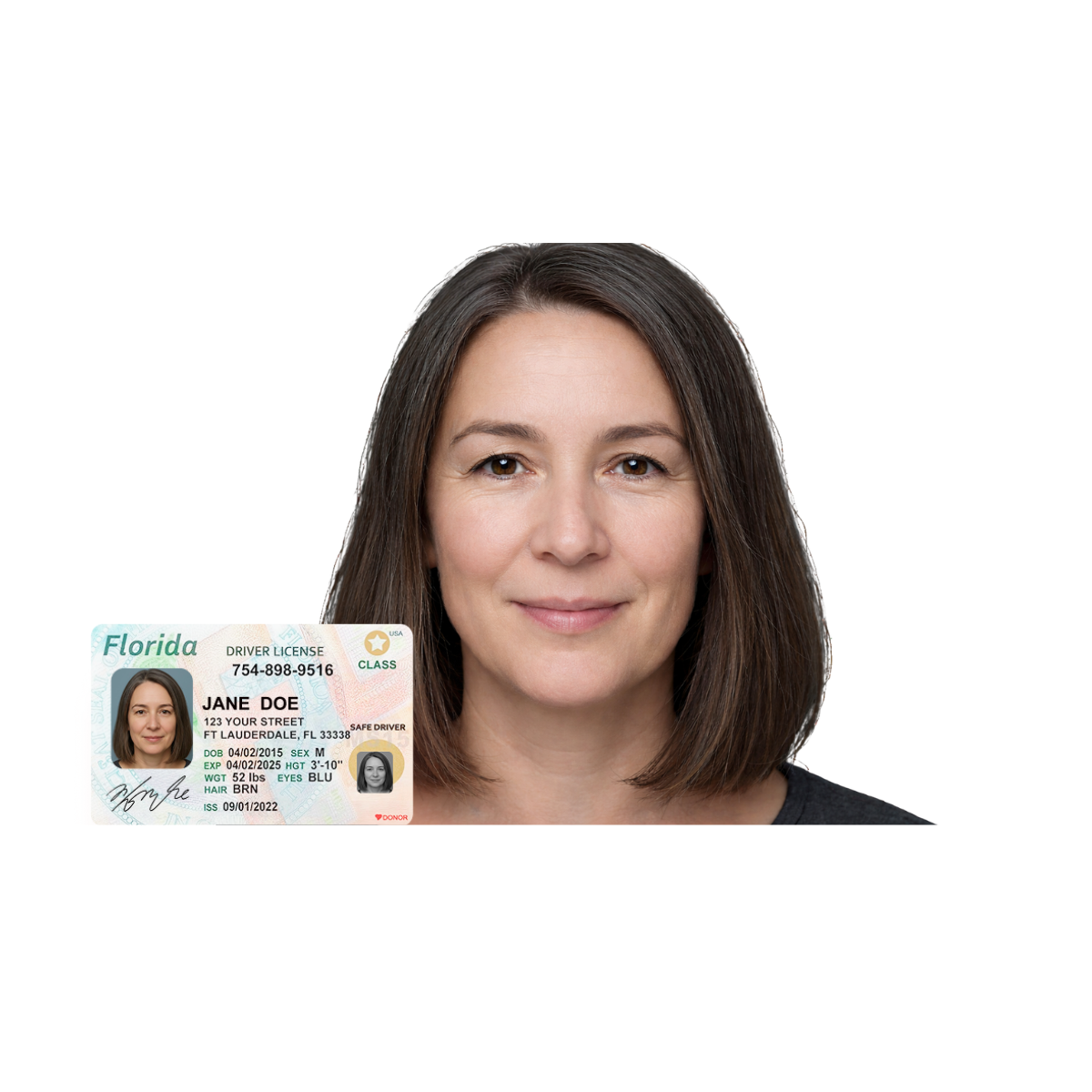
Instead of managing age-verification intake through email chains and disconnected PDFs, CAMs and boards gain a structured process layer that supports documentation consistency and operational control at scale.
See how TenantEvaluation standardizes 55+ age verification for Florida communities.
Accepted Documents and Initial Intake Workflow
That structured process begins with clear document standards. Under HOPA, codified at 24 CFR Part 100 Subpart E, communities must verify resident ages using reliable documentation. Florida associations should establish a written intake checklist that specifies which documents are accepted and in what format.
A standardized intake process follows these steps:
- Applicant receives the community’s age-verification requirements in writing at the time of application.
- Applicant submits at least one qualifying proof-of-age document for each adult household member aged 55 or older.
- CAM confirms the document is legible, unexpired where applicable, and matches the applicant’s name on file.
- Document is logged with a timestamp and stored in the community’s age-verification record.
- Any missing or illegible documents trigger a structured follow-up request, not an ad hoc email.
Affidavit Requirements and Practical Sample Language
Communities need records that clearly demonstrate compliance with HOPA. Affidavits provide a supplemental layer of documentation when primary ID documents are unavailable or when the community’s governing documents require a signed attestation.
A compliant age-verification affidavit should include the following elements:
- Full legal name of the qualifying resident(s)
- Unit address and community name
- Date of birth of the qualifying resident(s)
- A statement affirming that the information provided is accurate to the best of the signer’s knowledge
- Signature of the qualifying resident or an adult household member over 18
- Date of signature
- Space for the CAM or board representative to note the document reviewed alongside the affidavit
Sample affidavit language: “I, [Full Name], residing at [Unit Address], [Community Name], [City], Florida, hereby certify that I was born on [Date of Birth] and that I am 55 years of age or older. I understand this certification is provided in connection with the community’s age-verification requirements under applicable federal and state housing regulations. I affirm that the information above is true and accurate to the best of my knowledge. Signature: _______________ Date: _______________.”
Handling Younger Spouses, Caregivers, and Other Edge Cases
Under HOPA, 55+ communities must maintain at least 80% of occupied units with one resident age 55 or older, and the remaining 20% may accommodate limited under-55 residents only if the community’s own governing documents permit it. Several edge cases require clear procedural guidance.
- Younger spouses or partners: The minimum age for a younger spouse is set by the individual community’s CC&Rs rather than federal law. The CAM should collect the governing document provision that permits the arrangement, the qualifying resident’s proof of age, and the younger spouse’s government-issued ID.
- Live-in caregivers: A live-in caregiver under age 55 may reside in a 55+ community as a reasonable accommodation under fair housing laws when a resident with a disability requires substantial assistance, subject to documentation of the need and the caregiver’s active role. Documentation should include a written description of the care relationship and the caregiver’s identification.
- Inheritance and adult children: Age restrictions in 55+ communities apply to occupants, not owners, so an adult child may purchase a home for a qualifying parent. When a unit transfers through inheritance, the board should review whether the new occupant qualifies under the community’s governing documents before approving residency.
- Surviving spouses: Federal law provides no guarantee that an under-55 surviving spouse may remain in the home after the qualifying resident’s death, and continued occupancy depends on the community’s own CC&Rs.
Because edge cases carry the same compliance risk as standard applications and often face closer scrutiny during audits, each one should be documented with the same rigor. The governing document provision should be cited, supporting documentation retained in the unit’s file, and the rationale for approval clearly noted.
Biennial Survey Cadence and Record-Keeping Best Practices
Under federal HOPA guidelines (24 CFR § 100.307), a 55+ community must be able to produce reliable surveys and affidavits verifying 80% occupancy by persons 55+ when responding to a complaint, but no specific survey frequency is required. The survey functions as a recurring operational cycle that requires advance planning, not a one-time event.
Record-keeping best practices for the survey cycle include:
- Maintaining a unit-level log that tracks the qualifying resident’s name, date of birth, proof-of-age document type, and the date the document was collected.
- Flagging units where the qualifying resident has changed due to sale, inheritance, or death, and initiating a new verification intake for those units.
- Pairing occupancy surveys with ongoing record updates so that changes in occupancy are captured as they occur rather than only during formal survey periods.
- Storing all age-verification records in a format that is searchable, retrievable, and available for inspection if a Fair Housing complaint is filed.
- Scheduling the next survey cycle before the current one expires to avoid a gap in documentation coverage.
Workflow Steps from Application through Ongoing Audit
A repeatable age-verification workflow for Florida 55+ communities follows a defined sequence.
- Application intake: Applicant submits the age-restricted application with required proof-of-age documents.
- Document collection: CAM confirms receipt of at least one qualifying document per qualifying household member and logs the document type and date received.
- Identity confirmation: Document is reviewed for legibility, validity, and name match against the application.
- Affidavit collection (if required): Signed affidavit is collected and stored alongside the primary proof-of-age document.
- Board review: Application and supporting documentation are presented to the board for review and vote.
- Approval and record filing: Approved application is filed with all age-verification documents in the unit’s permanent record.
- Ongoing audit: Unit-level records are updated at each occupancy change and reviewed in full during the biennial survey cycle.
Manual vs. Centralized Digital Process Comparison
| Process Area | Manual (Email/PDF) | Centralized Digital Platform | Operational Impact |
|---|---|---|---|
| Document intake | Received via email, stored in folders or printed | Collected digitally within the application workflow | Reduces follow-up requests and misplaced documents |
| Record consistency | Varies by CAM, no enforced format | Standardized fields and document types across all applications | Improves documentation uniformity across units |
| Board review | Documents emailed to board members individually | Board-ready dashboard with application summary and voting workflow | Reduces email chains and accelerates board decisions |
| Biennial survey tracking | Managed in spreadsheets, manually updated | Unit-level tracking with real-time status visibility | Reduces gaps in survey coverage and manual errors |
Frequently Asked Questions
Can an adult child live permanently in a 55+ community with a qualifying parent?
Whether an adult child may reside permanently in a 55+ community depends on the community’s governing documents, not federal HOPA minimums alone. Federal law sets the 80% minimum, but the community’s CC&Rs control whether the remaining 20% can include under-55 permanent residents and at what minimum age. Many communities set a minimum age for any permanent resident who is not the qualifying 55+ occupant, commonly 18 or 19, and distinguish permanent residency from temporary guest stays. CAMs should review the governing documents and document the applicable provision in the unit’s file before approving an adult child as a permanent resident.
What happens to a younger surviving spouse after the qualifying 55+ resident passes away?
Federal HOPA law does not automatically protect a younger surviving spouse’s right to remain in the community after the qualifying resident’s death. The right to continued occupancy is determined entirely by the community’s CC&Rs and the available under-55 compliance buffer. Some communities include provisions that allow a surviving spouse to remain if the community’s 80% threshold is still met. Others require the unit to be sold or transferred. Boards should consult their governing documents and legal counsel when this situation arises, and CAMs should document the outcome and any supporting provisions in the unit’s record.
How should a CAM document a live-in caregiver who is under age 55?
A live-in caregiver under age 55 may qualify as a reasonable accommodation under fair housing laws when a resident with a disability requires substantial assistance. Documentation should include a written description of the care relationship, the caregiver’s government-issued identification, and any supporting documentation that establishes the nature and necessity of the care arrangement. The caregiver’s right to remain in the unit typically ends when the care relationship concludes. CAMs should retain all caregiver documentation in the unit’s file alongside the qualifying resident’s age-verification records and note the governing document provision or board resolution that authorized the arrangement.
What records must a 55+ community maintain to defend against a Fair Housing complaint?
A 55+ community must be able to produce a current occupancy survey demonstrating that at least 80% of occupied units have one resident aged 55 or older, along with the underlying age-verification documents, such as government-issued photo IDs, birth certificates, passports, or signed certifications, for each qualifying resident. Records must be updated at each occupancy change and formally surveyed at least once every two years. Communities should also maintain written policies stating their intent to operate as housing for older persons. A community that cannot produce a current survey has no procedural defense if a rejected applicant files a familial status discrimination complaint.
How does TenantEvaluation’s 55+ Communities Verification support Florida CAMs operationally?
TenantEvaluation’s 55+ Communities Verification replaces email-based intake with a structured workflow that guides CAMs through document collection, board review, and record-keeping, all within one platform. This operational shift reduces the manual coordination that typically consumes CAM time and creates documentation gaps. CAMs gain a repeatable process that supports consistent application handling while preserving legal guidance and board decision-making authority.
Conclusion: Turning Compliance Rules into Daily Practice
For Florida CAMs and HOA boards managing 55+ communities, a standardized age-verification workflow delivers concrete operational value. Teams see fewer follow-up emails, more consistent documentation across units, faster board reviews, and records that stand up when challenged. Under Florida Statute 760.29(4) and the parallel federal HOPA framework at 42 U.S.C. 3607(b), a qualified 55+ community must satisfy the 80% occupancy rule, maintain published policies demonstrating intent to serve older residents, and verify age occupancy through reliable surveys and affidavits. Meeting those requirements consistently depends on a process that is repeatable by design, not dependent on individual CAM habits or institutional memory.
TenantEvaluation’s 55+ Communities Verification provides Florida Condos and HOAs with the structured workflow layer that makes consistent, auditable age verification achievable at scale. Built specifically for Community Association Managers and boards, it turns the seven-step workflow outlined above into a guided digital process that ensures no application skips a verification step and no document goes unfiled.
