Written by: Luis Teran, Co-founder, CEO, TenantEvaluation | Last updated: August 6, 2026
Key Takeaways
- Florida HOA boards and CAMs often use rental-focused software that does not match association governance, compliance, or onboarding workflows.
- Rental-centric tools usually miss HOA essentials such as reserve accounting, architectural review queues, violation tracking with cure periods, board voting dashboards, and association-specific FCRA-compliant screening.
- TenantEvaluation uses a pay-per-application revenue-sharing model with no upfront platform fees, so many associations treat it as cost-neutral or revenue-generating.
- Most HOA platforms fall short on resident screening because they lack biometric identity verification, 55+ verification, FCRA-first adverse action automation, and a dedicated board voting interface that TenantEvaluation includes.
- Associations that want compliant, efficient onboarding can use TenantEvaluation to replace manual processes with automated, audit-ready workflows.
Why HOA-Specific Software Works Better Than Rental Platforms
HOA management software focuses on association governance such as assessment billing, reserve fund accounting, architectural review queues, violation tracking with cure periods, board voting workflows, and resident onboarding that aligns with Florida Statutes Chapter 718 and Chapter 720. Rental-centric platforms focus on lease origination, rent collection, and maintenance ticketing. These workflows look similar at first but differ in accounting depth, compliance requirements, and the level of board transparency that Florida communities expect.
The friction points are concrete. Rental platforms typically lack:
- Fund-level reserve accounting with board-approved budget line items
- Architectural review request queues with configurable approval timelines
- Violation workflows that track cure periods, fines, and hearing notices
- Board voting dashboards with timestamped, auditable decision records
- Resident screening integrated with FCRA-compliant adverse action workflows designed for associations rather than landlords
- Age-restricted community verification for 55+ properties
Florida’s 2026 regulatory environment adds urgency. Associations must maintain audit-ready records, protect sensitive applicant data under FCRA, and document age-restricted eligibility consistently. Platforms that ignore these requirements push CAMs into manual workarounds that increase liability exposure and inflate operating costs.
2026 HOA Platform Pricing: How Cost Models Compare
TenantEvaluation uses a pay-per-application, revenue-sharing model with no upfront platform fees. Application fees collected from residents fund the service, and a portion returns to the association or management company, which often makes the platform cost-neutral or revenue-generating. This structure differs from every subscription-based competitor in this comparison.
Pricing structures across the seven platforms in this guide fall into three categories:
- Pay-per-application with revenue sharing: TenantEvaluation uses no monthly subscription. Associations collect application fees and receive a rebate on the remainder after TenantEvaluation’s service fee is deducted.
- Per-unit or per-door monthly subscriptions: AppFolio charges on a per-unit monthly basis with minimums that can make small self-managed communities pay disproportionately. Vantaca charges on a per-door monthly subscription basis, with per-door costs decreasing as portfolio size grows (quote-based).
- Flat monthly, tiered, or perpetual license plans: Buildium charges flat monthly subscription fees based on tiered plans (Essential at $62/month, Growth at $192/month, Premium at $400/month), plus optional transaction fees. HOA Express offers lower-cost flat monthly plans. Condo Control offers tiered flat monthly subscription plans based on community size in unit ranges. TOPS Pro is sold as a perpetual license with annual maintenance fees, while the separate TOPS ONE product uses per-unit subscription pricing.
For self-managed communities that process fewer than 100 applications per year, TenantEvaluation’s model removes fixed software costs entirely. For large management companies processing about 100,000 applications per year, which reflects TenantEvaluation’s current scale, the revenue-sharing structure turns onboarding into a compliant income stream instead of a pure operating expense.
How AppFolio and Buildium Handle HOA Workflows
TenantEvaluation does not replace a full property management suite. It serves as the compliance-first resident onboarding and screening layer that AppFolio and Buildium do not provide. That distinction shapes where each platform creates friction for association workflows.
TenantEvaluation delivers a board-ready approval process through QuickApprove. Board members use a dedicated voting dashboard with real-time application tracking, AI-generated applicant summaries, and timestamped decision records. This setup replaces email chains and spreadsheets with a connected, auditable approval workflow inside one platform.

AppFolio offers broad property management features such as maintenance, accounting, and a resident portal, yet its screening integration targets rental landlords. Board package workflows, association-specific adverse action documentation, and 55+ verification do not exist as native capabilities. CAMs who use AppFolio for HOA communities usually manage screening through a separate vendor, which creates a fragmented record trail.
Buildium includes HOA accounting features and a resident portal and often appears closer to association management software than AppFolio. However, Buildium’s screening module lacks biometric identity verification, FCRA-first adverse action automation, and a dedicated board voting interface. Violation and architectural review workflows also require significant manual configuration.
Florida CAMs who need a platform that covers the full onboarding lifecycle, including application intake, biometric ID verification through IDVerify, board voting, lease tracking, and connected payments, will not find that layer natively in AppFolio or Buildium.

Schedule a demo today to see how TenantEvaluation fills the onboarding gap that AppFolio and Buildium leave open.
Budget-Friendly AppFolio Alternatives for Self-Managed HOAs
Self-managed communities with limited budgets can choose from several low-cost tools, yet each option introduces trade-offs that increase manual workload and compliance risk over time.
- HOA Express and Condo Control provide entry-tier plans with basic document storage, announcement tools, and payment portals. They do not include integrated resident screening, FCRA compliance infrastructure, or board voting dashboards.
- TurboTenant offers free landlord tools for rental screening but does not support association governance, 55+ verification, or HOA accounting.
- TenantEvaluation charges no upfront platform fee for associations. Because the revenue-sharing model funds the service through application fees, self-managed communities gain a full-featured, FCRA-compliant onboarding platform without a subscription cost, which creates a structural advantage over free or low-cost tools that still require manual screening workarounds.
The hidden cost of free tools is administrative labor. Manual document review, paper-based ID verification, and email-based board approvals consume staff hours that TenantEvaluation’s automated workflows remove. One Florida-based management company reported $240,000 in annual savings and 50 hours of daily staff time recovered after switching.
Where HOA Platforms Miss the Mark on Screening and Onboarding
Resident screening remains the largest gap in rental-centric and generic HOA platforms. Many tools include a basic background check module attached to a property management suite. FCRA compliance, biometric fraud prevention, age-restricted verification, lease lifecycle tracking, and connected payment collection require purpose-built infrastructure that generic platforms do not include.
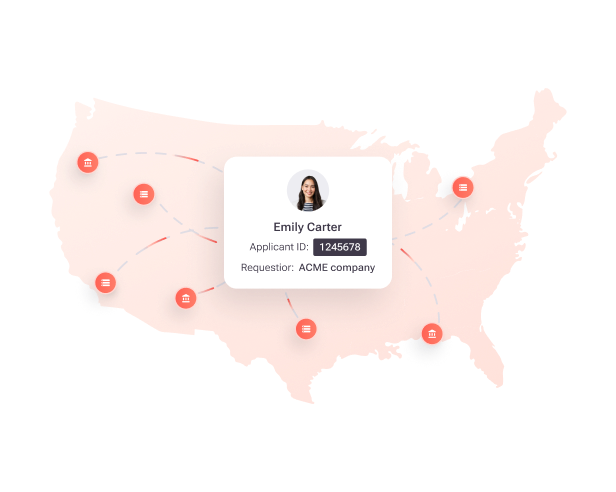
TenantEvaluation closes these gaps with dedicated capabilities:
- QuickApprove accelerates resident approvals with real-time application tracking, automated communication support, customized approval letters, a personalized welcome package, and a board-ready approval process built for CAMs, boards, and property management teams without sacrificing control, compliance, or visibility.
- IDVerify embeds biometric identity verification, including government ID validation, AI-powered liveness detection, and facial biometric matching, directly inside the screening workflow. Communities move from document-based review to biometric-confirmed identity verification.
- 55+ Communities Verification reduces manual work, standardizes application handling, supports documentation consistency, and improves operational efficiency for Florida condos and HOAs that manage age-restricted requirements.
- Lease Tracking provides centralized, real-time lease visibility and lifecycle control. It connects resident onboarding, unit data, approvals, and lease documentation inside one platform, with real-time lease status, automated lease document collection during onboarding, unit-level tracking, and audit-ready digital lease records.
- TEpayments by Zinc supports a connected payment workflow inside TenantEvaluation that collects application fees and deposits during resident onboarding. Payments go directly to the association’s designated account, and TenantEvaluation never holds the funds.
AppFolio, Buildium, Vantaca, and similar platforms do not offer biometric screening, 55+ documentation workflows, or a board voting dashboard as native, integrated capabilities. Associations that use those platforms rely on separate vendors, spreadsheets, or manual processes, which introduces audit gaps and compliance risk.
2026 Feature Comparison: How 7 HOA Platforms Stack Up
The table below highlights a clear pattern. TenantEvaluation treats resident screening and onboarding as a complete, integrated workflow instead of a bolt-on module. The comparison focuses on screening integration depth, board voting infrastructure, Florida-specific compliance features, and pricing model. Pricing reflects 2026 published models, and feature assessments reflect native platform capabilities without third-party add-ons.
| Platform | Screening & Onboarding Integration | Board Package / Voting Dashboard | Florida 55+ Support & FCRA Posture | 2026 Pricing Model |
|---|---|---|---|---|
| TenantEvaluation | Full A–Z onboarding: biometric IDVerify+, QuickApprove, Lease Tracking, TEpayments by Zinc, FCRA-first adverse action, direct TransUnion/Equifax reseller | Dedicated board voting dashboard with AI-generated summaries, real-time tracking, timestamped decisions | Native 55+ Communities Verification; FCRA compliance as foundation; automated adverse action workflows; PCI Level 1 | Pay-per-application; revenue-sharing; no upfront platform fee |
| AppFolio | Rental-centric screening module, no biometric verification, no HOA-specific adverse action automation | No dedicated board voting dashboard, board packages require manual assembly | No native 55+ verification, FCRA posture designed for landlords, not associations | Per-unit monthly subscription, minimums apply |
| Buildium | Background check module available, no biometric ID verification, screening not HOA-specific | No dedicated board voting interface, violation workflows require manual configuration | No native 55+ support, FCRA compliance not association-specific | Flat monthly tiered plans (Essential $62/mo, Growth $192/mo, Premium $400/mo plus optional transaction fees) |
| Vantaca | Association management focus, screening not a core capability, relies on third-party integrations | Board portal available, voting workflows present but not screening-connected | No native 55+ verification, compliance posture not FCRA-first | Per-door monthly subscription (quote-based, costs decrease as portfolio expands) |
| TOPS Pro | Accounting-focused, screening requires third-party vendor, no integrated onboarding workflow | Board reporting tools available, no integrated voting dashboard tied to screening | No native 55+ support, FCRA not a stated foundation | Perpetual license with annual maintenance fees (separate TOPS ONE uses per-unit subscription) |
| HOA Express | No integrated screening, document storage only, manual onboarding required | Basic announcement and document tools, no voting dashboard | No 55+ or FCRA infrastructure | Flat monthly plans, free tier available with feature limits |
| Condo Control | No integrated screening, amenity booking and communication focus, manual onboarding | Board portal for document sharing, no screening-connected voting workflow | No 55+ or FCRA infrastructure | Tiered flat monthly plans based on unit ranges |
Quick Self-Assessment for Your Community
The checklist below helps you see which platform category fits your community’s current situation.
- Your team spends more than five hours per week chasing application documents, payment confirmations, or board approvals by email. In that case, your community is a strong candidate for an automated onboarding platform such as TenantEvaluation.
- Your association has received a complaint, audit finding, or legal inquiry related to screening decisions, adverse action notices, or applicant data handling in the past two years. FCRA-first infrastructure then becomes a priority rather than a simple feature upgrade.
- Your community includes age-restricted units or operates as a 55+ property under Florida law. Manual eligibility documentation creates inconsistency risk that 55+ Communities Verification is built to address.
- Your lease records sit across folders, inboxes, and spreadsheets with no centralized visibility into active, pending, or expired leases. Centralized, real-time lease visibility and lifecycle control then represent a clear gap with direct compliance implications.
- Your community is self-managed with a board that reviews and votes on applications. A platform with no upfront fee and a dedicated board voting dashboard, rather than a per-unit subscription, usually aligns better with your cost structure and governance model.
Three or more “yes” answers indicate that rental-centric or generic HOA platforms are creating measurable operational and compliance risk for your community.
Schedule a demo today and walk through your community’s specific workflow with a TenantEvaluation specialist.
Decision Framework for Evaluating AppFolio Alternatives
Florida CAMs and boards can use six connected criteria before committing to a new system. Together these criteria reveal whether a platform will reduce or increase operational and compliance risk.
- Compliance readiness forms the foundation. Confirm whether the platform operates as a direct credit bureau reseller with FCRA-first adverse action automation or bolts compliance onto a rental-focused core. Associations carry liability for screening decisions, so the platform’s compliance architecture directly affects that exposure.
- Operational efficiency builds on that foundation. Measure reductions in manual follow-ups, document chase cycles, and approval bottlenecks. Platforms that automate document collection, ID verification, and board communication remove the labor cost that manual processes create.
- Transparency ensures that boards can see what is happening. Board members need real-time visibility into application status, voting records, and payment flows. Platforms that route approvals through email chains or require manual board package assembly reduce transparency and slow decisions.
- Scalability determines how the platform handles growth. A system that manages 100 applications per year should also manage 10,000 without adding headcount. Evaluate whether the automation layer scales with volume or forces proportional staff increases.
- Auditability protects the association during reviews and disputes. Every screening decision, board vote, payment transaction, and lease status change should create a timestamped, searchable digital record. Audit-ready records reduce legal exposure and simplify regulatory responses.
- Risk controls address fraud and data protection. Biometric identity verification, automated redaction of PII, PCI Level 1 payment infrastructure, and configurable 55+ documentation workflows act as core risk controls rather than premium add-ons. Assess whether a platform treats them as foundational or optional.
Frequently Asked Questions
What makes TenantEvaluation different from AppFolio for HOA communities?
AppFolio operates as a full property management suite built mainly for rental portfolios. TenantEvaluation focuses on resident screening and onboarding for community associations and management companies, with FCRA compliance as the foundation. Key differences include a dedicated board voting dashboard, biometric identity verification through IDVerify+, native 55+ Communities Verification for age-restricted Florida properties, centralized Lease Tracking from application to occupancy, and a pay-per-application revenue-sharing model with no upfront platform fee. AppFolio does not provide these capabilities natively for HOA workflows.
Can a self-managed HOA use TenantEvaluation without a professional management company?
Yes. TenantEvaluation serves both self-managed communities and professionally managed portfolios. The platform’s revenue-sharing model, described in the pricing section above, fits self-managed boards because it removes the need to justify a recurring subscription cost. Board members access a dedicated review and voting dashboard directly, without a CAM intermediary, and the QuickApprove workflow supports high-volume seasons and complex onboarding requirements even for small teams.
How does resident screening in TenantEvaluation differ from what Buildium offers?
Buildium includes a background check module, yet it does not center HOA-specific FCRA workflows, biometric fraud prevention, or association governance requirements. TenantEvaluation acts as a direct reseller of TransUnion and Equifax data, not a third-party aggregator, so data access follows strict bureau rules with regular compliance audits. IDVerify+ adds biometric identity verification inside the same workflow, combining government ID validation, AI-powered liveness detection, and facial biometric matching. Buildium does not offer a comparable biometric layer or a board voting dashboard connected to screening outcomes.
What does TEpayments by Zinc do that standard HOA payment portals do not?
Most HOA payment portals handle recurring assessment collection as a separate function. TEpayments by Zinc operates as a connected payment workflow inside TenantEvaluation that collects application fees, deposits, and other required resident payments within the onboarding process. Each association defines what to collect and at which stage, and the capability adapts to the property’s process instead of forcing a universal sequence. Payments move directly from the applicant to the association’s designated account, and TenantEvaluation never holds the funds. This approach removes manual payment chasing, spreadsheet tracking, and applicant confusion about what to pay and when.
Is TenantEvaluation suitable for Florida 55+ communities specifically?
TenantEvaluation includes 55+ Communities Verification, a built-in capability that helps Florida condos and HOAs standardize how age-restricted requirements are handled across applications. It reduces manual work, standardizes application handling, supports documentation consistency, and improves operational efficiency for communities that manage age-restricted requirements. The capability is built for Community Association Managers and designed for Florida condos and HOAs, not adapted from a generic rental screening tool. It supports documentation and consistency while not replacing legal guidance.

Conclusion: Selecting the Right HOA Onboarding Layer
Top-ranked property management platforms for rentals were not built for Florida association governance. AppFolio and Buildium serve rental portfolios effectively but create friction for CAMs and boards that manage HOA accounting depth, violation workflows, board voting, age-restricted verification, and FCRA-compliant resident onboarding.
The evaluation criteria that matter for Florida communities in 2026, including compliance readiness, operational efficiency, transparency, scalability, auditability, and risk controls, point toward a platform built specifically for community associations with FCRA compliance as the core. TenantEvaluation has processed over 100,000 applications annually across more than 5,000 communities, operates as a direct TransUnion and Equifax reseller, and delivers the integrated onboarding infrastructure described above that rental-centric platforms do not provide natively.
Schedule a demo today to evaluate whether TenantEvaluation is the right onboarding layer for your community or portfolio.
