Written by: Luis Teran, Co-founder, CEO, TenantEvaluation
Key Takeaways for Florida Snowbird Approvals
- Manual HOA snowbird approval workflows in Florida create backlogs, compliance gaps, and fraud exposure that delay seasonal move-ins.
- A 7-step digital checklist with property code distribution, online application, biometric IDVerify, FCRA screening, QuickApprove board routing, automated letters, and Lease Tracking can cut approval time by up to 70%.
- Florida statutes cap fees and set reasonable timelines. TenantEvaluation’s connected platform turns application fees into a compliant revenue stream while meeting those requirements.
- Biometric identity verification, real-time lease visibility, and automated adverse-action notices protect associations from FCRA liability and identity fraud common in seasonal markets.
- Eliminate bottlenecks and maintain full board oversight with TenantEvaluation. Schedule a demo today.
7-Step HOA Snowbird Tenant Approval Checklist for Florida CAMs
This checklist gives Florida CAMs and boards a clear sequence for processing seasonal rental applications. Each step reduces bottlenecks, supports FCRA compliance, and creates an audit-ready record for every application.
- Distribute the community property code. The owner or listing agent gives the applicant the association’s unique property code to start the digital application inside TenantEvaluation. This step removes paper intake and ensures every application enters a single tracked workflow.
- Collect the completed digital application and fees. The applicant submits personal, financial, and contact details through the 100% online platform, and the system collects application fees automatically at submission. Because incomplete applications cause most processing delays, TenantEvaluation’s intelligent form logic validates all required fields and rejects incomplete submissions before they reach the CAM’s queue.
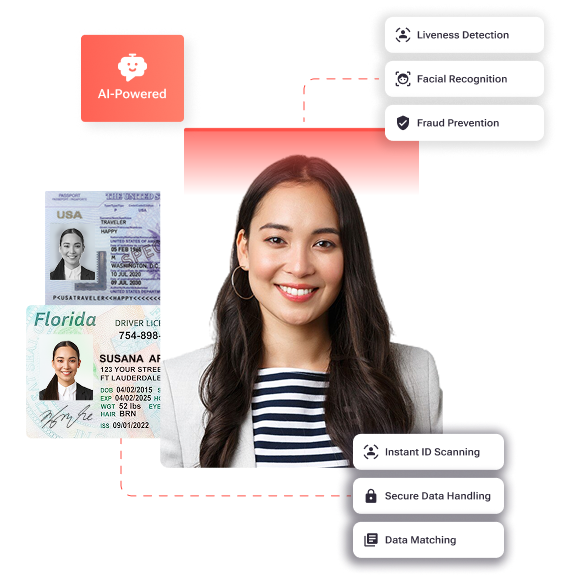
- Run biometric identity verification with IDVerify. Before screening begins, the applicant completes a guided biometric verification step that includes government-issued ID upload, AI-powered liveness detection, and selfie-to-ID biometric comparison. This process moves communities from document-only review to verified physical identity confirmation and reduces exposure to stolen IDs, synthetic identities, and impersonation attempts that are increasingly common in seasonal rental markets.
- Order FCRA-compliant background and credit screening. TenantEvaluation runs a comprehensive screening report that includes criminal background, credit, eviction history, income verification, and reference checks. The platform sources data directly from TransUnion and Equifax as a legitimate bureau reseller, and it embeds permissible purpose controls and automated adverse action workflows into the process.
- Route the application to the board with QuickApprove. The board-ready approval dashboard gives board members direct, real-time access to application status, AI-generated applicant summaries, and a voting panel. QuickApprove accelerates resident approvals inside one connected platform with real-time application tracking, automated communication support, and fewer manual follow-ups, while preserving board oversight and compliance review.
- Issue the approval decision and customized approval letter. After the board votes, QuickApprove generates a customized approval letter and personalized welcome package automatically. Denied applications trigger FCRA-compliant adverse action notices without extra manual steps, so every decision stays documented and defensible.
- Record the executed lease in Lease Tracking. The final step connects the approved application to a centralized lease record inside TenantEvaluation’s Lease Tracking system. Lease documentation is collected automatically during onboarding, unit-level occupancy status updates in real time, and the record remains searchable and audit-ready from application to occupancy.
See this 7-step workflow running live in a demo and watch how each step connects inside one platform.
How Long HOA Approval Takes in Florida
Understanding the legal timeline requirements helps CAMs apply the checklist above without missing statutory expectations. Under Florida Statute §720.306 for HOAs and Florida Statute §718.112 for condominiums, associations may establish tenant approval requirements through their governing documents, including application fees and processing timelines. Florida law caps condominium transfer fees, including tenant application fees, at $150 per applicant (subject to possible CPI adjustment) under FS 718.112, and associations must act within the timeframe in their governing documents or within a reasonable period.
In practice, manual approval workflows in Florida communities typically take 7 to 21 days during peak snowbird season because of incomplete submissions, board scheduling conflicts, and disconnected document storage. TenantEvaluation’s QuickApprove can reduce that cycle by up to 70%, and teams report up to 50 hours of administrative time saved daily. The platform’s revenue-sharing model means application fees collected through TenantEvaluation generate a rebate back to the association after the service fee is deducted, which turns a cost center into a compliant income stream with no upfront platform fees.

How Florida HOAs Restrict Short-Term Rentals
Florida HOAs and condo associations can restrict short-term rentals through their governing documents, including declarations, bylaws, and rules and regulations. Under §720.306(1)(h), amendments to HOA governing documents enacted after July 1, 2021 that prohibit or regulate rentals apply only to parcel owners acquiring title after the effective date or who consent, with limited exceptions such as restrictions on rentals shorter than six months. For condominiums, §718.110 governs amendments that restrict unit owner rights to lease their units.
CAMs should confirm that any short-term rental restriction appears in the recorded governing documents before enforcing it against a snowbird applicant. Restrictions that exist only in board resolutions, rather than the declaration or bylaws, carry enforcement risk. TenantEvaluation’s custom setup configures each community’s specific governing document requirements into the platform, so application intake automatically reflects the association’s current rental restrictions.
Guest vs. Tenant Rules in Florida Snowbird Communities
The guest versus tenant distinction drives who must complete the approval process in many Florida snowbird communities. A guest is generally a person who occupies a unit with the owner present or with the owner’s permission for a limited, non-compensated period. A tenant is a person who occupies a unit under a lease agreement, with or without the owner present, in exchange for rent.
Florida associations that ignore this distinction risk allowing long-term occupants to avoid the tenant approval process entirely. Governing documents typically define the maximum duration of a guest stay, often 30 to 60 days, after which the occupant must be registered as a tenant and submit a formal application. CAMs can reduce this risk by auditing unit occupancy records at the start of each snowbird season to identify units where guest stays exceed the governing document threshold. TenantEvaluation’s Lease Tracking provides real-time lease status visibility, including active, pending, expired, or missing, so CAMs and boards see a centralized operational picture of occupancy across the community.
Minimum Lease Duration Rules in Florida HOAs
Florida law allows associations to set minimum lease duration requirements through their governing documents. Many Florida HOAs and condo associations choose minimums of 30, 60, or 90 days to discourage short-term rental activity that conflicts with community character. Under §718.110(13), a condominium amendment that restricts lease duration applies only to unit owners who consent to the amendment and unit owners who acquire title after the amendment’s effective date.
For snowbird communities, a 30-day minimum is the most common threshold and aligns with the typical November-through-April seasonal rental pattern. CAMs must verify that every executed lease submitted with a snowbird application meets the community’s minimum duration requirement before routing the application to the board. The same intelligent validation described in Step 2 also checks lease duration requirements, preventing non-compliant applications from advancing in the workflow.
Common Snowbird Approval Bottlenecks in Florida Communities
Four recurring bottlenecks cause most snowbird approval delays in Florida communities.
- Incomplete submissions. Applicants often submit applications without executed leases, valid IDs, or required supporting documents. TenantEvaluation’s smart form logic automatically checks for executed leases, valid IDs via IDVerify, and required documents, then rejects incomplete submissions before they consume staff time.
- Missing or unverified lease records. Leases submitted via email frequently sit in inboxes instead of connecting to the application record. Lease Tracking automates lease document collection during onboarding and links every lease to its corresponding unit and occupancy record inside one platform, which removes spreadsheets, missing leases, and operational guesswork.
- Board voting delays. Boards that rely on email chains for application review lack a structured voting mechanism and have limited visibility into pending applications. QuickApprove‘s board-ready approval process gives board members a dedicated voting panel with AI-generated applicant summaries and reduces the back-and-forth that stalls decisions during peak season.
- Identity fraud risk. Seasonal rental markets attract impersonation attempts and synthetic identity fraud. IDVerify addresses this risk by introducing biometric identity verification directly inside the TenantEvaluation workflow. The system first validates the government-issued ID, then uses AI-powered liveness detection to confirm a real person is present, and finally performs facial biometric comparison to match the live person to the ID photo before any screening authorization occurs. This layered approach reinforces FCRA-aligned workflows and creates audit defensibility against fraud claims.
See how TenantEvaluation eliminates these four bottlenecks in a live demo of the connected platform.
Approval Timeline and Fees: Platform Comparison
This comparison table shows how TenantEvaluation stacks up against generic background screening tools and broader property management software on four key dimensions for snowbird approval workflows. All metrics reflect platform capabilities as documented by each provider category.
| Capability | TenantEvaluation | Generic Screening Tools (e.g., ApplyCheck, Verify Screening Solutions) | Broader Property Management Software (e.g., AppFolio, Buildium) |
|---|---|---|---|
| Application processing time | 5–10 minutes per application, approval cycle reduced up to 70% | Days to weeks, manual follow-up required for document gaps | Days to weeks, dependent on manual manager intervention |
| Board visibility | Dedicated board voting dashboard with real-time application status and AI-generated summaries via QuickApprove | No board-specific dashboard, results delivered via email or PDF | Limited board access, approval workflows not purpose-built for HOA and condo boards |
| Fraud prevention | Biometric identity verification with liveness detection and selfie-to-ID comparison via IDVerify | Document upload review only, no biometric or liveness validation | Standard ID upload, no biometric verification layer |
| Lease tracking | Centralized, real-time lease visibility with automated document collection, unit-level tracking, and audit-ready records | Not included, lease management handled outside the screening platform | Lease storage available but not connected to the screening and approval workflow |
Frequently Asked Questions About Florida Snowbird Approvals
What is a snowbird tenant approval in a Florida HOA or condo?
A snowbird tenant approval is the formal process a Florida HOA or condominium association uses to review, screen, and approve a seasonal tenant, typically someone renting a unit for the winter months from November through April. The process includes application intake, identity verification, background and credit screening, board review and voting, and lease record retention. Florida associations may require this approval process through their governing documents, and specific requirements, including fees, timelines, and documentation, vary by community.
How long does HOA tenant approval take in Florida?
The timeline depends on the association’s governing documents and the efficiency of its approval workflow. Florida statutes require associations to act within the timeframe specified in their governing documents or within a reasonable period, as described in the timeline section above. Communities using manual processes commonly see 7 to 21 day approval windows during peak snowbird season. Communities using TenantEvaluation’s connected platform report significantly faster cycles, with administrative time savings of up to 50 hours per day across the management team.
Who is responsible for submitting the tenant application, the owner or the tenant?
In most Florida HOA and condo communities, the unit owner is responsible for making sure the tenant submits a completed application to the association before occupancy begins. The owner typically provides the tenant with the association’s application requirements and property code. The tenant then completes the application directly, including identity verification, document uploads, and fee payment. CAMs should confirm whether the governing documents require the owner, the tenant, or both to submit documentation, because requirements differ by community.
Can a Florida HOA deny a snowbird tenant application?
Florida HOAs and condo associations may deny tenant applications when the applicant does not meet the criteria in the governing documents, such as minimum credit score requirements, background check standards, or income thresholds. Denials must follow FCRA requirements, including an adverse action notice when a consumer report contributed to the decision. TenantEvaluation’s platform includes automated adverse action workflows to support this requirement and maintains built-in audit trails for every application decision.
What is the difference between a guest and a tenant in a Florida HOA?
A guest is a person who occupies a unit temporarily with the owner’s permission, usually without a lease agreement and for a period defined in the governing documents, often 30 to 60 days. A tenant is a person who occupies a unit under a formal lease agreement, with or without the owner present, in exchange for rent. Florida associations that do not enforce this distinction risk allowing long-term occupants to bypass the tenant approval process. CAMs can reduce that risk by reviewing governing document definitions at the start of each snowbird season and using real-time lease visibility tools to confirm occupancy status across all units before the peak rental period begins.
Conclusion: Modernizing Florida Snowbird Approvals
Peak-season snowbird application backlogs create a predictable operational strain, but a structured workflow can solve it. Manual email chains, disconnected spreadsheets, and document-based identity review create delays, compliance gaps, and fraud exposure that compound every winter. Florida CAMs and HOA boards need a process that stays fast, statute-aligned, and board-ready while preserving control, compliance, and lease visibility.
TenantEvaluation is built specifically for community associations and management companies, with FCRA compliance as the foundation rather than an afterthought. QuickApprove accelerates resident approvals inside one connected platform. IDVerify replaces document-only review with biometric-backed identity confirmation. Lease Tracking delivers centralized, real-time lease visibility and lifecycle control from application to occupancy, fully connected and audit-ready for the volume Florida communities face every season. TenantEvaluation is the definitive platform for Florida HOA snowbird tenant approvals.
Transform your snowbird approval workflow before next season by booking a demo and seeing the platform in action.
