
Key takeaways
- Florida HOAs in 2026 need structured digital record-keeping to meet website access rules, retention schedules, and audit expectations.
- Automated screening workflows tailored to Florida law reduce errors, keep forms current with statute changes, and support consistent decisions.
- Strong security, including redaction, encryption, and detailed audit trails, protects sensitive data and supports board transparency.
- Modern platforms improve applicant experience with online, multilingual tools while giving boards analytics for better planning and budgeting.
- Tenant Evaluation offers automated screening, documentation, and compliance tools for HOAs and condos; get started with Tenant Evaluation here.
1. Prioritize secure digital record-keeping for all official documents
Digital records now sit at the center of HOA compliance in Florida. HOAs with 100 or more parcels, and condos with 25 or more units, must offer digital access to official records through a website or app.
Screening applications, background checks, leases, and approval letters should live in a structured digital system, not in email inboxes or file cabinets. Clear rules for file naming, version control, and user permissions keep information organized and easy to find during an audit or dispute.
Florida Statutes Chapter 720 requires retention of official records, including current rules and meeting minutes. A digital system makes it practical to meet these obligations without overloading staff.
- Store all screening records in one secure platform.
- Use standardized labels for applications, approvals, and correspondence.
- Set permission levels so board, management, and vendors see only what they need.
2. Implement automated screening workflows tailored to Florida-specific regulations
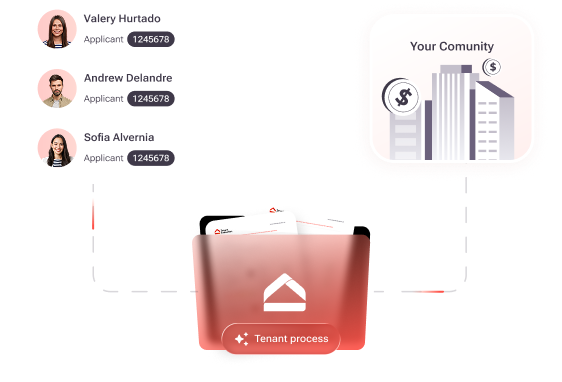
Automation helps HOAs follow the same compliant process for every applicant. Workflows that reflect Florida-specific rules reduce missed steps and inconsistent treatment across communities.
Smart online applications can adjust questions based on applicant type, such as buyer, tenant, or additional occupant, so each person submits the right information with fewer back-and-forth emails.
Statutory shifts reinforce the need for flexible workflows. HB 913 extended SIRS deadlines from December 31, 2024, to December 31, 2025. Systems that update once in the platform are safer than manual processes that depend on retraining and new paper forms.
Well-designed workflows should:
- Guide staff and applicants through each required step.
- Lock in criteria that match governing documents and Florida law.
- Time-stamp every decision for later review.
Schedule a demo to see automated HOA screening workflows tailored to Florida requirements.
3. Enhance data security and privacy with automatic redaction and encryption
Screening files contain Social Security numbers, bank details, and other highly sensitive data. Manual handling increases the risk of breach, loss, or improper sharing.
Modern systems protect HOAs by redacting sensitive fields in stored documents and by encrypting data both in transit and at rest. Payment handling should meet PCI Level 1 standards to reduce exposure around application fees. Florida rules also require long retention periods for inspection reports and general records, so security needs to hold up over many years.

Industry data in 2024 placed the average cost of a data breach above $4.45 million. For an HOA, even a smaller incident involving unredacted applications can trigger legal action, regulatory scrutiny, and loss of owner trust.
- Use redaction tools for Social Security numbers and bank data.
- Encrypt all stored and transmitted information.
- Limit access by role and log every system access event.
4. Maintain comprehensive audit trails and clear board transparency
Boards in 2026 face higher expectations for openness. Enhanced board education requirements emphasize transparency and recordkeeping, so screening decisions must be traceable.
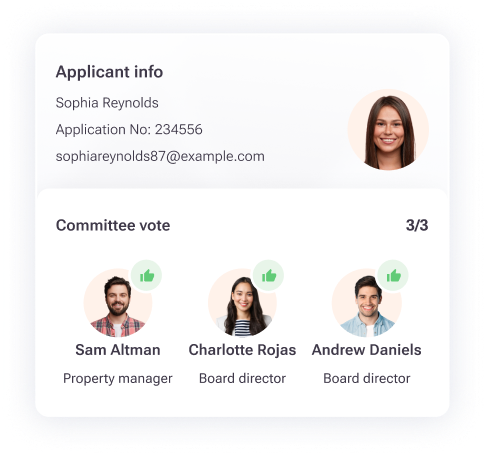
Every action in the screening process should create a record. That includes document submissions, background check results, questions from applicants, and each vote or approval step by the board.
HB 913 expanded what owners can inspect by adding bank statements and ledgers to official records, as detailed in recent summaries of the law. When systems automatically track who did what and when, boards can answer questions quickly and demonstrate consistent handling of applications.
- Provide board members with a real-time dashboard of applications.
- Capture votes and comments in the same system as the application.
- Export reports easily for audits, owner requests, or legal review.
5. Use analytics for community insights and strategic planning
Screening data can guide more than approvals. Trends in applicants and residents support better planning for rules, amenities, and reserves.
Reporting tools can show patterns such as age ranges, household sizes, pet ownership rates, and vehicle types. Insights on electric vehicle adoption, for example, can help boards plan charging infrastructure and parking policies.
Boards that use data instead of anecdotes usually respond faster to community needs and set policies that match how residents actually live.
- Run regular reports on approval times and incomplete applications.
- Track demographics and lifestyle trends that affect amenities.
- Review patterns in denials to verify fair, consistent criteria.
6. Streamline applicant experience and communication with multilingual support
A clear, online process reduces staff workload and improves first impressions for future residents. Complex or paper-heavy applications often lead to missing information and delays.
Effective systems let applicants apply from any device, upload documents, pay fees, and see status updates in real time. Automated reminders for missing items cut down on phone calls and emails.
Multilingual tools matter in diverse markets such as South Florida. Systems with translated interfaces or 24/7 AI chat in multiple languages help applicants understand requirements and submit complete, accurate information on the first try.
Communities that simplify applications often see higher completion rates and faster approvals, which supports occupancy and cash flow.
7. Improve revenue and cost efficiency with integrated solutions
Screening platforms can lower expenses while supporting new or more reliable revenue streams. Automation reduces clerical work, and integrated fee collection helps associations capture all application-related income.
Systems that collect fees online and reconcile them automatically remove the need for manual check processing and separate tracking spreadsheets. Some providers offer revenue-sharing models where service fees are deducted and the balance is passed to the association, creating low- or no-cost programs.
Many Florida management companies report double-digit reductions in processing time after adopting automated screening. Savings in staff hours can then shift toward owner service, project management, and compliance oversight.
|
Feature |
Manual process |
Automated system |
Impact |
|
Document collection |
Paper forms and email attachments |
Online applications, digital uploads, e-signatures |
Faster intake and fewer lost items |
|
Data security |
File cabinets and unsecured email |
Redaction, encryption, structured access |
Lower breach and disclosure risk |
|
Compliance tracking |
Spreadsheets and checklists |
Workflows with built-in rules |
Consistent, documented decisions |
|
Board transparency |
Scattered emails and ad hoc reports |
Shared dashboards and exports |
Faster, clearer oversight |
See how an integrated screening and documentation platform can support your HOA’s financial goals.
Frequently asked questions
What new Florida laws in 2026 affect HOA screening and record-keeping?
Current operations in 2026 reflect laws that took effect in 2024 and 2025. HOAs with 100 or more parcels, and condos with 25 or more units, must provide digital access to official records through a website or app. Structural inspection reports must remain on file for at least 15 years, and most other records for at least 7 years. Board education rules stress transparency and proper handling of records, which makes structured digital systems essential.
How does proper documentation reduce financial risk for an HOA?
Accurate, complete documentation lowers the chance of compliance violations, fair housing claims, and disputes with owners or residents. Clear audit trails show that the association applies screening rules consistently, which helps in complaints or litigation. Digital systems also cut administrative time, reduce the risk of lost checks or records, and support cleaner financial reporting.
Can automated systems support different screening rules across communities?
Modern platforms usually support community-level settings. Managers can configure different income standards, credit score thresholds, and documentation requirements for each association. Workflows then apply the right rules based on the community and applicant type, such as tenant or purchaser, so each application follows the correct path while staying consistent with Florida law.
What security measures are most important for HOA screening documentation in 2026?
Key protections include end-to-end encryption, automatic redaction of sensitive data, PCI-compliant payment processing, and role-based access controls. Systems should log every login and change, apply multi-factor authentication, and follow clear backup and retention rules. These steps help HOAs protect resident data and demonstrate responsible handling of information during audits or incidents.
How can HOAs measure ROI on automated screening and documentation tools?
Boards can track average processing time per application, staff hours devoted to screening tasks, error rates, and the number of missing or incomplete submissions. Other useful metrics include fee collection rates, legal and compliance costs, and owner or resident satisfaction scores. Many communities see substantial time savings and lower error rates within the first year of adopting automation.
Conclusion: Strengthen HOA screening compliance documentation in 2026
Florida associations in 2026 face stricter rules, longer retention periods, and greater expectations for transparency. Strong digital screening documentation helps boards meet these demands while protecting residents and the community’s financial health.
HOAs that focus on secure digital records, automated workflows, strong security, clear audit trails, analytics, and applicant-friendly processes will be better prepared for future regulatory changes. These strategies also support smoother operations and more confident decision-making by boards and managers.