Written by: Luis Teran, Co-founder, CEO, TenantEvaluation | Last updated: September 16, 2026
Key Takeaways For HOA Screening Compliance
- HOA resident onboarding compliance follows six sequential stages: intake, permissible purpose, screening, board review, adverse action, and record retention.
- Each stage must be completed and documented before the next begins. Missing a step breaks the audit trail and increases FCRA and fair housing risk.
- Direct TransUnion and Equifax reseller relationships, paired with biometric identity verification, document permissible purpose before any screening order.
- Automated adverse action workflows, timestamped board voting records, and seven-year retention support both FCRA requirements and Florida’s stricter standards.
- TenantEvaluation supplies the compliance architecture that enforces every stage of the onboarding lifecycle for community associations and management companies—see how the six stages connect.
Six Stages Of Compliant HOA Resident Onboarding
Compliant HOA resident onboarding moves through six sequential stages:
- Application intake
- Permissible purpose
- Screening
- Board review
- Adverse action
- Record retention
Each stage gates the next. Skipping one breaks the audit trail and exposes the association, and sometimes the individual manager, to FCRA liability, fair housing complaints, and Florida regulatory action.
1. Application Intake
Intake is the compliant collection of applicant data and documents, with consent captured before any report is ordered. A complete intake package includes digital document collection, e-signatures, and automatic redaction of sensitive PII such as Social Security numbers and banking details. This keeps sensitive data out of email chains and paper files.
TenantEvaluation enforces intake in two ways. Smart application form logic rejects incomplete submissions before they enter the review queue, so staff are not chasing missing documents later. Automatic PII redaction, PCI Level 1 compliance, and end-to-end encryption then keep the sensitive data that does arrive inside a secure, timestamped file from the moment of submission.
2. Permissible Purpose
Permissible purpose is the FCRA-required legal basis, such as evaluating an applicant for a housing decision, documented when the screening order is placed. 15 U.S.C. §1681b allows a consumer report only for a recognized permissible purpose, and that purpose must be documented before the order, not reconstructed later.
The difference between a direct bureau reseller and a third-party data scraper drives compliance here. Using skip-tracing or gray-market data sources for tenant screening is the most commonly litigated FCRA violation in this category because those sources are not registered consumer reporting agencies. TenantEvaluation is a legitimate reseller of TransUnion and Equifax data and accesses bureau data under strict bureau rules with regular compliance reviews and audits and no gray-market or offshore data sources. IDVerify+ confirms applicant identity before screening authorization, which reinforces permissible-purpose validation and audit defensibility before any report is ordered.
3. Screening
Screening is the ordering and receipt of consumer reports such as credit, criminal, eviction, and income under the documented permissible purpose. The FCRA applies to any report furnished by a consumer reporting agency for use in a housing decision, including criminal background checks, eviction history searches, rental history traces, and employment verification reports, not just credit reports.
TenantEvaluation’s SafeCheck+ delivers nationwide and global background checks. IncomeEV verifies income by contacting employers directly instead of relying only on self-reported data. Credit and eviction history flow through the same direct bureau relationships that govern permissible purpose. The association makes the decision, and TenantEvaluation supplies the data, which keeps the file defensible under 15 U.S.C. §1681b.
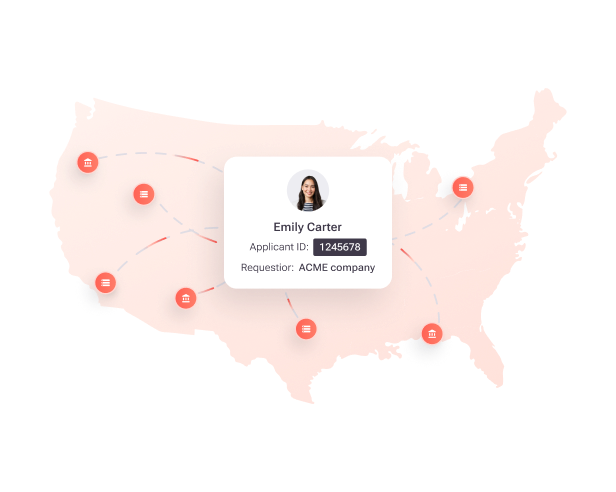
See how permissible purpose is enforced before every screening order inside one connected platform.
4. Board Review
Board review is the governance stage where the association, not the vendor, makes the approval decision and documents that decision. Under Florida Statute §718.111(1)(b), each board member’s vote or abstention must appear in the minutes. Florida law therefore requires a timestamped voting record, and the platform records every vote automatically.
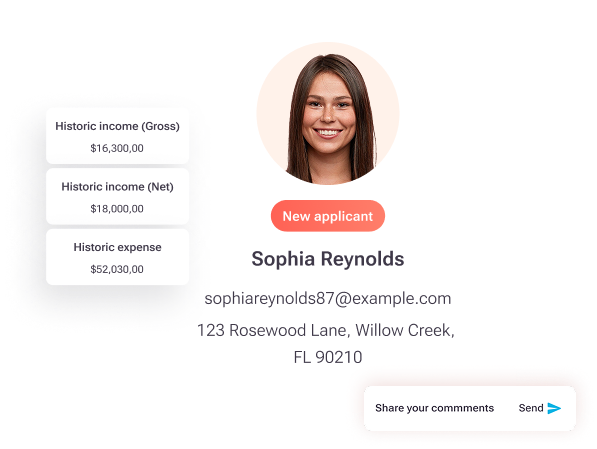
QuickApprove is TenantEvaluation’s accelerated approval workflow for CAMs, boards, and property management teams inside one connected platform. It gives board members a voting dashboard with summarized applicant reports, so they can decide without seeing raw sensitive data. Real-time tracking shows where each application sits, and automated communication, customized approval letters, and a welcome package handle the applicant-facing steps once a vote is recorded. Every vote is timestamped inside the platform to preserve the audit trail.
5. Adverse Action
Adverse action is the FCRA-required two-step notification sequence when an application is denied based on information in a consumer report. 15 U.S.C. §1681m governs this process.
First, the applicant receives a pre-adverse notice with a copy of the report and the FTC Summary of Rights, along with a dispute window. Standard practice is to wait at least 5 business days after sending the pre-adverse notice before finalizing the denial, which gives the applicant time to contact the consumer reporting agency about errors. If the decision stands, the final adverse notice names the consumer reporting agency as the source of the report and states that the CRA did not make the decision. The final adverse notice must also include specific reasons for the adverse action, not a generic statement like “failed background check.”
TenantEvaluation automates this sequence. Adverse action workflows follow FCRA timing, keep the association as decision-maker of record, and maintain audit trails for every application. Failure to send adverse action notices is one of the most common violations that result in FCRA lawsuits against landlords and associations, so automation reduces a major source of risk.
6. Record Retention
Retention is the obligation to preserve the application, signed consent, screening report, decision record, and any adverse action notice for as long as regulators or plaintiffs can reach them. A complete retention file includes all five elements.
Florida’s official-records obligations run longer than the FCRA floor. Florida Statute §718.111(12)(b) requires condominium associations to retain most official records for at least 7 years. Florida Statute §720.303(5)(a) sets the same 7-year floor for HOA official records. TenantEvaluation maintains built-in audit trails for every application, searchable digital history, and exportable approval history, so communities can meet the stricter Florida standard instead of the FCRA minimum.
How FCRA Rules Map To The Six Screening Stages
The six stages above mirror how the FCRA structures its obligations. The statute creates deadlines that line up with each gate in the workflow.
The FCRA’s obligations are sequential, not parallel. Permissible purpose must be documented before the screening order is placed. The pre-adverse notice must go out before the final denial is communicated. The final adverse notice must name the consumer reporting agency as the source of the report and state that the CRA did not make the decision. The final adverse notice must also include specific reasons for the adverse action, not a generic statement like “failed background check.”
Direct bureau reseller relationships with TransUnion and Equifax keep data access inside bureau rules. Third-party scraping puts the association outside those rules because scraped data sources are not registered consumer reporting agencies and cannot support a valid permissible-purpose chain.
The FCRA obligation applies whether the decision-maker is a volunteer board or a management company. The statute attaches to whoever orders the report and uses it to make a housing decision, regardless of license status.
Board Approval Inside A Compliant Screening Workflow
The association is the FCRA “user” that makes the decision, and TenantEvaluation provides the data that supports it. That separation keeps the file defensible. For significant votes, best practice adds individual roll call votes by name, a brief summary of the discussion, any dissenting opinions, and any conditions or contingencies attached to the approval.
QuickApprove delivers a board-ready approval process with automated communication support, customized approval letters, and a personalized welcome package while preserving board oversight and compliance review. Timestamped voting records inside the platform create the audit trail that a regulator or plaintiff would need to reconstruct the decision. A 2023 Community Associations Institute benchmark study found that 28% of HOA litigation stemmed directly from record-keeping disputes, which shows why timestamped, unalterable board records function as a compliance control.
Explore QuickApprove’s voting dashboard and lifecycle connection to see how board decisions stay documented.
Who Owns Screening Compliance In Self-Managed HOAs And CAM Communities?
The association always owns the decision and the liability, while the CAM executes the operational workflow.
In self-managed communities, the board is the FCRA user of record, and no licensed professional sits in the loop. The board carries the FCRA and fair housing exposure directly, including the obligation to document permissible purpose, sequence adverse action correctly, and retain records to the Florida statutory standard. If the HOA orders a consumer report, it must have a permissible purpose under the FCRA and the applicant’s written authorization on a clear disclosure, regardless of whether a licensed manager participates.
In CAM-run communities, the manager runs the workflow, but the board retains governance responsibility for the approval framework and policies. Board decisions, policy choices, and association-level financial decisions remain the board’s responsibility. A platform must support both governance models without assuming a licensed manager is present.
55+ Community Verification Requirements For Florida HOAs
Florida’s 55+ framework mirrors the federal standard under Fair Housing Act §3607(b)(2)(C). At least 80% of occupied units must include at least one occupant age 55 or older, the community must publish and follow policies showing intent to operate as 55+ housing, and it must maintain age-verification procedures. Florida no longer requires 55+ communities to register with the state commission, so practical compliance focuses on the community’s own policy and age-verification procedure.
TenantEvaluation’s 55+ Communities Verification serves Florida condos and HOAs and is designed for Community Association Managers. It reduces manual work, standardizes application handling, supports documentation consistency, improves operational efficiency, and strengthens internal processes, creating a more structured process for age-restricted communities while leaving legal guidance to counsel.
Records HOAs Must Retain For Screening Audit Trails
A complete FCRA retention file includes five elements: the application, the signed standalone consent, the screening report, the decision record, and any adverse action notice sent. The consent form must be standalone, not embedded in the lease or buried in paragraph text, and must be signed and dated before any report is ordered.
An auditor’s reconstruction test asks who was screened, when, against what criteria, what was returned, and how any match was resolved, all in a dated, unalterable record. A dated, tamper-evident record carries far more evidentiary weight than a spreadsheet cell or a screenshot with no verifiable origin, so platforms that preserve this level of detail strengthen the association’s position.
As noted in the retention stage above, Florida’s 7-year floor under Fla. Stat. §718.111(12) and Fla. Stat. §720.303(5) supersedes the FCRA minimum for these records. TenantEvaluation’s built-in audit trails, searchable digital history, and exportable approval history are designed to meet that standard.
Identity Verification As A Compliance Layer
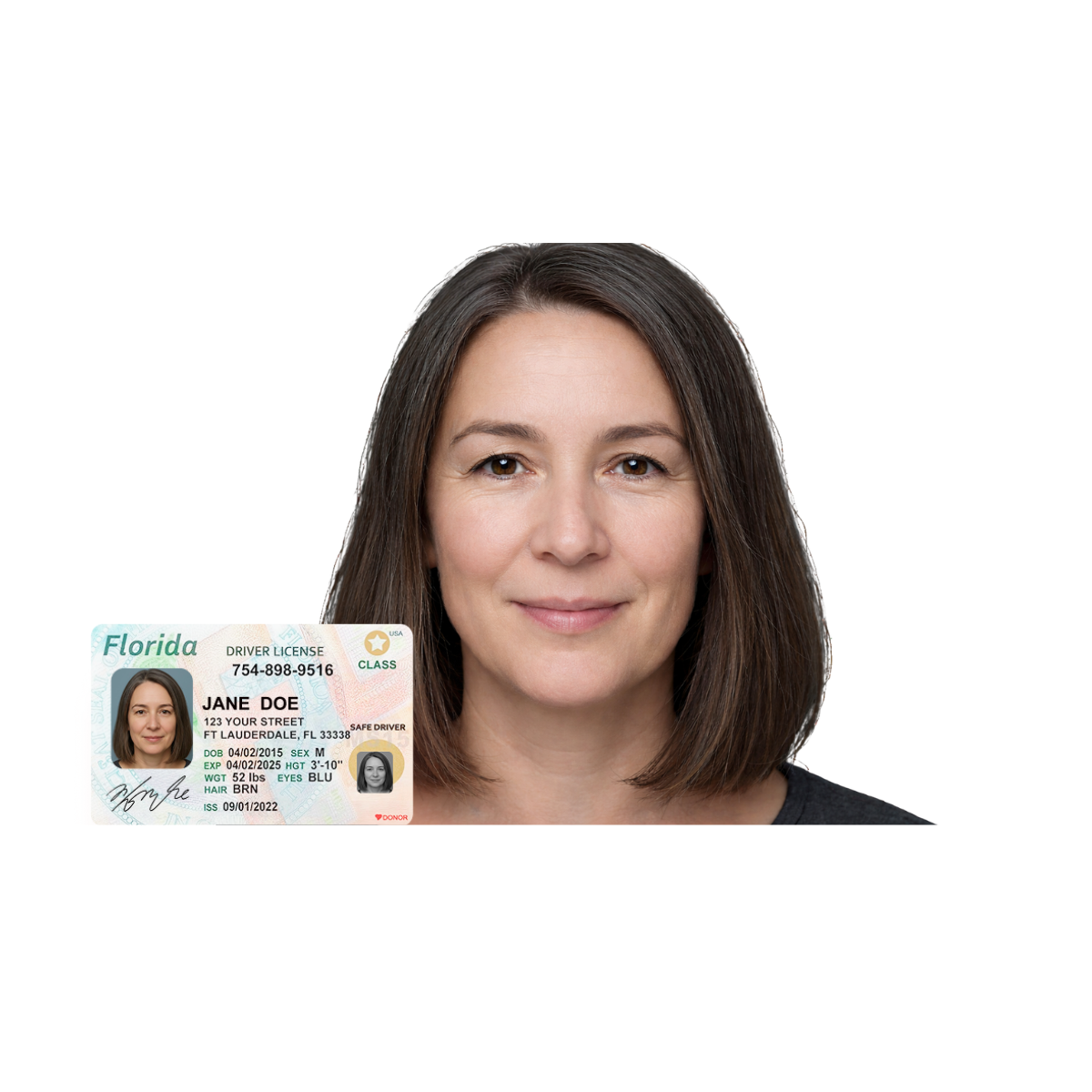
IDVerify+ is TenantEvaluation’s biometric identity verification layer embedded directly into the screening workflow. Identity confirmation occurs before screening authorization, which reinforces FCRA-aligned workflows and audit defensibility before a consumer report is ordered. IDVerify+ uses government ID validation, AI-powered liveness detection, and biometric facial matching to confirm that the applicant is the person they claim to be.
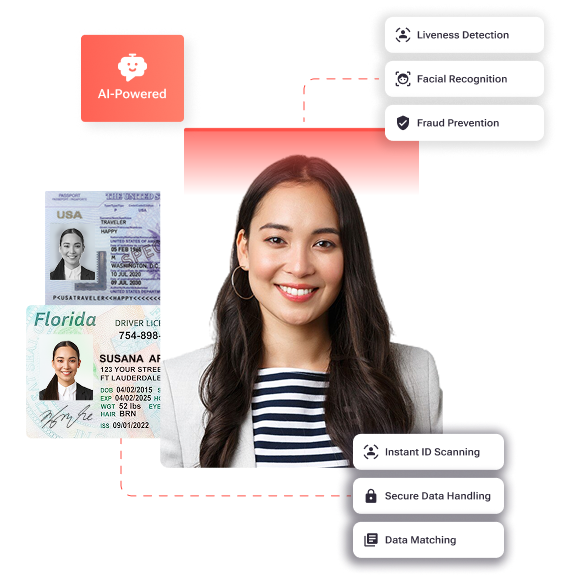
This capability functions as compliance infrastructure. Permissible purpose requires that the association know who it is screening. Biometric confirmation strengthens that foundation by moving communities from document-based review, which cannot reliably prevent impersonation or synthetic identity fraud, to verified physical identity confirmation before the screening order is placed.
How To Compare HOA Onboarding And Screening Compliance Platforms
Compliance architecture is the right evaluation frame for HOA screening software. The table below highlights how four attributes that carry FCRA risk—permissible purpose controls, screening data source, identity verification, and adverse action handling—differ across platform categories.
| Compliance Attribute | TenantEvaluation | Standalone Screening Platforms (e.g., ApplyCheck, Verify Screening Solutions) | General CAM Platforms (e.g., AppFolio, RealPage, Buildium, Vantaca) |
|---|---|---|---|
| Permissible Purpose Controls | Strict permissible-purpose controls, direct TransUnion and Equifax reseller relationships, IDVerify+ confirms identity before screening authorization | Background checks via TazWorks platform, permissible-purpose documentation varies by implementation, no native biometric identity confirmation before screening | Screening features present, but compliance controls for community associations are limited and often configured manually |
| Screening Data Source | Direct TransUnion and Equifax reseller, no gray-market or offshore data sources, regular compliance reviews and audits | TazWorks platform background checks, bureau reseller relationships vary, focus on background checks rather than full onboarding compliance | Third-party screening integrations, bureau relationships and compliance controls differ by vendor and integration |
| Identity Verification | Native biometric verification via IDVerify+ with government ID validation, AI liveness detection, and biometric facial matching inside the platform | Document upload only, no native biometric verification layer reported | Document upload or third-party integration, biometric verification rarely included as a standard feature |
| Adverse Action Handling | Automated adverse action workflows sequenced to FCRA requirements, association remains decision-maker of record, built-in audit trails for every application | Adverse action support varies, manual notice generation common, audit trail completeness depends on implementation | No automated adverse action sequencing, notices typically generated manually for community association screening decisions |
TenantEvaluation is built for community associations and management companies rather than generic rentals. It covers A–Z onboarding from application intake through final decision and record retention, serving 5,000+ communities and processing about 100,000 applications per year. One Florida-based management company cut processing time in half after switching, which freed 50 hours of staff time per day and saved $240,000 annually. The platform carries a 4.8/5 Google rating and has generated $150M for communities.
Core capabilities include QuickApprove, IDVerify+, 55+ Communities Verification, Lease Tracking, and TEpayments by Zinc. These tools operate inside one connected platform, delivering up to 70% time savings and as much as 50 hours of staff time recovered per day.
Frequently Asked Questions About HOA Screening Compliance
Is HOA Resident Onboarding And Screening Compliance Software Necessary For Self-Managed Communities?
The FCRA obligation attaches to whoever orders the consumer report and makes the housing decision. In a self-managed community, that party is the board. There is no licensed manager to absorb operational compliance responsibility, so the board is the FCRA user of record, carries the adverse action obligation, and must retain the complete screening file to the Florida statutory standard. A platform that enforces each stage of the onboarding lifecycle gives a volunteer board a practical way to meet federal and state obligations without a compliance professional in the loop.
What Is Permissible Purpose Under The FCRA?
Permissible purpose is a legally recognized reason to obtain a consumer report under 15 U.S.C. §1681b. For HOA and condo association screening, the permissible purpose is evaluating an applicant for a housing decision. That purpose must be documented when the screening order is placed, not reconstructed later. The consent form must be standalone, signed, and dated before any report is ordered. Using a consumer report without documented permissible purpose violates the FCRA even if the association ultimately approves the applicant.
How Long Should An HOA Retain Screening Records?
The FCRA sets no fixed retention period for landlords and associations. Many landlord-tenant attorneys recommend at least three years to cover the FCRA statute of limitations in most jurisdictions. As noted earlier, Florida’s official-records obligations require at least seven years for most official records, which sets the practical floor for Florida condominium and HOA associations. A complete retention file includes the application, signed standalone consent, screening report, decision record, and any adverse action notice sent.
Does Biometric Identity Verification Replace Document Review?
Biometric identity verification strengthens permissible-purpose validation by confirming the applicant’s physical identity before screening authorization. It operates alongside document review rather than replacing it. IDVerify+ adds government ID validation, AI-powered liveness detection, and biometric facial matching as a layer on top of document collection, so communities move from document-based review alone to biometric-confirmed identity verification inside the same onboarding workflow.
How Does 55+ Verification Work For Florida HOAs?
TenantEvaluation’s 55+ Communities Verification standardizes how age-restricted requirements are handled across applications for Florida condos and HOAs. It reduces manual work, standardizes application handling, and supports documentation consistency, which creates a more structured and scalable process for Community Association Managers and boards managing age-restricted communities. It functions as a workflow and documentation tool that supports internal compliance processes while legal guidance remains with counsel.
Conclusion: Compliance Lives In The Workflow
The six stages of compliant HOA resident onboarding work together as a single workflow. Intake, permissible purpose, screening, board review, adverse action, and retention each add a layer of documentation and timing that keeps the association inside FCRA, fair housing, and Florida requirements.
TenantEvaluation is built for community associations and management companies with FCRA compliance as the foundation. Direct TransUnion and Equifax reseller relationships, automated adverse action workflows, timestamped board voting records, biometric identity verification, and audit-ready retention form the platform’s core architecture.
See how TenantEvaluation enforces compliance at every onboarding stage and supports both boards and management companies.
