Written by: Luis Teran, Co-founder, CEO, TenantEvaluation
What Florida CAMs and Boards Can Expect in Peak Season
- Florida HOA and ARC applications submitted during summer peak season typically take 30 to 60 days to reach a decision, with longer waits when volume spikes or packets arrive incomplete.
- ARC packets need detailed site plans, dimensions, product brands, and color specifications, while lease approvals require executed agreements, IDs, and background authorizations, and missing items restart the intake clock.
- Board meeting cadence directly shapes approval speed, because applications that arrive after a meeting may wait 28 to 89 days for the next scheduled vote, especially when board members travel during summer.
- Incomplete packets cause the biggest delays and add 1 to 2 weeks before review begins, so complete submissions 6 to 8 weeks before target dates provide the most reliable path to on-time decisions.
- TenantEvaluation streamlines peak-season approvals with digital workflows that flag incomplete packets at intake and provide board-ready dashboards, see how the platform manages peak-season volume.
Florida HOA Timelines in Normal vs Peak Season
Florida Statutes §720.3035 requires HOAs to issue a written ARC decision within 45 days of receiving a complete application. Newer master-planned communities most commonly use a 30-day window, 1990s–2000s communities typically allow 45 days, and older communities with quarterly ARC meetings often operate on a 60-day cycle.
Lease and rental approval timelines usually follow a similar 30-to-45-day range under most Florida HOA governing documents. During summer, both tracks feel pressure from the same forces, because spring and early summer bring a flood of HOA and ARC applications, stretching real timelines beyond the written 30-day window due to seasonal backlogs. When board members are traveling and management staff are handling elevated volume at the same time, even a technically compliant 30-day window can functionally become a 45-to-60-day wait.
These delays affect both architectural review and lease approval processes, and each follows a distinct document path and decision workflow.
How ARC and Lease Approvals Differ in Peak Season
Architectural review and lease approval follow different document requirements and decision paths, and each reacts differently to peak-season pressure.
ARC packets typically require site plans drawn to scale, height and width dimensions, specific product brands and color names, and a description of every material change. Spectrum Association Management notes that anything not listed in an approved request is not permitted, so vague submissions generate automatic kick-backs. ARC decisions often require a committee quorum, which ties approval speed directly to member availability.
Lease approval packets require an executed lease agreement, government-issued IDs for all adult occupants, background authorization forms, and any community-specific addenda. Missing any single item restarts the intake clock. During summer, both tracks compete for the same management staff bandwidth, which compresses response capacity across the board and magnifies the impact of incomplete packets.

How Board Meeting Cadence Slows or Speeds Decisions
Board meeting frequency sets the outer boundary for how quickly many applications can move. Most Florida HOA boards meet monthly, and some meet quarterly, and this difference directly determines how long applications wait for a vote.
An application that arrives the day after a monthly board meeting may wait 28 days before the next scheduled vote, regardless of how complete the packet is. A packet submitted right after a quarterly meeting may wait 89 days. Summer compounds these calendar-driven delays, because board members take vacations, quorum requirements become harder to meet, and emergency meetings carry their own notice and procedural requirements under Chapter 720.
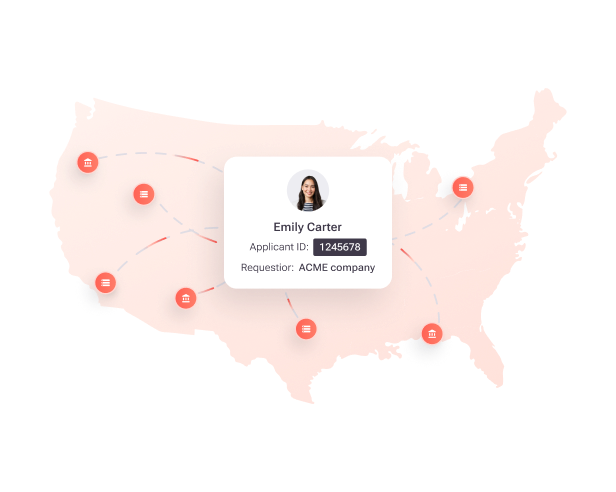
Communities that route all approvals through full board votes, instead of delegating ARC decisions to a standing committee, face the longest delays. Digital workflows that give board members asynchronous review and voting capability address this structural bottleneck while preserving required oversight.
See how the board dashboard keeps decisions moving even when members cannot meet in person.
Why Incomplete Packets Create the Longest Delays
Many home improvement requests submitted to HOAs are postponed or denied because essential information is missing from the application packet. The most frequently absent items include:
- To-scale plat maps showing project location
- Height, width, and depth dimensions of proposed structures
- Specific product brands and exact paint shade names or codes
- Executed lease agreements for rental applications
- Government-issued IDs for all adult occupants
- Signed background check authorization forms
- Community-specific addenda or disclosure forms
If an HOA or ARC application packet is partial, applicants may lose one to two weeks before review starts because management companies first log the submission and request missing items. That 1-to-2-week restart penalty, multiplied across dozens of summer applications, is the single largest controllable source of delay in peak-season operations.
Florida Deemed-Approved Clauses and Operational Risk
Any automatic approval of an ARC request upon non-response is governed by the community’s own CC&Rs or other published guidelines, not by Florida Statute §720.3035.
Homeowners and applicants need clean proof that the review clock started. Submissions via certified mail with return receipt or through the HOA’s official portal with timestamped confirmation, rather than email, create the proof of delivery needed to start the review clock cleanly. CAMs and boards face direct operational risk from this clause, because a missed deadline on a complete, properly delivered packet results in automatic approval regardless of the board’s position on the request.
Digital submission platforms that timestamp every packet at intake remove ambiguity about when the statutory clock began and support consistent enforcement.
Peak-Season Submission Calendar and Complete-Packet Checklists
A 6-to-8-week advance submission window covers the full statutory review period and the 1-to-2-week restart risk from incomplete packets. The calendar below maps backward from a target project or move-in date.
| Weeks Before Target Date | Action |
|---|---|
| 8 weeks out | Confirm governing document review window (30/45/60 days) and next board meeting date |
| 7 weeks out | Assemble complete packet using checklist below and obtain all signatures |
| 6 weeks out | Submit via certified mail or timestamped digital portal and retain proof of delivery |
| 4–5 weeks out | Follow up if no written acknowledgment arrives within 5 business days of submission |
| 2–3 weeks out | Confirm board meeting agenda inclusion and prepare for conditional approval requests |
| 1 week out | Confirm written approval received and retain a copy for records |
ARC Application Checklist
- Completed ARC application form specific to the community
- To-scale plat or site map showing project location
- Dimensions for height, width, and depth of all proposed structures
- Exact product brands, model numbers, and color names or codes
- Material specifications for all affected surfaces
- Drainage plan, if applicable
- Contractor license number and insurance certificate, if applicable
- Neighbor notification documentation, if required by CC&Rs
Lease and Rental Application Checklist
- Fully executed lease agreement with all pages and signatures
- Government-issued photo ID for every adult occupant age 18 or older
- Signed background check and credit authorization forms
- Proof of income or employment verification
- Pet registration and vaccination records, if applicable
- Vehicle registrations for parking assignment
- Community-specific addenda or acknowledgment forms
- Application fee payment confirmation
Manual Processing vs TenantEvaluation Digital Workflow
The table below compares key operational metrics between manual paper-based processing and TenantEvaluation’s digital submission workflow. Processing time figures reflect TenantEvaluation’s internal platform data for digital submission and industry-standard manual intake timelines.
| Metric | Traditional / Manual | TenantEvaluation Digital | Impact |
|---|---|---|---|
| Application intake time | 5–10 business days | 5–10 minutes | Packet enters review queue the same day |
| Incomplete packet detection | 1–2 week restart penalty | Flagged at submission through smart form logic | Removes restart delay before review begins |
| Board review access | Email chains and physical document packets | Real-time board dashboard with voting panel | Asynchronous review between scheduled meetings |
| Overall approval cycle reduction | Baseline 30–60 day peak-season range | Up to 70% reduction in processing time | Projects and move-ins reach target dates more reliably |
How QuickApprove Speeds Decisions While Preserving Oversight
TenantEvaluation serves more than 5,000 communities and processes about 100,000 applications annually, built specifically for Florida community associations and management companies with FCRA compliance as the foundation, not an afterthought. QuickApprove is TenantEvaluation’s accelerated approval workflow for CAMs, boards, and property management teams handling high-volume seasons and communities with complex onboarding requirements.

QuickApprove operates inside one connected platform and delivers:
- Real-time application tracking so managers and boards see exactly where every application stands without email follow-ups
- A board-ready approval process with a dedicated review and voting dashboard that gives board members direct access to summarized applicant reports and a structured voting workflow
- Automated communication support that keeps applicants, realtors, and owners informed at every stage
- Customized approval letters and a personalized welcome package generated without additional manual work
- Reduced manual follow-ups that free staff time for higher-value community management tasks
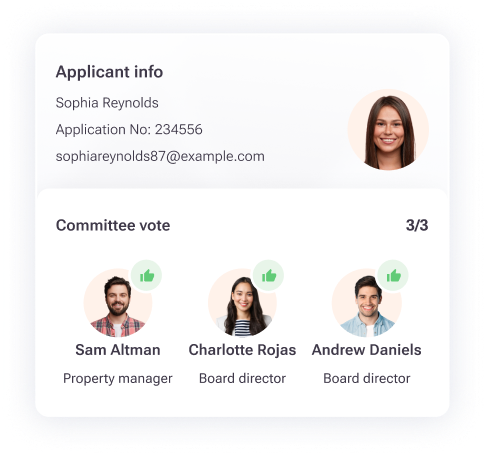
QuickApprove accelerates resident approvals while preserving board oversight, screening, and compliance review. It replaces email chains and spreadsheets with a connected, auditable workflow that is faster, clearer, more consistent, and easier to manage during peak application seasons.
Watch QuickApprove handle a full application cycle and see how it fits your community’s process.
Frequently Asked Questions
How long does it take for an HOA to approve an application in Florida?
In Florida, HOA approval timelines are governed by the community’s CC&Rs and Florida Statutes Chapter 720. The standard review window generally ranges from 30 to 60 days depending on community age and meeting frequency, as outlined earlier in this guide. During summer peak season, actual timelines often extend beyond these written windows because of application volume, board member availability, and incomplete packet submissions that restart the intake clock. A realistic planning range for summer submissions is 45 to 60 days from a complete, properly delivered packet to a written decision.
How long do ARC requests take during summer peak season?
Architectural Review Committee requests submitted during summer peak season, typically May through August in Florida, face compounded delays. The statutory review window of 30 to 60 days applies from the date a complete packet is received, and incomplete submissions add 1 to 2 weeks before the clock formally starts. Board member vacations and elevated application volume stretch timelines further. Communities that route ARC decisions through full board votes instead of a standing committee face the longest waits. Submitting a complete packet 6 to 8 weeks before a project target date provides the most reliable way to stay within the statutory window and avoid the deemed-approved scenario.
What happens if my HOA misses the deemed-approved deadline?
Under Florida Statutes Section 720.3035, if an HOA or ARC fails to respond in writing within the review period specified in the community’s CC&Rs, whether 30, 45, or 60 days, the application is automatically deemed approved. This clause has been enforced by Florida appellate courts and applies regardless of the board’s position on the request. For homeowners, a properly submitted, complete packet delivered via certified mail or a timestamped digital portal creates a legally defensible approval if the HOA misses its deadline. For CAMs and boards, peak-season volume and board scheduling gaps create direct legal exposure. Digital workflows with automated intake timestamping and board notification reduce this risk by keeping the review process on schedule.
Can digital workflows really cut approval time by 70%?
TenantEvaluation’s platform reduces application processing time by up to 70% compared to manual workflows. The reduction comes from several compounding factors, including smart form logic that flags incomplete packets at submission rather than after manual review, which removes the 1-to-2-week restart penalty. Digital intake moves applications into the review queue in minutes instead of 5 to 10 business days. A board-ready dashboard enables asynchronous review and voting between scheduled meetings, and automated communication removes many manual follow-up cycles. The 70% figure reflects cumulative time saved across intake, review, board decision, and approval letter generation, not a reduction in a single step alone. Communities processing high application volumes during peak season see the largest absolute time savings.
Conclusion: Practical Timeline Strategies for Florida HOAs
Florida HOA and ARC approval timelines range from 30 to 60 days under governing documents, and peak-season extensions push practical timelines toward the upper bound for most communities. The two largest controllable delay factors are incomplete packets, which add 1 to 2 weeks before review begins, and board meeting cadence, which can hold complete applications for weeks between scheduled votes.
Submitting complete packets 6 to 8 weeks before a project or move-in target date, using certified mail or a timestamped digital portal, and applying the deemed-approved provisions of Florida Statutes Section 720.3035 form the core practices for managing peak-season timelines. Digital submission workflows that flag incomplete packets at intake, provide real-time tracking, and give boards asynchronous review capability address structural causes of delay while preserving required oversight.
TenantEvaluation’s QuickApprove workflow brings these capabilities into one connected platform built specifically for Florida community associations, with FCRA compliance as the foundation, not an afterthought. For CAMs, boards, and property management teams managing summer volume, it often marks the difference between a 60-day bottleneck and a decision that reaches the board on time.
Explore how TenantEvaluation moves submissions to decisions faster while maintaining control, compliance, and visibility.
