Written by: Luis Teran, Co-founder, CEO, TenantEvaluation | Last updated: June 26, 2026
Key Takeaways for Florida HOA Onboarding
- HOA onboarding software with background screening connects digital applications, FCRA-compliant checks, identity verification, and board approvals in one platform.
- Florida HOAs must follow FCRA rules, including written consent, adverse action notices, and audit trails for every screening decision.
- Biometric identity verification and automated document validation reduce fraud risk and speed up application processing.
- Board voting dashboards with timestamped records replace email chains, improving governance and compliance documentation.
- Centralized lease tracking connected to onboarding provides real-time visibility; explore TenantEvaluation’s lease tracking features.
7-Step HOA Onboarding Workflow
The following seven steps show how a connected platform removes manual handoffs and creates an auditable path from application to occupancy.
- Application Submission: Applicant receives a property code, creates an account, and completes a fully online application with document uploads and secure fee payment.
- Intelligent Form Validation: Platform logic checks for executed leases, valid IDs, and required documents, and it rejects incomplete submissions automatically.
- Biometric Identity Verification: Applicant completes guided government-ID upload and a liveness selfie. AI confirms physical presence and biometric match before screening continues.
- Background and Credit Screening: FCRA-compliant criminal, credit, income, eviction, and reference checks run through trusted bureau reseller relationships.
- Document Review and Redaction: The platform auto-redacts sensitive PII. Managers receive a clean, audit-ready screening report.
- Board Review and Voting: Board members open a dedicated dashboard, review AI-summarized applicant reports, and cast timestamped votes.
- Decision, Approval Letter, and Lease Tracking: The system issues a customized approval letter and welcome package. Lease documentation is collected and connected to the unit record for real-time lifecycle visibility.
See the full workflow in action for your Florida community.
How Florida HOAs Handle Background Checks
Florida HOAs and condominium associations have broad authority under their governing documents to screen prospective residents and tenants before granting occupancy approval. Most Florida community associations use some combination of criminal history checks, credit evaluations, eviction history reviews, and identity verification. The scope and depth of screening vary by community bylaws. The legal obligation to conduct screening in an FCRA-compliant manner applies uniformly whenever a consumer report is ordered. Associations that rely on manual processes, such as emailed PDFs, spreadsheet tracking, and informal board votes, face higher risk of procedural errors, inconsistent criteria, and incomplete adverse action documentation.
HOA Screening Process from Application to Decision
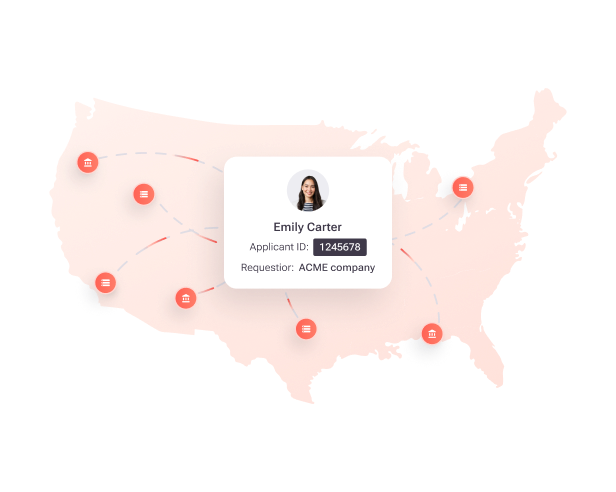
A structured HOA screening process moves from application intake through identity confirmation, background data retrieval, board deliberation, and final decision. Each stage generates records that must be retained and made available if a screening decision is challenged. The most common failure in manual workflows is the gap between data retrieval and board notification. Reports sit in a manager’s inbox while board members wait for forwarded emails, which creates delays that extend approval timelines from hours into days or weeks. Platforms built specifically for community associations close this gap by connecting screening output directly to a board-accessible dashboard and removing the forwarding step entirely.
FCRA-Compliant HOA Onboarding Requirements
Beyond workflow efficiency, every screening platform must meet federal compliance standards. The Fair Credit Reporting Act governs any use of consumer reports, including credit, criminal, and eviction data, in housing decisions. FCRA compliance for HOA onboarding requires permissible purpose documentation, written applicant authorization, accurate data sourcing from legitimate bureau resellers, and a defined adverse action process that notifies applicants of negative decisions and their right to dispute. TenantEvaluation is built specifically for community associations and management companies, with FCRA compliance as the foundation rather than an afterthought. As a direct reseller of TransUnion and Equifax data, TenantEvaluation accesses bureau data under strict reseller rules, maintains automated adverse action workflows, and provides built-in audit trails for every application. This structure keeps associations protected from liability exposure tied to gray-market or offshore data sources.
Board Approval Workflow for HOA Applications
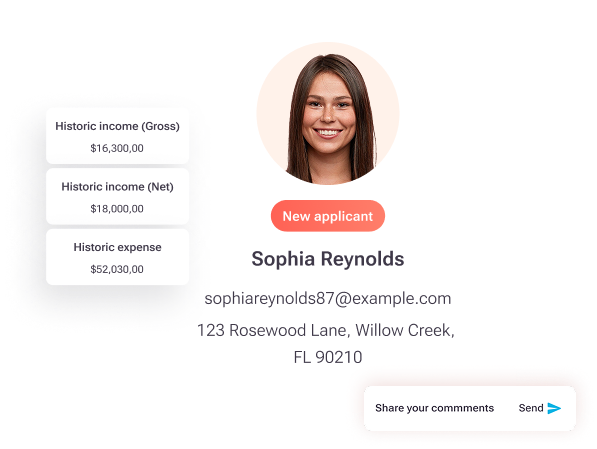
Board approval workflows formalize the governance layer of resident screening. A compliant workflow documents which board members reviewed each application, when votes were cast, and what criteria informed the decision. Without a dedicated platform, this documentation typically lives across email threads and meeting minutes, which are difficult to search, easy to lose, and weak for audit defense. QuickApprove is TenantEvaluation’s accelerated approval workflow that gives boards a dedicated review and voting panel inside one connected platform. It supports real-time application tracking, automated communication, customized approval letters, and a personalized welcome package, so communities accelerate resident approvals while maintaining control, compliance, and visibility.
2026 Florida HOA Market and Operational Pressures
Florida’s community association market ranks among the largest and most complex in the United States. The state includes a high concentration of age-restricted communities, high-density condominiums, and gated HOAs across Miami, Fort Lauderdale, Palm Beach, Tampa, Orlando, and surrounding regions. Florida CAMs manage portfolios that span multiple association types simultaneously, each with distinct governing documents, screening criteria, and board structures. The administrative burden of managing applicant pipelines across these communities manually, with separate email chains, spreadsheet trackers, and PDF folders for each, creates compounding inefficiency that generic property management software does not resolve. TenantEvaluation serves more than 5,000 communities and processes approximately 100,000 applications per year, with a platform configured specifically for Florida regulations and workflows.
Compliance, Risk, and Governance in Florida Communities
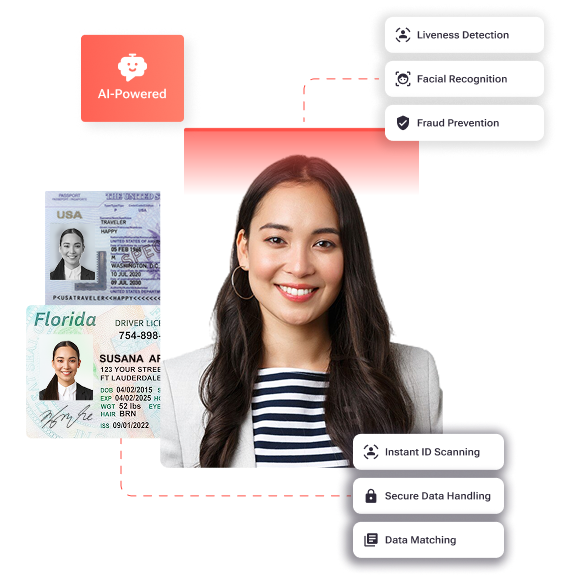
Florida community associations face compliance obligations that extend beyond FCRA. Age-restricted communities operating under the Housing for Older Persons Act must maintain consistent documentation of age eligibility across all applicants. Associations that handle applicant PII without encryption or auto-redaction expose themselves to data breach liability. Identity fraud, including stolen IDs, synthetic identities, and impersonation attempts, is an increasing risk in condo and HOA communities where traditional document-based screening cannot confirm physical presence. IDVerify addresses this directly by embedding biometric identity verification into the TenantEvaluation workflow. It combines government ID validation, AI-powered liveness detection, and facial biometric comparison, so communities move from document-based review to biometric-confirmed identity verification before approval decisions.
Common Failure Points in Manual HOA Onboarding
Manual HOA onboarding processes fail at predictable points. Incomplete applications reach managers because no automated logic enforces document requirements at submission. Background check reports are ordered before identity is confirmed, which creates permissible-purpose exposure. Board members receive forwarded emails rather than structured summaries, and deliberation slows. Adverse action notices are issued late or omitted. Lease copies sit in personal inboxes rather than centralized records, which creates occupancy visibility gaps that persist for the life of the tenancy. Each failure point represents both an operational inefficiency and a potential compliance liability.
Emerging Best Practices for Florida HOAs
Leading Florida community associations and management companies now consolidate onboarding onto platforms that connect every stage, from application intake through lease lifecycle management, into a single auditable workflow. Biometric identity verification is becoming a baseline expectation in high-density and gated communities. Board voting dashboards with timestamped records are replacing email-based approval chains. 55+ Communities Verification is emerging as a structured operational layer for age-restricted communities. It standardizes application handling, reduces manual work, improves documentation consistency, and strengthens internal processes for Florida condos and HOAs without replacing legal guidance. Centralized lease tracking, connected directly to the onboarding workflow, is replacing disconnected spreadsheets and providing real-time lease status visibility from application to occupancy.
Explore how TenantEvaluation’s centralized platform fits your community’s onboarding requirements.
Must-Have Evaluation Framework for HOA Platforms
The best practices described above translate into specific platform requirements. When evaluating HOA onboarding software with background screening, Florida CAMs and board members should assess platforms against the following criteria.
- FCRA compliance architecture: Confirm that the platform is a direct bureau reseller with automated adverse action workflows and built-in audit trails.
- End-to-end coverage: Check whether the platform handles application intake, document collection, identity verification, screening, board voting, and lease tracking, rather than only a subset.
- Florida-specific configuration: Verify that the platform can match each community’s governing documents, screening criteria, and association workflows.
- Biometric identity verification: Ensure the platform confirms physical presence and biometric match before screening authorization, instead of relying only on document uploads.
- Board dashboard access: Look for a dedicated, real-time review and voting panel for board members, not a process built on forwarded emails.
- 55+ community support: Confirm that the platform standardizes age-restricted application handling and improves documentation consistency across communities.
- Lease lifecycle visibility: Require a platform that connects onboarding, approvals, and lease documentation into one centralized, audit-ready workflow.
- Revenue model alignment: Favor a pay-per-application model that can generate revenue for the association instead of a fixed monthly subscription.
Side-by-Side Feature Comparison for Screening Tools
The following comparison highlights how TenantEvaluation’s integrated HOA workflow differs from tools that handle only screening or only property management.
| Feature | TenantEvaluation | Generic Screening Tools (e.g., ApplyCheck, Verify Screening Solutions) | Broad PMS Platforms (e.g., AppFolio, Buildium) |
|---|---|---|---|
| End-to-end onboarding automation | Full A–Z: intake, screening, board voting, lease tracking | Screening only, no onboarding lifecycle | Property management focus, limited screening depth |
| Board voting dashboard | Dedicated real-time panel with timestamped votes | Not available | Not available or limited |
| Biometric identity verification | IDVerify+: liveness detection, facial biometric match, government ID validation, native to platform | Not available or third-party redirect | Not available |
| 55+ Communities Verification | Built-in, standardizes age-restricted handling for Florida condos and HOAs | Not available | Not available |
| Lease Tracking | Centralized, real-time lease visibility connected to onboarding and unit records | Not available | Basic lease storage, not connected to screening workflow |
| FCRA compliance foundation | Direct TransUnion and Equifax reseller, automated adverse action, built-in audit trails | Varies, often third-party data aggregators | Varies, not association-specific |
| Florida-specific configuration | Configured per community governing documents and Florida workflows | Generic, not Florida-specific | Generic, not association-specific |
| Revenue model | Pay-per-application with revenue sharing back to association | Per-report fees, no revenue sharing | Monthly subscription, no revenue sharing |
Choosing Between Self-Managed and Management Company Workflows
Self-managed Florida HOAs and condominiums face the same FCRA obligations and screening complexity as professionally managed communities, but they lack dedicated administrative staff to absorb manual workload. For self-managed boards, an all-in-one platform that automates document collection, screening, and board voting is not a convenience, it is an operational necessity. Management companies face a different but equally compelling need. They must standardize workflows across multi-community portfolios while providing portfolio-level lease visibility and scaling without additional headcount. TenantEvaluation’s revenue-sharing model, where application fees generate income back to the association or management company after the platform fee is deducted, often makes the platform cost-neutral or revenue-generating for both self-managed and professionally managed communities.
Conclusion and Practical Next Steps
Manual HOA onboarding processes built on email chains, spreadsheets, and disconnected document folders create administrative burden, compliance exposure, identity fraud risk, inconsistent 55+ documentation, and fragmented lease visibility. Florida CAMs, property managers, and HOA boards operating in 2026 need a platform that addresses all of these failure points within a single, FCRA-compliant workflow. TenantEvaluation addresses these gaps with a platform designed for community associations from the ground up. With QuickApprove, IDVerify, 55+ Communities Verification, and centralized Lease Tracking, TenantEvaluation delivers end-to-end automation, strong board governance controls, and Florida-specific configuration that generic alternatives do not provide.
Connect your community’s onboarding, screening, board approvals, and lease tracking into one audit-ready platform.
Frequently Asked Questions
What does FCRA-compliant HOA onboarding software require?
FCRA-compliant HOA onboarding software must obtain written authorization from applicants before ordering any consumer report. It must source credit and background data from legitimate bureau resellers rather than gray-market aggregators. The platform must maintain a complete audit trail of every screening action and decision and execute a defined adverse action process, including timely written notice to applicants who are denied based on screening results. It must also maintain a clear separation between data provision and the actual residency decision, which remains with the association. TenantEvaluation is a direct reseller of TransUnion and Equifax data, includes automated adverse action workflows, and provides built-in audit trails for every application, which makes FCRA compliance a structural feature of the platform rather than a manual checklist item for managers.
How does biometric identity verification differ from document-based screening?
Standard document-based screening asks applicants to upload a copy of their government-issued ID, which a manager then reviews visually. This process cannot confirm that the person submitting the application is the same person pictured on the ID, and it cannot detect synthetic identities or impersonation attempts. Biometric identity verification, as implemented through IDVerify inside TenantEvaluation, adds AI-powered liveness detection to confirm physical presence, facial landmark biometric mapping to match the applicant’s face to their ID photo, and government ID authenticity validation. All three layers run inside the TenantEvaluation workflow without redirecting applicants to external portals. The result is a multi-layer fraud prevention system that confirms applicants are real, present, and matched to their identification before any approval decision, a capability not available in many generic screening tools or broad property management platforms.
What is the difference between a board voting dashboard and email-based approvals?
An email-based approval process requires a manager to forward screening reports to board members, collect individual responses, reconcile votes, and document the outcome manually across multiple inboxes with no centralized record. A board voting dashboard replaces this with direct access to applications inside the platform. Board members review cases, cast timestamped votes, and create an auditable governance record in one place. This approach removes the forwarding step, reduces deliberation time, and supports compliance readiness while preserving full board oversight.
How does 55+ Communities Verification help Florida age-restricted HOAs and condos?
Florida age-restricted communities must maintain consistent documentation of age eligibility across all applicants to support their operational status as housing for older persons. When this process runs manually through emails, PDFs, and individual follow-ups, documentation becomes inconsistent across applicants and communities, which creates gaps that surface during audits or disputes. 55+ Communities Verification inside TenantEvaluation standardizes how age-restricted application requirements are handled across applications. It reduces manual work for CAMs and boards, improves documentation consistency, and strengthens internal operational controls. The feature is designed specifically for Florida condos and HOAs and supports Community Association Managers who manage age-restricted communities at scale while not replacing legal guidance.
How does Lease Tracking differ from shared folders or spreadsheets?
Shared folders and spreadsheets store lease documents as static files with no connection to the onboarding workflow, no automated status tracking, and no unit-level occupancy visibility. When a lease expires, someone must identify it manually. When a new application is approved, the lease document must be filed manually in the correct location. Lease Tracking inside TenantEvaluation connects resident onboarding, unit data, approvals, and lease documentation into one centralized, real-time workflow. It provides real-time lease status visibility, including active, pending, expired, or missing, automated lease document collection during onboarding, unit-level tracking tied to occupancy records, and a searchable digital history of leases and resident activity. Every record is audit-ready and accessible inside the same platform used for applications, screening, and board approvals, which removes spreadsheets, scattered email chains, and operational blind spots from application to occupancy.
