Written by: Luis Teran, Co-founder, CEO, TenantEvaluation
Key Takeaways for Florida HOA Lease Approvals
- The HOA lease approval process in Florida follows seven clear steps that help associations evaluate and authorize new tenancies while staying compliant with community rules.
- Incomplete packets, board scheduling delays, communication gaps, and identity fraud risks often extend processing times and increase liability for associations.
- Standardized checklists, uniform screening criteria, biometric identity verification, and centralized digital tracking reduce manual work and support consistent decisions.
- Florida requirements such as rental caps, flood disclosures, and FCRA-compliant screening must appear in every approval workflow to avoid legal exposure and protect operations.
- TenantEvaluation streamlines the HOA lease approval process for Florida CAMs and boards with automated workflows, biometric verification, and real-time tracking, so you can see how TenantEvaluation automates your approval workflow.
7-Step HOA Lease Approval Process in Florida
This seven-step breakdown reflects standard Florida HOA and condo association practice as of 2026. Timelines and specific requirements vary by each community’s declaration, bylaws, and rules.
Step 1: Confirm Rental Eligibility in Community Rules
Before marketing a unit, the owner or their agent must pull and review the association’s recorded declaration, bylaws, and rules to identify rental caps, minimum lease terms, approval authority, and required addenda. This review confirms whether the unit is currently eligible to be leased, including any active rental caps or waitlists.
Step 2: Assemble a Complete Lease Application Packet
The owner or agent assembles a complete approval packet. A standard Florida HOA lease packet commonly includes a notice of intent to lease, an executed lease or lease draft, owner and property manager contact details, individual applications for each adult occupant, government-issued photo IDs, screening authorizations, vehicle and parking information, pet disclosures where applicable, and any required association addenda. Mandatory association lease addenda, including rules and regulations riders and crime-free addenda, are frequently required and must be signed by the landlord and all adult occupants.
Step 3: Submit the Packet and Pay Association Fees
Processing typically does not begin until the packet is complete. Submission must follow the association’s required delivery method. Orlando-area associations commonly charge nonrefundable application fees such as $50 per adult applicant or $100 per person or married couple. Some communities also require an association-held damage deposit. Written confirmation that the packet is complete and received helps avoid disputes about when the review clock starts.
Step 4: Run Background Screening and Verify Identity
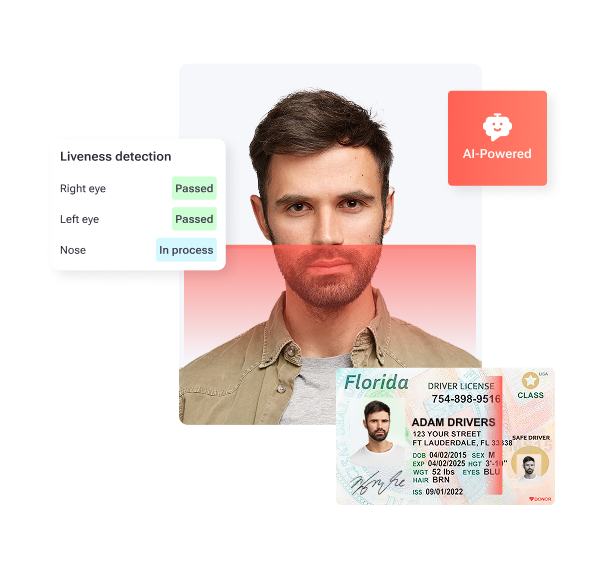
The CAM or association conducts or verifies screening for each adult applicant, including criminal background checks, credit evaluation, income verification, eviction history, and reference checks. Identity verification serves as a critical layer at this stage. Florida’s HB 1293, enacted in 2026, makes it a crime to occupy a rental property using forged documents or false identity, which reinforces the need for biometric-backed identity confirmation before approval.
Step 5: Coordinate Board Review and Voting
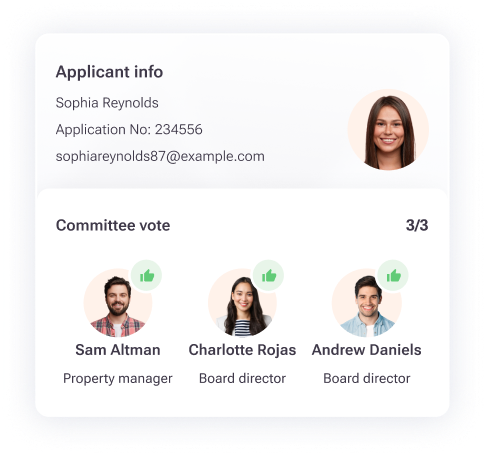
Depending on community rules, approval authority may rest with the CAM, a committee, or the full board. When board review is required, applications must align with board meeting schedules, which often creates the longest delays. Delays in HOA rental approvals commonly arise when approval requires board review rather than staff action.
Step 6: Issue Written Approval or Denial
The association issues written approval or denial to the owner or agent. A rejection issued with no documented reason may indicate discrimination or unfair application of rules, providing potential grounds for legal action. Denial reasons must tie directly to community rules and be applied consistently. If denied, owners may request written reasons and pursue internal hardship exemptions or statutory dispute resolution such as pre-suit mediation under Florida Statutes § 720.311 for HOAs.
Step 7: Execute the Lease and Track the Tenancy
Once approved, the lease is executed and the association records the tenancy in its records. Move-in access credentials usually remain on hold until written approval is granted. Ongoing lease tracking, which includes monitoring active leases, expiration dates, and occupancy status, remains an operational requirement that many communities still manage through disconnected spreadsheets and email chains, which creates compliance risk and administrative burden. The following table summarizes the typical timeline and responsibilities for each step in the approval process.
| Step | Responsible Party | Typical Timeline |
|---|---|---|
| 1. Governing document review | Owner / Agent | Before marketing |
| 2. Packet preparation | Owner / Agent | 1–3 days |
| 3. Submission and fee payment | Owner / Applicant | Day of submission |
| 4. Screening and ID verification | CAM / Association | 24–72 hours |
| 5. Board review and voting | Board of Directors | 1–5 business days |
| 6. Approval or denial notice | CAM / Association | Within review window |
| 7. Lease execution and tracking | Owner / CAM | Post-approval |
A common planning assumption for Central Florida HOA lease approvals is 3 to 7 business days after submission of a truly complete packet. Orlando-area investors commonly budget 3–4 weeks from tenant selection to move-in when they account for pre-submission notice requirements and board schedules.
TenantEvaluation’s QuickApprove accelerates resident approvals by moving applications from submission to decision inside one connected platform, with real-time application tracking, a board-ready approval process, automated communication support, and fewer manual follow-ups, while preserving control, compliance, and visibility. Schedule a demo today to see QuickApprove in action.

Florida HOA Lease Application Requirements and Legal Details
Florida HOA and condo lease application requirements come from each community’s declaration, bylaws, and rules and regulations. No single statewide checklist applies to every community, but the following elements appear consistently across Florida associations.
Standard document requirements typically include a completed application for each adult occupant, government-issued photo ID, executed or draft lease with all addenda, screening authorization forms for criminal and credit checks, vehicle and parking information, and pet disclosures with vaccination records where applicable. Some associations also require Social Security or immigration documentation for identity verification purposes.
Rental caps limit the percentage of units that may be leased at any one time. When a community has reached its cap, applications move to a waitlist regardless of applicant qualifications. Owners must confirm cap status before marketing a unit.
Right of first refusal provisions, where present in community rules, allow the association to step in and lease the unit under the same terms offered to a prospective tenant. These provisions must be exercised within the timeframe specified in the documents that govern the community.
Flood disclosure requirements took effect October 1, 2025. Residential landlords, including condominium unit owners acting as landlords, must provide specific flood disclosures before or at the time of lease execution stating whether the property has experienced flooding, whether flood insurance claims were filed, and whether federal or state assistance was received.
Accurate recordkeeping across all submitted documents protects the association and speeds decisions. Incomplete or inconsistent records create compliance exposure and slow approvals. TenantEvaluation’s platform automates document collection, applies smart form logic to reject incomplete submissions, and maintains searchable, audit-ready digital records that connect every document to the corresponding application and unit record.
Common HOA Lease Approval Challenges and Practical Fixes
Incomplete submissions are the leading cause of processing delays. As noted earlier, associations will not start review until all required documents arrive, which means a single missing item can add days to the timeline. Digital platforms with intelligent form logic reject incomplete submissions automatically and remove back-and-forth before review begins.
Board scheduling bottlenecks appear when approval authority requires a full board vote and the next meeting is days or weeks away. A board-ready digital dashboard, where members can review summarized applicant reports and cast votes in real time, removes the dependency on in-person meetings for routine approvals.
Communication gaps between owners, applicants, realtors, and the association create uncertainty and repeated status inquiries. Automated notifications and real-time application tracking reduce manual follow-up calls and emails.
Identity fraud exposure is a growing risk. The 2026 statute that criminalizes occupancy under false identity reinforces why traditional document-based screening often falls short. TenantEvaluation’s IDVerify addresses this directly by embedding biometric identity verification into the screening workflow. The system combines government ID validation, AI-powered liveness detection, and biometric facial matching to confirm that applicants are real, present, and matched to their identification before approval decisions are made.
Inconsistent decision-making exposes associations to Fair Housing Act liability. Unwritten or case-by-case decision-making by Florida HOAs that is not grounded in community rules can expose the association to discrimination claims. Standardized, criteria-based screening workflows applied uniformly across all applicants reduce this risk.
Best Practices for Faster, Compliant HOA Lease Approvals
Florida CAMs and boards that run efficient approval workflows share several habits. They review and update community rules regularly, document screening criteria and apply them uniformly, standardize application packets with a defined checklist, and record every decision with a clear content trail.
Application checklist for Florida HOA lease approvals:
- Confirm rental cap availability before marketing.
- Provide applicants with the complete document checklist upfront.
- Require applications from all adult occupants at the same time.
- Collect screening authorizations before starting background checks.
- Verify government-issued ID for every adult applicant.
- Confirm flood disclosure delivery before or at lease execution.
- Issue written approval or denial with documented reasoning.
- Record the executed lease and track occupancy status in a central system.
| Process Element | Manual Workflow | Digital Workflow (TenantEvaluation) |
|---|---|---|
| Application submission | Paper or email, prone to missing documents | Online submission with intelligent form logic that rejects incomplete packets |
| Identity verification | Document review only, no biometric confirmation | Biometric ID validation, liveness detection, and facial matching via IDVerify |
| Board review | Email chains, spreadsheets, in-person meetings | Board-ready dashboard with real-time voting via QuickApprove |
| Lease tracking | Disconnected spreadsheets, manual expiration tracking | Centralized, real-time lease visibility from application to occupancy |
FCRA compliance remains non-negotiable in the screening process. TenantEvaluation is built specifically for community associations with FCRA compliance as the foundation, not an add-on. As a direct reseller of TransUnion and Equifax data, TenantEvaluation maintains strict permissible purpose controls, automated adverse action workflows, and built-in audit trails for every application. The platform’s revenue-sharing model allows associations to generate income from application fees without upfront platform costs, which turns the approval process into a compliant, controlled revenue stream.
Conclusion: Modernizing Florida HOA Lease Approvals
The HOA lease approval process in Florida follows a defined sequence of steps, from rule review through post-approval lease tracking, and each step carries compliance obligations and operational dependencies. Manual execution of this process creates delays, fraud exposure, inconsistent decisions, and administrative overload for CAMs and boards. A digital, Florida-specific workflow addresses each of these risks in a structured way.
Clear sequential steps, standardized document requirements, biometric identity verification, board-ready approval tools, and centralized lease tracking form the operational foundation of an efficient and compliant approval process in 2026. TenantEvaluation delivers these capabilities inside one connected platform, purpose-built for Florida community associations and management companies, with 5,000+ communities, 100,000+ applications processed annually, and $150M generated for communities.
Frequently Asked Questions
How long does HOA lease approval take in Florida?
Processing times vary by community and its rules. Once a complete application packet is submitted, many Florida HOA and condo associations complete their review within 24 to 72 hours, with some taking up to 5 business days. When board approval is required and the next scheduled meeting is days away, total timelines can extend to 3 to 4 weeks from tenant selection to move-in. Communities that require advance written notice before lease initiation, sometimes 15 days, add additional time before the review clock even starts. Digital platforms like TenantEvaluation reduce processing time by eliminating incomplete submissions, automating screening, and giving boards a real-time voting dashboard.
What are the most common reasons an HOA denies a lease application in Florida?
Florida HOAs and condominiums may lawfully deny a lease application when the denial is supported by a written rule in community documents and applied consistently to all applicants. Common documented reasons include failure to meet minimum income standards relative to rent, a prior history of rule violations within the community, false information provided on the application regarding criminal history or background, and felony convictions where civil rights have not been restored. Associations that issue denials without documented reasoning grounded in written rules risk Fair Housing Act liability. Rejected applicants in Florida may consult legal counsel and, for HOAs, may pursue pre-suit mediation under Florida Statutes § 720.311.
What documents are required for an HOA lease application in Florida?
Requirements vary by community, but a standard Florida HOA lease application packet typically includes a completed application for each adult occupant, government-issued photo identification, an executed or draft lease with all required addenda, criminal and credit screening authorization forms, vehicle and parking information, and pet disclosures with vaccination records where applicable. Many associations also require mandatory association addenda, such as rules and regulations riders and crime-free addenda, signed by both the landlord and all adult occupants. Some communities require a nonrefundable application fee per adult applicant and an association-held damage deposit. As of October 1, 2025, Florida landlords must also provide flood disclosure documentation before or at the time of lease execution.
What is the right of first refusal in a Florida HOA, and how does it affect the lease approval process?
Right of first refusal is a provision found in some Florida HOA and condo documents that gives the association the right to step in and lease a unit under the same terms offered to a prospective tenant. When this provision exists, the owner must present the proposed lease terms to the association before finalizing the tenancy. The association then has a defined window, specified in the community rules, to exercise or waive that right. If the association exercises the right, it assumes the tenancy under the offered terms. If it waives the right or the window expires without action, the owner may proceed with the prospective tenant. Not all Florida communities include this provision, so owners should confirm its presence and terms before marketing a unit.
How does TenantEvaluation differ from generic tenant screening platforms for HOA lease approvals?
TenantEvaluation is built exclusively for Florida community associations and management companies, not generic rental markets. That specialization means the platform is configured to match each community’s specific rules, screening criteria, and Florida regulatory requirements. Key differentiators include a dedicated board review and voting dashboard inside the platform, biometric identity verification through IDVerify+ that moves communities from document-based review to confirmed physical identity, and centralized lease tracking that connects applications, approvals, unit data, and lease documentation in one real-time workflow. FCRA compliance functions as a foundational design principle rather than a feature add-on. TenantEvaluation is also a direct reseller of TransUnion and Equifax data, maintaining strict bureau-level compliance controls. The platform’s revenue-sharing model allows associations to generate income from application fees with no upfront platform costs, which many competing solutions do not offer.
