
Last updated: March 1, 2026
Key Takeaways
- HOA communities face rising identity fraud in 2026, with 79% of organizations reporting payment scams. Advanced biometric verification now plays a critical role in stopping fake IDs and impersonation.
- IDScan.net offers strong fake ID detection but lacks native FCRA integration, HOA-specific workflows, and simple setup for community managers.
- IDVerify delivers cloud-based biometrics with AI liveness detection, facial matching, and seamless TenantEvaluation integration, so HOAs avoid extra hardware.
- HOAs report 70% time savings, $240,000 in annual cost reductions, and added revenue through IDVerify’s automated screening and QuickApprove dashboards.
- Get started with Tenant Evaluation today for fraud-resistant HOA onboarding powered by IDVerify.
HOA Identity Verification Requirements in 2026
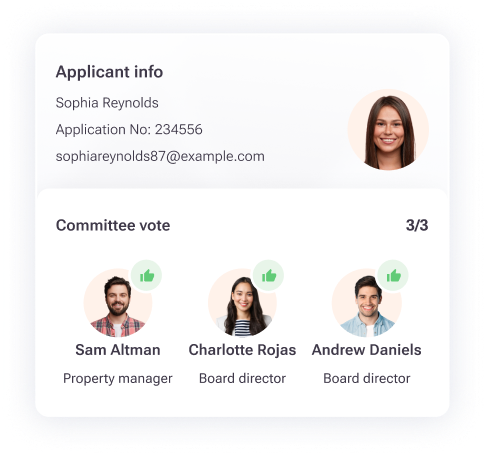
Modern community associations need identity verification that fits real-world operations and compliance rules. Core requirements include biometric liveness detection to block deepfake attempts, facial landmark recognition for selfie-to-ID comparison, government-issued ID validation, and FCRA-compliant audit trails. QuickApprove dashboard integration lets board members review verification results next to screening reports, while Florida-specific compliance keeps communities aligned with state HOA governance.

High-risk HOA scenarios demand strong verification for vendor access at gated communities, resident application processing, and board voting on occupancy approvals. AI liveness detection in 2026 verifies physical presence by analyzing subtle movements, skin texture, blood flow, depth perception, and behavioral cues. These checks help separate real applicants from sophisticated fraud attempts.
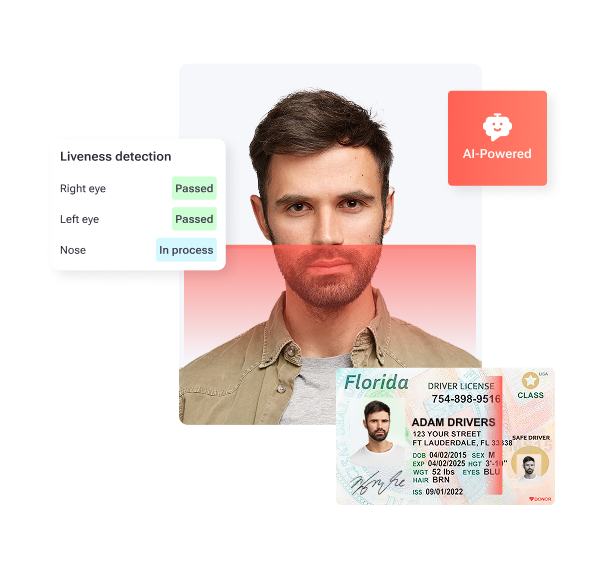
Automation creates measurable ROI through 70% time savings and removes manual document review cycles that once consumed more than 50 hours daily for large portfolios. Revenue-sharing models turn verification into a profit-generating community service instead of a pure cost center. Strong fraud prevention also protects association assets and reduces liability exposure for boards and managers.
IDScan.net Capabilities and HOA Limitations
IDScan.net delivers identity verification through software-based tools, including mobile apps and cloud-based remote verification. The platform detects 95% of fake IDs using forensic template analysis and multi-wavelength security checks, which positions it as a security-focused option for high-stakes verification.
Several gaps appear when HOAs try to implement IDScan.net. The lack of native FCRA integration creates workflow breaks for community association screening, and the standalone setup forces managers to stitch together multiple systems for a complete process.
Setup friction often becomes a major concern for CAMs who oversee many properties. IDScan.net’s architecture limits seamless remote verification and adds deployment complexity across distributed HOA portfolios. Cloud-based alternatives with simple configuration and no hardware give managers faster rollout and easier scaling.
HOA-Focused Alternatives to IDScan.net: 2026 Comparison
The 2026 identity verification market offers several alternatives to traditional scanners, each covering different HOA fraud and workflow needs. Cloud-based platforms now dominate because they provide more flexibility, lower costs, and smoother connections to screening platforms than hardware-heavy systems.
| Feature | IDScan.net | iDenfy | Persona | IDVerify |
|---|---|---|---|---|
| HOA Integration | Limited | Generic API | Generic API | Native TenantEvaluation |
| Biometric Liveness | Software-based | Cloud-based | Cloud-based | AI-powered passive |
| Setup Requirements | Software configuration | API integration | API integration | Configuration only |
| FCRA Compliance | External integration | Not specialized | Not specialized | Built-in foundation |
| Pricing Model | Subscription-based | Per-verification | Per-verification | Revenue sharing |
| HOA Dashboard | None | Generic reporting | Generic reporting | QuickApprove integration |
| Verification Speed | App-based processing | Automated processing | Automated processing | Real-time automated |
IDVerify stands out through native TenantEvaluation integration, which removes third-party redirects and keeps applicants in a single flow. The solution processes more than 100,000 applications each year and holds a 4.8/5 Google rating, with proven performance across over 5,000 Florida communities.

Why IDVerify Outperforms IDScan.net for HOAs
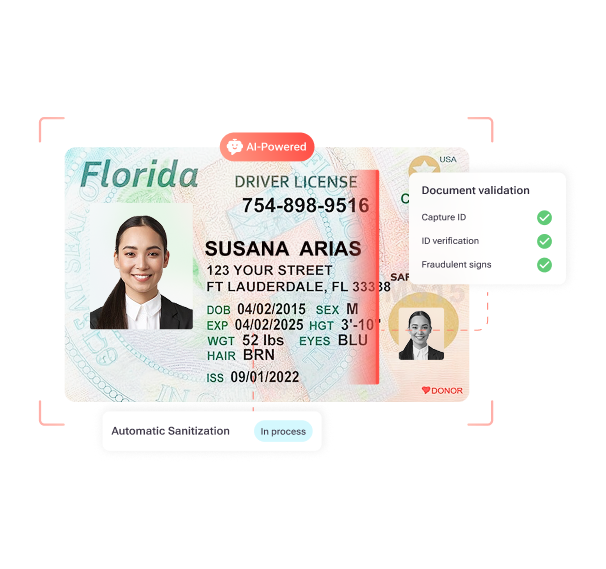
IDVerify’s cloud-based design removes the need for scanners and other hardware that many biometric systems still require. The platform runs through web and mobile interfaces, so managers can deploy it across unlimited properties without installation, maintenance, or replacement costs.
Workflow integration inside TenantEvaluation’s screening platform creates a continuous path from application to approval. Applications move from initial submission to biometric verification, then to background checks through SafeCheck+, income verification through IncomeEv, and final board approval in QuickApprove. This structure removes data silos and manual handoffs between each verification step.
Efficiency gains reach more than 50 hours saved per day for large management companies, which supports annual cost reductions of about $240,000 through automation. Communities shift from document-based review that needs constant oversight to biometric-backed identity confirmation with automated fraud detection. TransUnion and Equifax reseller status also gives TenantEvaluation direct credit bureau access and avoids risky third-party data scraping.
Schedule a demo today to see IDVerify’s HOA-focused workflows and biometric verification in action.
Real HOA Results and IDVerify ROI
Community Association Managers use IDVerify to automatically reject fake IDs and cut processing times by about 70% compared to manual review. Board members see verification results inside QuickApprove dashboards, which supports confident approvals backed by biometric data and traditional screening reports.
Mobile verification lets applicants complete identity checks from anywhere, which helps out-of-state buyers and renters confirm identity before visiting a property. The platform supports gated communities, high-rise condominiums, and master-planned developments through configurable risk profiles for each association.
Performance data shows strong ROI, with more than 5,000 communities served and strategic partnerships with RealManage and FirstService Residential. Community associations have generated over $150 million through streamlined onboarding and application processing. Revenue-sharing models remove upfront costs and create ongoing income from each application.
Step-by-Step IDVerify Implementation for HOAs
HOA identity verification rollout follows five clear steps. Teams start with an assessment of current screening workflows. They then complete a full TenantEvaluation platform demo, followed by IDVerify configuration tailored to each community.
Staff training comes next, supported by 24/7 AI assistance in 11 languages. Ongoing analytics monitoring then tracks performance and guides continuous improvements to fraud rules and workflows.
Decision frameworks should favor cloud-based tools with native screening integration instead of hardware systems that require separate equipment purchases. IDVerify supports rapid deployment and flexible verification rules for each association, which allows growth without infrastructure barriers.
Most Florida community associations that want strong fraud prevention, smooth workflows, and automation-driven ROI can treat IDVerify as their primary identity verification solution. The platform aligns with HOA screening needs while keeping processes simple for managers and boards.
Schedule a demo today to roll out advanced biometric verification across your HOA portfolio.
Frequently Asked Questions
Is IDVerify FCRA compliant for HOA screening?
Yes. IDVerify operates on an FCRA-compliant foundation through TenantEvaluation’s direct TransUnion and Equifax reseller relationships. The platform enforces strict permissible purpose controls, automated adverse action workflows, and built-in audit trails for every verification. Identity confirmation happens before screening authorization, which supports FCRA-aligned workflows and strong audit defensibility for community associations.
How does IDScan.net pricing compare to IDVerify costs?
IDScan.net uses subscription fees for its software-based tools. IDVerify uses a revenue-sharing model with no upfront hardware costs, which turns verification into a profit-generating service for community associations through application fee processing.
Is IDVerify suitable for small HOA communities?
Yes. IDVerify scales from small self-managed communities to large enterprise portfolios. Each association can set its own verification requirements and risk profile instead of relying on a single global setting. The cloud-based design removes minimum deployment thresholds while still delivering enterprise-grade security and compliance.
What biometric verification methods does IDVerify use?
IDVerify layers several methods, including government-issued ID validation, AI-powered liveness detection that analyzes facial movements and depth, and biometric facial matching that compares selfies to ID photos. The system works passively without forcing users through complex actions. It detects spoofing attempts by spotting inconsistencies in lighting, texture, and movement patterns while keeping the experience simple for applicants.
How quickly can IDVerify be implemented for HOA screening?
Most HOAs implement IDVerify within a few days, which is faster than typical hardware-based deployments. The platform runs through web and mobile interfaces and needs only configuration and staff training. Native integration with existing TenantEvaluation workflows removes complex API projects and third-party connections that often slow traditional verification rollouts.
Conclusion: IDVerify as the 2026 Standard for HOA Identity Checks
IDVerify serves as a leading HOA identity verification option for 2026, with cloud-based biometric authentication that avoids the hardware issues common with scanners like IDScan.net. Native TenantEvaluation integration, FCRA-aligned workflows, and 70% time savings create a strong fit for Florida community associations that want reliable, fraud-resistant onboarding.
The move from document-only checks to biometric-backed identity confirmation helps HOAs stay ahead of rising fraud while keeping the applicant journey smooth. Community Association Managers gain automated fake ID detection, board members review results in QuickApprove, and associations earn revenue from application processing without upfront investment.
Schedule a demo today to upgrade your HOA’s identity verification with IDVerify’s biometric tools and end-to-end screening integration.