
Key takeaways
- Florida’s expanded definition of “official records” in 2026 requires structured, well-documented systems for invoices, receipts, minutes, and owner records.
- Clear retention rules for permanent, 7-year, and 1-year records help boards reduce risk and prepare for inspections, audits, and owner requests.
- Digital-first, cloud-based platforms with strong access controls now provide more secure, efficient document management than paper files or basic shared drives.
- Common pain points such as non-compliance, data breaches, and unorganized archives can be mitigated with written policies, consistent processes, and the right technology.
- TenantEvaluation offers a Florida-focused platform that centralizes applications, documents, approvals, and audits; schedule a demo to see how it supports compliant HOA document management in 2026.
Why effective HOA document management matters for Florida communities in 2026
Florida HOAs and condominium associations now operate in a demanding regulatory environment that expects organized, accessible, and secure records. Official records include a growing range of materials, from minutes and financials to applications and compliance files. Official records now include all invoices, transaction receipts, and deposit slips that substantiate any receipt or expenditure of funds by the association, which adds significant volume to what boards must track and store.
Efficient document management supports daily operations, reduces liability, and improves transparency with owners. Community association managers who move away from manual filing and email threads report major time savings and fewer disputes over “missing” records. Manual processes can consume many staff hours each day, so digital tools and automation have become central to sustainable operations.
Recent Florida legislation also reshaped how documents must be shared. HOAs with 100 or more parcels were required to have websites operational by January 2025 with protected sections for sensitive documents, which pushed many communities to adopt portals and structured digital libraries.
Boards that define clear categories, naming conventions, and access rules for each document type find information much faster and respond to record requests more confidently. Thoughtful organization also supports consistent retention practices across changing boards and management companies.
Florida’s HOA record rules: what boards need to keep and for how long
Florida’s legal framework starts with three ideas: official records, governing documents, and retention periods. Official records cover the materials needed to run the association, governing documents define how the association operates, and retention periods state how long records must stay on file.
Florida Statute 720 establishes that associations must maintain each applicable item for at least 7 years unless governing documents require longer retention periods. Some records must be kept permanently, while others have shorter timelines.
Permanent retention documents
Governing documents such as CC&Rs, bylaws, articles of incorporation, parcel maps, meeting minutes, association property deeds, and architectural plans must be maintained permanently with at least one hard copy and one digital copy. These items create the long-term legal and historical record of the community.
Meeting minutes must be preserved permanently to maintain transparent governance history and resolve disputes. Access to old minutes helps new boards understand how and why policies evolved.
7-year retention documents
Financial records including invoices, receipts, and bank statements must be retained for seven years under Florida Statutes. This includes budgets, ledgers, tax returns, and supporting documents.
Financial records including budgets, general ledgers, bank statements, invoices, and tax returns must be retained for 7 years, which aligns with common tax and audit timelines.
1-year retention documents
Voting records must be maintained for at least one year after the date of election, vote, or meeting. These records include ballots, proxies, and sign-in sheets.
Virtual meetings must be recorded and retained for at least one year, and condominium associations with 25 or more units must post those recordings on their website or portal for owner access.
Schedule a demo today to see how TenantEvaluation can align your application and record workflows with these retention rules.
Digital transformation in HOA document management
Many Florida communities now rely on digital tools for record creation, storage, and owner access. Online systems make it easier to meet legal requirements for providing documents while improving searchability and reducing physical storage needs.
HOAs with 100 or more parcels were required to have websites operational by January 2025 with protected sections for sensitive documents, which encouraged adoption of owner portals and secure file areas. Protected electronic locations on websites must restrict access to sensitive information for employees and parcel owners only, so access control now matters as much as storage.
Digital-first creation and organization
Boards and managers increasingly start with digital forms, e-signatures, and online collaboration instead of paper. This approach avoids scanning later and supports consistent naming rules and folder structures from the beginning.
Well-planned digital libraries typically include:
- Standardized file names and categories by record type and year
- Searchable PDFs created with OCR to locate keywords quickly
- Clear separation between owner-visible and board-only folders
Secure cloud-based platforms
Cloud document systems now provide higher security and resilience than local file cabinets or single-computer storage. Strong options include features such as encryption, multi-factor authentication, role-based access, and automatic backups with geographic redundancy.
Detailed access logs and version history also support audits and help resolve disputes about who viewed or changed a record.
Integrated platforms for applications, approvals, and storage
Consolidated platforms that handle applications, screening, document collection, and long-term storage reduce manual work and duplicate data entry. Automated workflows can route files for review, store final decisions, and keep an auditable trail.
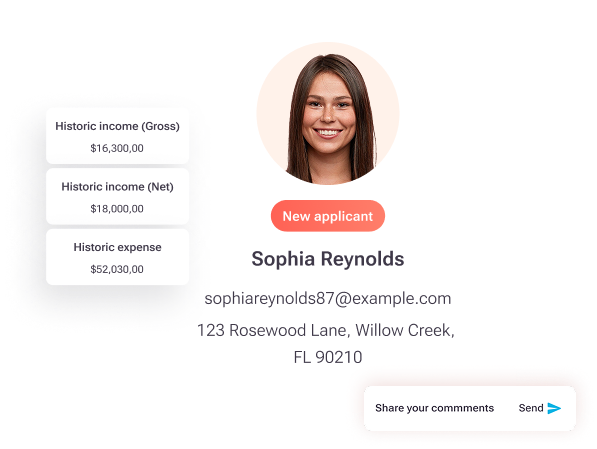
Advanced tools also recognize document types, tag them automatically, and link them to specific units or owners, which cuts retrieval time and improves consistency across managers and board terms.
Common HOA document management challenges and practical fixes
Non-compliance with Florida statutes
Disorganized or incomplete records can create legal exposure and owner frustration. Official records must be organized in a manner that facilitates inspection by unit owners, ending the practice of providing unorganized document boxes, so random stacks or unlabeled folders are no longer acceptable.
Boards can limit risk by reviewing policies annually, training staff on access rules, and using systems that track retention periods and document categories consistently.
Data security risks and privacy issues
Resident applications, background checks, and bank statements contain sensitive information that must be protected. Records containing personal or private information must not be released to owners, which makes redaction and permission settings critical.
Improved security often includes PCI-compliant payment handling, automatic redaction of Social Security numbers and account details, encryption, and granular user roles so only authorized people see protected data.
Slow or inconsistent access for stakeholders
Password-protected HOA websites or portals can minimize document access issues and facilitate owner access while protecting private information. Clear rules about which records are owner-accessible versus board-only prevent confusion.
Modern systems can give owners self-service access to most official records while reserving sensitive files, such as applications or violations, for managers and directors.
Lack of written retention and destruction policies
Florida Chapter 720 requires HOA boards to place document preservation on their annual agenda at the first board meeting of the calendar year. This requirement gives boards a regular opportunity to confirm that retention schedules and destruction practices match current law.
HOAs should work with attorneys and certified public accountants to establish comprehensive record retention policies so each document type has a defined retention period and destruction process.
Managing legacy paper archives
Older communities often maintain rooms or off-site storage full of boxes. Temperature-controlled document storage facilities provide a cost-effective compliance solution for record preservation when items must remain in physical form.
Many associations pair secure storage with a multi-year scanning plan that converts high-priority records to digital files, verifies quality, and then securely destroys documents that no longer need to be kept.
Schedule a demo today to see how TenantEvaluation can help you move from paper-heavy processes to organized digital records.
Implementing a practical HOA document strategy with TenantEvaluation
Effective document strategies combine clear policies, consistent processes, and technology that fits Florida’s rules. Boards gain the best results by defining how documents should be created, stored, and accessed, then choosing tools that reinforce those standards.
All-in-one digital platform for Florida associations
TenantEvaluation’s platform centralizes resident applications, screening, document collection, approvals, and long-term storage. Automated workflows route files through review, track decisions, and store final records, which can reduce manual handling and email chains.
Compliance-focused setup and monitoring
TenantEvaluation can be configured around each community’s governing documents, Florida statutory requirements, and local approval processes. Built-in monitoring tracks retention timeframes, generates reports, and issues alerts for upcoming actions so important dates are not overlooked.
Security, redaction, and audit trails
TenantEvaluation uses automatic redaction to shield sensitive personal and financial data while still allowing boards to review complete files when appropriate. The platform operates with PCI Level 1 standards, encryption, role-based permissions, and continuous security monitoring.
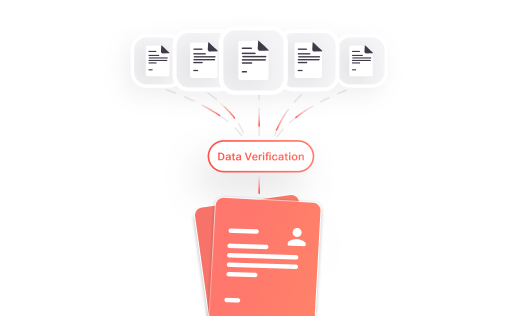
Detailed audit logs record who accessed or changed documents and when, which supports investigations, legal responses, and owner inquiries.
Board voting and collaborative review
The QuickApprove dashboard gives board members a single location to review application materials, see AI-generated summaries, and cast votes. This approach reduces scattered email threads and keeps a clear record of decisions.
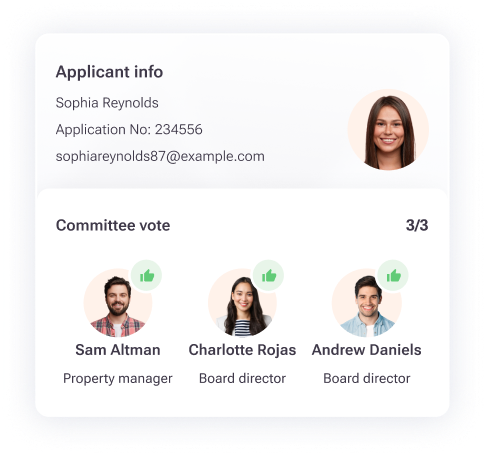
Each action taken by a director appears in the audit log, which supports transparent governance and consistent enforcement of community rules.
Frequently asked questions on Florida HOA document management
Q1: What are the main document retention periods for Florida HOAs?
Most official records must be kept for at least 7 years. Financial records such as invoices, receipts, and bank statements fall into this category. Governing documents and meeting minutes require permanent retention. Voting materials, including ballots, proxies, and sign-in sheets, must be kept for at least one year after the vote. Governing documents may set longer periods, and those community-specific rules control when stricter.
Q2: What counts as an “official record” for a Florida HOA today?
Official records include board and member meeting minutes, voting materials, written records related to HOA operations, and all documents that support financial activity. This definition now explicitly covers invoices, transaction receipts, and deposit slips that support any association income or expense, which broadens the set of documents that must be retained and made available for inspection.
Q3: How must HOAs with 100 or more parcels manage records online after the 2025 website deadline?
HOAs with 100 or more parcels must maintain a website or mobile application that allows owners secure access to specific official records. Required items include current governing documents, annual budgets, insurance policies, certain contracts, bid lists, and meeting notices. Sensitive content must appear only in protected areas with login credentials and appropriate access controls.
Q4: What are the rules for virtual meeting recordings?
Condominium virtual meetings must be recorded and stored as official records for at least one year. Associations with 25 or more units must also add these recordings to the association website or portal for owner viewing. These files should be backed up and protected like other key records.
Q5: Can Florida HOAs store official records outside the state?
Associations must make official records available within 45 miles of the community or within the county where the HOA is located. Digital copies may reside on cloud servers in other locations, but boards still need the ability to provide access within those distance requirements. Physical records should remain in Florida and be accessible for timely inspection.
Conclusion: Strengthening your HOA’s future with organized document management
Thoughtful document management in 2026 helps Florida HOAs stay compliant, reduce risk, and build trust with owners. Communities that invest in clear policies, digital tools, and secure access processes find it easier to respond to record requests, manage board transitions, and document enforcement actions.
TenantEvaluation supports this work with a Florida-focused platform that connects applications, screening, approvals, and long-term records in one place. Schedule a demo today to see how TenantEvaluation can help your board manage documents more efficiently while meeting Florida’s HOA requirements in 2026.