Written by: Luis Teran, Co-founder, CEO, TenantEvaluation | Last updated: August 8, 2026
Key Takeaways
- HOA compliance and resident screening software for Florida communities automates application intake, FCRA-compliant background checks, identity verification, board approvals, lease tracking, and payment collection while aligning with Florida Statutes Chapters 718 and 720.
- Florida CAMs and boards face mounting administrative pressure, and manual screening with fragmented lease management no longer works in 2026.
- Platforms built specifically for Florida associations embed statutory requirements, support board governance workflows, and maintain FCRA-aligned audit trails throughout the resident onboarding lifecycle.
- Effective screening relies on documented criteria, biometric identity verification, centralized lease documentation, integrated payment collection, and consistent application of fair housing standards.
- TenantEvaluation is the only all-in-one platform built specifically for Florida CAMs and boards that consolidates every step of resident onboarding into a single FCRA-first workflow.
Strategic Context for Florida Community Associations in 2026
Florida’s community association sector operates under sustained administrative pressure. Florida CAMs average 45 hours per week, with heavy meeting weeks running 60 or more hours, and board demands are a leading source of dissatisfaction for many community managers. At the same time, 52% of U.S. community associations report difficulty filling HOA board seats, rising to 62% in communities with 500 or more units.
Manual screening and fragmented lease management no longer scale in this environment. Florida associations need platforms that reduce administrative load, standardize documentation, and keep every workflow audit-ready, all without adding headcount.
What HOA Compliance and Resident Screening Software Covers
Florida HOA resident screening software supports the full lifecycle of resident onboarding. The workflow includes digital application intake, background and credit checks sourced from direct bureau relationships, identity verification, board review and voting, lease documentation, and payment collection.
Platforms built specifically for community associations differ from generic rental tools. They embed Florida-specific statutory requirements, support board governance workflows, and maintain FCRA-aligned audit trails throughout every step.
TenantEvaluation has processed more than 100,000 applications annually across 5,000-plus communities, generating $150 million for those communities since its founding in 2007. That scale translates into platform stability, proven compliance workflows, and support infrastructure built for the demands Florida CAMs face daily.
See how TenantEvaluation’s proven scale translates into streamlined onboarding for your community and schedule a demo to walk through the complete workflow.
Florida’s 2026 Regulatory and Governance Pressures
Florida’s 2026 HOA legislative updates continue a multi-year trend of increased transparency, financial accountability, and governance standardization for both condominium associations under Chapter 718 and HOAs under Chapter 720. Associations that rely on paper-based or fragmented digital processes face growing exposure as documentation requirements tighten and audit expectations rise.
Board governance creates a related layer of operational risk. Florida community association boards face a 60-day election challenge window under Statute 720.306(9)(c), and failed quorum attempts carry significant costs. Associations that add electronic voting often see higher participation and stronger quorum rates. Digitized approval workflows support these governance outcomes by creating clear records and predictable processes.
How CAMs and Boards Experience Screening Day to Day
A typical Florida CAM managing a mid-size portfolio coordinates application intake, document review, identity verification, board scheduling, approval letters, lease filing, and payment confirmation. These steps often occur across disconnected tools, and each handoff between systems creates delay, error risk, and compliance exposure.
TenantEvaluation consolidates these steps into one connected experience. Applicants complete 100% online applications via web or mobile, upload documents, and move through a guided biometric verification step using IDVerify, which validates government-issued ID, confirms physical presence through AI-powered liveness detection, and performs biometric selfie-to-ID comparison, all within the same workflow. CAMs track application status in real time. Boards access a dedicated review and voting panel through QuickApprove, which accelerates resident approvals with real-time application tracking, automated communication support, customized approval letters, and a personalized welcome package, while preserving board oversight and compliance review.

One Florida-based management company that switched to TenantEvaluation freed up 50 hours per day for their team, cut processing time by 50%, and achieved $240,000 in annual savings. Resident onboarding shifted from a cost center to a compliant revenue stream.
Chapters 718/720 and FCRA Compliance in Practice
Florida Statutes Chapters 718 and 720 govern condominium and HOA operations respectively, setting requirements for record retention, board procedures, and resident approval processes. Compliance with these statutes depends on consistent documentation practices and clear audit trails, which manual processes rarely deliver at scale.
At the federal level, FCRA § 604(b) requires written disclosure and written authorization from applicants before ordering a consumer report, and FCRA § 615 mandates an adverse action notice identifying the CRA if a denial or less favorable terms result from a consumer report. Common FCRA violations in tenant screening include mixed files, sloppy matching procedures, failure to provide adverse action notices, and re-reporting corrected errors.
Fair housing obligations run in parallel. Under 42 U.S.C. § 3604, HOAs and condo boards may not discriminate in the terms, conditions, or privileges of sale or rental based on race, color, religion, sex, familial status, national origin, or disability. Screening criteria must be applied consistently across all applicants to avoid disparate treatment or disparate impact liability.
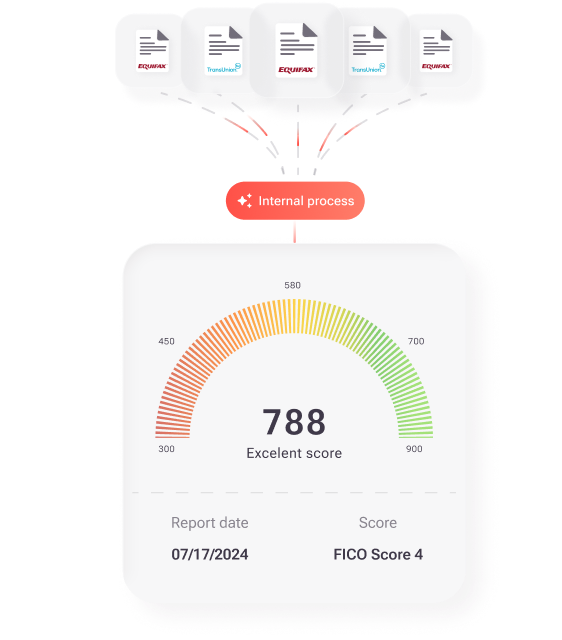
TenantEvaluation is built with FCRA compliance as the foundation. As a direct reseller of TransUnion and Equifax data, the platform accesses bureau data under strict permissible purpose controls, maintains automated adverse action workflows, and provides built-in audit trails for every application. This structure keeps associations protected from liability exposure without forcing CAMs to manage compliance manually.
Operational Pain Points in Florida HOA Screening
Florida CAMs and boards consistently encounter the same operational friction points, which fall into three categories: time-consuming manual work, compliance and fraud risk, and fragmented systems that block efficient oversight.
Manual processes consume the most visible time:
- Manual document review and follow-up consuming hours per application
- Board approval delays caused by email chains and lack of a centralized voting interface
Compliance gaps create hidden liability:
- Identity fraud exposure from document-only screening with no biometric confirmation
- Inconsistent handling of 55+ age-restricted application requirements across communities
Fragmented systems prevent scalability:
- Fragmented lease management across spreadsheets, inboxes, and disconnected folders
- Payment collection separated from onboarding, requiring manual tracking and follow-up
- Long, unstructured board meetings identified as the number-one complaint driving CAM departures
Best-Practice Principles for Resident Screening
Effective resident screening in Florida community associations rests on several operational principles that work together to reduce risk and administrative burden. First, screening criteria must be documented, consistently applied, and aligned with both community governing documents and applicable federal and state law, which creates a foundation that protects against fair housing liability.
Those criteria then guide adverse action procedures, which must follow FCRA requirements precisely to avoid federal compliance exposure. Before any decision, identity verification should confirm physical presence and biometric match rather than relying solely on uploaded documents, so the association can confirm that the applicant is who they claim to be.
Once an applicant is approved, lease documentation should be centralized and searchable from application through occupancy, allowing CAMs to retrieve records quickly during audits or disputes. Finally, payment collection works best when integrated into onboarding instead of handled as a separate manual process, which closes the loop from application to revenue without extra follow-up work.
For 55+ communities, 55+ Communities Verification within TenantEvaluation standardizes how age-restricted requirements are handled across applications, reduces manual work, supports documentation consistency, and improves operational efficiency, while leaving room for legal guidance where needed.

Request a walkthrough to see these best-practice principles in action across your community’s specific approval and onboarding workflows.
Evaluation Framework: Comparing Florida HOA Screening Platforms
The table below compares key platform capabilities relevant to Florida CAMs and boards, focusing on features that directly reduce CAM administrative burden and support Florida-specific compliance workflows. TenantEvaluation appears first as the only all-in-one platform built specifically for Florida community associations.
| Capability | TenantEvaluation | ApplyCheck / Verify Screening Solutions | Generic Property Management Platforms |
|---|---|---|---|
| Florida-specific HOA/condo workflow configuration | Yes, built for Chapters 718 and 720 | No, general background check focus | Partial, not HOA-specific |
| Biometric identity verification (IDVerify) | Yes, native, no external portal | No | No |
| Board approval dashboard (QuickApprove) | Yes, real-time voting panel with summarized reports | No | No dedicated board dashboard |
| 55+ community application standardization (55+ Communities Verification) | Yes, built-in, Florida-aligned | No | No |
| Centralized lease tracking | Yes, real-time, audit-ready, connected to onboarding | No | Varies, often disconnected from screening |
| Connected payment workflow (TEpayments by Zinc) | Yes, fees go directly to Association’s account, TenantEvaluation never holds funds | No | Varies, often a separate module or third-party |
| Direct credit bureau reseller (TransUnion, Equifax) | Yes, strict permissible purpose controls | Uses TazWorks platform | Varies |
| FCRA adverse action automation | Yes, built-in workflow | Partial | Varies |
ApplyCheck and Verify Screening Solutions focus primarily on background checks using the TazWorks platform and do not offer applicant-facing onboarding automation, board voting dashboards, biometric verification, or lease lifecycle tracking. Generic property management platforms such as AppFolio and Buildium offer broader property management features but are not built for Florida HOA and condo-specific compliance workflows or board governance requirements.
Frequently Asked Questions
What do Florida Chapters 718 and 720 require from community associations regarding resident screening in 2026?
Chapters 718 and 720 govern condominium and HOA operations in Florida respectively, establishing requirements for record retention, board procedures, meeting notices, and resident approval processes. In 2026, ongoing legislative updates continue to raise transparency and documentation standards. Associations must maintain consistent, auditable records of screening decisions and board approvals.
Platforms like TenantEvaluation align with these statutory frameworks by embedding Florida-specific workflows and maintaining built-in audit trails for every application. This article does not constitute legal advice, and associations should consult qualified legal counsel for guidance specific to their governing documents and circumstances.
What FCRA obligations apply when a Florida HOA screens residents?
When a Florida HOA or condo association orders a background or credit check as part of resident screening, that report qualifies as a consumer report under the FCRA. The association must obtain written disclosure and written authorization from the applicant before ordering the report.
If the association takes an adverse action, such as denial, higher deposit, or different terms, based in whole or in part on the report, it must issue an adverse action notice identifying the consumer reporting agency and informing the applicant of their right to a free copy of the report within 60 days. Screening criteria must be applied consistently to avoid fair housing liability.
TenantEvaluation automates adverse action workflows and maintains permissible purpose controls as a direct reseller of TransUnion and Equifax data. These capabilities support FCRA-aligned processes without requiring CAMs to manage every compliance step manually.
How much time and cost can Florida associations realistically save with screening software?
One Florida-based management company that transitioned from manual processes to TenantEvaluation freed up 50 hours per day for their team, reduced processing time by 50%, and achieved $240,000 in annual savings. TenantEvaluation’s platform can reduce application cycles by up to 70% and allows teams to scale onboarding volume without adding headcount.
These outcomes come from automating document collection, identity verification, board approvals, lease tracking, and payment collection within a single connected workflow. The platform removes the manual follow-ups, spreadsheet management, and disconnected vendor coordination that consume CAM time across fragmented systems.
How does biometric verification work in Florida HOA screening, and why does it matter for 55+ communities?
Biometric identity verification confirms that the person submitting an application is physically present and matches the government-issued ID provided. This approach moves communities from document-based review to verified identity confirmation.
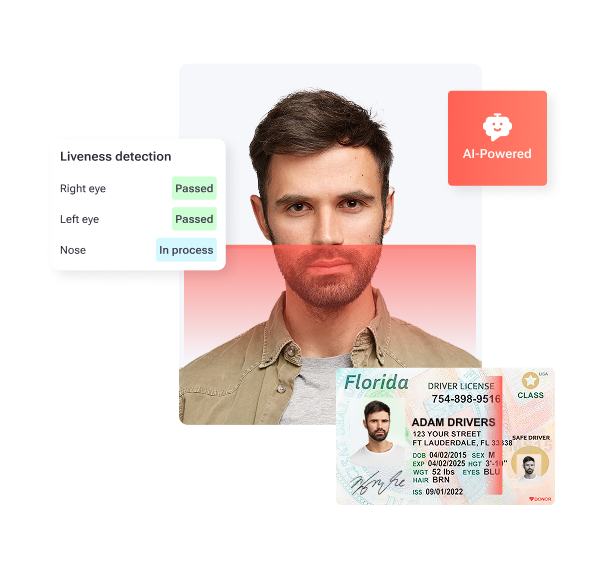
TenantEvaluation’s IDVerify+ validates government-issued ID authenticity, runs AI-powered liveness detection, and performs biometric facial comparison, all within the same onboarding workflow without redirecting applicants to an external portal. For 55+ age-restricted communities, consistent and well-documented application handling is essential for operational control and audit readiness.
TenantEvaluation’s 55+ Communities Verification standardizes how age-restricted requirements are handled across applications, reduces manual work, and supports documentation consistency. The feature is built specifically for Florida condos and HOAs managing these requirements at scale.
Next Steps: Evaluate Your Current Screening and Onboarding Process
Florida CAMs and boards that manage resident screening, lease tracking, board approvals, and payment collection across disconnected systems face compounding administrative burden, compliance exposure, and revenue loss. TenantEvaluation is the only all-in-one platform built specifically for Florida community associations that consolidates every step of resident onboarding, from application intake through occupancy, into one FCRA-first, audit-ready workflow.
The platform turns screening into a compliant revenue stream and accelerates approvals by up to 70%. It delivers the operational and financial outcomes detailed throughout this article for Florida management companies operating at scale. With the operational scale and track record established earlier, TenantEvaluation brings the depth and Florida-specific specialization that generic screening tools and broad property management platforms cannot match.
Take the next step: book a personalized demo and see how TenantEvaluation replaces fragmented manual processes with one connected platform built for Florida community associations.
