Written by: Luis Teran, Co-founder, CEO, TenantEvaluation
Key Takeaways for Florida CAMs and Boards
- Manual HOA approval processes in Florida create structural delays through email chains, incomplete documents, and monthly meeting backlogs that frustrate applicants and exhaust CAMs.
- The five most common bottlenecks are incomplete documents, manual sign-off loops, meeting backlogs, volunteer burnout, and unclear guidelines. QuickApprove addresses each one with automated workflows and board-ready tools.
- QuickApprove cuts delays with live status visibility, automated communication support, a dedicated voting dashboard, and biometric ID verification while maintaining FCRA compliance and board authority.
- Florida communities using QuickApprove reduce manual follow-ups, standardize documentation, and free up to 50 hours of staff time per day across high-volume and age-restricted associations.
- Learn how TenantEvaluation streamlines HOA approvals for Florida CAMs and boards at TenantEvaluation.
The Five Most Common HOA Approval Bottlenecks
The five most common HOA approval bottlenecks are incomplete documents, manual sign-off loops, monthly meeting backlogs, volunteer burnout, and unclear guidelines. QuickApprove addresses each with live status visibility, automated communication support, a board voting dashboard, customized approval letters, and a personalized welcome package, while maintaining FCRA compliance and board authority.
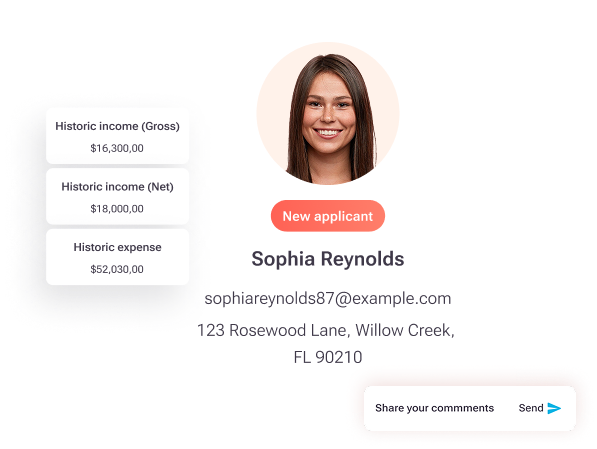
This article now walks through each bottleneck in detail and shows how QuickApprove changes the daily experience for CAMs, boards, and applicants.
1. Incomplete or Missing Documents
Incomplete or missing documents stop applications in their tracks and force CAMs into constant follow-up mode. Florida HOAs and condos typically require executed leases, government-issued IDs, proof of income, and community-specific forms before an application can advance.
Applicants often submit partial packages during high-volume seasons. The review process pauses while managers chase down missing items. Florida’s diverse applicant pool adds complexity, because language barriers and unfamiliarity with association requirements create repeated back-and-forth.
Each follow-up cycle adds days to the approval timeline and hours to a CAM’s workload. Applicants feel stalled, and boards see growing queues that do not reflect real progress.
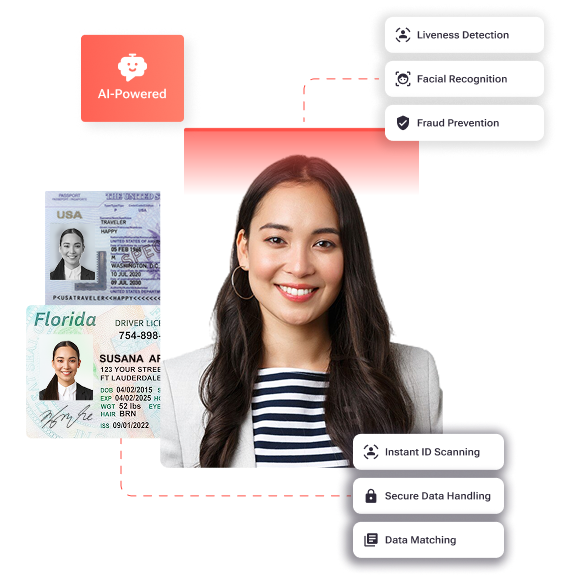
QuickApprove and IDVerify tackle this problem at the point of submission. Smart application form logic checks for executed leases, valid IDs, and required documents, and it rejects incomplete submissions before they enter the review queue.
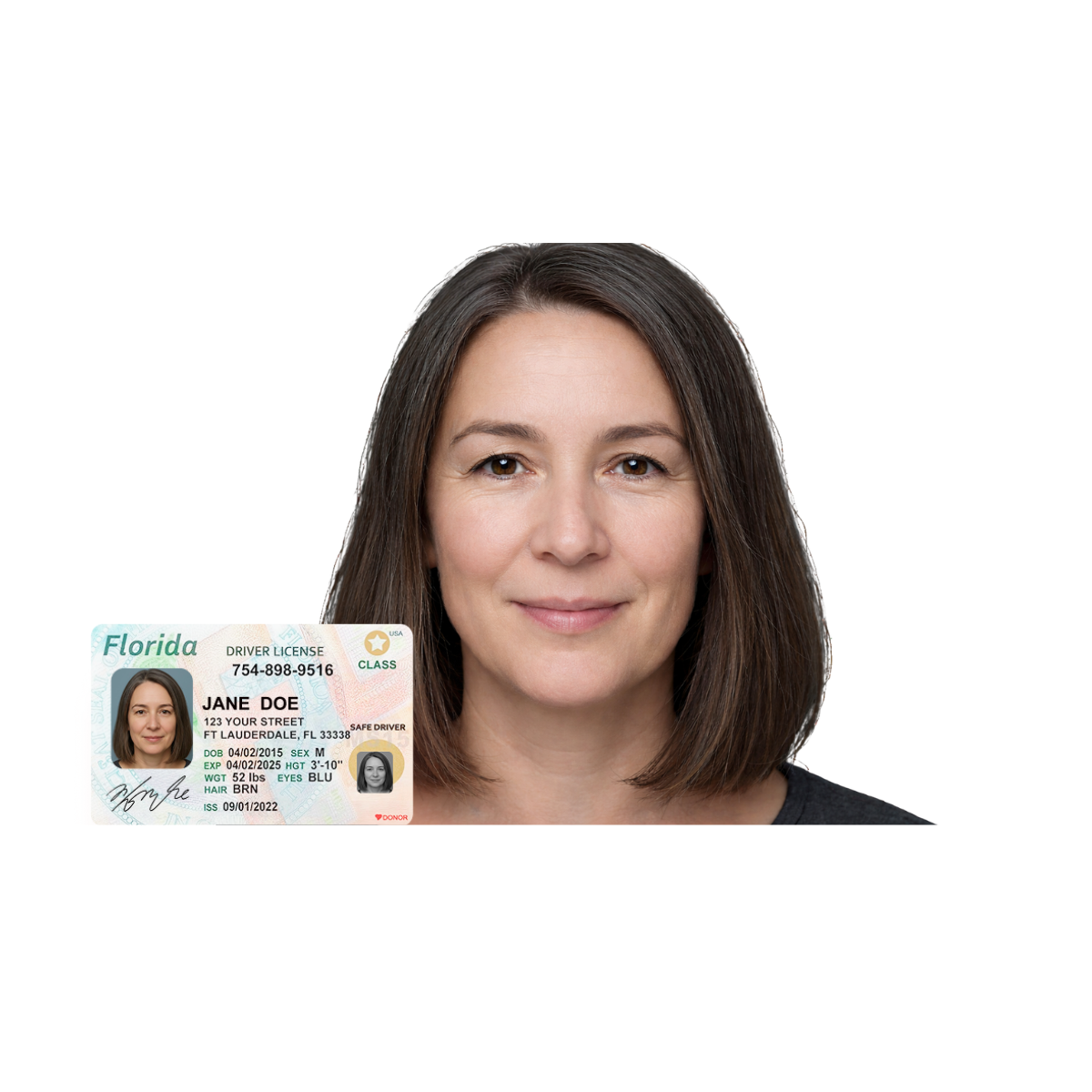
IDVerify adds biometric identity verification using government ID validation, AI-powered liveness detection, and selfie-to-ID biometric comparison. The system confirms applicant identity before the file reaches the board. Incomplete or unverified applications no longer clog the queue.
2. Manual Sign-off Loops
Manual sign-off loops slow every decision and hide where applications really stand. In communities without a centralized workflow, approvals move through email.
A CAM emails a board member. The board member replies with a question. The CAM follows up with the applicant. The applicant responds to a different thread. Days pass, and no one has a clear view of the application’s status.
This fragmented communication creates delays at every handoff point. It also makes it difficult to maintain a complete audit trail, which creates risk under FCRA requirements.
QuickApprove replaces scattered email chains with a single, connected platform. CAMs and boards see application status in one place, with updates that reflect current progress instead of old messages.
Automated communication support keeps applicants, owners, and board members informed without constant manual follow-up. Every action is timestamped and auditable, so CAMs and boards have a clear record of each decision without inbox chaos.
3. Monthly Meeting Backlogs
Monthly meeting schedules create predictable backlogs that frustrate everyone involved. Many Florida HOA boards only vote on applications during scheduled meetings.
Applications submitted after the agenda deadline wait until the next meeting for a decision. In communities with high turnover or seasonal influxes across South Florida, Tampa Bay, and the Gulf Coast, this delay compounds month after month.
Applicants often wait three to six weeks for a decision that could take three minutes. Realtors lose commissions, owners lose rental income, and boards face pressure they cannot address between meetings.
QuickApprove includes a board-ready voting dashboard that gives board members direct access to application status, AI-generated applicant summaries, and a clear voting panel. Boards can review and vote between meetings without sacrificing control, compliance, or visibility.
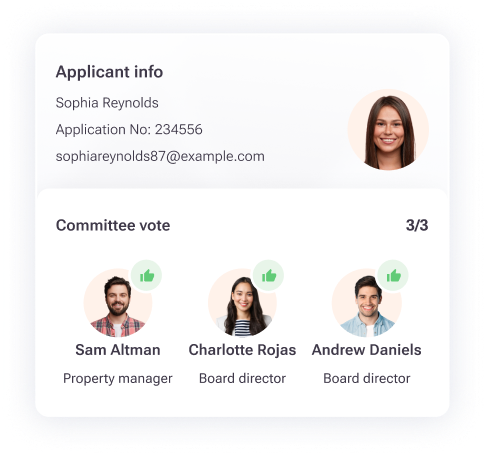
The dashboard is built specifically for board members, not adapted from generic property management tools. It fits how Florida boards actually work and reduces the backlog that monthly meetings create.
Schedule a demo today to see the board voting dashboard in action.
4. Volunteer Burnout and Follow-up Fatigue
Volunteer burnout and follow-up fatigue slow approvals and increase turnover on Florida HOA boards. Most board members are residents who manage approvals alongside full-time jobs and personal obligations.
When workflows depend on manual follow-ups, document chasing, and email coordination, a small group of volunteers carries a heavy administrative load. Burnout reduces response rates, slows decisions, and raises the risk of mistakes.
CAMs absorb the overflow and spend hours on repetitive follow-ups instead of higher-value community management work. Teams feel busy but do not see matching progress on applications.
QuickApprove reduces manual follow-ups through automated workflows as part of TenantEvaluation’s all-in-one digital platform that frees up to 50 hours of staff time per day. Status notifications, missing document requests, and approval letter generation run through the system instead of individual inboxes.
Volunteers handle decisions instead of logistics, and management teams gain a more sustainable workload. Communities experience faster approvals with less burnout.
5. Unclear or Inconsistent Guidelines
Unclear or inconsistent guidelines create confusion, disputes, and stalled applications. When communities do not standardize how rules apply across applicants, different board members may interpret the same requirement in different ways.
Applications then linger in review, generate questions, and create documentation gaps that can become liabilities during audits or legal proceedings. Applicants also perceive the process as unfair or unpredictable.
This challenge is especially acute in Florida’s age-restricted communities. HOAs and condos operating under 55+ requirements face additional documentation obligations. When handled manually through emails, PDFs, and individual follow-ups, these obligations often produce inconsistent records and extra administrative work.
QuickApprove standardizes application handling across communities. Florida condos and HOAs gain more consistent documentation and smoother operations.
For age-restricted communities, 55+ Communities Verification provides a built-in workflow that reduces manual work and standardizes how age-restricted requirements are handled. It supports documentation consistency and strengthens internal processes for Florida CAMs and boards that manage these communities.
QuickApprove in Practice: Before and After
| Process Area | Manual / Email-Based | With QuickApprove | Outcome |
|---|---|---|---|
| Application tracking | Spreadsheets and inbox searches | Status and history in one platform | Full visibility for CAMs and boards |
| Board voting | Monthly meeting agenda, email chains | Dedicated board voting dashboard | Faster decisions without lost oversight |
| Document collection | Manual follow-ups, incomplete submissions stall review | Smart form logic rejects incomplete submissions automatically | Fewer manual follow-ups and stalled files |
| Approval letters and onboarding | Manual drafting, inconsistent formatting | Customized approval letters and personalized welcome package | Consistent, professional applicant experience |
Frequently Asked Questions
What are the most common HOA approval bottlenecks in Florida?
The most common HOA approval bottlenecks in Florida are incomplete or missing documents, manual sign-off loops across email chains, monthly meeting backlogs that delay board votes, volunteer burnout and follow-up fatigue among board members and CAMs, and unclear or inconsistently applied community guidelines. Each bottleneck adds days or weeks to the approval timeline and increases administrative burden on management teams.
Florida communities with high seasonal turnover, especially in South Florida, Tampa Bay, and the Gulf Coast, face compounding delays during peak application periods. QuickApprove focuses directly on these recurring pain points.
How can Florida HOAs speed up the approval process without losing board oversight?
Florida HOAs can accelerate approvals by replacing manual email workflows with a connected digital platform that gives boards live access to application status and a dedicated voting dashboard. TenantEvaluation’s QuickApprove workflow is built for this purpose and reflects how Florida communities operate.
QuickApprove moves applications from submission to decision faster through status visibility, automated communication support, and a board-ready approval process. Boards retain full control over every decision, and the platform supports FCRA-compliant screening instead of bypassing it.
What is the impact of HOA approval delays on applicants and community associations?
HOA approval delays affect applicants, owners, CAMs, and boards at the same time. Applicants face uncertainty about move-in timelines, which disrupts relocation plans and realtor transactions.
Owners lose rental income during extended vacancy periods. CAMs handle repeated follow-ups, document chasing, and status inquiries. Boards manage pressure from applicants and owners while working through a backlog that monthly meetings cannot clear quickly.
For community associations, delays also create compliance exposure when audit trails are incomplete or inconsistent. A streamlined digital workflow reduces these impacts across all stakeholders in a single system.
How does TenantEvaluation maintain FCRA compliance during accelerated approvals?
TenantEvaluation is built for community associations and management companies with FCRA compliance as a core requirement. The platform operates as a direct reseller of TransUnion and Equifax data under strict bureau rules, maintains automated adverse action workflows, and generates audit trails for every application.
QuickApprove accelerates the workflow while keeping screening, identity verification, and documentation steps in place. IDVerify confirms applicant identity before screening authorization, which supports FCRA-aligned workflows and strengthens audit defensibility.
Does TenantEvaluation support Florida age-restricted communities?
TenantEvaluation supports Florida age-restricted communities through 55+ Communities Verification, a built-in capability designed for Florida condos and HOAs that manage 55+ properties. It standardizes how age-restricted requirements are handled across applications and reduces manual work for CAMs and boards.
The workflow improves documentation consistency and strengthens internal operational controls. It provides a more consistent and scalable way to handle 55+ application requirements while still allowing communities to seek legal guidance when needed.
The Final Recap
Each of these bottlenecks is solvable with a clear, digital workflow that reflects how Florida communities actually operate. CAMs, boards, and applicants all benefit when approvals move through one connected system instead of scattered emails and spreadsheets.
TenantEvaluation’s QuickApprove brings together application tracking, automated communication support, a board-ready voting dashboard, IDVerify biometric verification, and 55+ Communities Verification in a single FCRA-aligned platform. With 5,000+ communities served and 100,000+ applications processed annually, TenantEvaluation provides the operational infrastructure Florida community associations need to move faster without losing control.
Schedule a demo today and see how QuickApprove removes approval bottlenecks in your community.
