Written by: Luis Teran, Co-founder, CEO, TenantEvaluation
Key Takeaways for Florida HOA Denial Decisions
- Florida HOA boards must document every denial with specific governing-document citations to withstand Fair Housing Act scrutiny and avoid litigation.
- Legitimate denial reasons include incomplete applications, financial shortfalls, criminal-history flags, unpaid assessments, rental-cap violations, non-conforming architectural requests, and identity discrepancies.
- Manual email-and-spreadsheet workflows create gaps in audit trails and inconsistent criteria application that increase FCRA and Fair Housing Act exposure.
- Automated, FCRA-compliant platforms deliver timestamped records, adverse-action notices, and uniform screening criteria that protect associations and speed processing from days to minutes.
- TenantEvaluation equips Florida CAMs and boards with compliant tools for every stage of the denial process, from intake through record retention.
Common Reasons Florida HOAs Deny Applications
-
Incomplete or Inaccurate Application Submission. Missing documents, unsigned forms, or misrepresented information are the most operationally common denial triggers. Florida HOA rental restrictions require mandatory tenant approval processes, so incomplete submissions must be rejected before review begins. Under HB 1203 effective July 1, 2024, an HOA or ARC denying a parcel owner’s request for a structure or improvement must provide written notice identifying the non-compliant portion and citing the specific rule or covenant relied upon. Board action: issue a written deficiency notice that cites the exact missing item and the governing document section requiring it. TenantEvaluation’s intelligent form logic automatically rejects incomplete submissions and flags missing documents before the file reaches the board, which removes the most common source of back-and-forth.
Failure to Meet Financial Qualification Criteria. Associations commonly require minimum credit scores, income-to-rent ratios, or proof of funds. Florida condominium associations may charge a transfer approval fee of up to $150 per applicant when authorized in governing documents, and screening criteria must be applied uniformly. Board action: document the specific financial threshold in the denial letter and retain the screening report in the association’s records. TenantEvaluation surfaces credit and income data through its direct TransUnion and Equifax reseller relationships, so boards have a defensible, bureau-sourced basis for every financial denial.
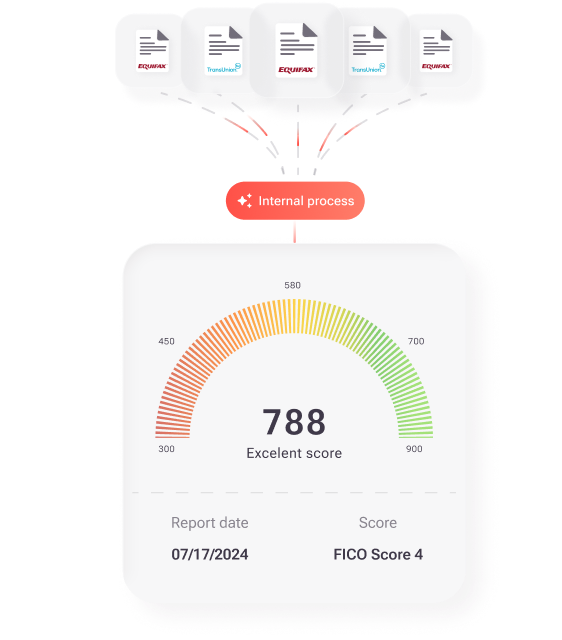
Trusted insights to evaluate financial responsibility. Access full credit reports and verified credit scores across the U.S. and Canada. Our reports provide detailed payment history, debt levels, and financial behavior—giving you a clear, reliable view of each applicant’s financial standing. Ideal for communities with diverse applicants, this tool helps you make confident, well-informed leasing decisions. Criminal History That Meets the Association’s Documented Standards. A crime-free lease addendum is likely enforceable in Florida when it is not applied arbitrarily and does not violate public policy. Under the Fair Housing Act, determinations that an individual poses a direct threat must be made on an individualized basis and cannot rely on general assumptions. Board action: apply a written, consistently enforced criminal history policy that evaluates the nature, severity, and recency of the offense. TenantEvaluation’s SafeCheck+ delivers nationwide and global background checks, including criminal records, offender registry, and FBI Most Wanted, within the same workflow. This reduces manual lookups and supports individualized review.
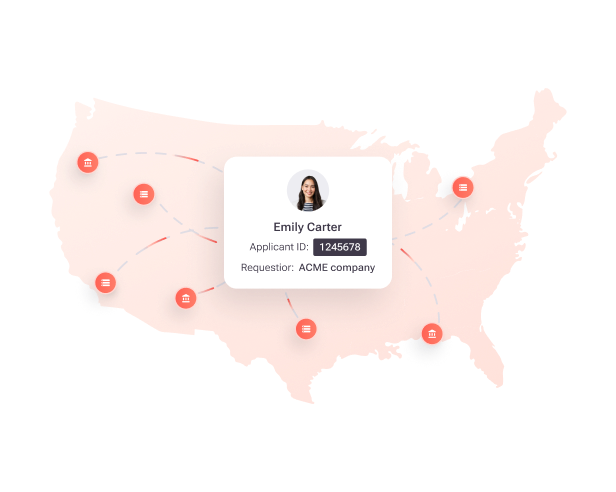
With SafeCheck+, our upgraded service provides you access to a comprehensive nationwide offender search, powered by real-time data from law enforcement agencies and trusted third-party sources. Our expanded coverage ensures that you never miss critical information, no matter where you operate. Unpaid Assessments or Outstanding Balances. Florida condominium associations may suspend a delinquent owner’s and that unit’s tenant’s rights to use common elements when the owner is more than 90 days delinquent (Section 718.303(4), Florida Statutes). Delinquency on dues is a documented, objective denial ground. Board action: confirm the balance in writing, cite the governing document provision, and retain the ledger record. TenantEvaluation’s platform maintains a complete audit trail that links the financial data to the denial decision, which supports defensible record-keeping.
Violation of Rental Caps or Lease Term Restrictions. Common Florida HOA rental restrictions include minimum lease terms of 6 or 12 months and rental caps of 15–25% of units. Under Section 720.306(h), Florida Statutes, rental restrictions adopted after July 1, 2021 apply only to owners who acquired title after the amendment’s effective date or who consented to it. Board action: verify the owner’s acquisition date against the amendment’s effective date before issuing a denial, and document the analysis. TenantEvaluation’s custom setup encodes each community’s specific rental restrictions into the application workflow and flags cap violations before the board convenes.
Non-Conforming Architectural or Modification Request. Florida law requires an HOA that denies an architectural request to provide written notice stating with specificity the rule or covenant relied on and the specific aspect of the proposed improvement that does not conform. Vague language such as “not in harmony with the community” does not satisfy this standard. Under HB 293, effective May 28, 2024, HOAs cannot reject hurricane-protection applications that meet adopted specifications. Board action: cite the exact declaration section and the exact nonconforming element in every architectural denial letter. TenantEvaluation’s document collection workflow captures submitted plans and supporting materials in a centralized, timestamped record that supports ARC decision documentation.
Identity Discrepancy or Misrepresentation. Growing exposure to stolen IDs, synthetic identities, and impersonation attempts makes identity verification a legitimate and increasingly necessary denial ground. Clear written records of application decisions are essential because liability under the Fair Housing Act can arise both from the denial itself and from the manner in which the decision is communicated. Board action: document the specific discrepancy, retain the verification result, and issue a written denial that cites the misrepresentation. TenantEvaluation’s IDVerify uses AI-powered liveness detection, government ID authentication, and biometric selfie-to-ID comparison to surface identity discrepancies before the file reaches the board. This shifts communities from document-based review to biometric-confirmed identity verification.
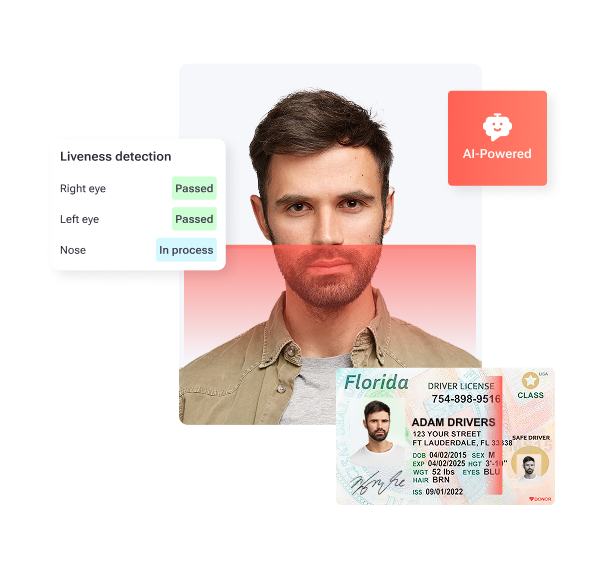
Expanding upon the Basic package, IDVerify Plus includes a critical Liveness feature, ensuring the person present matches the photo on the ID through sophisticated facial recognition technology. This advanced level of verification is ideal for high-security needs. How Manual Denial Workflows Create Friction and Risk
Email chains, spreadsheets, and paper files remain the default workflow for many Florida associations, and this approach creates measurable operational and legal exposure. Without real-time tracking, boards receive incomplete files and make decisions without full information. Without automated notifications, applicants and realtors generate repeated follow-up calls. Without a centralized audit trail, boards that skip required procedures or impose penalties without notice face legal liability under Chapter 720’s fiduciary duty standard.
Florida Statute 720.303 requires that a vote or abstention from voting on each matter voted upon for each director present at a board meeting must be recorded in the minutes, including application denials. Manual minute-taking after a meeting introduces errors, omissions, and disputes. The combination of inconsistent documentation and inconsistent criteria application is the primary driver of Fair Housing Act exposure for Florida associations.
How TenantEvaluation Supports Compliant Denial Communication
FCRA-aligned adverse-action workflows require clear separation between the entity that provides data, such as TenantEvaluation, and the entity that makes the decision, which is the association. TenantEvaluation maintains this separation by design. As a direct reseller of TransUnion and Equifax data, not a third-party scraper, TenantEvaluation accesses bureau data under strict permissible-purpose controls, with regular compliance reviews and audits.
Every application processed through TenantEvaluation generates a built-in audit trail that includes timestamped document uploads, board voting records, automated adverse-action notices, and redacted copies of sensitive data. Consistent, documented enforcement procedures help Florida HOAs demonstrate that decisions were made using neutral standards rather than arbitrary judgment. This complete record forms the core defense in any Fair Housing Act complaint because it shows how the board applied its criteria. TenantEvaluation’s automated adverse-action workflow then closes the loop by generating the required notices without additional manual steps, which reduces the risk of procedural omissions that create liability.
Schedule a demo today to see how TenantEvaluation’s FCRA-first platform handles adverse-action documentation for Florida associations.
Operational Signs of a Dysfunctional HOA Board
Inconsistent or poorly documented denials are among the clearest operational red flags in a community association. Florida HOAs and their architectural committees must reasonably and equitably apply architectural standards to all parcel owners. The architectural approval inconsistency described in the non-conforming request example above often signals broader board dysfunction, because unsystematic processes lead to different standards for similar requests and create the selective-enforcement vulnerability Florida courts recognize. When boards apply different criteria to different applicants, even unintentionally, the association becomes vulnerable to discrimination claims and legal challenges.
Additional signs include boards that rely on email chains for approval votes, lack visibility into application status between meetings, and produce denial letters that fail to cite specific governing document provisions. Each of these gaps creates both operational friction, such as repeated follow-ups, delayed decisions, and frustrated stakeholders, and legal exposure, because fragmented processes make it nearly impossible to prove consistent criteria application after the fact. TenantEvaluation’s QuickApprove accelerated approval workflow addresses all three gaps at once by replacing these fragmented processes with a single connected platform. The board-ready dashboard gives board members direct, real-time access to application status, AI-generated applicant summaries, and a structured voting panel, which replaces email chains and spreadsheets with a transparent, auditable decision process inside TenantEvaluation while preserving control, compliance, and visibility.
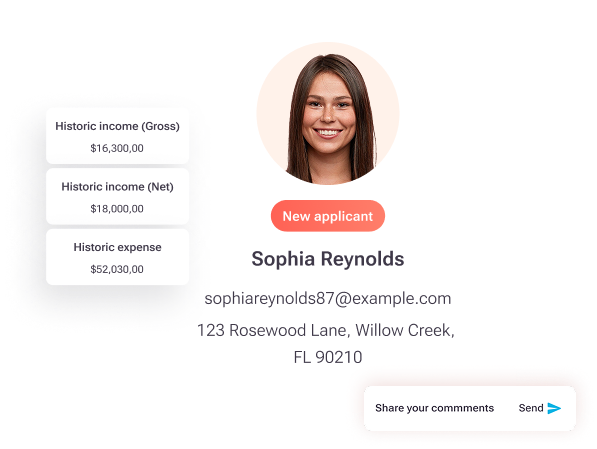
QuickApprove: Fast, Informed Decisions at the Click of a Button Manual vs. Digital Denial Handling in Florida Associations
The operational and legal differences between manual and digital denial workflows appear clearly when you compare processing time, staff effort, audit trails, and liability exposure side by side.
Metric Manual Process TenantEvaluation Digital Platform Source Application processing time 5–10 days 5–10 minutes TenantEvaluation platform data Staff time consumed High, with manual follow-ups with applicants, realtors, and owners Up to 50 hours per day freed through workflow automation TenantEvaluation customer case study Audit trail completeness Fragmented across emails, PDFs, and spreadsheets, and prone to gaps Built-in, timestamped audit trail for every application action and board vote Florida Statute 720.303 vote-recording requirement Liability exposure Higher, because inconsistent criteria application and missing adverse-action notices increase Fair Housing Act and FCRA risk Lower, because automated adverse-action workflows, permissible-purpose controls, and consistent criteria application reduce exposure Chapter 720 fiduciary duty standard; Fair Housing Act documentation requirements The operational differences above raise common questions from Florida CAMs and board members about how denial procedures work in practice.
Frequently Asked Questions
Can an applicant appeal an HOA denial in Florida?
Most Florida HOA and condo governing documents include an appeal or reconsideration process, and applicants have the right to request the specific written basis for any denial. Under Florida HOA law, many architectural denial disputes are subject to mandatory presuit mediation before a lawsuit may be filed. Boards should document the appeal process in their governing documents and apply it consistently to every applicant. TenantEvaluation’s audit trail preserves the original denial record, the stated reason, and any subsequent communications, which gives boards a defensible file if an appeal escalates.
What does the Fair Housing Act prohibit Florida HOA boards from doing during the application process?
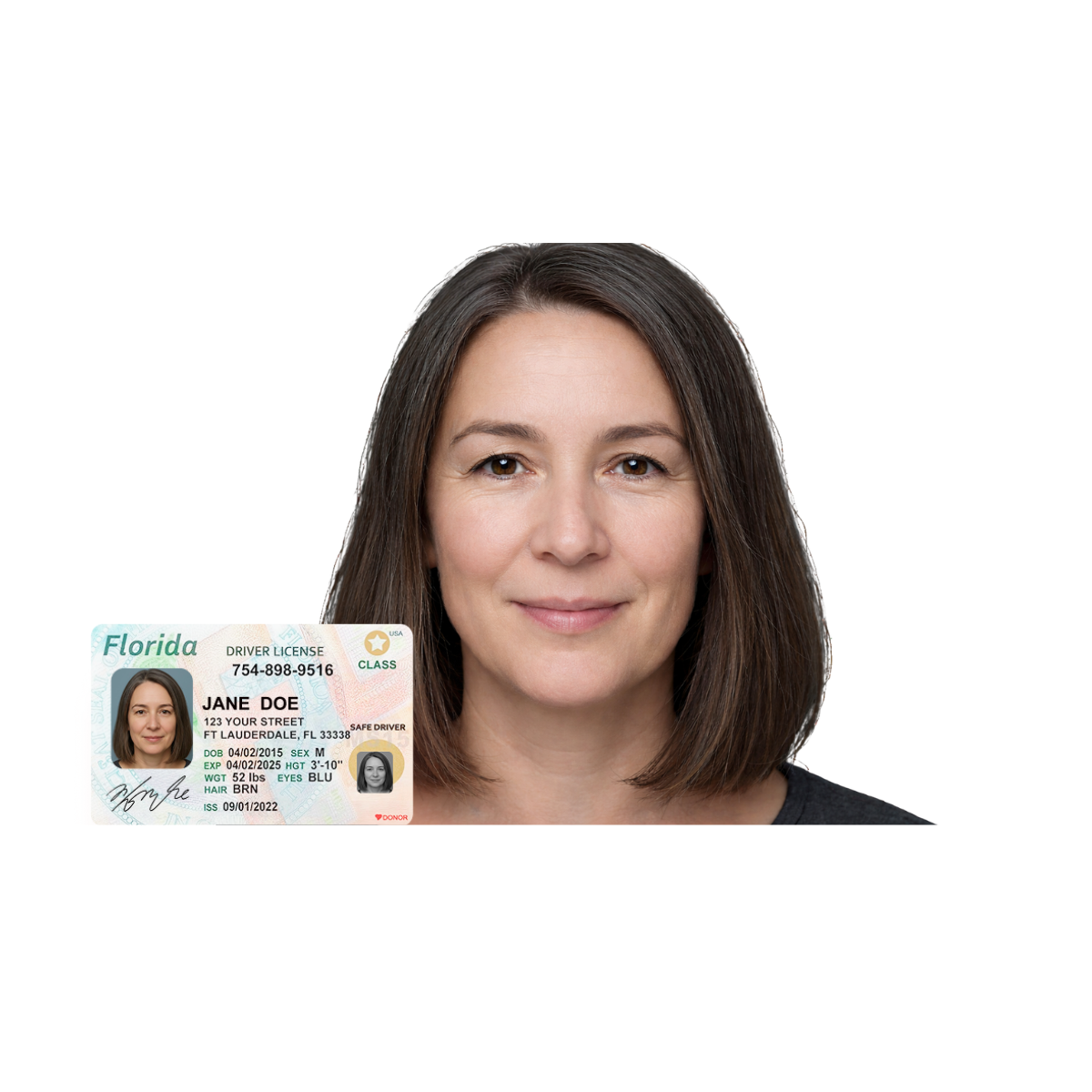
The Fair Housing Act prohibits housing providers, including HOAs, from making decisions that make housing unavailable or impose unequal terms based on race, color, religion, sex, national origin, familial status, or disability. The Act’s protected classes remain the same across all decisions, and its reach extends beyond the denial itself to how the decision is communicated and implemented. Boards must avoid selective enforcement, steering, and any communications that could be interpreted as discriminatory. Denials based on a disability-related direct-threat determination must be made on an individualized basis using objective evidence, not general assumptions. Florida’s 55+ age-restricted communities may legally exclude families with children under 18 under the Housing for Older Persons Act, provided they meet federal documentation and verification requirements. TenantEvaluation’s 55+ Communities Verification capability helps Florida condos and HOAs standardize how age-restricted requirements are handled across applications, which supports documentation consistency and reduces manual work without replacing legal guidance.
+55 Communities What happens if an HOA denies an application on or near a closing date?
A denial issued close to a scheduled closing creates significant disruption for buyers, sellers, realtors, and lenders. Florida condo associations and HOAs are not required to approve applications by a specific deadline unless the governing documents impose one, but unreasonable delays can create legal exposure. Boards should process applications within the timeframe specified in their governing documents and communicate decisions promptly in writing. TenantEvaluation’s QuickApprove accelerated approval workflow is designed for these high-pressure scenarios. It moves applications from submission to decision faster, with real-time tracking and automated communication support, so boards are not caught making rushed decisions without complete information.
What financial issues can legitimately disqualify an HOA applicant in Florida?
Legitimate financial denial grounds include failure to meet the association’s documented credit score minimum, insufficient income relative to the association’s stated ratio, and outstanding delinquencies on assessments. For condo purchases, lender-side issues such as the association failing to meet reserve funding thresholds can also block a transaction. Florida law prohibits waiving or underfunding structural reserves for components such as roofs and load-bearing walls under SB-4D and SB-154, and associations with underfunded reserves may find that lenders deny financing for prospective buyers, effectively blocking the purchase at the association level. Boards should ensure their financial criteria are documented in governing documents and applied uniformly to every applicant.
Conclusion: Turning Denials into Defensible Decisions
Consistent, documented application denials are not just an administrative best practice. They are the primary legal protection available to Florida HOA and condo boards in 2026. Every denial must cite a specific governing document provision, apply a criterion that is enforced uniformly across all applicants, and generate a record that can withstand a Fair Housing Act or FCRA audit. Manual workflows cannot reliably deliver that standard at scale.
TenantEvaluation is the FCRA-first platform built specifically for Florida community associations and management companies. With direct credit bureau reseller relationships, automated adverse-action workflows, biometric identity verification through IDVerify, the QuickApprove board-ready approval workflow, and built-in audit trails for every application, TenantEvaluation gives CAMs and boards practical tools to apply denial criteria defensibly, accelerate approvals, and reduce liability across 5,000+ communities and 100,000+ applications processed annually.
Schedule a demo today to see how Florida’s leading community association screening platform handles the full denial workflow, from application intake to board decision to compliant record retention.
