Written by: Luis Teran, Co-founder, CEO, TenantEvaluation
Key Takeaways for Florida HOAs Using Biometric ID Checks
- Florida HOAs face rising identity fraud with a 30% increase in synthetic IDs. Biometric checks with liveness detection and facial matching create a strong defense against spoofing and impersonation.
- Biometric verification follows five steps: ID upload, live selfie with liveness actions, document authentication, facial matching, and integrated screening results that fit existing HOA workflows.
- Biometric checks remain legal under Florida Statutes 720/718 and 2026 House Bill 635 when HOAs obtain clear consent and use temporary data handling without permanent storage.
- Biometric screening delivers major fraud reduction, significant time savings, faster approvals, and new revenue opportunities through platforms like TenantEvaluation’s IDVerify+ with native HOA integration.
- TenantEvaluation addresses privacy, accessibility, and cost concerns with multi-language support, a revenue-sharing model, and FCRA compliance. See how IDVerify+ protects your community from identity fraud.
Biometric ID Checks for HOA Applicants Explained
A biometric ID check for HOA applicants combines several verification technologies to confirm identity beyond traditional document uploads. The process starts with government-issued ID authentication using AI algorithms that analyze security features, detect tampering, and extract key identity data. Advanced liveness detection prevents spoofing by analyzing three-dimensional facial cues, skin texture, lighting reflections, and involuntary movements to confirm physical presence.
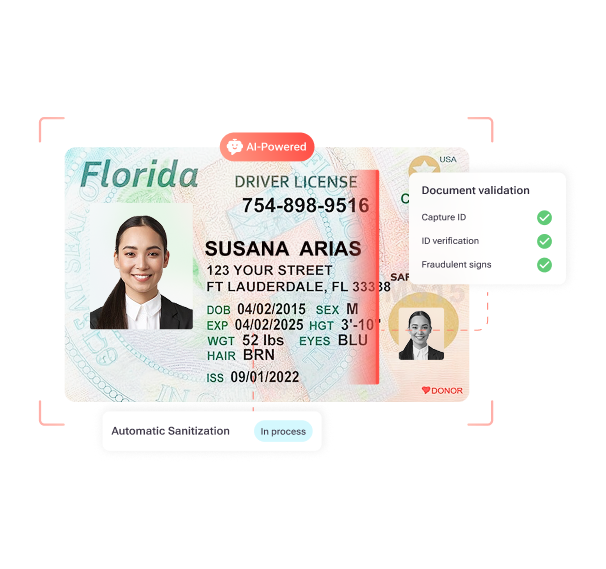
The system then maps facial landmarks and performs biometric comparison between the live selfie and ID photograph. Biometric verification confirms that the person presenting identification matches the document holder, which blocks stolen IDs, synthetic identities, and impersonation attempts that target high-value Florida communities. This technology addresses specific HOA fraud risks while keeping the process convenient through mobile-friendly workflows. Experience TenantEvaluation’s IDVerify biometric solution designed specifically for HOA communities.
Step-by-Step Biometric Verification for HOA Applicants
The biometric verification process for HOA applicants follows five core steps that create thorough identity confirmation. First, applicants upload their government-issued identification document through a secure mobile or web interface. Second, the system guides applicants through a live selfie capture process that includes randomized liveness detection actions such as head turns or blinking to prevent spoofing with photos or videos.
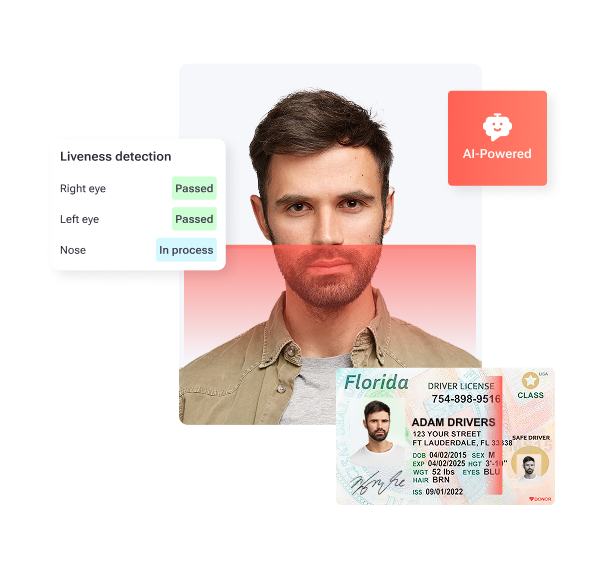
Third, AI-powered algorithms authenticate the ID document by analyzing security features, watermarks, and detecting any tampering or forgery attempts. Fourth, facial recognition technology performs biometric matching between the live selfie and the ID photograph using advanced algorithms that map facial landmarks and geometry. Fifth, the verification results flow directly into the HOA screening report with pass or fail status and supporting documentation.
TenantEvaluation’s IDVerify manages this entire process inside a single platform, which removes the need for external redirects or separate verification portals that frustrate applicants and administrators. The native integration keeps HOA workflows consistent while preserving audit trails for compliance. Experience the streamlined verification process firsthand with a personalized walkthrough.

Florida HOA Biometric Rules, Consent, and Compliance
Florida HOAs can legally require biometric ID checks for applicant screening under existing statutes and recent legislative updates. Florida Statutes 720 and 718 authorize community associations to use reasonable screening procedures that protect community interests. Florida House Bill 635 (2026) explicitly recognizes biometric authentication as a valid multi-factor authentication method, defining it as verification using “something you are” such as fingerprints or facial recognition. This legislation creates a clear framework for biometric use and sets cybersecurity compliance standards.
Privacy compliance depends on strong consent mechanisms and careful data handling. HOAs must provide clear notices explaining biometric collection purposes, obtain explicit applicant consent, and maintain appropriate data protection measures. Biometric verification offers an advantage because systems perform real-time matching without permanent biometric storage, which lowers privacy risk compared to traditional databases.
TenantEvaluation’s platform supports compliance with automatic data redaction, PCI Level 1 controls, and FCRA-aligned audit trails that strengthen legal defensibility. Associations should also use revocable consent procedures and transparent privacy policies to address applicant concerns while preserving screening effectiveness. Get expert guidance on implementing compliant biometric screening for your Florida HOA.
Fraud Prevention and Efficiency Gains from Biometric ID Checks
Biometric ID checks deliver measurable fraud prevention and operational gains for Florida HOAs facing sophisticated identity threats. The technology achieves the fraud reduction mentioned earlier through liveness detection that defeats deepfakes, photo spoofs, and impersonation attempts that bypass traditional document review. Administrative efficiency improves dramatically, with the time savings allowing Community Association Managers to focus on higher-value activities instead of manual document analysis.
Financial benefits extend beyond fraud prevention to include liability reduction and revenue acceleration. Faster, more accurate screening enables quicker approvals that reduce vacancy periods and accelerate rental income for investment properties within HOA communities. This speed advantage becomes even more valuable when combined with TenantEvaluation’s revenue-sharing model, which has generated $150 million for communities while eliminating upfront technology costs.
To ensure boards can capitalize on these faster approvals, the platform’s QuickApprove dashboard provides Board members with transparent access to verification results, which supports informed decisions without creating new bottlenecks. Enhanced security measures protect communities from fraudulent occupants while preserving a positive applicant experience through streamlined mobile-friendly workflows. Discover how our revenue-sharing model delivers ROI without upfront costs.

Common Biometric Concerns for HOAs and Practical Fixes
HOAs often raise concerns about privacy, accessibility, and implementation costs, yet modern biometric solutions address these issues directly. Privacy advocates highlight biometric data collection and potential surveillance overreach, but HOA applications differ from government tracking systems. Proper implementation uses temporary verification without permanent biometric storage, automatic data redaction, and opt-in consent that respects applicant privacy while still meeting security goals.
Accessibility concerns usually focus on elderly applicants or residents with limited smartphone access. TenantEvaluation responds with multi-language support in 11 languages, intuitive mobile interfaces, and 24/7 AI-powered assistance that guides applicants through each step of verification. Cost questions often center on subscription fees or per-use charges, yet revenue-sharing models remove upfront expenses and can generate income for associations.
Technical integration concerns ease when HOAs use native platform solutions that embed biometric verification directly into existing workflows, without external redirects or separate vendor portals. See how we have solved these challenges for communities like yours.
Why TenantEvaluation’s IDVerify+ Fits Florida HOAs
TenantEvaluation’s IDVerify+ delivers biometric verification built specifically for HOA communities, with native integration, advanced fraud prevention, and Florida-focused compliance features that generic tools lack. The platform’s all-in-one approach removes the need for external verification portals, which helps maintain applicant trust and keeps administrators working inside a single ecosystem. The following comparison shows how IDVerify+ provides stronger native integration, more advanced fraud controls, and more flexible revenue options than competing products.
| Feature | IDVerify+ (TenantEvaluation) | ApplyCheck | Snappt | Verify Screening |
|---|---|---|---|---|
| Native HOA Integration | Yes (no redirects) | No | Partial | No |
| Liveness Detection | AI-powered | Basic | Yes | No |
| FCRA Reseller | Yes (TransUnion/Equifax) | No | No | Partial |
| Revenue Model | Sharing | Subscription | Per-use | Subscription |
| FL Compliance | Built-in | Generic | Generic | Generic |
TenantEvaluation’s advantages include direct credit bureau relationships, configurable community-specific settings, and board-focused dashboards that competitors do not provide. The platform’s track record includes $240,000 in annual savings for management companies and more than 50 hours of daily time savings through automation. FCRA compliance serves as a core design principle, which supports legal defensibility and audit readiness. See how IDVerify+ delivers HOA-focused biometric verification in a live session.
Biometric ID verification now plays a central role for Florida HOAs that face fraud threats beyond the reach of traditional screening. TenantEvaluation’s IDVerify+ leads this shift with native integration, documented results, and Florida-specific compliance features. Community Association Managers can review current fraud exposure, compare biometric options, and train board members on new security capabilities. See how we protect communities like yours with advanced identity verification.
FAQ
Is biometric ID verification legal for Florida HOAs?
Yes, Florida HOAs can legally implement biometric ID verification for applicant screening. Florida Statutes 720 and 718 authorize reasonable screening procedures, and House Bill 635 (2026) explicitly recognizes biometric authentication as valid multi-factor authentication. HOAs must obtain proper consent and apply privacy protections, yet the legal framework supports biometric verification when associations use transparent policies and strong data safeguards.
What is liveness detection in biometric verification?
Liveness detection uses AI algorithms to confirm that biometric samples come from a live, physically present person rather than photos, videos, or other spoofing attempts. The technology analyzes facial movements, blinking patterns, skin texture, lighting reflections, and three-dimensional depth cues to detect fraud attempts. Advanced systems may require randomized actions like head turns to further verify physical presence and block sophisticated spoofing techniques.
How accurate is biometric facial matching for HOA screening?
Modern biometric facial matching often reaches accuracy rates above 95 percent when comparing live selfies to government-issued ID photographs. The technology uses machine learning algorithms trained on large sets of genuine and fraudulent examples to map facial landmarks, analyze geometric relationships, and detect subtle tampering attempts. Accuracy continues to improve as AI models adapt to new fraud techniques and changing environmental conditions.
Does biometric verification slow down HOA applications?
No, biometric verification usually speeds up the application process by cutting manual review time by up to 70 percent. Automated verification runs in real time during application submission, which removes delays from manual document checks and follow-up calls. Applicants complete the biometric check in minutes on a smartphone, and administrators receive instant verification results inside their screening reports.
How does TenantEvaluation integrate biometric verification?
TenantEvaluation’s IDVerify embeds biometric verification directly inside the screening workflow, so applicants never leave the main application portal. The system guides applicants through ID upload and selfie capture within the same platform used for application submission. Verification results appear in screening reports with FCRA-compliant audit trails, automated data redaction, and board-accessible dashboards that support transparent decisions.
