Written by: Luis Teran, Co-founder, CEO, TenantEvaluation
Key Takeaways
- HOPA requires 80% of units in 55+ communities to be occupied by at least one person 55 or older, with biennial surveys verifying compliance.
- Communities should handle noncompliance through a 5-step process: formal notice, proof demand, fines, eviction if needed, and full documentation.
- Up to 20% of units can house residents under 55, while guests and caregivers must follow strict limits and board-approved policies.
- AI-driven fraud such as deepfakes and synthetic IDs undermines manual verification, so automated tools are now essential for Florida’s 601+ 55+ communities.
- Streamline HOPA compliance and fraud prevention with TenantEvaluation’s 55+ verification and see how it works in your community.
HOPA Verified Status and Compliance Framework
HOPA verified status applies to communities that meet Housing for Older Persons Act requirements through clear documentation and consistent enforcement. Under HOPA, age-restricted communities must have at least 80 percent of the occupied units occupied by at least one person 55 years of age or older.
The operational framework for HOPA compliance includes application verification, ongoing monitoring, noncompliance identification, and enforcement procedures. When noncompliance occurs, communities should follow these 5 essential steps for handling violations.
1. Issue formal notice
2. Demand proof of compliance
3. Impose fines per governing documents
4. Initiate eviction proceedings if necessary
5. Document all actions for audit trails
Living in a 55+ Community at Age 52
A 52-year-old can permanently reside as the primary resident in up to 20% of the occupied units in a 55+ HOPA community. Communities may also allow temporary guests under specific policies, typically limited to 30–90 days annually. Adult children under 55 may qualify for caregiver exceptions in certain circumstances. These exceptions require careful documentation and board approval to preserve HOPA compliance.
Biennial Surveys for 55+ Communities
HOPA requires age-restricted communities to conduct occupancy surveys every two years to confirm that at least 80% of units house one person 55 or older. These surveys must document current resident ages, identify any noncompliant units, and outline action plans for maintaining the 80/20 ratio. Florida communities must keep detailed records of survey results and remediation efforts to remain audit ready.

Fraud Risks That Directly Impact HOPA Compliance
As communities enforce HOPA’s 80/20 rule, they face growing fraud risks that undermine age verification. Eighty-five percent of landlords encountered rental fraud in 2025, driven by synthetic identities and AI-generated documents. AI-driven fraud and deepfakes represent a major fraud trend for 2026, with cybercriminals creating convincing documents that bypass traditional checks.
These tactics can falsify birth dates and government IDs, which are central to HOPA verification. Florida’s regulatory environment now expects robust verification processes because manual systems rarely detect sophisticated fraud schemes.
Age Verification Workflows for 55+ HOAs
CAMs and Board Members need clear workflows for each resident category, because every group has different verification requirements. Primary applicants must provide birth certificates or government-issued identification proving age 55 or older. Temporary guests fall under a different standard and require defined duration limits and documentation that prevent them from establishing permanent residence. Adult children seeking caregiver status face the strictest review, including medical documentation and formal board approval to justify their under-55 presence.

Essential documentation includes a Noncompliance Notice Checklist that covers formal notice delivery methods, required proof specifications, response timeframes, fine schedules, and escalation procedures. Communities should customize these templates to match their governing documents while still meeting HOPA standards. Strong documentation supports consistent enforcement and protects the association during disputes.
80/20 Rule Compliance and Ongoing Risk Management
The 80/20 rule requires continuous monitoring that extends far beyond initial application approval. Communities must track unit occupancy changes, monitor guest duration limits, and conduct regular compliance audits. Key risk factors include unreported occupancy changes, extended guest stays, and adult children establishing permanent residence without proper approval.
Governance responsibilities include maintaining audit-ready documentation, applying fair enforcement procedures, and offering clear appeal processes. Partnerships with experienced management companies like RealManage add another layer of oversight and provide professional guidance for complex or disputed cases.
Common HOPA Compliance Gaps and Failure Points
Manual verification processes create serious vulnerabilities such as inconsistent documentation standards, delayed response times, human error in age calculations, and weak audit trails. Synthetic identity fraud appears clean to many screening systems and often remains undetected until after approval. Scaling these manual methods across large portfolios multiplies the risk of missed violations and inconsistent enforcement.
Best Practices and HOPA Enforcement Steps
Comprehensive HOPA compliance relies on four ongoing practices that work together as a single program.
1. Establish Standardized Procedures: Use consistent application verification processes and conduct biennial occupancy surveys with documented methodologies.
2. Handle Noncompliance Using the 5-Step Process: When violations occur, apply the formal notice, proof demand, fines, eviction, and documentation steps outlined earlier.
3. Monitor 80/20 Rule Compliance: Track occupancy ratios continuously, identify at-risk units, and implement corrective actions before HOPA status is threatened.
4. Maintain Comprehensive Documentation: Create audit-ready records, implement fine schedules per governing documents, and follow proper eviction procedures when necessary.
Technology standardization becomes crucial for communities that manage multiple properties or high application volumes. Explore a personalized walkthrough to see how automated tools can reduce manual work while strengthening compliance procedures.
Why TenantEvaluation Leads Florida 55+ Community Verification
TenantEvaluation serves over 5,000 communities and processes more than 100,000 applications annually, with a 4.8/5 Google rating and $150M generated for Florida associations. The platform’s 55+ Communities Verification reduces manual work, standardizes application handling, and supports documentation consistency. It is built for Florida Condos and HOAs, designed for Community Association Managers, improves operational efficiency, and strengthens internal processes.
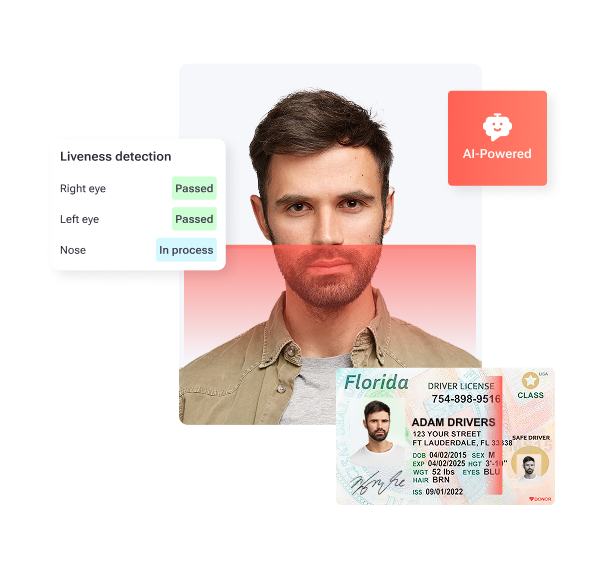
The integrated IDVerify biometric verification combats sophisticated fraud through government ID validation, AI-powered liveness detection, and facial matching technology. QuickApprove gives Board Members dedicated dashboards for streamlined approval workflows and complete audit trails.

TenantEvaluation is built on FCRA compliance foundations with direct credit bureau reseller relationships and offers revenue-sharing models that remove upfront costs while generating income for associations. The following comparison shows how TenantEvaluation’s Florida-specific design delivers faster, more automated HOPA compliance than generic screening platforms.
| Feature | TenantEvaluation | ApplyCheck/Verify Screening Solutions |
|---|---|---|
| 55+ Standardization | Full automation (significantly reduces manual work) | Manual TazWorks-based processes |
| Processing Time | 5–10 minutes end-to-end | 5–10 days with delays |
| Florida 55+ Focus | Built-in HOPA workflows | Generic screening without HOA specialization |
| Board Dashboard | QuickApprove dedicated interface | No board-specific tools |
How to Evaluate 55+ Verification Platforms
When selecting verification platforms, prioritize Florida-specific 55+ support, automation that reduces manual work, FCRA-compliant foundations, scalability across multiple communities, and integrated fraud prevention technologies. TenantEvaluation meets all these criteria and adds specialized tools tailored to Florida’s regulatory environment and community association workflows.
Get started with comprehensive 55+ verification that protects HOPA status while streamlining operations.
Frequently Asked Questions
What does HOPA verified mean?
HOPA verified means a community meets Housing for Older Persons Act requirements through proper documentation and compliance procedures. The community maintains the 80% occupancy threshold described above through biennial surveys, accurate records, and consistent enforcement of age restrictions.
Can a 52 year old live in 55+ community?
Yes, under the 20% exception rule explained above. A 52-year-old may also qualify as a temporary guest under specific policies, typically 30–90 days annually, or as a caregiver for a qualifying resident under documented medical necessity. Any exception requires board approval and careful documentation to maintain HOPA compliance.
55+ communities survey every 2 years requirements?
HOPA mandates biennial occupancy surveys to verify that at least 80% of units house one person 55 or older. Surveys must document current resident ages, identify noncompliant units, and establish corrective action plans. Florida communities must maintain detailed records of survey methodology, results, and remediation efforts to preserve HOPA status.
80/20 rule condos enforcement procedures?
The 80/20 rule requires continuous monitoring beyond initial approval. Communities must track occupancy changes, monitor guest durations, and conduct regular compliance audits. Enforcement includes formal notices for violations, demands for compliance proof, progressive fines, and potential eviction proceedings, all supported by comprehensive documentation.
Steps for age verification noncompliance handling?
The five-step process includes issuing formal notice of violation, demanding specific proof of compliance, imposing fines per governing documents, initiating eviction proceedings if necessary, and documenting all actions for audit trails. Each step must follow defined timeframes, proper notice methods, and consistent application across all residents to maintain fair enforcement standards.
Conclusion and Next Steps for Implementation
Handling age verification noncompliance requires systematic procedures, comprehensive documentation, and technology that reduces manual work while strengthening compliance. This playbook offers a practical framework for protecting HOPA status and managing the complex challenges facing Florida’s 55+ communities in 2026. Get started with TenantEvaluation’s 55+ Communities Verification and transform your age verification processes.
