Written by: Luis Teran, Co-founder, CEO, TenantEvaluation | Last updated: August 6, 2026
Key Takeaways for Florida Associations
- Document-only screening no longer protects Florida community associations from rising synthetic identity fraud and document forgery.
- Biometric identity verification with liveness detection adds a stronger fraud barrier than traditional document forensics alone.
- Revenue-share pricing removes upfront costs for associations and can turn the application process into a steady revenue stream.
- FCRA compliance requires documented permissible purpose, adverse action workflows, and complete audit trails for every screening decision.
- TenantEvaluation delivers a cost-effective, FCRA-compliant fraud prevention platform with biometric verification and revenue-share economics for Florida associations of any size. Learn more about TenantEvaluation’s lease tracking solutions.
Where Fraud Prevention Fits in Daily Association Workflows
Fraud prevention works best when it connects to every step of the resident application lifecycle. Four workflow stages concentrate most fraud risk and define where prevention tools need to operate.
- Application intake: Incomplete or inconsistent document submissions often signal potential fraud. Smart form logic that rejects incomplete applications before review reduces manual work and blocks many risky submissions from moving forward.
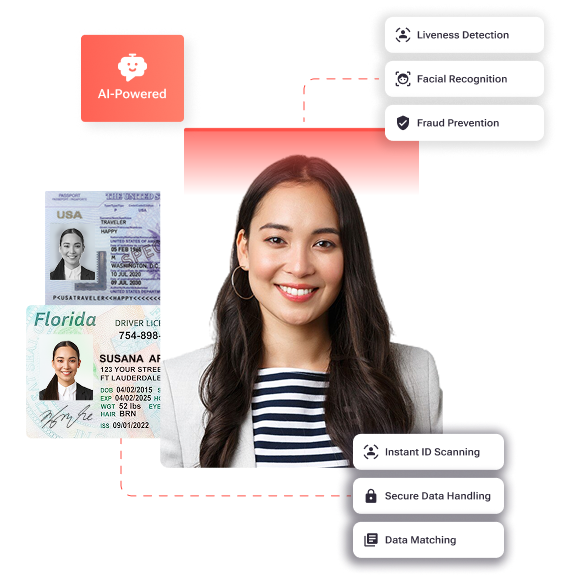
- Identity verification: Document review alone cannot confirm physical presence. Without biometric liveness detection and selfie-to-ID comparison, a stolen or fabricated ID can pass a manual check without raising suspicion.
- Board review and approval: Disconnected email chains and spreadsheet-based voting create gaps in the audit trail. A board-ready approval workflow with timestamped actions and centralized records closes those gaps and supports defensible decisions.
- Lease tracking and payment collection: Fraud risk continues after approval. Missing or outdated lease records, disconnected payment confirmation, and manual occupancy tracking create post-approval blind spots that raise compliance and operational risk.
These workflow stages share failure points that build on each other. Manual document review without automated redaction creates the first gap in the audit trail. When application records are not directly connected to active leases, that gap widens and makes tracking harder. When payment collection happens outside the onboarding workflow, associations end up with incomplete records and weak audit defensibility across the resident lifecycle.
Compliance, Risk, and Board Governance Responsibilities
FCRA compliance for community associations extends far beyond running a background check. Associations must establish permissible purpose before accessing consumer data, provide pre-adverse and adverse action notices when a screening result influences a denial, and maintain a complete audit trail for every application decision. These requirements apply regardless of portfolio size, which means even small associations must understand and follow the same rules as large portfolios.
Boards carry governance responsibility for ensuring that the tools their management teams use meet these standards. Key compliance requirements for Florida community associations include:
- Documented permissible purpose for each consumer report accessed
- Automated adverse action workflows triggered by denial decisions
- Clear separation between the entity providing data (the screening platform) and the entity making the approval decision (the association)
- End-to-end encryption and auto-redaction of sensitive personal information such as Social Security numbers
- Timestamped, searchable audit trails covering every application action from submission through final decision
Platforms that treat FCRA compliance as an add-on feature create liability exposure for the associations that rely on them. Direct credit bureau reseller relationships, instead of third-party data scraping, add protection by ensuring data access under strict bureau rules with regular compliance audits.
How Pricing Models Affect Portfolio Costs
Fraud prevention tools for Florida associations follow two traditional pricing models. Subscription-based tools charge fixed monthly fees that apply regardless of application volume. Per-application tools charge a fee for each screening, so costs rise directly with usage.
Both traditional models require the association to pay upfront. The association either commits to a monthly subscription or absorbs per-application charges and setup fees. Higher volume usually increases total cost, even when volume discounts apply.
The revenue-share model works differently and changes the economics. Applicants pay the application fee as part of a structured, FCRA-compliant workflow. The platform deducts its service cost and sends the remainder to the association. Associations pay zero upfront cost at any portfolio size, and higher application throughput increases net revenue instead of increasing expense.
For smaller HOAs and condos, this structure removes the budget barrier that once limited access to biometric-grade fraud prevention. Larger portfolios gain a scalable model where deeper screening does not erode margins as application volume grows.
Current Best Practices for Cost-Effective Fraud Prevention
Florida community associations now rely on three practical approaches to control fraud risk without inflating budgets.
- Layered verification: Combining government ID validation, AI-powered liveness detection, and biometric selfie-to-ID comparison creates a multi-layer fraud barrier that document-only screening cannot match. Each layer targets a specific fraud vector such as document forgery, impersonation, or synthetic identity.
- Centralized digital records: Replacing spreadsheets and email chains with a single platform that connects applications, approvals, lease documentation, and payment records removes operational blind spots. Audit-ready digital records also cut the time and cost of handling disputes or regulatory inquiries.
- Applicant-pay and revenue-share economics: Shifting fraud prevention costs to the applicant through a clear, compliant fee workflow removes budget constraints for smaller associations. Revenue-share models then convert the application process into a net revenue source instead of a recurring expense.
Explore how layered verification and revenue-share economics work together for your portfolio.
Evaluation Framework for Selecting a Fraud Prevention Platform
Five clear criteria help Florida community associations compare fraud prevention tools and select the right fit.
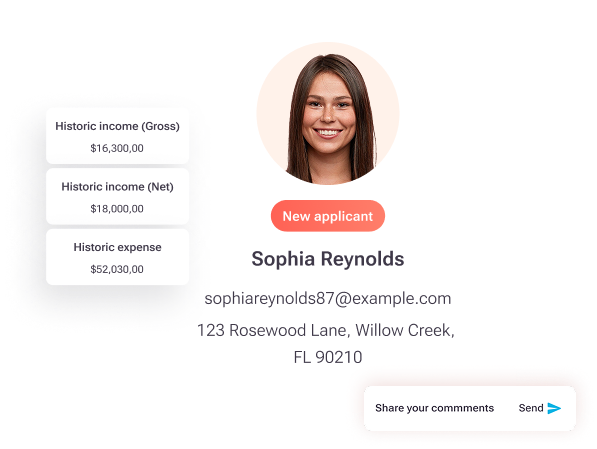
- Compliance readiness: The platform must meet the FCRA requirements outlined above and treat compliance as a core design principle. It should operate as a direct credit bureau reseller with automated adverse action workflows and built-in audit trails from day one. TenantEvaluation is a legitimate reseller of TransUnion and Equifax data, accessed under strict bureau rules with regular compliance audits.
- Operational efficiency: The tool should plug into existing application intake, board review, lease tracking, and payment collection workflows without adding manual steps. QuickApprove accelerates resident approvals inside one connected platform with real-time application tracking, automated communication support, customized approval letters, and a board-ready approval process while preserving control and visibility.
- Fraud prevention depth: Document-only screening cannot keep pace with current fraud tactics. IDVerify delivers government ID validation, AI-powered liveness detection, and biometric facial matching natively inside the TenantEvaluation workflow, so teams avoid external portals and workflow disruption.
- Scalability and specialization: Generic rental screening tools rarely match the governance structures, board voting needs, or Florida-specific regulatory environment of community associations. TenantEvaluation serves more than 5,000 communities and processes about 100,000 applications annually, built exclusively for community associations and management companies. 55+ Communities Verification standardizes age-restricted application handling, reduces manual work, and supports documentation consistency for Florida condos and HOAs with 55+ requirements.
- Total cost of ownership: TEpayments by Zinc provides a connected payment workflow inside TenantEvaluation that collects application fees and deposits during resident onboarding. Payments go directly to the association’s designated account, and TenantEvaluation never holds the funds. Combined with the revenue-share structure described earlier, the platform delivers lower total cost of ownership than subscription-based alternatives at comparable fraud prevention depth.
Frequently Asked Questions
How biometric verification outperforms document forensics against synthetic identity fraud
Document forensics focuses on the authenticity of an uploaded ID by checking for tampering, inconsistent fonts, or mismatched data fields. This method can catch forged documents but cannot confirm that the person submitting the application matches the person on the ID. Synthetic identity fraud, which blends real and fabricated data into a new identity, often uses documents that look legitimate and pass forensic review without flags.
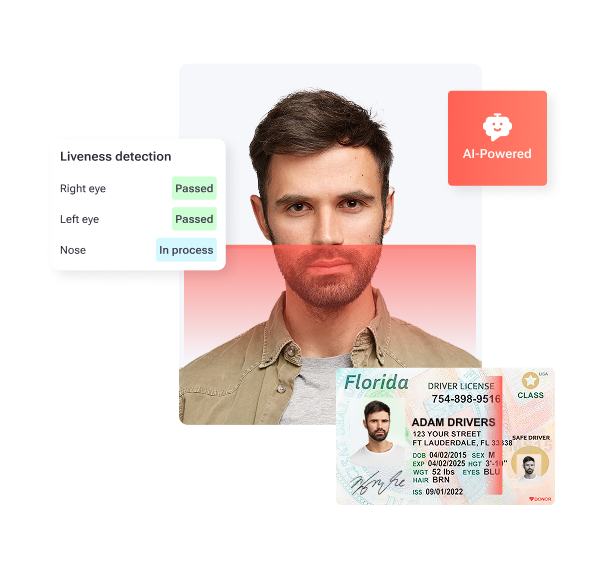
Biometric verification adds a real-time physical presence layer. AI-powered liveness detection confirms that a live person is completing verification, not a static photo or replayed video. Facial landmark recognition and selfie-to-ID biometric comparison then confirm that the live person matches the government-issued ID. This combination closes the core gap in document-only screening and resists stolen or synthetically constructed identity documents. For Florida community associations, where a fraudulent approval creates security and legal exposure, biometric verification delivers a much stronger fraud prevention layer than document forensics alone.
Florida rules that shape resident application screening in 2026
Florida community associations that conduct resident screening must comply with the federal Fair Credit Reporting Act, which governs the use of consumer reports such as credit, criminal background, and eviction history. FCRA requirements include establishing permissible purpose before accessing any consumer report, providing pre-adverse action and adverse action notices when a screening result contributes to a denial, and maintaining complete records of every application decision.
Florida condominium and HOA statutes add rules around application timelines, approval procedures, and board authority that vary by governing documents. Age-restricted communities operating under the Housing for Older Persons Act face separate documentation and verification requirements for 55+ eligibility. Florida House Bill 1293 and related legislative changes have increased scrutiny on identity verification practices in residential communities and support the move toward biometric-native screening workflows. Associations should consult qualified legal counsel for guidance tailored to their documents and applicable statutes.
How smaller HOAs access biometric tools without upfront fees
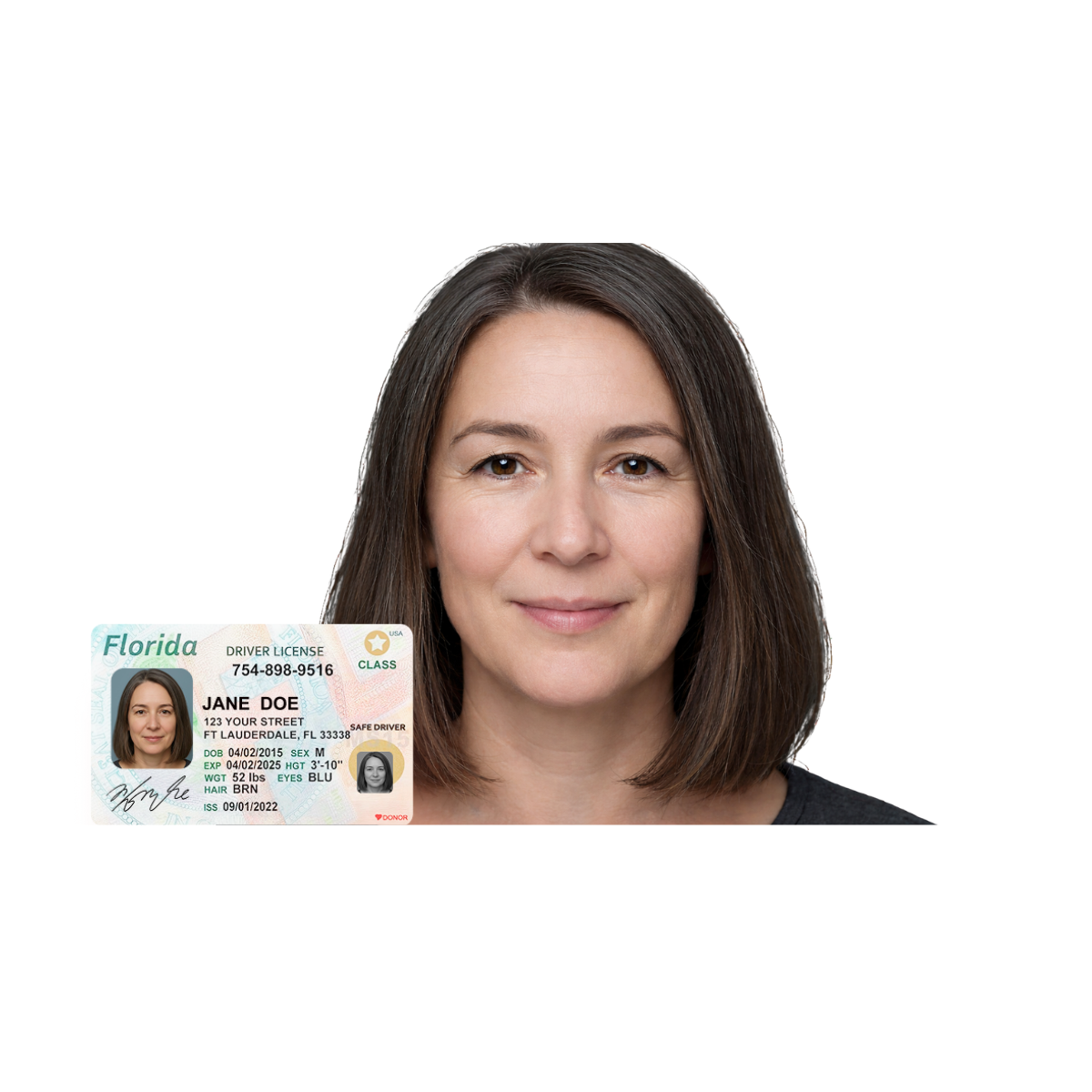
The revenue-share structure described earlier removes the upfront cost barrier that once limited smaller associations to document-only screening tools. Under this model, the applicant pays the application fee as part of onboarding. The platform deducts its service fee and sends the remainder directly to the association’s designated account.
The association pays no subscription fee, per-report cost, or setup charge. A self-managed community with fewer than 20 units can access the same biometric identity verification, FCRA-compliant background checks, and audit-ready workflow that large portfolios use, at zero net cost to the association. As application volume grows, the association’s revenue from the process grows in parallel, which makes the model more favorable at scale.
How TenantEvaluation works with existing CAM operations
TenantEvaluation functions as an all-in-one resident screening and onboarding platform built for community associations and management companies. Instead of acting as a plug-in to a third-party property management system, it delivers a complete workflow from application intake through identity verification, board review, lease tracking, and payment collection inside one platform.
CAMs use a centralized dashboard with real-time application tracking, automated communication support, and audit-ready records. Board members use a dedicated review and voting panel in the same system. Lease Tracking connects resident onboarding, unit data, approvals, and lease documentation into one centralized, real-time workflow that replaces spreadsheets and scattered email chains.
TEpayments by Zinc collects application fees and deposits within the existing onboarding process, with payments moving directly from the applicant to the association’s designated account. For management companies that serve multiple communities, the platform supports portfolio-level configuration so each community can maintain its own screening criteria, document requirements, and approval workflows inside a single system.
Reassess Your Current Fraud-Prevention Stack
Document-only screening no longer provides a defensible standard for Florida community associations. Rising synthetic identity fraud, evolving Florida regulatory expectations, and the availability of biometric-native tools at zero net cost remove the practical reasons to maintain legacy workflows.
TenantEvaluation offers a cost-effective, FCRA-compliant upgrade for Florida CAMs, property managers, and HOA and condo boards. IDVerify delivers biometric-backed identity confirmation inside the screening workflow. QuickApprove can reduce approval time by up to 70 percent while preserving board oversight and compliance controls. Lease Tracking provides centralized, real-time lease visibility from application to occupancy. TEpayments by Zinc connects fee and deposit collection to onboarding, with funds going directly to the association.
The revenue-share model turns the application process from an administrative cost into a compliant revenue stream for portfolios of any size across every Florida market.
