Written by: Luis Teran, Co-founder, CEO, TenantEvaluation
Key Takeaways for Florida 55+ Peak Season
- Florida peak season 55+ screening requires CAMs to verify age eligibility for every applicant during high-volume periods through standardized documentation and approval steps.
- December through April creates the highest application volume for 55+ communities, driven by snowbird retirees and second-home buyers that overwhelm manual processes.
- Manual 55+ handling during peak surges leads to documentation gaps, approval bottlenecks, audit exposure, and selective enforcement risks that threaten HOPA exemption status.
- Standardized workflows collect age verification at application submission, maintain real-time 80% occupancy tracking, and create timestamped audit trails for consistent enforcement.
- TenantEvaluation provides a built-for-Florida platform that reduces manual work and strengthens internal processes for 55+ communities.
Florida Peak Season 55+ Screening for Condos and HOAs
Florida CAMs and boards managing age-restricted communities face a recurring operational challenge during peak months. Application volume surges at predictable times each year, and the manual processes most communities rely on are not built to handle that volume consistently. When documentation gaps appear, approval timelines stretch, and audit readiness deteriorates.
Maintaining 55+ federal exemption status under the Housing for Older Persons Act (HOPA) requires documented proof of compliance, not just a deed restriction and a sign at the gate. That requirement places the operational burden squarely on CAMs and boards. They must collect, organize, and maintain age verification documentation in auditable condition at all times, including during the highest-volume months of the year.

TenantEvaluation’s 55+ Communities Verification is a built-for-Florida solution that reduces manual work, standardizes application handling, supports documentation consistency, improves operational efficiency, and strengthens internal processes for Florida Condos and HOAs. It is built specifically for Community Association Managers and replaces fragmented manual workflows with a structured, scalable process designed for the realities of Florida’s peak seasons.
Explore how TenantEvaluation manages 55+ screening when application volume spikes.
Florida Months with the Highest 55+ Application Volume
Florida’s housing market experiences two main waves of demand each year: a winter wave driven by out-of-state buyers and retirees visiting the state, and a spring wave driven by local families moving before the school year begins. For 55+ communities, these patterns create distinct application surges that require different operational responses.
| Month | Volume Pattern | Primary Driver |
|---|---|---|
| October–November | Rising | Snowbird pre-arrival inquiries and applications |
| December–February | Peak | Retirees and second-home buyers most active in Florida real estate |
| March–April | Sustained High | Continued snowbird season; spring purchase decisions |
| May–June | Moderate–Rising | Local families moving before the school year begins |
| July–August | Moderate | Summer family relocations; secondary move-in window |
| September | Low | Off-season transition period |
The December–April snowbird window represents the most operationally demanding period for 55+ communities. Applications arrive in concentrated bursts, documentation requirements remain constant, and the administrative workload compounds without additional staffing. Communities without standardized workflows absorb that volume through manual processes, which creates the conditions for documentation gaps and approval delays. These gaps carry measurable operational costs that compound during high-volume periods.
The Cost of Manual 55+ Handling During Peak Surges
Boards in 55+ communities struggle with inconsistent workflows where decisions are improvised rather than documented, leading to reliance on memory or last-minute checks instead of audit-ready records. During peak season, that inconsistency scales with volume, and the administrative consequences compound.
The operational costs of manual 55+ handling during high-volume months include:
- Staff hours consumed by manual document collection, follow-up emails, and PDF management
- Approval bottlenecks caused by incomplete applications that require repeated outreach
- Audit exposure when age verification documentation cannot be demonstrated on demand, putting the community’s legal exemption at risk
- Selective enforcement risk when inconsistent processes produce inconsistent outcomes across applicants
- Failure to proactively administer 80% occupancy verification and age certification procedures during high-volume periods
- Board visibility gaps when approval status lives in email chains rather than a centralized platform
TenantEvaluation’s platform addresses each of these cost centers directly. It replaces manual handling with structured, scalable workflows that maintain documentation consistency regardless of application volume.
See how much time and risk your community can eliminate with automated 55+ workflows.
Standardizing 55+ Application Handling Across Communities
Standardization in 55+ application handling ensures every applicant moves through the same documented steps. Every required document is collected at the same stage, and every approval decision is supported by the same quality of records. This consistency holds regardless of which CAM is processing the application or how many applications arrive in a given week.
A standardized 55+ workflow includes the following steps:
- Applicant receives community-specific application instructions with age documentation requirements clearly stated
- Age verification documents are collected digitally during the application submission stage
- 80% occupancy threshold is confirmed against current unit records before the application proceeds
- Documentation is reviewed against community-specific criteria within the platform
- Application is routed to board review with a complete, organized record attached
- Approval or denial is issued with supporting documentation retained in a searchable digital record
TenantEvaluation’s 55+ Communities Verification is the built-in capability that makes this workflow operational. It is built for Florida Condos and HOAs, designed for Community Association Managers, and supports documentation consistency and stronger internal processes without replacing legal guidance.
Walk through a live 55+ workflow and see how standardization works in practice.
Documentation Consistency and Audit Readiness During High-Volume Months
As established earlier, federal law requires documented proof of age-restricted status. That requirement does not pause during December or March. Communities that cannot produce organized, complete age verification records on demand face exemption risk regardless of how well-intentioned their processes are.
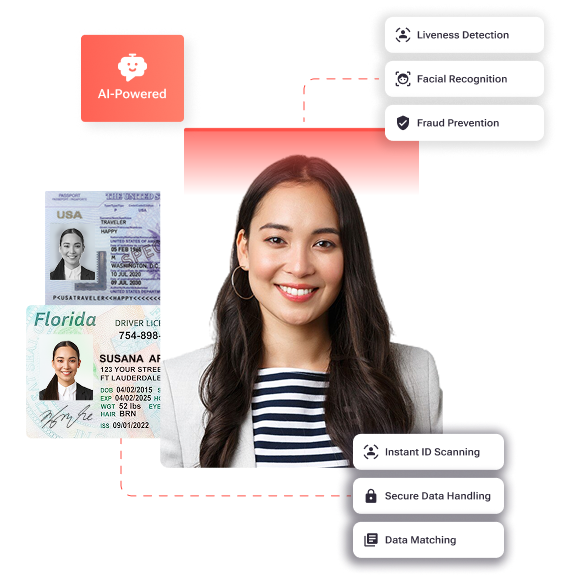
Record-keeping tactics that support audit readiness during peak months include:
- Collect age documentation at the point of application submission, not after approval
- Store all records in a centralized, searchable digital system, not across email inboxes and shared drives
- Maintain a timestamped audit trail for every application action, including document receipt, review, and approval
- Track 80% occupancy status at the unit level in real time, not through periodic manual counts
- Retain records for all applicants, including those who were denied, to demonstrate consistent enforcement
- Administer resident surveys and age certification procedures proactively, not reactively
TenantEvaluation’s platform builds these record-keeping requirements into the application workflow itself. Documentation consistency becomes a byproduct of the process rather than a separate administrative task.
Real-Time Tracking and Board Visibility During Peak Periods
Board members in 55+ communities need visibility into application status without becoming bottlenecks in the approval process. When applications are managed through email chains and spreadsheets, boards either receive too little information to make confident decisions or too much unstructured information to act on efficiently.
QuickApprove is TenantEvaluation’s accelerated approval workflow built for CAMs, Boards, and property management teams inside one connected platform. It delivers real-time application tracking, a board-ready approval process, automated communication support, customized approval letters, and a personalized welcome package. The process becomes faster, clearer, more consistent, and easier to manage while preserving control, compliance, and visibility. It is designed specifically for high-volume seasons and complex onboarding requirements.
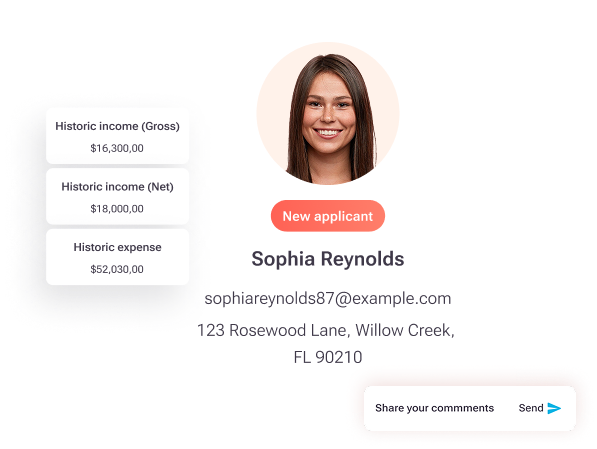
Board members access a dedicated review and voting dashboard with summarized applicant reports, which eliminates the need to parse raw documents or request status updates from managers. Applications move from submission to decision faster, and every action is logged in an auditable record.
Connecting Lease Tracking and 55+ Onboarding for Occupancy Control
Age-restricted communities require more than approved applications. They require confirmed occupancy records that connect each approved resident to a specific unit and a documented lease. Without that connection, 80% occupancy tracking becomes a manual reconciliation exercise rather than a real-time operational capability.
TenantEvaluation’s Lease Tracking delivers centralized, real-time lease visibility and lifecycle control from application to occupancy, fully connected. Built for CAMs, Boards, Property Management Companies, and community operations teams, it connects resident onboarding, unit data, approvals, and lease documentation into one streamlined workflow. It provides real-time lease status (active, pending, expired, or missing), automated lease document collection during onboarding, unit-level tracking and searchable digital history, and audit-ready digital lease records. This approach reduces manual follow-ups, spreadsheets, and scattered email chains inside one connected platform.
For 55+ communities, that connection between onboarding and occupancy is operationally significant. When a lease record is missing or outdated, occupancy counts become unreliable, and unreliable occupancy counts create exemption risk.
Eliminate occupancy tracking gaps and maintain audit-ready 80% threshold records in real time.
Actionable Checklist for CAMs Managing 55+ Peak Season
This checklist outlines the core operational steps for CAMs preparing for and managing 55+ application volume during Florida’s peak months.
Before Peak Season (September–November):
- Confirm current 80% occupancy status at the unit level
- Review and update age documentation requirements in the application workflow
- Verify that all board members have access to the application review dashboard
- Confirm lease records are current and stored in a centralized, searchable system
- Establish approval timeline benchmarks for the incoming high-volume period
During Peak Season (December–April):
- Process age documentation at the point of application submission, not after
- Track 80% occupancy threshold in real time as applications are approved
- Route all applications through a standardized review and approval workflow
- Maintain timestamped records for every application action
- Use automated communication tools to reduce manual follow-up volume
- Confirm lease documentation is collected and connected to each approved application
Post-Season Audit Preparation:
- Confirm all approved applications have complete age verification records on file
- Verify occupancy counts against unit-level lease records
- Review audit trail for documentation gaps or inconsistent enforcement patterns
- Archive the season’s records in a searchable digital system
Frequently Asked Questions
Which months create the highest 55+ application volume in Florida?
The highest 55+ application volume in Florida occurs during two primary windows. The first is the snowbird season from December through April, when retirees and second-home buyers are most active in Florida real estate. The second is the summer family-move window from May through July, when local families relocate before the school year begins. December through April remains the most operationally demanding period for 55+ communities because applications arrive in concentrated bursts while documentation requirements remain constant.
How do 55+ communities handle documentation during peak season?
Communities that manage documentation effectively during peak season collect age verification records at the point of application submission rather than after approval. They store all records in a centralized digital system with searchable history and maintain timestamped audit trails for every application action. The most operationally sound approach connects age documentation collection directly to the application workflow so that documentation consistency is built into the process rather than managed as a separate administrative task. TenantEvaluation’s 55+ Communities Verification standardizes this process for Florida Condos and HOAs, reducing manual work and improving documentation consistency across all applications.
What are the biggest risks of manual 55+ processing?
Manual 55+ processing creates several compounding risks. Documentation gaps emerge when age verification records are collected inconsistently or stored across email inboxes and shared drives rather than in a centralized system. Audit exposure increases when communities cannot produce organized, complete records on demand. Selective enforcement risk arises when inconsistent processes produce inconsistent outcomes across applicants, which creates both legal exposure and community conflict. Occupancy tracking errors occur when lease records are disconnected from the application process, making 80% threshold verification unreliable. During peak season, all of these risks scale with application volume.
How can boards maintain visibility without slowing approvals?
Boards maintain visibility without creating bottlenecks by accessing a dedicated review and voting dashboard that presents summarized applicant information in a structured format instead of receiving raw documents through email. TenantEvaluation’s QuickApprove gives board members direct, real-time access to application status, summarized reports on each applicant, and a voting panel for approvals inside one connected platform. This replaces email chains and spreadsheets with a board-ready approval process that accelerates decisions without removing board oversight, compliance, or control. Boards can act on applications faster because the information they need is organized and accessible, not buried in unstructured communication threads.
Conclusion: A Proven Platform for Florida 55+ Peak Season
Florida’s peak seasons create predictable, recurring operational pressure for CAMs and boards managing 55+ communities. The December–April snowbird window and the summer family-move period both generate application surges that manual processes are not built to absorb consistently. Documentation gaps, approval bottlenecks, occupancy tracking errors, and audit exposure are the direct operational consequences of fragmented workflows at high volume.
TenantEvaluation addresses each of these challenges through a platform built specifically for Florida Condos and HOAs. 55+ Communities Verification focuses on the core 55+ workflow challenges CAMs face during peak season. QuickApprove accelerates resident approvals with real-time tracking and a board-ready approval process inside one connected platform. Lease Tracking connects onboarding, unit data, approvals, and lease documentation into one centralized, audit-ready workflow from application to occupancy. With 5,000+ communities served, 100,000+ applications processed annually, and FCRA compliance as the foundation, TenantEvaluation functions as a definitive operational platform for Florida 55+ communities managing peak season volume.
