Written by: Luis Teran, Co-founder, CEO, TenantEvaluation
Key Takeaways for Florida HOA Tenant Screening
- Florida HOAs may require tenant background checks only when their governing documents explicitly authorize screening and the same criteria apply to every applicant.
- FCRA compliance requires a standalone written disclosure and signed consent before ordering any consumer report, plus an adverse action notice if the report influences a denial.
- Criminal history evaluations should follow an individualized FHA assessment instead of blanket bans to reduce disparate impact risk under the Fair Housing Act.
- Sealed, expunged, and juvenile records are protected under Florida law and must be excluded from screening reports to avoid legal exposure.
- TenantEvaluation automates these compliance steps and provides Florida-specific workflows; learn more.
Governing-Document Authority for Florida HOA Background Checks
Florida community associations get their screening authority from their governing documents, such as the declaration, bylaws, or recorded rules and regulations. If those documents do not clearly authorize background checks, the association has no legal basis to require one. Courts and regulators treat any authority that is not granted in governing documents as unavailable.
Once governing-document authority is confirmed, the association must apply the same screening criteria to every applicant in the same category. Selective screening, such as running a background check on one prospective tenant but not another in similar circumstances, creates fair housing exposure and weakens the association’s position in any dispute. Florida law permits condominium associations to charge application or transfer fees (capped at $100) under § 718.112(2)(i) when authorized in governing documents, while HOAs may charge such fees only if expressly authorized in their recorded governing documents under Chapter 720. Associations should confirm the current permissible fee amount with legal counsel, because legislative updates may change these figures.
TenantEvaluation embeds governing-document authority directly into each community profile, so the platform only runs screening workflows that match the criteria the association has already approved. See how the platform configures your community’s specific rules from day one.
FCRA Written Disclosure, Consent, and Adverse Action
The Fair Credit Reporting Act (FCRA) governs consumer reports used in tenant screening by Florida HOAs and condominium associations. Before any background check starts, the association must provide the applicant with a clear and conspicuous written disclosure in a document that contains only that disclosure. The association must also obtain a separate signed written authorization. These are two distinct documents, and combining the disclosure with the application form is a common FCRA violation.
Permissible purpose is the second core requirement. An association may order a consumer report only to evaluate a prospective tenant’s application. Using the report for any other purpose, or sharing it with people who are not involved in the decision, violates FCRA and can trigger statutory damages.
When a landlord or housing provider takes adverse action based in whole or in part on information in a consumer report, it must provide an adverse action notice (orally, in writing, or electronically) containing the name, address, and phone number of the consumer reporting agency, notice of the right to a free copy of the report within 60 days, and notice of the right to dispute the report’s accuracy. Failure to follow this process is one of the most frequently cited FCRA violations in tenant screening disputes.
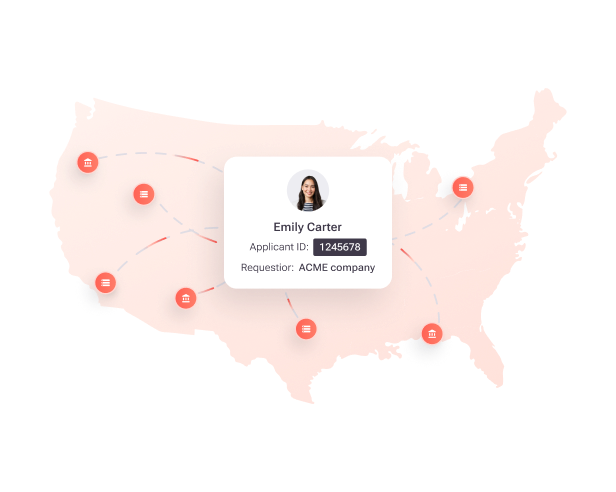
TenantEvaluation automates the adverse action workflow. As a direct reseller of TransUnion and Equifax data, not a third-party scraper, the platform accesses consumer data under strict bureau rules, maintains permissible-purpose controls, and generates compliant adverse action notices automatically, creating a defensible audit trail for every application.
Criminal Record Evaluation Under the Fair Housing Act
The U.S. Department of Housing and Urban Development’s 2016 guidance on criminal records under the Fair Housing Act explains that blanket policies excluding all applicants with any criminal record are likely to create a disparate impact on protected classes and may violate the FHA. Associations can reduce this risk by conducting an individualized assessment of each applicant’s criminal history.
An individualized assessment considers the nature and severity of the offense, the time that has passed since the offense or completion of the sentence, and any evidence of rehabilitation or other mitigating circumstances. The association should document this assessment and apply it consistently across applicants.
Arrest records without conviction were prohibited as a sole basis for denial under the now-rescinded 2015 HUD guidance on FHA standards for federally assisted housing. Blanket bans on applicants with any felony conviction, regardless of offense type or recency, create significant FHA liability. Associations should work with legal counsel to draft a written criminal-history evaluation policy that reflects the individualized assessment standard and incorporate that policy into the community’s screening criteria before issuing any denial based on criminal history.
Protected Record Types in Florida Tenant Screening
Florida law protects several categories of records that associations and their screening vendors must respect. Under Florida Statute § 943.0585, courts may order the expungement of criminal history records, and under § 943.059, records may be sealed. Once a record is expunged or sealed, the individual is generally not required to disclose it, and an association should consult legal counsel before using such records as a basis for denial.
Juvenile records receive separate protection under Florida Statute § 985.04. Juvenile delinquency records are confidential, and their use in tenant screening is restricted. An association that receives or acts on juvenile record information, whether through a screening vendor or another source, should consult legal counsel about potential exposure.
Associations must confirm that their screening vendor does not surface sealed, expunged, or juvenile records in reports. TenantEvaluation’s SafeCheck+ solution is designed to exclude these categories, and the platform’s audit trails document what information was reviewed and what was excluded, which supports the association’s defensibility if a denial is challenged.
Florida 2026 HOA Law Updates Affecting Screening
Florida’s legislature continues to update community association law, and 2026 follows that pattern. Associations should confirm the current text of applicable statutes with their legal counsel, because amendments affecting screening fees, documentation requirements, and board approval procedures may already be in effect. Key areas to verify include:
- Current rules on application and transfer fees for condominiums under § 718.112 and for HOAs under Chapter 720
- New documentation or notice requirements for tenant approval or denial decisions
- Updated timeframes for boards to act on rental applications
- Requirements related to electronic records, digital consent, or audit trail retention
- Changes affecting age-restricted community verification under the Housing for Older Persons Act (HOPA)
TenantEvaluation monitors Florida legislative developments and updates its platform workflows accordingly, so associations using the platform work inside a system that reflects current requirements instead of relying on manual policy updates.
Board Checklist: Florida Tenant Background Check Compliance
With these legal requirements and recent legislative changes in mind, the following table consolidates key compliance steps into a board-ready reference that CAMs, LCAMs, and board members can review with their association attorney before starting or updating a tenant screening program.
| Compliance Step | Requirement | Common Error | TenantEvaluation Solution |
|---|---|---|---|
| Governing-Document Authority | Screening must be explicitly authorized in the declaration, bylaws, or rules | Assuming authority exists without reviewing documents | Community profile configured to match governing-document criteria |
| FCRA Written Disclosure | Standalone written disclosure provided before ordering any consumer report | Embedding disclosure inside the application form | Automated standalone disclosure delivered and signed within the platform |
| Written Applicant Consent | Signed authorization obtained before report is ordered | Ordering report before consent is confirmed | Consent gate built into the workflow, so reports cannot be initiated without it |
| Uniform Application | Identical criteria applied to every applicant in the same category | Selective screening based on subjective factors | Standardized criteria enforced across all applications in the community profile |
| Criminal-History Individualized Assessment | HUD guidance recommends individualized assessment to reduce disparate impact and avoid blanket bans | Automatic denial for any felony conviction | Structured review workflow with documented assessment fields |
| Sealed, Expunged, and Juvenile Records | These records have protections under Florida law; consult counsel on their use | Using vendor reports that surface protected records | SafeCheck+ excludes protected record categories, and the audit trail documents exclusions |
| Adverse Action Notice | Must provide adverse action notice with all FCRA-required elements when denial is based on a consumer report | Failing to provide the required adverse action notice with all required elements | Automated adverse action workflow generates and delivers compliant notice with timestamped delivery |
| Fee Authorization and Disclosure | Application fee must be authorized by governing documents or applicable law and disclosed in advance | Charging fees not authorized by governing documents or statute | TEpayments by Zinc collects fees within the onboarding workflow; fee structure configured per community |
| Audit Trail Retention | Records of consent, reports reviewed, and decisions made must be retained | No documentation of what information was reviewed or when | Built-in audit trails for every application, timestamped and searchable |
How TenantEvaluation Supports Florida HOA Compliance
TenantEvaluation is built specifically for community associations and management companies, with FCRA compliance as the foundation rather than an add-on. Every feature in the platform aligns with the legal and operational environment that Florida CAMs, LCAMs, and boards manage every day.
QuickApprove accelerates resident approvals inside one connected platform, giving boards a dedicated review and voting dashboard with real-time application tracking, automated communication support, customized approval letters, and a personalized welcome package. Boards keep control, compliance, and visibility while handling high-volume seasons and complex onboarding requirements.

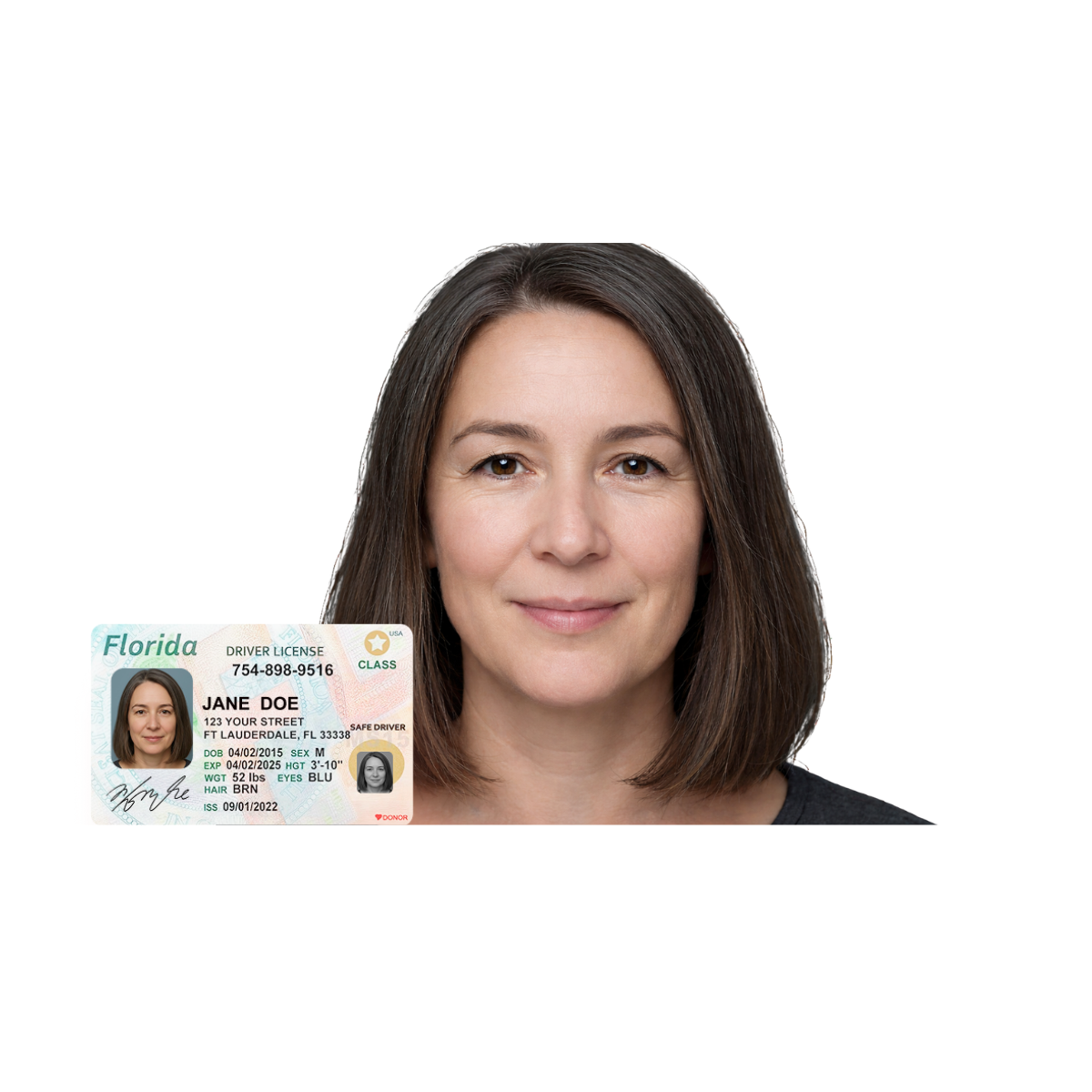
IDVerify+ brings biometric identity verification directly into the screening workflow, combining government ID validation, AI-powered liveness detection, and biometric facial matching. This shifts communities from document-only review to verified physical identity confirmation before any approval decision, which strengthens permissible-purpose validation and audit defensibility.

Lease Tracking connects resident onboarding, unit data, approvals, and lease documentation into one centralized, real-time workflow. Associations gain audit-ready digital lease records, real-time lease status visibility, and automated lease document collection, which replaces spreadsheets and scattered email chains from application to occupancy.
TEpayments by Zinc provides a connected payment workflow inside TenantEvaluation that collects application fees, deposits, and other required resident payments within the onboarding process. Payments move directly from the applicant to the association’s designated account, and TenantEvaluation never holds the funds. Each association defines what is collected and at which stage.
As a direct reseller of TransUnion and Equifax data, TenantEvaluation accesses consumer information under strict bureau rules, with regular compliance reviews and audits, no gray-market data sources, and clear separation between decision-making by the association and data provision by TenantEvaluation. Explore how TenantEvaluation’s Florida-specific workflows replace manual processes with a single, defensible, attorney-ready platform.
Common Denial Mistakes That Create Liability
Several recurring errors create most of the legal exposure for Florida community associations that conduct tenant screening. These mistakes fall into three main categories: consent violations, inconsistent application, and prohibited or protected data use.
Consent violations occur when associations order consumer reports without proper authorization. The most common example is ordering a consumer report without a standalone written disclosure and signed consent. Combining the FCRA disclosure with the application form is a violation, even if the applicant signs the application.
Inconsistent application creates fair housing exposure. This includes running a background check on one applicant but not another in the same category, or applying different credit score thresholds to different applicants. Charging application fees that are not authorized by governing documents or statute also creates risk and can support claims for reimbursement.
Prohibited or protected data use involves relying on information that should not influence the decision. Examples include issuing a denial based on an arrest record without conviction, using sealed, expunged, or juvenile records that have protections under Florida law, skipping the adverse action notice described in the FCRA section above, or maintaining no audit trail of what information was reviewed and when.
TenantEvaluation’s platform addresses these errors through automated workflow gates, standardized criteria enforcement, protected-record exclusions, and built-in adverse action notices. The result is a defensible record for every application processed across its 5,000+ communities and approximately 100,000 applications per year.
Summary and Next Steps for Florida Boards
Florida HOAs and condominium associations may require tenant background checks only when governing documents authorize screening and identical criteria apply uniformly to every applicant. Associations can evaluate criminal history through an individualized FHA assessment instead of a blanket ban. Sealed, expunged, and juvenile records have protections under Florida law. Adverse action based on a consumer report requires the FCRA adverse action notice described earlier. Application fees must be authorized and disclosed in advance, and every step should be documented in an audit-ready record.
Manual or inconsistent screening creates legal exposure at each of these steps. TenantEvaluation is built for Florida community associations and embeds governing-document authority, written consent workflows, protected-record exclusions, automated adverse action notices, and board-ready dashboards into every part of the screening and approval process. Let TenantEvaluation show your board and management team how a compliant, defensible, Florida-specific screening workflow operates from application to approval.
Frequently Asked Questions
Can a Florida HOA deny a rental application based on a criminal record?
A Florida HOA may consider criminal history as part of a tenant screening decision, but it cannot apply a blanket ban that automatically excludes all applicants with any criminal record. HUD’s guidance under the Fair Housing Act recommends an individualized assessment that considers the nature and severity of the offense, the time since the offense or sentence completion, and any evidence of rehabilitation. Arrest records without conviction were prohibited as a sole basis for denial under the now-rescinded 2015 HUD guidance on FHA standards for federally assisted housing. Associations should adopt a written criminal-history evaluation policy, have counsel review it, and document every decision consistently across all applicants.
What happens if a Florida HOA fails to follow FCRA adverse action requirements?
Failure to provide the adverse action notice described earlier is a FCRA violation. Statutory damages for willful FCRA violations range from $100 to $1,000 per violation, and courts may also award actual damages and attorney’s fees. Automated adverse action workflows, such as those built into TenantEvaluation, help reduce the risk of missing the required notice.
Are Florida HOAs required to apply the same screening criteria to every applicant?
Yes. Uniform application of screening criteria functions as both a fair housing requirement and a practical legal defense. If an association applies different credit score thresholds, different criminal-history standards, or different documentation requirements to applicants in the same category, it creates exposure under the Fair Housing Act’s disparate treatment theory. Selective screening, such as running a background check on some applicants but not others, is especially difficult to defend. Associations should document their screening criteria in writing, incorporate them into the community’s governing documents or rules, and use a platform that enforces those criteria consistently across every application.
What records can a Florida HOA not use in tenant screening?
Florida law protects sealed criminal records under § 943.059, expunged criminal records under § 943.0585, and juvenile delinquency records under § 985.04. Once a record is sealed or expunged, the individual is generally not required to disclose it, and associations should consult legal counsel before considering such records in screening decisions. An association that receives or acts on this information should ensure compliance with all applicable laws. TenantEvaluation’s SafeCheck+ solution excludes protected record categories and documents those exclusions in the application’s audit trail.
How does TenantEvaluation differ from generic tenant screening platforms for Florida HOAs?
Generic tenant screening platforms are built for individual landlords and multifamily rental operators, not for the specific legal and operational environment of Florida community associations. TenantEvaluation is built exclusively for community associations and management companies, with FCRA compliance as the foundation. The platform configures each community’s governing-document authority, screening criteria, and fee structure directly into the workflow. It includes a dedicated board review and voting dashboard through QuickApprove, biometric identity verification through IDVerify+, automated adverse action notices, protected-record exclusions through SafeCheck+, centralized lease lifecycle visibility through Lease Tracking, and connected payment collection through TEpayments by Zinc, all inside one platform. As a direct reseller of TransUnion and Equifax data, TenantEvaluation accesses consumer information under strict bureau rules, with no gray-market data sources and built-in audit trails for every application.
