Written by: Luis Teran, Co-founder, CEO, TenantEvaluation | Last updated: July 19, 2026
Key Takeaways for Florida HOAs and Condos
- Florida HOAs and condos face heightened compliance obligations under Chapters 718 and 720, with HB 1293 making rental application fraud a third-degree felony effective October 2026.
- Biometric identity verification with liveness detection now plays a central role in blocking deepfake and synthetic identity fraud in resident applications.
- Board-ready approval workflows and centralized lease tracking replace email bottlenecks and give real-time visibility from application through occupancy.
- FCRA compliance, direct bureau reseller relationships, and automated adverse action workflows are mandatory for any resident verification platform used by Florida community associations.
- TenantEvaluation provides tools that help Florida HOAs and condos streamline verification, reduce fraud exposure, and maintain full regulatory compliance.
How HOA Resident Verification Works in Practice
HOA resident verification is a structured process that confirms the identity, financial qualifications, and background of prospective residents before occupancy approval. A complete verification workflow follows a logical sequence that builds from identity to decision.
- Collect a completed application from every adult occupant over 18 to establish who must be screened.
- Validate government-issued photo identification through biometric or document-based methods to confirm the person’s identity.
- Obtain written consent for consumer report access under FCRA requirements once identity is established.
- Run credit, criminal background, and eviction history checks through an FCRA-compliant provider to evaluate risk.
- Verify income and employment against documented community thresholds to confirm financial capacity.
- Route the completed application package to the board for review and a recorded vote using a consistent process.
- Issue a written approval or FCRA-compliant adverse action notice and retain all records for the required period.
Florida HOA Screening Rules and 2026 Legal Changes
Rental caps, waiting periods, and rental prohibitions in Florida HOAs and condominiums must come from amendments properly adopted under Chapters 720 and 718 and recorded in the association’s governing documents. Associations must enforce those restrictions through statutory procedures, including written notice and an opportunity for a hearing before imposing fines or suspensions.
HB 1293 defines fraudulent entry as knowingly and willfully making a materially false statement about identity on a rental application or presenting forged, fictitious, or counterfeit documents such as a driver’s license, identification card, bank statement, or pay stub. The law also treats fraudulent rental applications as noncompliance under s. 83.56 that can be classified as non-curable, allowing landlords to issue a 7-day notice to vacate with no opportunity to cure.
Biometric Identity Checks That Block Application Fraud
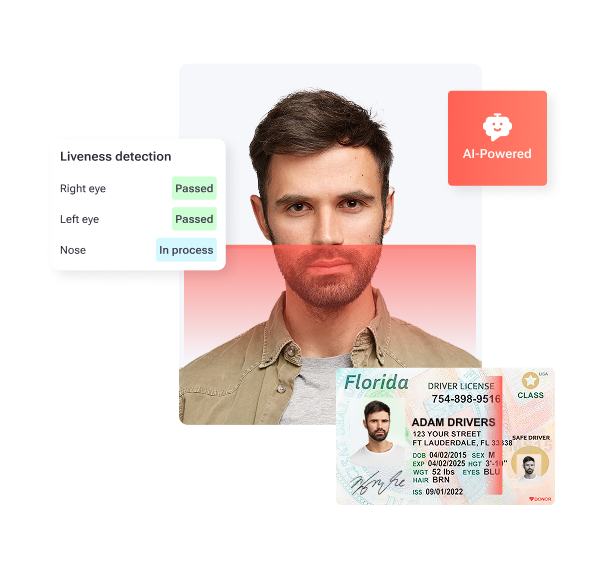
Modern biometric identity verification platforms must include liveness detection to counter deepfakes, synthetic identities, and AI-driven impersonation, because visual matching alone no longer proves a real person is present. For Florida HOAs that process many applications, this move from simple document review to biometric-confirmed identity has become a day-to-day requirement.

IDVerify is TenantEvaluation’s biometric identity verification layer, embedded directly inside the screening workflow. It combines government-issued ID validation, AI-powered liveness detection, facial landmark recognition, and biometric selfie-to-ID comparison within TenantEvaluation, without external portals or broken workflows. CAMs see verification results, including ID authenticity confirmation, liveness status, biometric match result, and a redacted ID copy, directly in the screening report. IDVerify can be enabled per condo or HOA and configured per property portfolio to match each community’s risk profile.
Board-Focused Approval Workflows That Speed Decisions
Approval delays create one of the most common operational bottlenecks in Florida community associations. Applications sit in email chains, board members lack clarity on what needs action, and approval letters require extra manual work after decisions.

QuickApprove is TenantEvaluation’s accelerated approval workflow for CAMs, boards, and property management teams inside one connected platform. It provides real-time application tracking, automated communication support, customized approval letters, a personalized welcome package, and a board-ready approval process with a dedicated review and voting dashboard. Communities maintain control, compliance, and visibility while handling high-volume seasons and complex onboarding requirements.
55+ Community Verification for HOPA Compliance
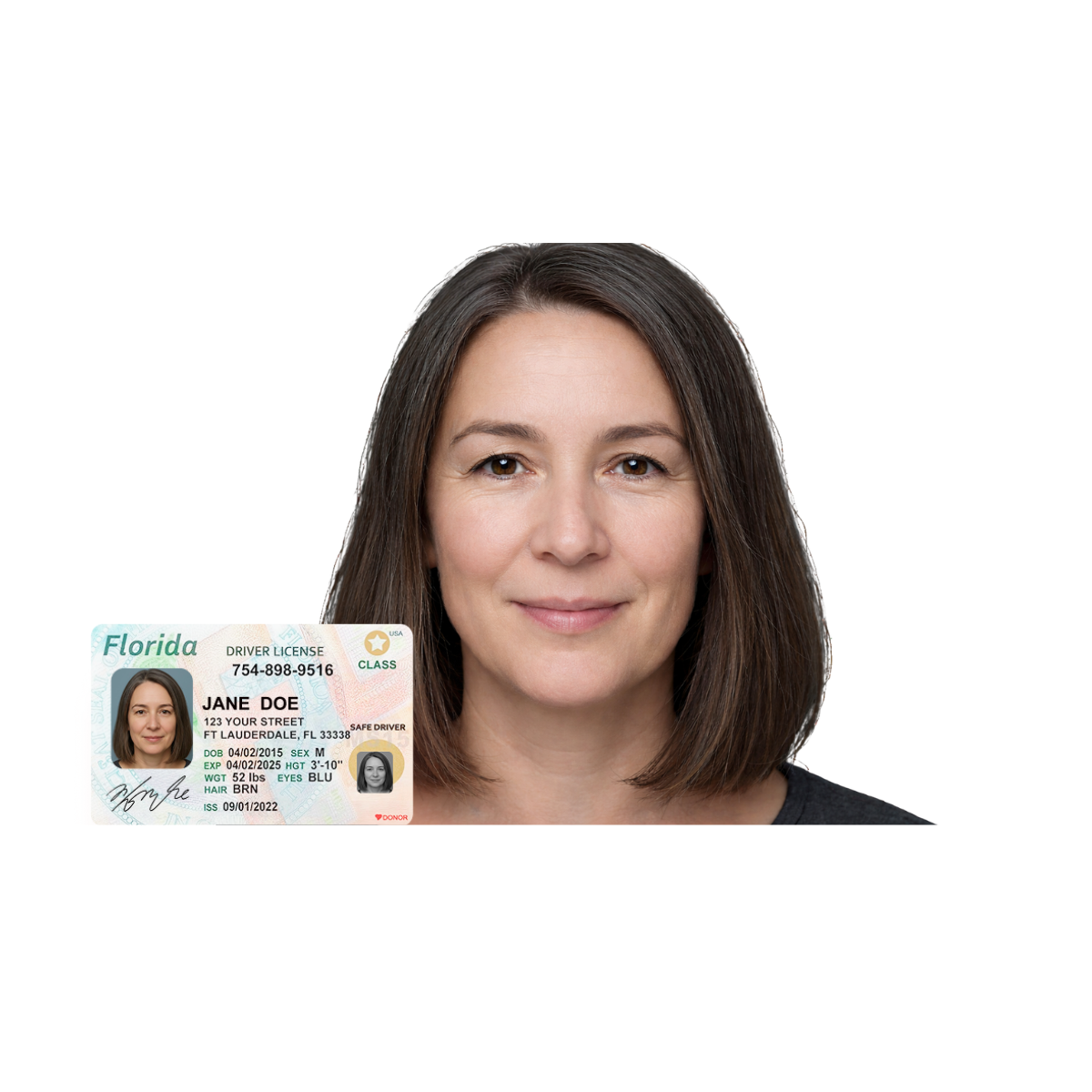
55+ Communities Verification is a built-in capability within TenantEvaluation that helps Florida condos and HOAs standardize how age-restricted requirements are handled across applications. It reduces manual work, improves documentation consistency, and strengthens internal operational efficiency and control. Legal counsel still guides policy, while the platform enforces a repeatable process.
Centralized Lease Tracking from Application to Move-In
Lease management in many Florida community associations remains fragmented and manual, with missing or outdated lease copies, disconnected spreadsheets, and no single source of truth. These gaps create operational blind spots and compliance risk tied to incomplete records.
TenantEvaluation’s Lease Tracking capability connects resident onboarding, unit data, approvals, and lease documentation in one centralized, real-time workflow. It provides real-time lease status visibility, including active, pending, expired, or missing leases, along with automated lease document collection during onboarding. Associations gain unit-level tracking tied to occupancy records and a searchable digital history of lease records and document trails, all audit-ready for CAMs, boards, property management companies, and community operations teams.
Schedule a demo today to see TenantEvaluation’s Lease Tracking in action.
FCRA Rules Every Screening Platform Must Support
Before running a background check on a prospective tenant, Florida landlords and property managers must provide a standalone written disclosure that a consumer report may be obtained and must obtain written authorization from the applicant under FCRA requirements. Willful violations of FCRA adverse action notice requirements can result in actual damages or statutory penalties up to $1,000 per instance.
TenantEvaluation is built specifically for community associations and management companies, with FCRA compliance as the foundation, not an afterthought. As a direct reseller of TransUnion and Equifax data, TenantEvaluation operates under strict bureau rules with regular compliance reviews, automated adverse action workflows, built-in audit trails for every application, and clear separation between decision-making by the association and data provision by TenantEvaluation.
Side-by-Side Comparison of HOA Resident Verification Tools
The table below compares four platforms across criteria that matter most to Florida community associations in 2026. All feature descriptions reflect publicly available product information as of July 2026.
| Feature | TenantEvaluation | ApplyCheck | Verify Screening Solutions | AppFolio / RealPage |
|---|---|---|---|---|
| Biometric ID Verification | IDVerify: liveness detection, facial biometric matching, government ID validation, natively embedded | Not available, relies on document upload review via TazWorks platform | Not available, white-labeled TazWorks platform without native biometric layer | Not purpose-built for HOA or condo biometric verification, no native liveness detection |
| Board Voting Dashboard | QuickApprove: dedicated board review panel, AI-generated summaries, timestamped voting workflow | No dedicated board dashboard, approval handled outside platform | No dedicated board dashboard, approval handled outside platform | General property management dashboards, no HOA-specific board voting workflow |
| Lease Lifecycle Visibility | Centralized Lease Tracking with real-time status, unit-level tracking, and audit-ready digital records | Not available, no lease lifecycle management | Not available, no lease lifecycle management | Lease management within broader PM suite, not tailored to HOA workflows |
| FCRA Compliance Foundation | Direct TransUnion and Equifax reseller, automated adverse action workflows, built-in audit trails, FCRA-first design | FCRA-compliant background checks via TazWorks, no direct bureau reseller relationship disclosed | FCRA-compliant background checks via TazWorks, no direct bureau reseller relationship disclosed | FTC’s December 2020 settlement with AppFolio required a $4.25M payment for FCRA accuracy failures, compliance posture has since been updated |
Evaluation Criteria for Selecting a Screening Platform
Florida CAMs and boards benefit from a clear framework when comparing resident verification tools. The criteria below work together as a checklist for both compliance and operations.
- Compliance readiness: Confirm that the platform operates as a direct credit bureau reseller, supports automated adverse action workflows, and maintains built-in FCRA audit trails.
- Operational efficiency: Look for tools that remove manual follow-ups, shorten approval cycles, and connect application intake through occupancy in a single workflow.
- Transparency: Ensure boards have real-time visibility into application status and a structured voting process instead of scattered email threads.
- Scalability: Check that the platform can handle high-volume seasons and multi-community portfolios without requiring additional staff.
- Auditability: Require timestamped, searchable actions retained in a format that is defensible under FCRA, Chapter 718 and 720, and HB 1293.
- Risk controls: Prioritize biometric identity verification, 55+ documentation standardization, and centralized lease records to reduce fraud and compliance exposure.
Frequently Asked Questions
What is HOA verification and why is it required in Florida?
HOA verification is the process by which a Florida homeowners association or condominium association confirms the identity, financial qualifications, and background of a prospective resident before granting approval to occupy a unit. Florida Chapters 718 and 720 grant associations the statutory authority to adopt and enforce these requirements through their governing documents. Verification protects community safety, confirms that applicants meet financial thresholds, and supports compliance with the Fair Credit Reporting Act and fair housing laws. Without a structured verification process, associations face fraud exposure, compliance liability, and operational bottlenecks that delay occupancy and revenue.
What are the new HOA laws in Florida in 2026?
The most significant 2026 development for Florida community associations is House Bill 1293, signed by Governor DeSantis on June 12, 2026, and effective October 1, 2026. HB 1293 creates the criminal offense of “fraudulent entry of a residential dwelling unit,” classified as a third-degree felony. It applies when an applicant knowingly provides false statements about identity, submits forged or counterfeit documents such as a driver’s license or pay stub, or impersonates another person on a rental application. As noted earlier, this non-curable classification allows immediate eviction proceedings without giving the tenant a chance to remedy the fraud. For HOAs and condos, the law reinforces the need for biometric identity verification and documented screening workflows that can withstand legal scrutiny.
What is the 55+ community verification requirement in Florida?
The three HOPA requirements outlined earlier, the 80% occupancy threshold, published policies, and documented verification procedures, must be maintained continuously. HOPA also requires re-surveying residents at least every two years using reliable documentation such as driver’s licenses, passports, or birth certificates, with results documented for potential HUD audits. Failure to maintain the 80% threshold can result in loss of the HOPA exemption, which can make age restrictions unenforceable and expose the association to fair housing complaints. TenantEvaluation’s 55+ Communities Verification capability helps Florida condos and HOAs standardize how these requirements are handled across applications, improving documentation consistency and reducing manual work.
How does FCRA compliance apply to HOA resident screening in Florida?
The Fair Credit Reporting Act applies to any Florida HOA or property manager that uses a consumer report, including credit, criminal background, or eviction history, to make a housing decision. Key obligations include obtaining written consent from each applicant before pulling a report, having a documented permissible purpose, providing a pre-adverse action notice with a copy of the report and a summary of FCRA rights before denying an application, and sending a final adverse action notice identifying the consumer reporting agency and the applicant’s right to dispute. Willful violations can result in statutory penalties up to $1,000 per instance. As detailed in the FCRA section above, TenantEvaluation’s direct bureau relationships and automated workflows ensure that compliance is built into every step of the screening process.
What should Florida CAMs look for in a resident verification platform?
Florida Community Association Managers should focus on platforms that are purpose-built for HOA and condo workflows rather than adapted from generic rental or property management software. Key capabilities include biometric identity verification that addresses HB 1293-era fraud, a board-ready approval dashboard with a structured voting workflow, centralized lease tracking from application to occupancy, and FCRA-focused design with automated adverse action support. For age-restricted communities, 55+ documentation standardization is also crucial. Operational efficiency metrics, such as shorter approval cycle times and fewer manual follow-ups, matter especially for management companies that oversee large portfolios across multiple Florida communities.
Conclusion: Why Purpose-Built Tools Matter for Florida Associations
Manual resident verification processes expose Florida HOAs and condos to identity fraud, FCRA liability, Chapter 718 and 720 compliance gaps, and the new felony provisions of HB 1293. Generic tools built for broad rental markets do not address the board approval workflows, 55+ documentation requirements, biometric fraud prevention, or centralized lease visibility that Florida community associations need in 2026.
Unlike generic rental tools, TenantEvaluation’s compliance-first architecture addresses the specific regulatory requirements Florida community associations face. With IDVerify biometric verification, QuickApprove board-ready workflows, 55+ Communities Verification, and centralized Lease Tracking, TenantEvaluation delivers an all-in-one platform tailored to Florida’s regulatory environment, processing over 100,000 applications annually across more than 5,000 communities.
