Written by: Luis Teran, Co-founder, CEO, TenantEvaluation
Key Takeaways for Florida HOA Peak Season
- Florida HOA and condo approval timelines often stretch to 6–8 weeks during peak season because of incomplete applications, board quorum waits, background-check delays, and identity-fraud risks.
- Traditional email and spreadsheet workflows fragment the process and prevent the statutory review clock from starting until a complete file arrives.
- QuickApprove, IDVerify, and 55+ Communities Verification work together within TenantEvaluation to automate document checks, enable real-time board voting, and confirm applicant identity with biometrics.
- 2026 Florida condo law changes increase documentation and audit-trail requirements, so centralized, timestamped records now play a direct role in compliance and liability protection.
- Lease Tracking in TenantEvaluation closes the post-approval loop by tying every approved application to an audit-ready lease record—schedule a demo to see how Florida communities cut approval times by up to 70%.
Peak Season Timelines for Florida HOA Approvals
Florida’s Homeowners’ Association Act and Condominium Act set a statutory review period as the baseline. That clock starts only when the association receives a complete, compliant application package. During peak season, roughly October through April, four compounding factors routinely extend real-world timelines well beyond the statutory period.
Incomplete files are the single most common delay trigger. Applicants submit packages missing executed leases, valid government IDs, or required financial documents, which forces managers into manual follow-up loops that can consume days per file. Even after a file is complete, board quorum waits add another layer, because many associations require a formal board vote, and if the next scheduled meeting is three weeks away, the application waits regardless of readiness. While the file waits for board action, background-check queues from third-party vendors spike during high-volume months and add processing lag. Finally, identity-fraud spikes during peak season require additional manual scrutiny when biometric verification is absent, which further slows review.
The cumulative result is a Peak Season Timeline that looks roughly like this. Communities lose 3–5 days to incomplete submissions and follow-up. They lose 7–21 days waiting for the next board meeting. Background-check processing consumes 5–10 days. Approval letter generation and lease documentation add another 3–7 days. That adds up to 6–8 weeks, which significantly exceeds the statutory baseline. To understand why these delays persist, boards and CAMs need to examine the structural problems inside traditional workflows, even when tools like QuickApprove are available to compress the sequence to days rather than weeks.
Why Florida HOA Applications Sit Until the Next Meeting
The core structural problem is that traditional approval workflows are not workflows at all. They function as collections of disconnected steps managed across email inboxes, shared drives, and spreadsheets. A CAM receives an application by email, manually checks for missing documents, sends follow-up emails to the applicant or realtor, waits for responses, compiles a board packet, and distributes it ahead of the next monthly meeting. If a document arrives after the packet goes out, the application often rolls to the following month.
Board members receive application materials through email threads with no standardized format, no centralized status visibility, and no structured voting mechanism. Quorum requirements mean that even one absent board member can delay a decision. The lack of real-time communication tools prompts applicants and realtors to call or email repeatedly for status updates, which adds further administrative load.
QuickApprove replaces this fragmented process with a board-ready approval dashboard inside TenantEvaluation. Board members access summarized applicant reports and cast votes in real time, so routine approvals no longer wait for a meeting. Automated communication support keeps applicants and realtors informed at every stage and removes most inbound status inquiries. The result is a faster, clearer, and more consistent approval experience that fits high-volume seasons and complex onboarding requirements.

2026 Florida Condo Law Changes and Approval Compliance
Florida’s legislative environment for condominium and HOA governance has shifted in recent years, with ongoing amendments to Chapters 718 and 720 of the Florida Statutes. These changes address structural safety, reserve funding, board governance, and documentation requirements. Associations operating under 2026 statutory frameworks face heightened documentation obligations, stricter audit-trail requirements, and increased scrutiny of approval processes, especially for age-restricted communities subject to the Housing for Older Persons Act (HOPA).
For CAMs and boards, these changes translate directly into greater administrative complexity during peak season. Every approval decision must be defensible, documented, and easy to retrieve. Manual email-based workflows create gaps in audit trails that expose associations to liability. TenantEvaluation’s platform maintains built-in audit trails for every application, with timestamped board votes, automated adverse action workflows, and organized digital records that support compliance readiness without extra manual work. The platform is built specifically for community associations and management companies, with FCRA compliance as the foundation, not an afterthought. Meeting these heightened documentation standards starts with ensuring completeness at intake.
Complete Application Checklist That Starts the Statutory Clock
The statutory clock starts only when a complete application is received. Associations that define and enforce a complete application checklist at the point of submission, instead of discovering missing items later, remove the most common source of delay. A standard Florida HOA or condo application package includes a fully executed lease or purchase contract, government-issued photo ID for all adult occupants, completed background check authorization and consent forms, proof of income or financial qualification documents, pet documentation if applicable, vehicle registration information, and any community-specific addenda required by the association’s governing documents.
TenantEvaluation’s intelligent form logic enforces this checklist automatically. Submissions missing required documents are rejected before they enter the review queue, which prevents incomplete files from consuming manager time or stalling the approval clock. The platform’s smart application forms are configured to each community’s specific governing documents and screening criteria, so the checklist reflects the association’s actual requirements. Once a complete submission arrives, the clock starts immediately and the QuickApprove workflow moves the application forward without manual intervention.
55+ Communities Verification for HOPA Documentation
Florida’s age-restricted communities face a documentation challenge that generic screening platforms rarely handle well. To maintain HOPA exemption status, a 55+ community must demonstrate that at least 80% of occupied units have at least one resident aged 55 or older. The community must also show that it publishes and follows policies that confirm its intent to be 55+ housing and that it collects and retains age-confirming documentation such as driver’s licenses or birth certificates for ongoing verification. Managing this requirement across dozens or hundreds of applications during peak season through email, PDFs, and manual follow-ups creates inconsistent records, documentation gaps, and operational burden that compound over time.
TenantEvaluation’s 55+ Communities Verification reduces manual work, standardizes application handling, supports documentation consistency, and strengthens internal processes for Florida condos and HOAs. It replaces fragmented manual steps with a structured workflow that improves documentation consistency and operational efficiency across age-restricted communities. This capability does not function as a legal verification system and does not replace legal guidance. It operates as a workflow standardization and operational control layer designed specifically for CAMs and boards that manage 55+ community requirements at scale.
Biometric Fraud Prevention with IDVerify
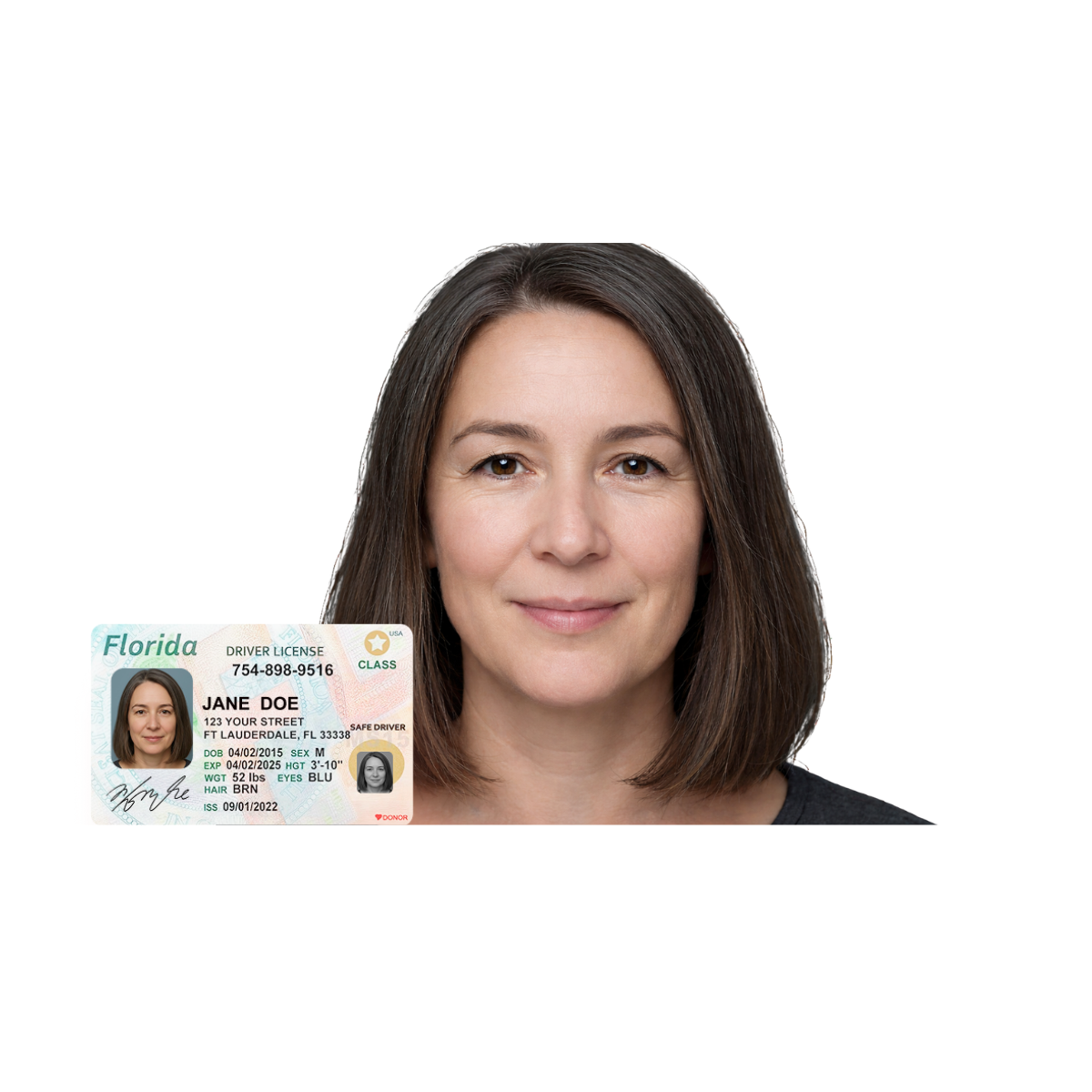
Identity fraud targeting Florida HOA and condo communities increases during peak season, when application volume is high and manual review capacity is stretched. Traditional screening methods that rely on uploaded document images and database checks cannot reliably detect stolen IDs, synthetic identities, or impersonation attempts. A fraudulent applicant who uploads a stolen government ID and passes a name-based background check can enter a community undetected under document-only review.
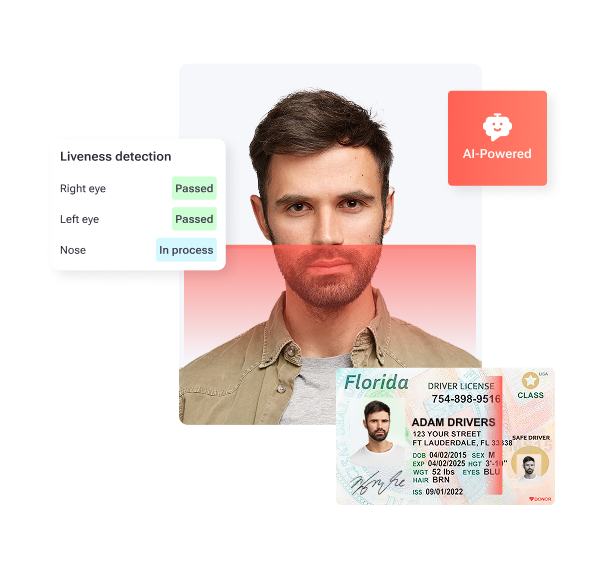
IDVerify adds government ID validation, AI-powered liveness detection, and biometric facial matching directly within the TenantEvaluation workflow. Applicants complete a guided identity verification step during the application process, upload their government-issued ID, and complete a selfie verification. Automated biometric validation runs instantly, and CAMs see verification results, including ID authenticity confirmation, liveness status, and biometric match result, embedded directly within the screening report. This shifts communities from document-based review to biometric-confirmed identity verification, which strengthens approval confidence and reduces liability exposure before residents enter the community.

Lease Tracking That Connects Approvals to Active Leases
Approval is not the end of the onboarding lifecycle. It functions as the midpoint. After a board vote, associations must still collect executed lease documentation, confirm occupancy, track lease terms, and maintain audit-ready records. Yet in communities that rely on spreadsheets and email, this post-approval phase creates the same fragmentation problems as the pre-approval phase. Teams struggle with missing lease copies, manual expiration tracking, no centralized visibility, and no direct connection between the approved application and the active lease.
TenantEvaluation’s Lease Tracking delivers centralized, real-time lease visibility and lifecycle control from application to occupancy. It connects resident onboarding, unit data, approvals, and lease documentation into one streamlined, audit-ready workflow. Real-time lease status tracking, automated lease document collection during onboarding, unit-level tracking, and searchable digital history replace scattered email chains and disconnected spreadsheets. For boards, this provides a clearer operational picture of occupancy and resident activity across communities. For CAMs, it removes manual follow-ups and administrative blind spots that slow post-approval operations.
Before-and-After Workflow Comparison for Florida HOAs
Under a traditional email and spreadsheet workflow, a Florida HOA application during peak season follows a predictable pattern of delays. An applicant submits an incomplete package by email. The CAM manually reviews it, identifies missing documents, and sends follow-up emails. The applicant or realtor responds over several days. The CAM compiles a board packet and distributes it before the next monthly meeting, which may be two to three weeks away. Board members review materials in their email inboxes with no structured voting mechanism. A decision is reached at the meeting, an approval letter is drafted manually, and lease documentation is collected through additional email exchanges. Total elapsed time: the same 6–8 weeks described earlier. Audit trail: fragmented across inboxes and folders.
With TenantEvaluation’s QuickApprove workflow, the same process operates within one connected platform. Smart form logic rejects incomplete submissions at intake. IDVerify confirms applicant identity biometrically before the file reaches review. The board accesses a dedicated dashboard with summarized applicant reports and votes in real time. Automated communication support keeps all parties informed without manual follow-up. Customized approval letters and a personalized welcome package are generated automatically. Lease Tracking connects the approved application to active lease documentation in one audit-ready record. Total elapsed time: days, not weeks, with up to 70% faster approvals and a complete, searchable audit trail throughout.
Frequently Asked Questions
What triggers the constructive approval clause in Florida HOA applications?
Florida law provides that if an association fails to act on a completed application within the applicable review period, the application may be deemed approved by default under constructive approval principles. The critical word is “completed” because the clock does not start until the association receives a fully compliant application package with all required documents. Associations that enforce complete-submission requirements at intake, as TenantEvaluation’s smart form logic does, protect themselves from constructive approval exposure by ensuring the clock starts only when the file is genuinely complete.
What happens when an application is incomplete during peak season?
Incomplete applications are the leading cause of peak-season approval delays. When a file is missing an executed lease, valid ID, or required financial documentation, the review clock does not start, and the CAM must enter a manual follow-up cycle that can consume days or weeks. TenantEvaluation addresses this at the point of submission. Intelligent form logic automatically checks for required documents and rejects incomplete submissions before they enter the review queue. Applicants receive immediate notification of what is missing, which reduces back-and-forth and keeps the process moving.
How do 2026 Florida condo law changes affect the approval process?
Recent and ongoing amendments to Florida’s condominium statutes have increased documentation, governance, and audit-trail requirements for associations. Boards and CAMs operating under 2026 frameworks face greater scrutiny of approval records, board voting documentation, and applicant file completeness. Manual email-based workflows create gaps that are difficult to defend in audits or disputes. TenantEvaluation’s platform maintains timestamped audit trails for every application, automated adverse action workflows, and organized digital records, which support compliance readiness without adding administrative burden to already-stretched peak-season operations.
How does biometric verification reduce fraud risk during peak season?
Peak season brings higher application volume and greater exposure to identity fraud. Applicants using stolen IDs or synthetic identities can pass document-only screening if no biometric confirmation is required. IDVerify addresses this by combining government ID authentication, AI-powered liveness detection, and biometric selfie-to-ID comparison within the TenantEvaluation workflow. This confirms that the person submitting the application is physically present and matches their identification, which moves communities from document-based review to biometric-confirmed identity verification before any approval decision is made.
Can TenantEvaluation handle both HOA and 55+ community applications in the same platform?
Yes. TenantEvaluation is built specifically for Florida community associations and management companies, with configurable workflows that support standard HOA and condo applications alongside age-restricted 55+ community requirements. The 55+ Communities Verification capability standardizes how age-restricted documentation is collected and managed across applications, which reduces manual work and improves documentation consistency for communities that must maintain HOPA-qualifying records. Both workflows operate within the same platform, giving CAMs and boards a single connected system for their entire portfolio regardless of community type.
Conclusion: Turning Peak-Season Chaos into Controlled Approvals
Florida HOA and condo boards face a structural problem every peak season. Statutory approval timelines stretch to 6–8 weeks under the weight of manual workflows, incomplete submissions, quorum waits, and identity-fraud exposure. The solution is not faster email. It is a purpose-built platform that removes each bottleneck at its source. TenantEvaluation is the Florida-built, all-in-one resident onboarding platform that turns the entire approval lifecycle into a single, audit-ready system. QuickApprove accelerates resident approvals without losing control, compliance, or visibility. IDVerify confirms applicant identity biometrically before approval. 55+ Communities Verification standardizes age-restricted documentation handling. Lease Tracking connects every approval to an audit-ready lease record. With 5,000+ communities, 100,000+ applications processed annually, and a 4.8/5 Google rating, TenantEvaluation has already generated $150M for Florida communities, and peak season is exactly when those compressed timelines matter most.
