Written by: Luis Teran, Co-founder, CEO, TenantEvaluation
Key Takeaways for Florida HOA Occupancy Control
- Florida HOAs struggle with missing lease copies, outdated spreadsheets, and unreliable occupancy data that create compliance risks under Chapter 720.
- Chapter 720 allows HOAs to restrict rentals but requires accurate ownership records and consent tracking to enforce rules consistently across owners.
- Automated lease registration and approval workflows cut manual follow-ups by collecting documents, running background checks, and routing applications through connected systems.
- Real-time lease visibility with automated expiration alerts replaces scattered spreadsheets and supports proactive enforcement before unauthorized occupancy occurs.
- TenantEvaluation centralizes lease tracking, approvals, and occupancy data into one platform that supports compliance requirements, so you can see how it works for your community.
How Chapter 720 Shapes Florida HOA Occupancy Rules
Under Florida Statutes Chapter 720, HOAs may amend governing documents to restrict rental activity, but such amendments apply only to owners who acquire title after the amendment’s effective date or who consent to it. Specifically, FS 720.306(1)(h)(2) permits HOAs to prohibit rental terms shorter than six months, with such amendments binding all parcel owners regardless of purchase date. Condominium associations operate under Chapter 718.
A critical operational nuance appears in how newer rules apply. Broader rental regulations adopted after July 1, 2021, apply only to owners who acquire title after the amendment’s effective date or who consent, while minimum-term and frequency restrictions bind all owners. Associations therefore must maintain accurate, current records of ownership dates, consent status, and governing-document versions. Manual tracking methods routinely fail to support this level of precision.
Lease Registration and Approval Workflows in Florida HOAs
To enforce the rental restrictions permitted under Chapter 720, most Florida HOAs with rental rules require owners to register leases before a tenant takes occupancy. Rental caps, waiting lists, and pre-occupancy approval processes are community-specific rules adopted in governing documents rather than universal statutory mandates, so the exact workflow varies by community. Common steps include lease submission, document review, background screening, and board or manager approval before move-in.
TenantEvaluation automates this entire sequence. During onboarding, the platform collects lease documents, triggers background checks through IDVerify, and routes applications through the QuickApprove accelerated approval workflow. CAMs, boards, and property management teams follow a single path from submission to decision, with real-time application tracking and fewer manual follow-ups while maintaining full oversight.
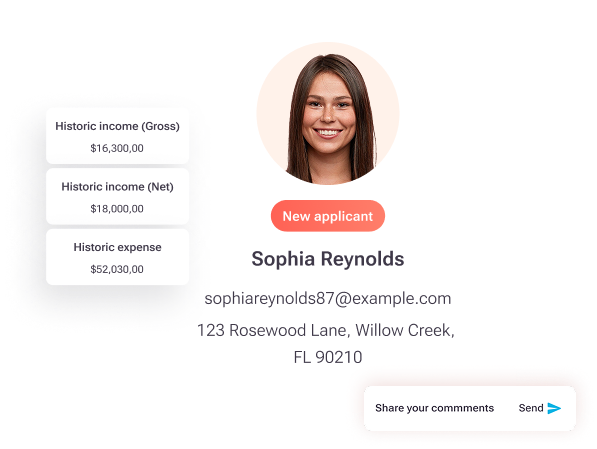
Real-Time Lease Visibility with TenantEvaluation Lease Tracking
TenantEvaluation’s Lease Tracking gives CAMs, boards, property management companies, and community operations teams centralized, real-time lease visibility and lifecycle control. Every lease carries a live status: active, pending, expired, or missing. Unit-level tracking ties each lease record directly to occupancy data, and a searchable digital history gives managers instant access to lease agreements, resident activity, and document trails, all in a unified system.
This structure replaces the scattered reality that most associations currently operate in. Lease copies often sit across folders, inboxes, and multiple spreadsheets with no connection to active occupancy data. Lease Tracking connects resident onboarding, unit data, approvals, and lease documentation into one streamlined workflow from application to occupancy that supports compliance requirements.
Florida HOA Lease Expiration Tracking and Renewals
Lease expiration tracking is one of the most common failure points in HOA lease management. When a lease expires without renewal documentation on file, the association loses visibility into whether the occupancy remains authorized. That gap creates both enforcement problems and potential liability. Rental violations in Florida community associations are sometimes difficult to detect or confirm without a registration or approval requirement for leases.
TenantEvaluation’s Lease Tracking replaces manual spreadsheet reminders with automated lease expiration alerts and lifecycle control. Managers receive notifications before leases lapse, which supports proactive follow-up with owners instead of reactive enforcement after a violation surfaces. The process reduces operational blind spots and scales to handle higher onboarding volume without adding complexity.
HOA Access Control for Guests and Unauthorized Occupants
Expired or missing leases create a direct access control problem for communities. Owners may have guests staying in their absence, which can be hard to distinguish from short-term rentals, making additional guest usage restrictions beneficial for enforcement. Without real-time lease status visibility, access systems and front-desk staff have no reliable way to flag units where occupancy is unverified.
TenantEvaluation’s Lease Tracking surfaces expired and missing lease statuses at the unit level, giving managers and boards the operational data needed to act before unauthorized occupancy becomes entrenched. When combined with IDVerify biometric identity verification, which confirms applicant identity using AI-powered liveness detection, government ID validation, and biometric facial matching, communities shift from document-only review to verified physical identity confirmation before approval.

Privacy and Record-Keeping Rules Under Chapter 720
Florida HOAs must maintain proper records to show that any rental cap is applied consistently and uniformly across the community. Chapter 720 also governs member access to association records. Lease-related documentation therefore must be stored in a way that remains accessible for legitimate review while still protected from improper disclosure.
TenantEvaluation supports these requirements through digital lease records designed for audits, automatic redaction of sensitive personal information, PCI Level 1 compliance, and end-to-end encryption. Every action inside the platform is timestamped and auditable, which creates a complete record trail that supports compliance readiness while leaving legal interpretation to the association’s attorney.
Board Dashboards for Faster, Documented Decisions
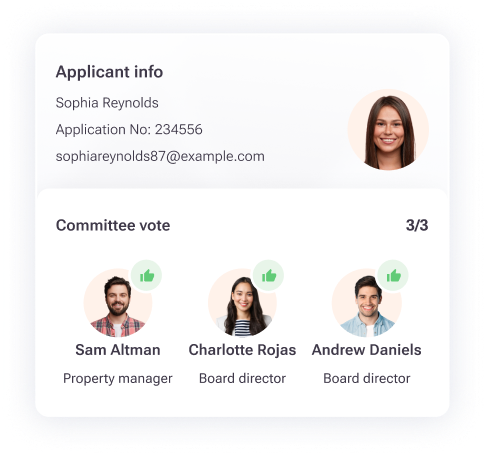
Boards need operational visibility without being buried in administrative detail. TenantEvaluation’s connected workflow gives board members a clearer picture of occupancy and resident activity across communities, including current lease status by unit, pending approvals, and document completeness, through the same platform used by CAMs and property management teams.
The QuickApprove board-ready approval process provides a dedicated review and voting dashboard with summarized applicant reports, which enables real-time application tracking without switching between systems. This consolidated view supports automated communication with applicants, replacing the email chains and spreadsheet updates that typically fragment the approval process. Boards can decide faster while maintaining the documentation and transparency needed for consistent enforcement.
Manual Spreadsheets vs. Platform-Based Lease Tracking
The table below compares manual spreadsheet methods with TenantEvaluation’s Lease Tracking capability across four operational dimensions. All platform outcomes are drawn from TenantEvaluation’s documented capabilities, and manual outcomes reflect the operational conditions described in the background research and company context above.
| Method | Lease Visibility | Follow-up Time | Record Type |
|---|---|---|---|
| Manual Spreadsheets | Decentralized across multiple files; missing or outdated lease copies common; no real-time status | High, with manual reminders and repeated follow-ups with owners and tenants across email and phone | Paper or disconnected digital files, not searchable, inconsistent across units |
| TenantEvaluation Lease Tracking | Centralized, real-time lease status at the unit level inside a single platform | Reduced, as automated expiration alerts and document collection during onboarding eliminate most manual follow-ups | Searchable digital history with timestamped document trails and auto-redacted sensitive data |
Frequently Asked Questions
What is Florida HOA occupancy tracking?
Florida HOA occupancy tracking is the systematic process of recording, monitoring, and verifying who occupies each unit in a community association in real time. It covers lease registration, document collection, expiration monitoring, and enforcement of rental caps and guest policies under Chapter 720 and Chapter 718. Effective occupancy tracking requires a direct connection between the resident onboarding process and ongoing lease status visibility, which manual spreadsheets and disconnected email chains cannot reliably provide at scale.
How long must Florida HOAs keep lease records?
Florida HOAs are generally required to maintain official records for a minimum of seven years under Chapter 720. Because rental restrictions may apply differently depending on when an owner acquired title and whether they consented to post-2021 amendments, associations benefit from retaining ownership history, consent records, and governing-document versions alongside lease copies. Digital records stored inside a centralized platform reduce the administrative burden of locating and producing these records when needed.
Who is responsible for updating occupancy data?
Responsibility for updating occupancy data typically falls on the Community Association Manager or the management company, acting on information provided by unit owners. Owners are generally required by governing documents to notify the association before a new tenant takes occupancy and to submit a copy of the executed lease. When this process is manual, updates are frequently delayed or incomplete. A centralized platform that collects lease documents automatically during onboarding and tracks status changes in real time reduces dependence on owner-initiated updates and keeps occupancy records current with less administrative effort.
How do condo and HOA occupancy rules differ?
Condominium associations in Florida operate under Chapter 718, while HOAs operate under Chapter 720. Both statutes permit rental restrictions, but the mechanics differ. For condominiums, rental cap amendments under Section 718.110(13) are not binding on existing owners unless they consent, but bind all subsequent buyers after the amendment takes effect. For HOAs, Section 720.306(1)(h) allows minimum-term and frequency restrictions to bind all owners regardless of purchase date, while broader rental regulations adopted after July 1, 2021, apply only to owners who acquire title after the effective date or who consent. Both frameworks require associations to maintain accurate, current records of ownership dates, consent status, and lease documentation to enforce restrictions consistently and avoid liability.
Conclusion: Moving Beyond Spreadsheets for Chapter 720 Compliance
Florida HOA occupancy tracking under Chapter 720 functions as an operational requirement with direct enforcement and liability consequences. The complexity of applying rental restrictions differently based on ownership date, consent status, and governing-document version means that fragmented manual processes are not just inefficient, they also increase compliance risk. Connected, documented workflows now represent the standard that modern community associations need to meet.
TenantEvaluation’s Lease Tracking capability delivers centralized, real-time lease visibility and lifecycle control from application to occupancy. The platform connects resident onboarding, unit data, approvals, and lease documentation into one streamlined system that supports compliance requirements. No spreadsheets. No missing leases. No operational guesswork.
Move beyond spreadsheets with a platform built for Florida HOA compliance.
