Written by: Luis Teran, Co-founder, CEO, TenantEvaluation
Key Takeaways for Florida HOAs and Condos
- Florida HOAs and condos must track occupancy through lease and ownership records, not physical sensors, to satisfy state statutes.
- Digital, audit-ready lease documentation has become essential as regulations such as HB 1021 and related bills expand recordkeeping duties.
- Software-based lease tracking platforms outperform sensor tools by tying approvals, real-time status, and searchable records together without hardware costs.
- Effective systems provide unit-level visibility, automated document collection, board dashboards, and enforcement of Florida-specific rental rules and caps.
- TenantEvaluation offers a centralized, compliance-native platform that connects every lease to every unit. Review the lease tracking platform.
Florida’s 2026 Regulatory Climate and the Shift to Digital Records
Florida community associations now operate in a strict and evolving regulatory environment. Florida condominium associations must maintain records related to rental amendments, owner consents, and title transfers. Under Fla. Stat. § 720.306(1)(h), Florida HOA rental amendments bind only consenting or after-acquired owners.
HB 1021 (2024) requires Florida condominium associations to maintain complete, current official records that are organized for easy inspection. The 2026 legislative session saw HB 657 pass the House 108-2 before dying in the Senate, signaling that rental and records legislation will likely return in 2027.
Digital recordkeeping now functions as a baseline requirement, not a convenience. Industry reports show limited access to real-time occupancy data among facilities management teams, a gap that creates measurable audit exposure for associations that still rely on spreadsheets and email chains. Centralized lease tracking platforms close this gap by connecting every lease and approval to each unit in a single, searchable system.
Ready to replace spreadsheets with a centralized, audit-ready system? See the audit-ready platform.
Hardware Sensors vs. Lease Tracking Software for HOAs
Occupancy tracking solutions fall into two broad categories: hardware and sensor platforms built for commercial space utilization, and software-based lease tracking platforms built for residential community compliance. The fundamental difference is that sensor platforms cannot produce lease agreements, board approvals, or audit-ready documentation that Florida statutes require; they only count physical presence. The table below illustrates this compliance gap across four criteria, showing why residential associations need document-driven lease tracking instead of presence-detection hardware.
| Solution | Compliance & Lease Integration | Cost Model | Board Oversight |
|---|---|---|---|
| TenantEvaluation Lease Tracking | Built for Florida HOA/condo compliance, connects resident onboarding, unit data, approvals, and lease documentation, real-time lease status (active, pending, expired, or missing), audit-ready digital lease records aligned with § 718.110(13) and § 720.306(1)(h) recordkeeping requirements | Pay-per-application, no upfront hardware costs, revenue-sharing model available | Dedicated board dashboard with real-time application and lease visibility, voting panel, searchable digital history |
| Density (sensor/IoT) | Sensor fusion detects physical presence counts, no lease record integration, no Florida statute alignment, not designed for residential unit-level compliance | Hardware procurement, installation, calibration, and ongoing maintenance, software, data pipelines, and cloud analytics add to cost | No board approval workflow, no lease document management, no audit trail for HOA/condo governance |
| VergeSense (sensor/IoT) | Workplace space utilization focus, environmental and motion sensor data, no lease integration, no residential compliance layer | Hardware-dependent, calibration and tuning required for local behaviors, ongoing maintenance costs | No HOA/condo governance features, no document collection or approval workflow |
| Tango (sensor/IoT) | Facility and workplace management focus, integrating heterogeneous sensor data formats presents ongoing technical challenges, no lease record or Florida statute alignment | Enterprise licensing plus hardware infrastructure, not structured for community association budgets | No board voting, lease approval, or occupancy verification workflow for residential associations |
Sensor platforms measure physical presence in commercial spaces. They do not collect lease agreements, track expiration dates, confirm board-approved occupancy, or produce the unit-level documentation required under Florida statutes. For Florida HOAs and condos, this creates a structural compliance gap rather than a simple feature tradeoff.
Tracking Occupancy Through Leases Instead of Sensors
For residential community associations, occupancy is confirmed through lease and ownership records, not physical presence detection. Florida HOAs require pre-rental approval processes that include tenant applications, background checks, credit screenings, and administrative fees, and these steps generate the documentary record that supports legally defensible occupancy verification.
Software-based lease tracking replaces the sensor by connecting the approval event to the occupancy record. When a lease is collected during onboarding, linked to a unit, and stored with a timestamped approval, the association gains a retrievable, audit-ready record that satisfies the official-records requirements under HB 1021 and HB 913 without any hardware installation.
When Florida associations pursue court action or liens to enforce governing documents, insufficient or incomplete lease and occupancy records weaken their legal standing. Automated lease document collection during onboarding closes this gap by ensuring every unit builds a complete, searchable digital history from day one.
Software Capabilities That Actually Work for Florida HOAs
Software that works for Florida HOAs must match the specific compliance structure of Florida statutes, not generic rental markets. Florida HOAs commonly enforce rental caps limiting the percentage of homes that may be leased simultaneously, which requires continuous monitoring of active lease counts. Minimum lease durations, often six or twelve months, must also be enforced, and without automated lease tracking, boards struggle to detect violations or short-term rental activity.
Effective HOA occupancy software must deliver six interconnected capabilities that work together as one system.
- Unit-level lease status visibility (active, pending, expired, or missing) gives managers and boards a real-time operational picture.
- Automated lease document collection tied to the onboarding workflow ensures every lease is captured at the point of entry instead of chased later.
- Searchable digital history of lease records and resident activity makes past decisions and current status instantly retrievable.
- Board-accessible approval and oversight dashboards provide governance transparency without constant manager-generated reports.
- Audit-ready records retrievable under Florida’s official-records requirements support inspections, disputes, and enforcement actions.
- No hardware dependency or installation requirement keeps budgets focused on compliance outcomes rather than devices.
Generic property management platforms and sensor-based tools do not address this full combination of requirements. Florida-specific community association platforms are built to handle them.
How TenantEvaluation Supports Community Association Occupancy Tracking
TenantEvaluation Lease Tracking delivers centralized, real-time lease visibility and lifecycle control for CAMs, boards, property management companies, and community operations teams. It connects resident onboarding, unit data, approvals, and lease documentation within TenantEvaluation’s centralized platform, replacing the function that sensors attempt to perform in commercial settings with a compliance-native, document-driven workflow for residential associations.
The platform provides real-time lease status at the unit level, automated lease document collection during onboarding, and unit-level tracking with searchable digital history. Every lease record becomes audit-ready from the moment an application is submitted. This workflow runs from application to occupancy in a fully connected sequence that reduces manual follow-ups, spreadsheets, and scattered email chains that create the compliance blind spots Florida statutes aim to close.
For 55+ communities, Florida HOA communities relying on HOPA must verify occupancy on an ongoing basis because at least 80% of occupied units must have one resident aged 55 or older. TenantEvaluation’s 55+ Communities Verification capability standardizes how age-restricted requirements are handled across applications, reducing manual work and improving documentation consistency alongside Lease Tracking’s occupancy records.

See how TenantEvaluation connects every lease to every unit. Explore the connected workflow.
Decision Framework: Six Criteria for Choosing Occupancy Tracking
- Compliance Readiness: The solution must align with the condo and HOA recordkeeping statutes discussed earlier, plus the official-records requirements of HB 1021 and HB 913. Sensor platforms do not meet these standards, while software-based lease tracking built for Florida associations does. Compliance readiness forms the foundation because a non-compliant system creates legal exposure regardless of its other strengths.
- Operational Efficiency: After confirming compliance, the solution should reduce manual follow-ups, spreadsheets, and scattered email chains. Manual management of lease records frequently results in missed violations until fines escalate or legal action becomes necessary. A compliant system that still demands heavy manual work will not be used consistently, which undermines its compliance value.
- Transparency: Boards need direct access to real-time lease status and unit-level occupancy data instead of waiting for manager reports. Board-accessible dashboards with searchable digital history become a structural requirement because they support faster decisions and clearer oversight.
- Scalability: The platform should handle higher onboarding volume without extra complexity or headcount. Solutions that already serve 5,000 or more communities and process over 100,000 applications annually demonstrate portfolio-level scalability.
- Auditability: Lease records must be retrievable, timestamped, and organized to satisfy Florida’s official-records regime. A compliant Florida community association must be able to produce, for any unit, which rental rules bind the owner and the consent or title records proving it. Audit-ready digital lease records provide the mechanism that makes this possible.
- Risk Controls: The solution should include identity verification, FCRA-compliant screening, and consistent policy application. Florida HOAs must apply tenant screening and rental restriction policies consistently to avoid fair housing violations, and manual tracking systems make uniform enforcement difficult to prove. TenantEvaluation’s IDVerify adds biometric identity confirmation, and QuickApprove accelerates resident approvals within TenantEvaluation while preserving control, compliance, and visibility.
Frequently Asked Questions
What is lease tracking software for HOAs, and how does it differ from sensor-based occupancy monitoring?
Lease tracking software for HOAs is a centralized platform that stores, manages, and surfaces lease records, occupancy status, and document history at the unit level, all connected directly to the resident onboarding and approval workflow. Sensor-based occupancy monitoring uses hardware such as motion detectors, infrared sensors, or Wi-Fi counters to estimate physical presence in a space, primarily for commercial facility management.
This distinction matters for Florida community associations because compliance under statutes such as § 718.110(13) and § 720.306(1)(h) requires documentary evidence, including executed leases, consent records, and approval histories, not presence counts. Sensors cannot produce a lease agreement, confirm board approval, or generate an audit-ready record. Software-based lease tracking performs all three tasks without any hardware installation.
How does TenantEvaluation Lease Tracking provide real-time lease status visibility?
TenantEvaluation Lease Tracking is built directly into the broader TenantEvaluation ecosystem, so lease status updates as onboarding events occur rather than being entered manually later. When an application is submitted, a lease document is collected automatically during onboarding. When a board approves occupancy, the unit record updates. When a lease approaches expiration, the status reflects that change in real time.
CAMs, property managers, and boards can view real-time lease status for any unit, search the digital history of lease records and resident activity, and access audit-ready digital lease records without digging through folders, inboxes, or spreadsheets. The entire workflow from application to occupancy stays fully connected within a single platform.
What Florida-specific compliance requirements make automated lease tracking necessary?
Florida community associations face several statutory obligations that manual systems cannot reliably satisfy at scale:
- Fla. Stat. § 718.110(13) requires condominium associations to track which rental rules apply to each unit based on acquisition date and consent records, with written consents retained permanently.
- Fla. Stat. § 720.306(1)(h) requires HOAs to track which rental amendments bind which owners, with different rules applying to consenting versus after-acquired owners.
- HB 1021 (2024) and HB 913 (2025) require complete, current, retrievable official records including leasing and tenant records, with larger condominiums required to post records on a website.
- HOPA compliance for 55+ communities requires ongoing occupancy verification that at least 80% of occupied units have one resident aged 55 or older.
- Rental cap enforcement requires associations to monitor the current count of active leases against governing document limits in real time.
Automated lease tracking connects these requirements to a single, searchable, audit-ready record system and replaces fragmented manual processes that create compliance exposure.
Can TenantEvaluation Lease Tracking replace spreadsheets for a large property management portfolio?
TenantEvaluation supports CAMs, boards, property management companies, and community operations teams managing portfolios of any size. The platform currently serves more than 5,000 communities and processes approximately 100,000 applications annually, which shows that the infrastructure scales without adding operational complexity.
Lease Tracking connects resident onboarding, unit data, approvals, and lease documentation into one streamlined workflow. Every lease remains connected, searchable, trackable, and audit-ready from application to occupancy through the TenantEvaluation ecosystem. Portfolio-level lease management no longer requires parallel spreadsheets, document chasing across inboxes, or manual reconciliation of occupancy records against approval histories.
How does TenantEvaluation handle board oversight for lease approvals and occupancy verification?
TenantEvaluation includes a dedicated board dashboard that gives board members direct, real-time access to application status, summarized applicant reports, a voting panel for approvals, and lease visibility across communities. QuickApprove accelerates resident approvals within TenantEvaluation, providing a board-ready approval process with automated communication support, customized approval letters, and fewer manual follow-ups while maintaining control and compliance.
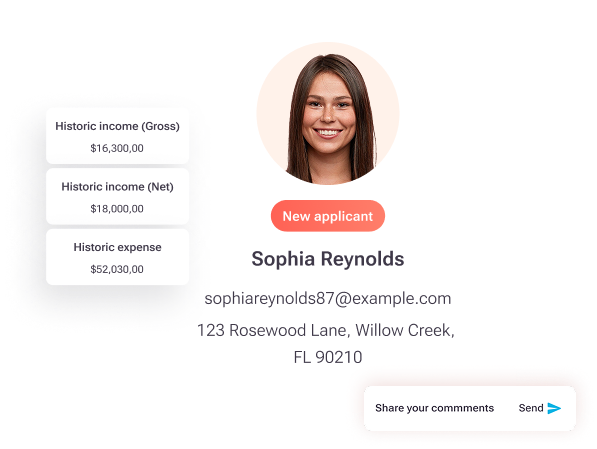
For occupancy verification, Lease Tracking gives boards a clear operational picture of lease status and resident activity across every unit. Audit-ready digital lease records support compliance readiness and reduce risk tied to incomplete or disconnected records.
Conclusion: Why Lease Tracking Beats Sensors for Florida Associations
Sensor-based occupancy tracking platforms serve commercial space utilization by measuring physical presence and improving desk or room allocation. They do not collect lease agreements, track expiration dates, confirm board-approved occupancy, or produce the unit-level documentation required under Florida statutes. For Florida HOAs and condos, this gap between hardware monitoring and software-based lease tracking represents a structural mismatch, not a minor feature difference.
Florida community associations operating under § 718.110(13), § 720.306(1)(h), HB 1021, and HB 913 need a system that delivers audit-ready digital lease records, real-time lease status visibility, and unit-level tracking connected directly to the onboarding workflow. TenantEvaluation Lease Tracking provides centralized, real-time lease visibility and lifecycle control from application to occupancy for CAMs, boards, property management companies, and community operations teams managing Florida communities.
The platform connects resident onboarding, unit data, approvals, and lease documentation, and delivers unit-level tracking with searchable digital history within a single compliance-native system. Associations replace operational guesswork with audit-ready records at every stage of the lease lifecycle.
Request your personalized demo and see how TenantEvaluation replaces spreadsheets and sensor costs with a compliance-first, no-hardware lease tracking solution built for Florida community associations.
