Written by: Luis Teran, Co-founder, CEO, TenantEvaluation | Last updated: July 8, 2026
Key Takeaways for Florida HOA Screening
- An integrated resident screening and compliance platform for Florida HOAs combines application intake, FCRA-compliant background checks, biometric identity verification, document collection, board voting, and lease tracking in one audit-ready system.
- Florida HOAs must meet strict requirements under statutes 718, 720, and HB 913, so purpose-built platforms with direct credit bureau relationships and Florida-specific configuration are essential for compliance and risk management.
- Key capabilities include biometric identity verification with AI liveness detection, board dashboards with real-time voting, centralized lease tracking, and 55+ community verification to reduce manual work and liability.
- Fragmented or manual screening processes expose associations to identity fraud, approval delays, incomplete lease records, and regulatory penalties that integrated platforms are designed to prevent.
- Community Association Managers evaluating solutions can use TenantEvaluation’s integrated platform to streamline compliance and operations; learn more.
7 Must-Have Features in a Florida HOA Screening and Compliance Platform
- FCRA-first design with direct credit bureau reseller relationships (TransUnion and Equifax), built-in adverse action workflows, and strict permissible purpose controls
- Biometric identity verification with AI-powered liveness detection, government ID authentication, and selfie-to-ID facial matching, all native to the screening workflow
- Board dashboard and voting panel with real-time application visibility, AI-generated summaries, and timestamped audit trails
- Centralized lease tracking with real-time status visibility (active, pending, expired, or missing), automated document collection, and unit-level occupancy records
- Florida statute-aligned configuration covering § 718.112(2)(k), § 720.306(1)(h), and HB 913 structural and governance requirements
- 55+ Communities Verification that standardizes age-restricted application handling, reduces manual work, and supports documentation consistency across Florida condos and HOAs
- Revenue-sharing model that turns application processing into a compliant, controlled income stream with no upfront fees
Why Florida HOAs Now Need Integrated Screening Platforms
Florida community associations operate in one of the most complex and actively evolving regulatory environments in the United States. An integrated resident screening and compliance platform for Florida HOAs now functions as a core risk management requirement, not a convenience. Florida’s condominium and HOA statutes have undergone significant changes over the past four years, driven by the Champlain Towers South collapse and fraud investigations such as The Hammocks. The legislative trend emphasizes tighter rules for building safety, fiscal responsibility, and community governance.
At the same time, the shift from fragmented tools to integrated HOA management platforms is accelerating in 2026, with most associations managing 50 or more units adopting dedicated software. Communities that retain paper-based processes experience higher inbound call volumes and more resident complaints. For Community Association Managers (CAMs) and boards across Miami, Fort Lauderdale, Tampa, Orlando, and the rest of Florida, the operational and legal case for integration is clear.
How Screening, Compliance, and Onboarding Fit Together
Resident screening in the HOA context covers identity verification, background checks (criminal, eviction, credit), income verification, and reference checks before a prospective resident receives approval to occupy a unit. Compliance covers the association’s adherence to federal law, primarily the Fair Credit Reporting Act (FCRA), and Florida-specific statutes that govern application fees, approval timelines, deposit handling, and lease restrictions. The onboarding workflow describes the full process from application submission through document collection, board review, approval decision, and lease execution.
An integrated platform connects these three layers in a single, audit-ready system. When screening, compliance, and onboarding live in separate tools or manual processes, associations accumulate liability at every handoff point.
Florida HOA Vendor Landscape and Competitive Gaps
The Florida HOA screening vendor landscape divides into three categories. Generic property management platforms such as AppFolio and RealPage offer broad feature sets but lack Florida-specific statute configuration, dedicated board voting dashboards, and FCRA reseller status. Background screening platforms such as ApplyCheck and Verify Screening Solutions use the TazWorks platform and focus on background checks without applicant interaction, automated document review, or lease lifecycle visibility. Purpose-built community association platforms, led by TenantEvaluation, deliver end-to-end onboarding with FCRA compliance as the foundation, direct bureau relationships, and Florida-specific workflow configuration.
The competitive gap is significant. No generic screening vendor currently positions itself as an FCRA reseller with direct TransUnion and Equifax relationships, provides biometric identity verification inside the screening workflow, or offers a board-ready voting dashboard connected to the approval process.
Real-World Example: A 300-Unit Fort Lauderdale Condo
A CAM managing a 300-unit condominium in Fort Lauderdale may receive 40 to 60 applications during peak season. Without an integrated platform, each application requires manual document collection by email, separate background check ordering, physical or PDF-based board packet preparation, and manual lease expiration tracking in spreadsheets. Common failure points include delays in board approval timelines caused by meeting schedules and incomplete screening, which result in tenants occupying properties without prior HOA approval. That situation triggers fines, amenity suspension, and legal exposure.
An integrated platform removes each of these failure points. Applicants submit everything online, documents are collected and validated automatically, and biometric identity verification runs inside the same workflow. The board reviews and votes through a dedicated dashboard, and lease records stay stored and tracked in real time from submission through occupancy.
Compliance, Risk, and Governance for Florida HOAs
Florida statute compliance is non-negotiable for associations that conduct resident screening. Key provisions include:
- Florida Statutes: Condominium associations may charge an approval fee only if authorized in governing documents, and the fee may not exceed $150 per applicant, subject to adjustments.
- Florida Statutes § 720.306(1)(h): Limits the reach of new HOA rental restrictions adopted after July 1, 2021, with a carve-out for amendments that prohibit rentals shorter than six months or more than three times per calendar year, which apply to all owners.
- HB 913: Addresses structural inspection and reserve funding mandates for condominium associations as part of the post-Surfside legislative response. These requirements accelerate structural inspection timelines and raise reserve funding, with Fannie Mae and Freddie Mac updating condominium project eligibility standards in March 2026 to increase required reserve allocations from 10% to 15% of total annual budgeted assessment income effective January 4, 2027.
- FCRA: Governs permissible purpose, adverse action notices, and data handling for all consumer credit and background report usage, and applies to every Florida HOA that conducts screening.
Governance and compliance pressure on Florida associations continues to intensify. Manual, fragmented processes make it harder to keep pace with these requirements.
Where Manual HOA Screening Breaks Down
Florida HOA managers consistently encounter the same operational breakdowns when screening and compliance processes remain manual or fragmented:
- Identity fraud exposure: Traditional document-upload screening cannot reliably prevent impersonation, stolen IDs, or synthetic identities. HOA managers face growing exposure to fraudulent applicants who attempt to enter communities through document-based screening alone.
- Approval delays: Applications stall in email chains and board meeting schedules, which creates occupancy-before-approval scenarios that trigger fines and legal liability.
- Fragmented lease management: Missing or outdated lease copies, manual expiration tracking, and disconnected spreadsheets create operational blind spots and compliance risk tied to incomplete records.
- Inconsistent screening policies: Florida HOA managers struggle to maintain consistent tenant screening policies that comply with fair housing laws while avoiding discriminatory practices when they evaluate criminal history, creditworthiness, and rental history without standardized workflows.
- Administrative overload: Manual follow-ups with applicants, realtors, and owners consume staff hours that could support higher-value operations.
Best Practices for Modern Florida HOA Screening
The operational standard for Florida community associations in 2026 centers on three requirements: biometric identity verification, board-integrated approval workflows, and centralized lease lifecycle visibility.
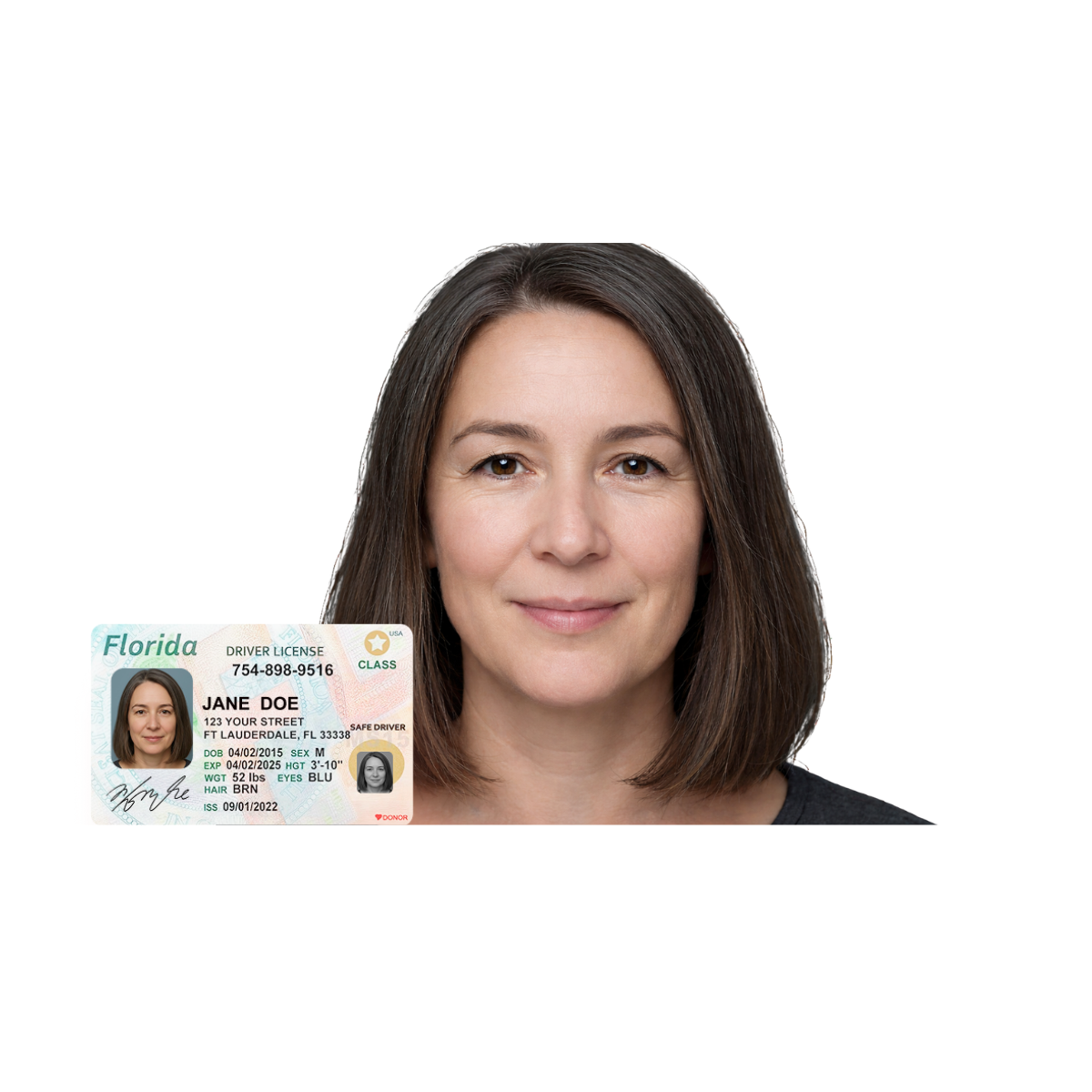
Biometric Identity Verification for Florida Condos: IDVerify by TenantEvaluation introduces automated KYC verification through government ID validation, AI-powered liveness detection, and biometric facial matching, all running inside the screening workflow without redirecting applicants to external portals. This shift moves communities from document-based review to biometric-confirmed identity and addresses growing exposure to synthetic identities and impersonation attempts that traditional screening cannot detect.

Board Dashboard and Voting Process: QuickApprove provides boards with a dedicated review and voting panel inside TenantEvaluation, with real-time application tracking, AI-generated applicant summaries, automated communication support, customized approval letters, and a personalized welcome package. It accelerates resident approvals while preserving control, compliance, and visibility, and it supports high-volume seasons and communities with complex onboarding requirements.
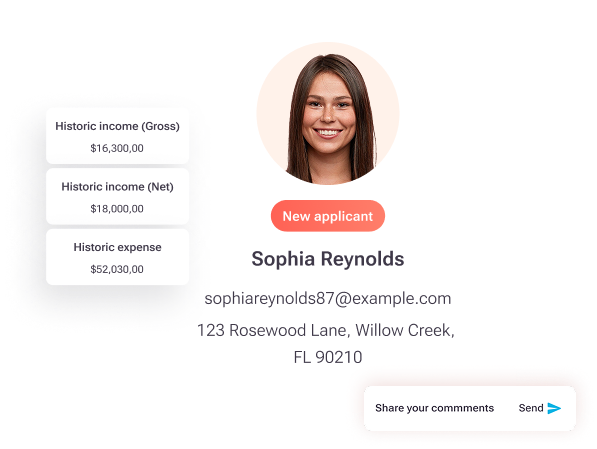
Lease Tracking and Occupancy Visibility: Centralized, real-time lease visibility and lifecycle control, from application to occupancy, replaces spreadsheets and scattered email chains. TenantEvaluation’s Lease Tracking connects resident onboarding, unit data, approvals, and lease documentation in one audit-ready workflow with real-time lease status, automated document collection, and searchable digital history.
55+ Communities Verification: 55+ Communities Verification standardizes how age-restricted application requirements are handled across Florida condos and HOAs. It reduces manual work, improves documentation consistency, and strengthens operational efficiency and internal controls for CAMs and boards that manage age-restricted communities.
How TenantEvaluation Compares to Other Platforms
The table below compares TenantEvaluation to generic screening and property management platforms across criteria that matter most to Florida HOA and condo managers. The comparison shows that TenantEvaluation uniquely combines FCRA reseller status, native biometric verification, and board-integrated workflows in one system. Every data point reflects documented platform capabilities and published customer outcomes.
| Evaluation Criterion | TenantEvaluation | Generic Screening Platforms (e.g., ApplyCheck, Verify Screening Solutions) | Broad Property Management Software (e.g., AppFolio, RealPage) |
|---|---|---|---|
| FCRA Reseller Status | Direct TransUnion and Equifax reseller, strict permissible purpose controls, built-in adverse action workflows | Typically use third-party data aggregators, reseller status not primary positioning | Screening often outsourced, not positioned as FCRA reseller |
| Biometric Identity Verification | IDVerify (see Best Practices section): native biometric verification with AI liveness detection | Document upload only, no biometric layer reported | Limited or no biometric verification, not designed for HOA fraud risk |
| Board Dashboard and Voting | QuickApprove board panel with real-time tracking, AI summaries, voting workflow, automated approval letters | No dedicated board voting dashboard | Board access varies, not purpose-built for HOA approval workflows |
| Lease Tracking | Centralized, real-time lease lifecycle visibility with unit-level tracking and audit-ready records | Not offered | Lease storage may exist, but not connected to screening and onboarding workflow |
| Florida Statute Configuration | Built for § 718, § 720, HB 913, with custom setup per community governing documents | Generic configuration, Florida-specific statute alignment not documented | General compliance tools, limited Florida HOA specialization |
| Revenue Model | Revenue-sharing model where application fee is collected, service fee deducted, and remainder rebated to association, with no upfront fees | Per-report fees, no revenue-sharing model | Monthly subscription, no revenue-sharing |
| 55+ Community Support | 55+ Communities Verification for standardized age-restricted application handling and documentation consistency | Not offered | Not offered as a purpose-built capability |
Quantified Outcomes: Before vs. After TenantEvaluation
A Florida-based management company that switched to TenantEvaluation documented a 50 percent reduction in processing time.
- 50 hours of staff time freed per day through automated workflows
- Total annual savings of $240,000
- Elimination of paper-based handling of sensitive resident information, replaced with PCI Level 1 compliance and end-to-end encryption
Before TenantEvaluation, this company managed applications across email chains, spreadsheets, and manual follow-ups, with no centralized lease visibility, no biometric fraud prevention, and no board-ready approval workflow. After implementation, every application moved through one connected platform from submission to occupancy, with full audit trails and real-time status visibility at every stage.
Frequently Asked Questions
How much can an integrated screening platform reduce HOA application approval time?
TenantEvaluation’s automated workflows and QuickApprove accelerated approval workflow reduce application approval time by up to 70 percent compared to manual processes. This acceleration comes from eliminating email chains and manual follow-ups that slow traditional approval workflows, with the platform handling document validation, identity verification, and board notification automatically. Communities that manage high application volumes during peak seasons report the most significant time savings.
How does biometric identity verification protect Florida condos and HOAs from identity fraud?
IDVerify by TenantEvaluation introduces a multi-layer fraud prevention system that confirms applicants are real, physically present, and matched to their government-issued identification before approval decisions occur. The process combines government ID authenticity validation, AI-powered liveness detection that confirms physical presence, and biometric facial landmark mapping with selfie-to-ID comparison. All verification runs inside TenantEvaluation, with no external portals or separate logins. Community Association Managers see verification results embedded directly within the screening report, including ID authenticity confirmation, liveness status, and biometric match result.
How does TenantEvaluation handle 55+ age-restricted community verification in Florida?
TenantEvaluation’s 55+ Communities Verification is a built-in capability that helps Florida condos and HOAs standardize how age-restricted application requirements are handled. It reduces manual work, improves documentation consistency, and strengthens operational efficiency and internal controls for CAMs and boards. Instead of fragmented manual processes that rely on heavy email communication, PDFs, and repeated follow-ups, the capability creates a structured and consistent workflow for age-restricted communities. It supports documentation and consistency for internal operational control without replacing legal guidance and scales across portfolios of multiple communities.
What does centralized lease tracking provide that spreadsheets cannot?
TenantEvaluation’s Lease Tracking delivers centralized, real-time lease visibility and lifecycle control from application to occupancy, fully connected inside one platform. Unlike spreadsheets, it provides real-time lease status for every unit, automated lease document collection during onboarding, unit-level tracking tied to occupancy records, and a searchable digital history of lease records, resident activity, and document trails. Every lease record is audit-ready and connected to the original application and approval workflow. Spreadsheets cannot provide real-time status updates, automated document collection, or direct connection between applications and active leases, which creates operational blind spots, delayed follow-ups, and compliance risk tied to incomplete records.
Is TenantEvaluation compliant with Florida HOA statutes and the FCRA?
TenantEvaluation is built specifically for community associations and management companies, with FCRA compliance as the foundation. As a direct reseller of TransUnion and Equifax data, TenantEvaluation accesses consumer data under strict bureau rules with regular compliance reviews and audits, and it does not rely on gray-market or offshore data sources. The platform includes built-in adverse action workflows, strict permissible purpose controls, automatic redaction of sensitive personal information, PCI Level 1 compliance, end-to-end encryption, and complete audit trails for every application. Platform configuration is customized per community to align with Florida statutes § 718, § 720, and HB 913 requirements, as well as each association’s governing documents, bylaws, and screening criteria.
Conclusion: Evaluating Your Current Screening Process
Florida HOAs and condominium associations face compounding regulatory, operational, and fraud-related pressures that manual and fragmented screening processes cannot manage effectively. Florida’s statutory environment continues to evolve, with governance, reserve funding, and structural compliance requirements tightening across the board. At the same time, identity fraud exposure is increasing, approval delays are generating liability, and lease management gaps are creating audit risk.
TenantEvaluation is the purpose-built integrated resident screening and compliance platform for Florida HOAs, serving 5,000 plus communities and processing approximately 100,000 applications annually. The platform delivers the capabilities detailed throughout this article, including FCRA-grade data access, biometric fraud prevention, board-integrated approvals, real-time lease visibility, and age-restricted community support, in one connected, audit-ready system.
Community Association Managers and board members who evaluate their current screening and compliance processes should confirm whether their existing tools provide these capabilities. If any of those capabilities are missing, the operational and legal exposure is measurable.
