Written by: Luis Teran, Co-founder, CEO, TenantEvaluation
Key Takeaways for Florida HOA Screening
- Florida HOA boards must obtain written applicant consent and document a permissible purpose before ordering any consumer report under FCRA rules.
- A structured adverse-action workflow is required whenever screening data influences a denial or conditional approval decision.
- Personal liability risk for board members increases when screening decisions lack documented, consistently applied criteria and audit trails.
- Process fragmentation, such as email approvals or buried consent forms, creates the most common FCRA and Fair Housing Act compliance failures.
- TenantEvaluation embeds FCRA-compliant workflows and audit trails for Florida HOA boards, so schedule a demo today.
FCRA Basics and Florida Board Liability Rules
The FCRA defines a consumer reporting agency as any entity that assembles or evaluates consumer information for the purpose of furnishing consumer reports to third parties. A consumer report includes any written, oral, or other communication bearing on a consumer’s creditworthiness, character, or personal characteristics used as a factor in establishing eligibility for housing.
Permissible purpose is the legal basis that authorizes a board or its agent to pull a consumer report. For HOAs, the permissible purpose is evaluating an applicant for tenancy or ownership within the community. Without a documented permissible purpose, obtaining a consumer report is a federal violation.
Written consent must be obtained in a standalone disclosure, not buried in a lease or application form, before any consumer report is ordered. The applicant must sign this disclosure separately.
Adverse action under the FCRA means any denial, conditional approval, or other action unfavorable to the applicant that is based in whole or in part on information in a consumer report.
These federal FCRA requirements operate alongside Florida-specific statutes that govern board member conduct and liability. Florida Statute §720.3033 governs education and certification requirements for HOA board directors. Under Florida Statute §720.303(1), which makes officers and directors subject to s. 617.0830, board members who fail to perform their duties in good faith, in a manner they reasonably believe to be in the best interests of the association, and with the care an ordinarily prudent person would exercise, may be held personally liable. Screening decisions made outside a documented, consistent process elevate that personal liability risk materially. Recent legislative updates to Florida HOA law revised governance and documentation requirements for boards, so structured screening workflows now function as a core governance control.
Florida Screening Environment After Miya’s Law
Florida’s community association environment has shifted significantly in recent years. Miya’s Law, enacted following the 2021 murder of Miya Marcano at an Orlando apartment complex, mandates background screenings for employees of nontransient and transient apartments. While Miya’s Law applies directly to employees rather than residents, it has accelerated a broader cultural and regulatory expectation that Florida community associations apply rigorous, documented screening standards across all access points to the community.
Level 2 screening, as defined under Florida law, includes fingerprint-based criminal history checks processed through the Florida Department of Law Enforcement (FDLE) and the FBI. For resident applicants, the parallel expectation is that background checks be comprehensive, consistently applied, and documented. Boards should expect those files to meet an evidentiary standard that can withstand regulatory or legal scrutiny.
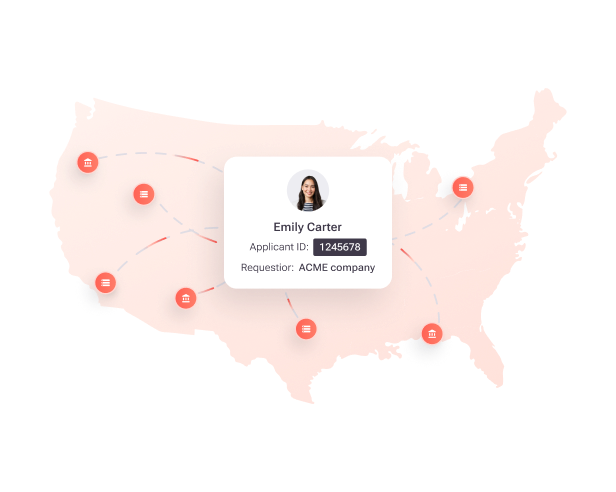
Recent updates to Florida HOA laws also revised board governance and official records provisions. These changes make fragmented, email-based screening approval processes a direct governance liability for board presidents and CAMs.
Step-by-Step Screening Workflow in Real Life
Florida HOA FCRA screening compliance depends on a sequenced, documented process that starts before any report is ordered. Each step builds the legal foundation for the next step.
First, the applicant receives a standalone written disclosure explaining that a consumer report will be obtained. The applicant signs and returns this document, which creates the legal authorization required by the FCRA. This signed consent is retained in the applicant’s file and must be retrievable on demand, because without it the board has no legal basis to move forward.
Second, the board or its designated CAM confirms that the permissible purpose, evaluating the applicant for residency, is documented in the association’s records. This confirmation must occur before ordering the report, because the FCRA prohibits obtaining consumer data without both consent and a documented permissible purpose. This step forms the legal predicate for the entire screening process.
Third, the consumer report is ordered through a compliant channel. TenantEvaluation is a direct reseller of TransUnion and Equifax data, so reports are accessed under strict bureau rules with no gray-market or offshore data sources. This direct relationship creates a structural compliance advantage that generic screening vendors cannot match.
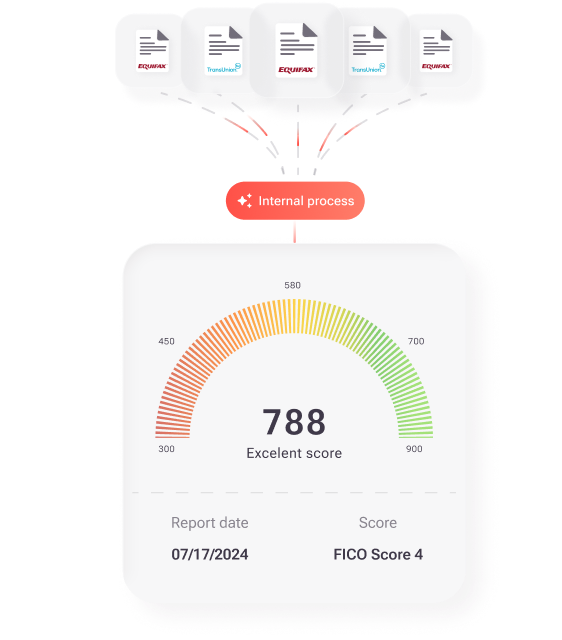
Fourth, the board applies its pre-established screening criteria uniformly. Criteria must be documented in writing before the screening cycle begins and applied identically to every applicant in the same category. Deviation from uniform criteria is one of the most common triggers for Fair Housing Act claims.
Fifth, if the report supports an adverse action, the FCRA two-step adverse-action notice process governs the remainder of the workflow. TenantEvaluation’s platform automates adverse-action notice generation, pre-populates required disclosures, and timestamps every step. The system creates an audit trail that supports the board’s documentation while preserving the board’s decision-making authority.
QuickApprove accelerates the board review and voting process inside TenantEvaluation. Board members receive a dedicated panel with summarized applicant reports and a structured voting workflow, which replaces email chains while maintaining board oversight and compliance visibility.

Compliance Risk and Board Governance Exposure
HOA board personal liability under Florida FCRA screening requirements is concrete and growing. Florida Statute §720.303(1) creates a direct line between procedural failures and individual board member exposure. When a board member participates in a screening decision that violates the FCRA by ordering a report without consent, applying criteria inconsistently, or failing to issue a proper adverse-action notice, that member may face personal liability separate from the association’s liability.
The protections available to board members depend on good-faith conduct and adherence to a reasonable standard of care. A board that operates from a documented, consistently applied screening workflow stands in a materially stronger position to invoke those protections than one that relies on informal email approvals or undocumented criteria.
FCRA violations carry actual damages plus costs and attorney fees for negligent noncompliance, and actual or statutory damages of $100 to $1,000 per violation plus punitive damages for willful violations. Class action exposure exists where multiple applicants experience the same procedural failure. For Florida HOA boards managing high application volumes, the aggregate risk of a single process gap can be substantial.
Typical Screening Gaps That Create Liability
The most frequent compliance failures in Florida HOA resident screening share a common structural cause: process fragmentation. Specific failure patterns include the following.
- Email-chain approvals: When board members review and vote on applications through email threads, there is no timestamped, centralized record of who reviewed what information and when. This gap is indefensible in a regulatory or litigation context.
- Missing audit trails: Without a system that logs every action, including consent receipt, report order, review, vote, and adverse-action notice, the board cannot demonstrate that its process was consistent or compliant.
- Inconsistent screening criteria: Applying different credit score thresholds, criminal history lookback periods, or income requirements to different applicants in the same category creates direct Fair Housing Act exposure, independent of FCRA obligations.
- Improper adverse-action notices: Notices that omit the consumer reporting agency’s contact information, fail to inform the applicant of their dispute rights, or are issued without a preceding pre-adverse-action notice are FCRA violations on their face.
- Consent buried in application forms: Embedding the consumer report authorization within a general application rather than providing it as a standalone disclosure is a procedural violation regardless of whether the applicant signed the application.
Screening Best Practices for 2026 Florida HOAs
Boards and CAMs operating in Florida’s 2026 regulatory environment should align their screening processes with the following standards, which work together as a single, defensible framework.
- Uniform written screening criteria: Adopt a single written policy that specifies every criterion, including credit score minimums, criminal history parameters, income thresholds, and documentation requirements. Apply this policy identically to every applicant in the same category before the screening cycle begins.
- Timestamped records for every action: Log every step in the screening process, from consent receipt through final decision, with a timestamp and retain it in a retrievable format. Manual systems rarely produce this level of detail consistently.
- Separation of decision-making from data provision: The association makes the residency decision, and the screening platform provides the data. This structural separation reflects a core FCRA compliance principle and differentiates purpose-built platforms from generic tools.
- Direct credit bureau data sourcing: Consumer reports sourced through direct bureau reseller relationships carry stronger chain-of-custody documentation than reports assembled through third-party aggregators.
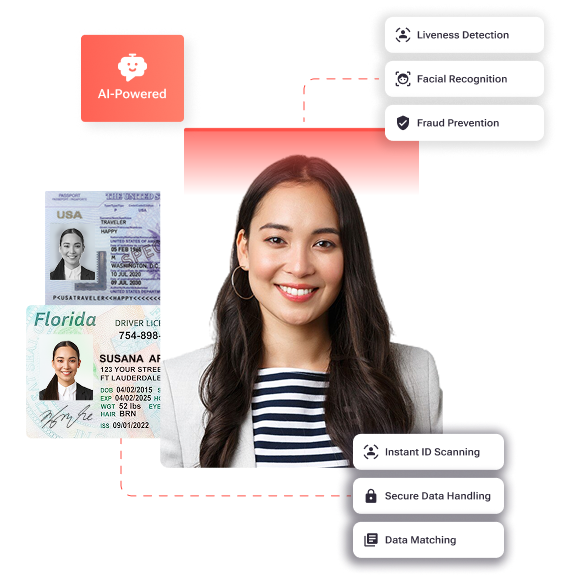
- Biometric identity verification before screening: IDVerify confirms applicant identity through government ID validation, AI-powered liveness detection, and biometric facial matching before the screening report is ordered. This step reinforces permissible-purpose validation and strengthens audit defensibility.
Adverse-Action Checklist and Sample Notices
Florida HOA boards evaluating their current screening workflow against 2026 compliance standards should assess each of the following elements. This checklist also functions as the foundation for an adverse-action notice review.
The following checklist represents the minimum documentation standard that will withstand regulatory scrutiny in 2026. Each item corresponds to a specific FCRA requirement, and missing any single element creates a compliance gap that exposes the board to personal liability.
2026 Adverse-Action Notice Checklist (Updated)
- Standalone written consumer report disclosure obtained and retained prior to report order
- Permissible purpose documented in association records
- Consumer report ordered through a direct bureau reseller (not a gray-market aggregator)
- Uniform screening criteria applied and documented in writing before the screening cycle
- Pre-adverse-action notice issued with a copy of the consumer report and summary of rights
- Minimum five-business-day waiting period observed before final adverse action
- Final adverse-action notice includes: name, address, and phone number of the consumer reporting agency; statement that the agency did not make the adverse decision; applicant’s right to obtain a free copy of the report within 60 days; applicant’s right to dispute accuracy or completeness of the report
- All notices timestamped and retained in a retrievable audit file
- Board voting on the application documented in a centralized system, not email
- Lease documentation connected to the approved application record
Sample Pre-Adverse-Action Notice Language (2026):
“We have received a consumer report in connection with your application for residency at [Community Name]. Information contained in this report may affect our decision. A copy of the report and a summary of your rights under the Fair Credit Reporting Act are enclosed. You have the right to dispute the accuracy or completeness of any information in the report directly with the consumer reporting agency. We will not make a final decision for [five business days] to allow you time to address any inaccuracies.”
Sample Final Adverse-Action Notice Language (2026):
“After review of your application and the consumer report obtained in connection with it, [Community Name] has determined that your application for residency has been denied. The consumer report was provided by [CRA Name, Address, Phone]. The consumer reporting agency did not make this decision and cannot explain why it was made. You have the right to obtain a free copy of your consumer report from the agency within 60 days of this notice and to dispute the accuracy or completeness of any information in the report.”
TenantEvaluation’s platform automates the generation of both notice types, pre-populates required disclosures, and retains timestamped copies in the applicant’s audit file. This support promotes documentation consistency while leaving legal counsel and final decisions in the board’s control.
Frequently Asked Questions
What does Florida Statute §720.3033 require of HOA board members in the context of resident screening?
Florida Statute §720.3033 requires HOA board directors to meet education and certification obligations. The standard for board member conduct, requiring duties be performed in good faith, in a manner reasonably believed to be in the best interests of the association, and with the care an ordinarily prudent person would exercise, is provided under Florida Statute §720.303(1), which subjects officers and directors to s. 617.0830.
In the context of resident screening, this framework means board members must apply documented, uniform criteria consistently across all applicants, follow a structured adverse-action process when denying applications based on consumer report data, and maintain complete records of their decisions. Board members who participate in screening decisions that deviate from these standards may face personal liability separate from the association’s liability. A documented, platform-supported screening workflow offers one of the most practical ways to demonstrate the good-faith standard the statute requires.
What is Miya’s Law and how does it affect Florida HOA resident screening?
Miya’s Law was enacted by the Florida Legislature following the 2021 murder of Miya Marcano at an Orlando apartment complex. The law mandates background screenings for employees of nontransient and transient apartments as a condition of employment. While the law’s direct application is to employees rather than resident applicants, it has established a broader regulatory and cultural expectation that Florida community associations apply rigorous, documented screening standards.
HOA boards that have not reviewed their resident screening criteria and documentation practices in light of Miya’s Law should treat that review as a governance priority. Aligning employee-level expectations with resident screening practices signals that the board takes access control and safety seriously.
What are the FCRA’s adverse-action requirements for Florida HOA boards?
When a Florida HOA board takes an adverse action, such as a denial, conditional approval, or any unfavorable decision, based in whole or in part on information in a consumer report, the FCRA requires a two-step notice process. First, the board must issue a pre-adverse-action notice that includes a copy of the consumer report and a summary of the applicant’s FCRA rights, and must allow a reasonable period for the applicant to dispute inaccuracies before the final decision is made.
Second, if the board proceeds with the adverse action, it must issue a final adverse-action notice that identifies the consumer reporting agency, states that the agency did not make the decision, and informs the applicant of their right to obtain a free copy of the report and to dispute its contents. Both notices must be retained in a timestamped, retrievable format.
How do new HOA laws in Florida effective in 2026 affect board screening obligations?
Florida’s 2026 HOA legislative updates revised official records provisions and introduced updates to board governance and accountability standards, including conflict disclosures. For screening specifically, these updates increase the need for boards to operate from a documented, consistently applied workflow rather than informal email-based processes.
Boards that cannot produce a complete audit trail of their screening decisions, including consent records, report orders, criteria applied, votes cast, and notices issued, face heightened regulatory and litigation exposure under the updated statutory framework.
What is the difference between Level 1 and Level 2 background screening in Florida?
Under Florida law, Level 1 screening is a name-based check of Florida criminal history records and the national sex offender registry. Level 2 screening is a fingerprint-based check that includes Florida criminal history, national criminal history through the FBI, and additional federal databases.
Level 2 screening is more comprehensive and is the standard mandated by Miya’s Law for employees with unit access. For resident applicants, HOA boards typically conduct consumer report-based background checks that include criminal history, credit, and eviction records. The appropriate scope of a resident background check should be defined in the association’s written screening criteria and applied uniformly to all applicants in the same category.
Conclusion and Practical Next Steps for Boards
Florida HOA resident screening FCRA compliance functions as a structured, repeatable workflow rather than a single document or one-time policy decision. That workflow must produce a complete, timestamped audit trail for every application, from written consent through final adverse-action notice. The personal liability standard established in §720.303(1) applies directly to screening decisions, which makes the documented workflow described above a practical necessity instead of a procedural formality.
TenantEvaluation is the only platform built specifically for Florida community associations that embeds FCRA compliance as the foundation, not an afterthought. As a direct reseller of TransUnion and Equifax data, TenantEvaluation provides consumer reports under strict bureau rules with no gray-market sources. Automated adverse-action workflows, built-in audit trails, IDVerify biometric identity confirmation, and the QuickApprove board dashboard replace email chains and spreadsheets with a connected, board-ready approval process while preserving board oversight, control, and compliance visibility.
Serving more than 5,000 communities and processing approximately 100,000 applications annually, TenantEvaluation supports the documentation consistency and process structure that Florida HOA boards need in 2026. Evaluate your current screening workflow against the 2026 checklist and schedule a demo today.
