Florida HOA Resident Screening: FCRA and State Compliance
Written by: Luis Teran, Co-founder, CEO, TenantEvaluation
Key Takeaways for Florida HOA Screening in 2026
Florida HOAs and condo associations may require background checks only when their recorded governing documents expressly authorize screening.
Every compliant screening program follows an eight-step FCRA workflow that starts with a governing-document test and ends with secure record retention.
Standalone FCRA disclosures, individualized criminal-record assessments, and timely pre-adverse and adverse-action notices are mandatory to avoid liability up to $1,000 per violation.
The 2026 Florida legislative session introduced no material changes to HOA screening authority under Chapters 718 or 720, so compliance still depends on existing governing-document language.
An automated FCRA-compliant workflow platform built for Florida HOAs and management companies can turn the board liability checklist into an audit-ready process, so see how TenantEvaluation handles every step.
Eight-Step Florida HOA Screening Workflow for 2026
The following eight-step workflow reflects current FCRA requirements and Florida statutory authority as of August 2026. Each step functions as a required element of a defensible screening program.
Standalone disclosure + written consent. Provide a standalone written disclosure and obtain signed authorization before ordering any consumer report. See the verbatim template below.
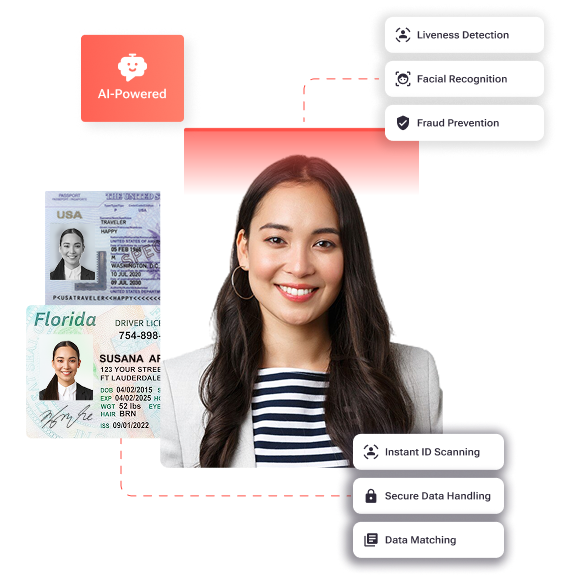
Permissible-purpose determination. Confirm that the association has a permissible purpose under 15 U.S.C. § 1681b before the report is ordered. TenantEvaluation’s IDVerify biometric identity verification step strengthens permissible-purpose validation by confirming applicant identity before screening authorization is processed.
FCRA-compliant background check. Order the consumer report through a compliant consumer reporting agency. TenantEvaluation is a direct reseller of TransUnion and Equifax data, not a third-party scraper, and its QuickApprove board-ready dashboard surfaces the completed report for board review without email chains or spreadsheets.
Individualized criminal-record assessment. Federal fair housing guidance discourages blanket policies that automatically reject applicants with any criminal history. Boards must consider the nature and severity of the offense, time elapsed, and evidence of rehabilitation, and must document that reasoning.
Pre-adverse notice. If the report may support a denial, send the pre-adverse notice package before issuing any decision. See the verbatim template below.
Adverse-action notice. After the review period, if the board proceeds with denial, issue the final adverse-action notice. See the verbatim template below.
Record retention. Retain FCRA-related records for every applicant, store them securely, and dispose of them under the FTC Disposal Rule.
Step 2: Sample Standalone Disclosure and Consent Form
The FCRA requires that the disclosure stand alone, so it cannot appear inside a lease, application, or other combined document. The following template satisfies that requirement.
DISCLOSURE REGARDING CONSUMER REPORT
In connection with your application for residency at [Community Name], [Association Name] (“the Association”) may obtain one or more consumer reports about you for the purpose of evaluating your application. These reports may include credit history, criminal background, eviction history, and other information obtained from consumer reporting agencies.
This disclosure is made pursuant to the Fair Credit Reporting Act, 15 U.S.C. § 1681 et seq. You have rights under the FCRA, including the right to know if information in your consumer report has been used against you, the right to access your consumer report, and the right to dispute inaccurate information.
By signing below, you authorize the Association and its designated consumer reporting agency to obtain such reports.
The templates above cover the disclosure and consent phase in Step 2 of the workflow. Steps 3 through 5, including permissible-purpose determination, ordering the compliant background check, and conducting individualized criminal-record assessments, appear in the eight-step workflow section and operate automatically inside TenantEvaluation’s platform. The next section focuses on the notice requirements that govern how boards communicate screening decisions.
Steps 6 and 7: Pre-Adverse and Adverse-Action Notice Templates
The Association is considering taking adverse action on your application for residency based in whole or in part on information contained in a consumer report obtained from [CRA Name], located at [CRA Address], reachable at [CRA Phone Number].
Enclosed with this notice is a copy of “A Summary of Your Rights Under the Fair Credit Reporting Act” as prepared by the Consumer Financial Protection Bureau.
You have the right to dispute the accuracy or completeness of any information in the report directly with the consumer reporting agency. Please submit any dispute within five business days of the date of this notice. No final decision will be made until at least five business days have elapsed.
Sincerely,
[Association Name] | [Contact Information]
If the board proceeds with denial after the review period, the final adverse-action notice must clearly state that the association, not the consumer reporting agency, made the decision.
ADVERSE ACTION NOTICE
Date: [Date]
Applicant Name: [Full Name]
Re: Application for Residency — [Unit Address]
Dear [Applicant Name],
After review of your application and the consumer report previously provided to you, [Association Name] has decided to deny your application for residency. This decision was made by the Association, not by the consumer reporting agency.
The consumer report used in this decision was furnished by: [CRA Name] | [CRA Address] | [CRA Phone Number].
You have the right to obtain a free copy of your consumer report from the agency listed above within 60 days of this notice. You also have the right to dispute the accuracy or completeness of any information in the report with the consumer reporting agency.
This decision does not reflect a judgment about your character. It is based on information in the consumer report as applied to the Association’s established screening criteria.
Sincerely,
[Association Name] | [Contact Information]
Florida HOA Law Changes in 2026 That Affect Screening
For condominium associations under Chapter 718, statutory provisions regarding transfer fees remain in effect. This framework applies separately from any owner’s application fee and is not affected by the 2026 session.
For 55+ communities, the Housing for Older Persons Act (HOPA) requirements remain unchanged. TenantEvaluation’s 55+ Communities Verification capability helps Florida condos and HOAs standardize how age-restricted requirements are handled across applications, reducing manual work and improving documentation consistency without replacing legal guidance.
+55 Communities
Because the 2026 legislative session introduced no new screening requirements, Florida HOAs must continue to rely on the existing compliance framework. The following checklist maps the liability exposures that remain under current law and identifies the documentation needed to defend each area.
Board Liability Checklist for Florida HOA Screening
Exposure Area
Risk if Unaddressed
Required Documentation
Mitigation Action
No governing-document authority
Board action void; Chapter 718/720 liability
Recorded Declaration/CC&Rs, bylaws excerpt authorizing screening
Confirm authority before implementing any screening program
Missing standalone FCRA disclosure
FCRA civil liability up to $1,000 per violation
Signed standalone disclosure form for every applicant
Use a compliant standalone form and retain signed copies
Blanket criminal-record denial
Fair Housing Act complaint; HUD enforcement
Written individualized assessment documenting offense, time elapsed, rehabilitation
Apply individualized assessment and document reasoning for every denial involving criminal history
Missing or incomplete adverse-action workflow
FCRA civil liability; applicant dispute exposure
Pre-adverse notice plus CFPB summary; final adverse-action notice
Send pre-adverse package, allow five business days per FTC guidance, and issue final notice if proceeding with denial
Inadequate record retention
Inability to defend against disputes or audits
FCRA-related records for all applicants
Retain securely and dispose under FTC Disposal Rule
Inconsistent screening criteria
Fair Housing Act complaint based on disparate impact
Written screening criteria applied uniformly; application logs
Each item in the checklist above represents a manual compliance step that creates board liability when documentation is incomplete or inconsistent. TenantEvaluation reduces that exposure by automating every required action.
How TenantEvaluation Automates Florida HOA Screening
TenantEvaluation addresses each step of the compliance workflow through purpose-built capabilities rather than bolted-on features. The platform accesses credit bureau data under the strict bureau rules mentioned in Step 4, avoiding the gray-market or offshore sources that create liability exposure for associations using third-party scrapers.
The governing-document check sits inside the community setup process, so each association’s screening criteria, fee caps, and document requirements are configured into the platform before any application is accepted. Once those criteria are in place, the IDVerify step described in the workflow above runs natively inside the platform before the background check is ordered, reinforcing permissible-purpose controls and reducing identity fraud exposure.
ID Verify
Adverse-action notices run through automated workflows rather than manual steps. When a report supports a potential denial, the platform triggers the pre-adverse notice package, tracks the review period, and queues the final adverse-action notice with the CRA name, address, and phone number populated automatically. Every step receives a timestamp and appears in a built-in audit trail.
The QuickApprove board-ready dashboard gives board members direct access to summarized applicant reports and a voting workflow inside one connected platform. Boards replace email chains and spreadsheets with real-time application tracking, automated communication support, customized approval letters, and a personalized welcome package while keeping full oversight and compliance review.
QuickApprove: Fast, Informed Decisions at the Click of a Button
For age-restricted communities, 55+ Communities Verification standardizes how age-restricted requirements are handled across applications. This feature improves documentation consistency and reduces fragmented manual processes across emails, PDFs, and follow-ups.
Lease Tracking connects resident onboarding, unit data, approvals, and lease documentation into one centralized, real-time workflow. Boards gain real-time lease status visibility, automated lease document collection, unit-level tracking, and audit-ready digital records that replace spreadsheets and scattered email chains from application to occupancy.
TEpayments by Zinc collects application fees, deposits, and other required resident payments within the onboarding process associations already use. Payments go directly from the applicant to the Association’s designated account, and TenantEvaluation never holds the funds, which gives boards traceable records and operational clarity in one connected payment workflow.
Next Steps for Florida HOA and Condo Boards
The Board Liability Checklist above identifies the documentation every Florida HOA and condo board needs to defend a screening decision. The eight-step workflow maps the exact sequence required under the FCRA and Florida governing-document authority. TenantEvaluation is built specifically for community associations and management companies, with FCRA compliance as the foundation, and every item on that checklist corresponds to an automated, audit-ready step inside the platform.
Can a Florida HOA deny an applicant based on a criminal record?
A Florida HOA or condo association can consider criminal history as part of a resident screening decision, but it cannot apply a blanket denial policy that automatically rejects any applicant with any criminal record. Federal fair housing law requires an individualized assessment that considers the nature and severity of the offense, the time elapsed since the offense, and any evidence of rehabilitation. Boards must document their reasoning whenever criminal history influences a screening decision.
Arrest records that did not result in a conviction carry additional restrictions under federal fair housing guidance. Failure to apply individualized assessment consistently exposes the board to Fair Housing Act complaints and HUD enforcement action.
What is the screening fee cap for Florida condominiums in 2026?
Under the Florida Condominium Act (Chapter 718), a condominium association may charge a screening or transfer fee as authorized by its governing documents and applicable law. This framework applies separately from any fee charged to the unit owner, and the 2026 legislative session did not modify this area of Chapter 718.
HOAs governed by Chapter 720 operate under different fee authority established in their governing documents, and no 2026 amendment altered Chapter 720 screening or approval fee rules.
How long must a Florida HOA retain FCRA screening records?
Florida HOAs should retain FCRA screening records for every applicant, not only those who were approved. Records must be stored securely and disposed of in compliance with the FTC Disposal Rule, which requires shredding physical documents and permanently deleting electronic files rather than discarding them in standard trash or recycling.
The retention obligation applies to denied applicants as well, because disputes and regulatory inquiries can arise after a denial. TenantEvaluation’s built-in audit trail stores every timestamped action and document automatically, creating a searchable, audit-ready record without manual filing.
Does the 2026 Florida legislative session change HOA screening authority?
No. As detailed in the section above, the 2026 legislative session introduced no changes to HOA screening authority under Chapter 720. Screening requirements in 2026 continue to depend on what the association’s recorded governing documents expressly authorize.
What makes TenantEvaluation different from generic tenant screening platforms for Florida HOAs?
Generic tenant screening platforms are built for landlord-tenant relationships, not community association governance. TenantEvaluation is built exclusively for Florida HOAs, condominiums, and management companies, with workflows that begin with governing-document authority checks, embed FCRA-compliant disclosure and adverse-action automation, and include a board-ready voting dashboard that generic platforms do not offer.
As a direct reseller of TransUnion and Equifax data, TenantEvaluation accesses credit bureau data under strict bureau rules, not through third-party scraping, which reduces liability exposure for the association. Additional capabilities including IDVerify biometric identity verification, 55+ Communities Verification, Lease Tracking, and TEpayments by Zinc address the full resident onboarding lifecycle inside one platform, replacing the fragmented combination of spreadsheets, email chains, and disconnected screening tools that many Florida associations currently rely on.