Written by: Luis Teran, Co-founder, CEO, TenantEvaluation | Last updated: July 20, 2026
Key Takeaways for Florida Condo Compliance
- Florida condo associations face strict obligations under Chapters 718 and 720. Resident onboarding now functions as a compliance process that demands audit-ready documentation and fast records retrieval.
- Manual processes create predictable failure points. Missing leases, incomplete applications, slow board approvals, identity fraud exposure, and poor occupancy visibility all increase regulatory and financial risk.
- Effective HOA compliance tracking software delivers FCRA-compliant screening, biometric identity verification, board voting dashboards, centralized lease tracking, automated audit trails, and strong data security that align with 2026 requirements.
- Associations that adopt digital platforms report up to 80% reduction in administrative time, stronger audit defensibility, and better compliance with ten-business-day records production mandates and seven-year retention rules.
- TenantEvaluation centralizes screening, approvals, and lease tracking in one audit-ready platform. See how it supports your compliance obligations in a live walkthrough.
Core Compliance Terms for Florida Condo and HOA Boards
Florida condo and HOA compliance discussions rely on several terms that carry specific legal meaning.
- FCRA (Fair Credit Reporting Act): The federal statute that governs how consumer information is collected, used, and disclosed in screening decisions. It requires written consent before running a credit or background check and mandates an adverse action notice when a consumer report contributes to a denial.
- Permissible purpose: The legally recognized reason an association may obtain a consumer report. For community associations, this usually means evaluating a prospective resident or purchaser. Obtaining a report without a permissible purpose exposes the association to civil liability.
- Audit trail: A timestamped, sequential record of every action taken on an application or document, including who reviewed it, when, and what decision they made. Under § 718.111(12), official records must be retained for at least seven years and produced within ten business days of a written request.
- Lease lifecycle: The full arc of a rental agreement from application submission through occupancy, renewal, and expiration. Florida associations must maintain rental records as official records under § 718.111(12)(a)13.
The 2026 Florida Compliance Landscape for Condo Associations
Florida’s statutory environment for condo and HOA governance has tightened materially since 2024, and several obligations reached operational maturity in 2026.
Associations with 25 or more units must now maintain a website or secure online portal containing key official records, with expanded DBPR enforcement authority for noncompliance. Florida condominium associations managing 150 or more units have been required since 2019 to maintain a password-protected digital records repository under § 718.111(12)(g), and that rule now also applies to associations with 25 or more units. At the same time, buildings first occupied in 1996 hit the 30-year milestone inspection trigger in 2026, while coastal buildings first occupied in 2001 reach the 25-year coastal threshold under the Structural Integrity Reserve Study (SIRS) framework.
Records-access penalties remain a primary enforcement vector. Aggregate exposure on a single DBPR complaint involving multiple violations commonly reaches $25,000–$100,000, and willful records-denial cases spanning multiple months can exceed $150,000 when including prevailing-party attorney fees under FS 718.303. Professionals spend an average of 18 minutes locating a single document manually in Florida HOA and condominium records systems, which compounds quickly during high-volume onboarding seasons.
Identity fraud now represents a growing operational risk. Community Association Managers face more stolen IDs, synthetic identities, and impersonation attempts that traditional document-upload screening cannot reliably detect. The shift from spreadsheets to integrated platforms has become standard practice. Most associations managing 50 or more units now use dedicated software for at least some operational functions, and the compliance gap continues to widen for those that still rely on manual workflows.
Daily Operations: How One Application Triggers Multiple Compliance Steps
Each resident application for a Florida CAM triggers a chain of compliance steps where every action depends on the previous one. The applicant must first provide written consent to a background check under FCRA before screening can proceed. That screening only holds value when the association verifies identity and confirms that the applicant matches the government-issued ID.

Once identity is confirmed, the board can review the file, vote on the application, and document its decision as an official record. After approval, the executed lease must be collected, linked to the unit, and stored as an official record. Every step creates a documentation artifact that may be subject to a unit owner’s inspection request.

Lease lifecycle management for Florida condo associations works best when software automatically tracks lease expirations, move-in and move-out dates, and tenant approval workflows, with alerts sent 30, 60, and 90 days before expiration to trigger re-approval processes. Without centralized tooling, these tasks fall back to email chains and spreadsheets, which cannot produce a reliable audit trail on demand.
Manual workflows also impose measurable cost burdens on Florida condo associations. Tasks such as approval tracking, lease reminders, vehicle tracking, and announcements consume administrative hours that increase when board voting delays slow application decisions. When applications stall in email threads, approval timelines extend, applicants disengage, and realtors escalate, which further strains staff time.
Compliance, Risk, and Governance Requirements for Florida Platforms
Florida condo association compliance software must address seven core functional requirements that align with current statutes and work together as a single control framework. These requirements create a checklist CAMs and board members can use when evaluating platforms.
- FCRA-compliant screening with permissible-purpose controls: The platform must enforce written consent before any consumer report is pulled and automate adverse action notices when a report contributes to a denial. This control protects the association from FCRA liability.
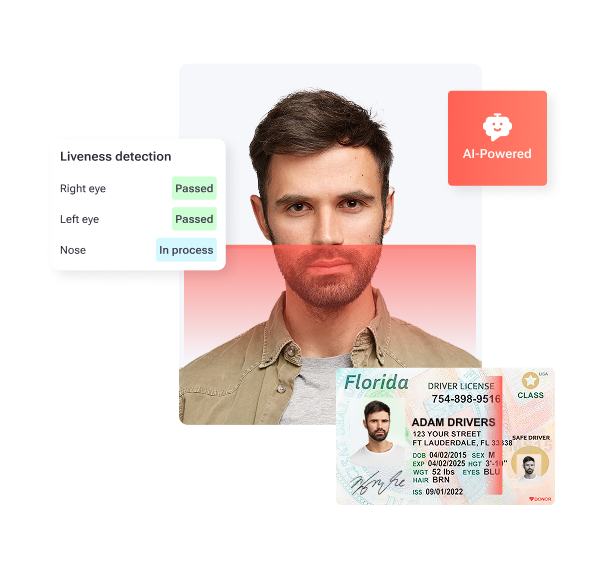
- Biometric identity verification: Document-upload screening cannot confirm physical presence. A biometric layer that includes government ID validation, AI-powered liveness detection, and facial biometric matching moves communities from document-based review to verified identity confirmation.
- Board voting dashboard: Directors need a dedicated, timestamped panel to review applications, cast votes, and generate a documented decision record without relying on email. This structure supports consistent governance.
- Centralized lease tracking: Executed leases must be stored as official records, linked to unit and occupancy data, and retrievable within the ten-business-day statutory window. Centralization supports both compliance and day-to-day operations.
- Automated audit trails: Every application action, including submission, review, approval, and denial, must be timestamped and retained for at least seven years under § 718.111(12). These trails provide evidence during DBPR inquiries.
- Data security and auto-redaction: Sensitive PII such as Social Security numbers and banking details must be automatically redacted from stored documents. PCI Level 1 compliance and end-to-end encryption form the baseline for protecting resident data.
- 55+ community documentation standardization: Age-restricted communities require consistent, structured documentation across applications. Standardization supports internal controls and reduces fragmentation across emails, PDFs, and manual follow-ups.
Common Failure Points in Manual Florida Condo Workflows
Manual and fragmented workflows create predictable failure modes in Florida condo association operations.
- Missing lease copies: Leases stored across email inboxes and shared drives cannot be produced on demand. Failure to produce official records within the statutory ten-business-day window triggers the compliance penalties described earlier.
- Incomplete documentation: Manual intake processes allow applications to advance without executed leases, valid IDs, or required addenda. These gaps often surface during DBPR audits or owner inspection requests.
- Lengthy board approvals: Without a dedicated voting dashboard, board decisions depend on email availability. Applications stall, applicants disengage, and CAMs absorb the follow-up burden.
- Identity fraud exposure: Traditional document-based screening cannot detect synthetic identities or impersonation attempts. Since HB 1203 took effect July 1, 2024, certain willful records violations such as concealing records to hide a crime carry criminal penalties including third-degree felony exposure, which raises the stakes for every documentation failure.
- No occupancy visibility: Disconnected spreadsheets cannot confirm whether a unit is occupied, by whom, or under what lease terms. This gap creates enforcement inconsistency and resident disputes.
Best Practices for Standardized, Biometric, and Digital HOA Workflows
These failure modes are not inevitable. Florida associations that have moved to integrated platforms report measurable operational improvements, including the administrative time reductions documented earlier.
The following practices reflect current operational standards for Florida condo and HOA compliance and build on one another as a connected workflow.

- Standardize application intake with smart form logic: Dynamic forms that adjust based on applicant type, such as tenant, purchaser, or additional occupant, prevent incomplete submissions and reduce manual review time at the very start of the process.
- Implement biometric identity verification at the point of application: Once intake is standardized, confirming physical presence and ID authenticity before a consumer report is pulled reinforces FCRA permissible-purpose controls and strengthens audit defensibility. Best practice for screening is to use written, objective criteria and document individualized assessments to survive association review and fair housing audits.
- Connect lease collection to the onboarding workflow: With identity confirmed, automated lease document collection during application intake ensures executed leases are stored as official records from day one, not chased later when a records request arrives.
- Use a board-ready approval dashboard: A dedicated dashboard with timestamped voting records replaces email chains and provides a defensible decision trail for DBPR inquiries, closing the loop between intake and approval.
- Standardize 55+ community documentation: For age-restricted communities, structured and consistent documentation workflows maintain uniform handling across all applications and support internal operational control.
Decision Framework for Evaluating Florida HOA Compliance Platforms
Florida CAMs and board members evaluating Chapter 718 compliance software can assess platforms against five criteria: compliance readiness, operational efficiency, transparency, scalability, and auditability. These criteria translate into concrete feature differences across platform categories and highlight where purpose-built solutions diverge from generic tools.
The table below compares TenantEvaluation against generic HOA compliance platforms on like-for-like operational metrics relevant to Florida condo association compliance software selection.
| Criteria | TenantEvaluation | Generic HOA Platforms (e.g., HOA Cloud, HOA Rocket) | Background-Check-Only Vendors (e.g., ApplyCheck, Verify Screening Solutions) |
|---|---|---|---|
| FCRA foundation | FCRA-first design; direct TransUnion and Equifax reseller; automated adverse action workflows; strict permissible-purpose controls | Varies; FCRA compliance typically handled via third-party integrations | FCRA-compliant background checks; limited onboarding workflow |
| Biometric identity verification | IDVerify: government ID validation, AI liveness detection, biometric facial matching, native to platform | Not available in leading generic platforms | Not available |
| Board approval workflow | QuickApprove: dedicated board voting dashboard with real-time tracking, automated communication, and customized approval letters in one connected platform | Basic approval notifications; no dedicated board voting panel | Not available |
| Lease tracking and audit-ready records | Centralized, real-time lease visibility with active, pending, expired, or missing status; automated collection; unit-level tracking; searchable digital history from application to occupancy | Document storage available; limited lifecycle tracking | Not available |
| 55+ community documentation | 55+ Communities Verification: standardizes age-restricted application handling, reduces manual work, and improves documentation consistency | Not purpose-built for age-restricted Florida communities | Not available |
| Revenue model | Pay-per-application; revenue-sharing returns remainder to association after service fee; no upfront subscription | Typically monthly subscription fees | Per-report fees; no revenue-sharing model |
TenantEvaluation has processed 100,000+ applications annually across 5,000+ communities and has generated $150M for communities, which reflects a scale that generic platforms and background-check vendors do not match in the Florida community association segment.
Frequently Asked Questions
How does Chapter 718 compliance software help Florida condo associations meet records-access obligations?
Chapter 718 requires Florida condo associations to produce official records within ten business days of a written request. Failure creates a rebuttable presumption of willful noncompliance and triggers statutory damages of $50 per calendar day, with aggregate exposure on multi-violation DBPR complaints commonly reaching $25,000–$100,000. Compliance software addresses this risk by centralizing all application records, executed leases, board decisions, and screening documentation in a searchable digital repository.
When a records request arrives, CAMs can retrieve the relevant documents immediately instead of searching across email inboxes, shared drives, and physical files. TenantEvaluation’s platform maintains timestamped audit trails for every application action and stores lease documentation as official records connected to unit and occupancy data, which supports the ten-business-day production window without manual assembly.
What is SIRS compliance software for Florida, and does TenantEvaluation address it?
SIRS (Structural Integrity Reserve Study) compliance software refers to tools that help Florida condo associations track, document, and report on their structural reserve study obligations under § 718.112(2)(g). Florida requires condominium buildings three stories or higher to complete a SIRS every ten years, and associations must notify unit owners within 45 days of receiving the report and submit it to the Division of Florida Condominiums within the same window.
TenantEvaluation is purpose-built for resident screening, onboarding, and lease lifecycle management, not structural reserve tracking. However, its centralized records platform ensures that SIRS reports stored as official records remain retrievable on demand, which supports the broader audit-readiness posture that SIRS compliance requires. Associations with SIRS-specific tracking needs should evaluate dedicated structural compliance tools alongside TenantEvaluation’s onboarding platform.
How does lease tracking for Florida HOAs work inside TenantEvaluation?
TenantEvaluation’s Lease Tracking capability connects resident onboarding, unit data, board approvals, and lease documentation into one centralized, real-time workflow. During the application process, lease documents are collected automatically rather than chased retroactively.
Once an application is approved, the executed lease is automatically stored and linked to the unit record with a real-time status indicator that shows active, pending, expired, or missing. CAMs can view occupancy status across the portfolio, track lease expirations, and access a searchable digital history of all lease records and resident activity without opening a spreadsheet or searching an email inbox. For Florida HOAs and condo associations subject to the ten-business-day records production requirement, this approach keeps lease documentation audit-ready from the moment onboarding begins.
What is board approval software for Florida condos, and how does QuickApprove differ from generic tools?
Board approval software for Florida condos gives directors a structured, documented workflow for reviewing and voting on resident applications. This structure replaces email chains and informal communications that cannot produce a defensible audit trail.
TenantEvaluation’s QuickApprove is an accelerated approval workflow built for CAMs, boards, and property management teams inside one connected platform. It gives board members a dedicated review and voting dashboard with real-time application tracking, AI-generated applicant summaries, automated communication support, customized approval letters, and a personalized welcome package. Unlike generic HOA management tools that offer basic approval notifications, QuickApprove is designed for high-volume application seasons and communities with complex onboarding requirements, which helps accelerate resident approvals without losing control, compliance, or visibility.
How does biometric identity verification fit into FCRA-compliant screening for Florida community associations?
FCRA requires written consent before a consumer report is pulled and mandates adverse action notices when a report contributes to a denial. Biometric identity verification operates at the step before the consumer report by confirming that the applicant is a real, present individual matched to their government-issued ID before screening authorization proceeds.
TenantEvaluation’s IDVerify integrates government ID validation, AI-powered liveness detection, and biometric facial matching directly inside the screening workflow, with no external portals or workflow disruption. This sequence reinforces FCRA permissible-purpose controls by ensuring identity confirmation occurs prior to screening authorization, which strengthens audit defensibility. Florida community associations using IDVerify move from document-based review to biometric-confirmed identity verification and reduce exposure to synthetic identities and impersonation attempts that traditional screening cannot detect.
Conclusion: Selecting a Compliance-Ready Platform for Florida Condos
Florida’s 2026 compliance environment treats resident onboarding as a core statutory function. Records-access penalties, SIRS obligations, website mandates, and identity fraud exposure create compounding risk for associations that rely on manual processes or generic tools. Spreadsheets cannot produce an audit trail. Email chains cannot confirm occupancy status. Document-upload screening cannot verify physical identity.
TenantEvaluation is built specifically for community associations and management companies, with FCRA compliance as the foundation rather than an afterthought. Its integrated platform combines IDVerify biometric screening, QuickApprove board approval workflows, 55+ Communities Verification, and centralized Lease Tracking into one audit-ready system. This structure replaces fragmented workflows that create penalty exposure and operational blind spots for Florida CAMs and board members.
See how TenantEvaluation supports your audit readiness in a personalized platform demo.
