Written by: Luis Teran, Co-founder, CEO, TenantEvaluation | Last updated: July 16, 2026
Key Takeaways for Florida HOA Authorization Workflows
- Florida HOAs must follow strict FCRA rules, including standalone disclosures, permissible-purpose certification, and adverse-action notices, or risk penalties up to $1,000 per violation.
- Manual screening workflows create compliance gaps, weak documentation, and selective-enforcement risks that well-designed automation can remove.
- Associations should retain tenant screening records for at least three to seven years and keep them in a searchable, audit-ready system.
- Biometric verification, board dashboards, and centralized lease tracking are becoming 2026 standards that reduce fraud and speed up approvals.
- TenantEvaluation provides purpose-built compliance tools for Florida HOAs. Explore how the platform streamlines your authorization process.
Core FCRA Concepts for Florida HOA Authorization
Florida CAMs and board members need four foundational concepts in place before they evaluate any compliance tool.
FCRA Standalone Disclosure: The FCRA requires a standalone written disclosure, a separate, clear document, stating that a consumer report may be obtained. This disclosure cannot sit in fine print or as a sentence inside a lease application. It must exist as its own document before any credit, criminal, or eviction report is pulled.
Record Retention: Landlords should retain screening criteria, decision documentation, adverse action notices, and related records for a baseline period of three to five years to cover most regulatory and legal timelines. Florida’s Chapter 720 sets a seven-year floor for financial records and official association documents.
These definitions tie directly to association governing documents. Florida condominium and HOA boards should adopt the lease-application procedure by board rule, requiring every new lease to submit tenant data for background checks conducted against published, objective criteria. Understanding these concepts sets the stage for how regulators now enforce them across the industry.
Regulatory Pressures Shaping HOA Screening in 2026
Fully automated adverse action workflows achieve 99%+ notice completion rates and low fair housing complaint risk through consistent, logged, auditable delivery, compared to approximately 75–80% completion and high risk for fully manual processes. The same data shows that property management companies that standardize denial processes see 40–60% fewer fair housing complaints tied to inconsistent application of screening criteria.
Identity fraud now represents a growing threat. Traditional document-upload screening cannot reliably prevent impersonation or synthetic identity fraud, so associations are moving toward biometric verification layers embedded directly in the onboarding workflow. At the same time, regulators hold housing providers accountable for fair, explainable adverse-action decisions even when using AI or complex algorithms in automated systems.
Step-by-Step HOA Authorization Workflow in Practice
A defensible authorization workflow involves several stakeholders and follows a clear, documented sequence. The steps below reflect current best practice for Florida community associations in 2026.
- Governing document review: Confirm that the association’s bylaws or CC&Rs authorize screening, fee collection, and approval requirements before any application is issued. This confirmation creates the legal foundation for every later step.
- Standalone disclosure delivery: After confirming authority to screen, provide the applicant with a separate FCRA disclosure document, not embedded in the application, before any consumer report is ordered. The applicant must receive this disclosure before you move to authorization.
- Written authorization collection: Once the applicant has the disclosure, collect their signed authorization. A Florida rental application must be signed by the applicant before any credit or background screening is performed.
- Permissible-purpose certification: With signed authorization in place, the association or its CAM certifies to the screening provider that the report will be used solely for the housing application.
- Fee collection within statutory limits: Under Fla. Stat. § 718.112(2)(k), condominium associations may not charge an approval fee exceeding $150 per applicant (subject to CPI adjustments), and the fee cannot be charged again on renewal with the same lessee. Fees should be collected only after confirming both authority and limits.
- Report review and board decision: The board or designated CAM reviews the screening report against published, objective criteria and records the decision with a timestamp. This record connects the report to the final outcome.
- Adverse action notice (if applicable): Industry practice for the pre-adverse action notice waiting period is five business days to allow applicants time to review the report and dispute inaccuracies before a final decision is issued. Final adverse action follows only after this waiting period.
- Record retention: All authorization documents, reports, notices, and decision logs are stored in a compliant, searchable repository for the applicable retention period.
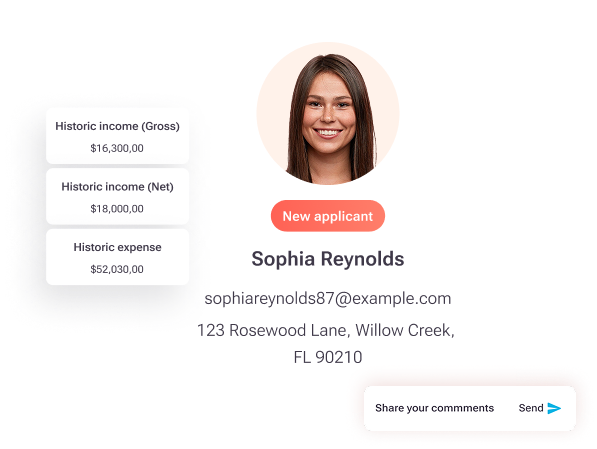
TenantEvaluation’s QuickApprove accelerates resident approvals by embedding this entire sequence inside one connected platform, with real-time application tracking, a board-ready approval process, automated communication support, and customized approval letters, while preserving control, compliance, and visibility. See how these workflow automations work in practice.
Compliance, Risk, and Governance Requirements for Florida HOAs
Florida CAMs and boards must satisfy several overlapping compliance obligations at the same time, and each requirement carries its own liability exposure.
FCRA Standalone Disclosure: As defined earlier, the standalone disclosure requirement carries per-instance violation liability when associations embed it in lease applications rather than presenting it as a separate document.
Permissible-Purpose Certification: The association must certify to the consumer reporting agency that the report is being obtained for a housing-related permissible purpose. Florida Statute § 83.425 preempts local governments from regulating rental application terms, associated fees, and the screening process for residential tenancies, reserving these matters exclusively to the state.
Automated Adverse-Action Notices: The completion-rate advantage of automation, referenced earlier, comes from specific workflow controls. Modern background screening platforms offer built-in adverse action workflows that generate compliant notices, track waiting periods, maintain documentation, prevent users from issuing final decisions before waiting periods conclude, and send automatic reminders about pending cases. Manual processes rarely match this consistency.
Record Retention and Disposition: Beyond the retention periods defined earlier, Florida associations should map each official record category to its statutory retention period and maintain a disposition log documenting what was destroyed, when, by whom, and under what authority. This log creates an audit trail for the destruction process itself.
Selective-Enforcement Safeguards: Florida landlords must document every screening decision with clear, objective criteria, including application materials, screening reports, verification contacts, decision rationale, and any exceptions granted with business justification, to defend against discrimination claims. Board-by-board discretionary approval of tenants without published, objective screening criteria may implicate rental restrictions under F.S. § 718.110(13).
Statutory Fee Cap: A Florida condominium association may charge a transfer fee for the lease or transfer of a unit only if the governing documents require association approval and authorize the fee. These overlapping obligations create real operational complexity when associations rely on manual processes.
Operational Risks from Manual HOA Authorization Processes
Manual authorization processes create four categories of operational risk for Florida associations.
- Manual bottlenecks: Applications routed through email chains and spreadsheets stall during peak seasons, creating delays that frustrate applicants and expose associations to inconsistent processing timelines.
- Incomplete audit trails: The FCRA requires landlords and property managers to document every step of the tenant screening process, including timestamps, attachments, and status changes, creating regulatory pressure for automated audit trails that demonstrate compliance with permissible-purpose certification, standalone disclosures, and adverse-action procedures.
- Inconsistent documentation: When landlords get into trouble, it is often not because they screened, it is because they screened inconsistently or communicated the result badly. Inconsistent documentation remains the primary driver of selective-enforcement claims.
- Identity-fraud exposure: Document-upload screening cannot confirm physical presence or prevent synthetic identity fraud, leaving communities vulnerable to impersonation attempts that pass traditional review.
Best Practices and 2026 Standards for HOA Screening
Workflow standardization forms the base of a defensible program. Associations should use written, objective screening criteria, avoid blanket criminal-record bans, and document individualized assessments when applying criminal history policies to mitigate fair housing disparate-impact risk under HUD guidance.
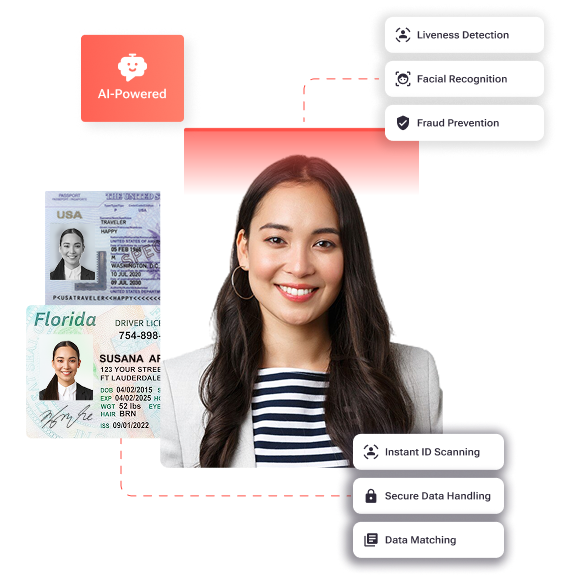
Biometric verification is shifting from an emerging option to a practical standard. TenantEvaluation’s IDVerify introduces automated KYC verification through government ID validation, AI-powered liveness detection, and biometric facial matching, all running natively inside the TenantEvaluation workflow. Communities move from document-based review to biometric-confirmed identity verification before approval decisions.
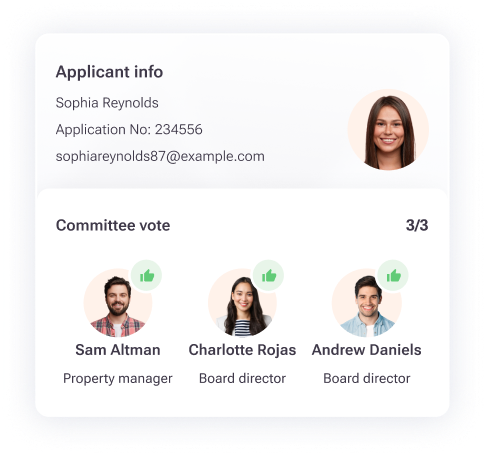
Board-ready dashboards replace email chains with a connected, auditable approval process. Automation achieves same-day adverse action notice delivery under four hours, exceeding the “timely” standard under FCRA and creating unambiguous compliance documentation amid growing regulatory scrutiny.
Centralized lease tracking connects the authorization workflow to occupancy records. TenantEvaluation’s Lease Tracking capability delivers centralized, real-time lease visibility and lifecycle control, from application to occupancy, with audit-ready digital lease records that support compliance readiness and reduce risk tied to incomplete or disconnected records.
Evaluation Framework for HOA Authorization Compliance Tools
Florida CAMs and board members evaluating compliance tools can apply five criteria. The table below maps each criterion to what a purpose-built platform delivers versus a generic alternative.
| Criterion | TenantEvaluation | Generic Screening Vendor | Broad Property Management Software |
|---|---|---|---|
| Compliance Readiness | FCRA-first design, direct TransUnion and Equifax reseller, automated standalone disclosure, permissible-purpose controls, and adverse-action workflows built in | FCRA tools present but not Florida-specific, no statutory fee-cap enforcement | Compliance features vary, not built for Chapter 718/720 workflows |
| Operational Efficiency | QuickApprove reduces approval cycles by up to 70%, frees up to 50 staff hours per day, and processes 100,000+ applications annually across 5,000+ communities | Manual follow-up required outside platform, no board-ready workflow | Broader feature set creates complexity, approval workflows not HOA-specific |
| Transparency & Board Access | Dedicated board voting panel with AI-generated applicant summaries, real-time application status, timestamped audit log | No board-specific dashboard, decisions communicated via email | Board access limited, not designed for community association governance |
| Auditability | Built-in audit trails for every application, automated adverse-action notice delivery, searchable digital lease records, PCI Level 1 compliant with end-to-end encryption | Audit logs present but not integrated with lease or occupancy records | Audit capability varies by module, records not connected to onboarding lifecycle |
TenantEvaluation is built specifically for community associations and management companies, with FCRA compliance as the foundation, not an afterthought. As a direct reseller of TransUnion and Equifax data, the platform accesses bureau data under strict bureau rules with regular compliance reviews and audits, protecting community associations from the liability exposure associated with gray-market or offshore data sources.
Frequently Asked Questions
What constitutes a valid FCRA standalone disclosure for Florida HOA tenant screening?
A valid FCRA standalone disclosure must meet the requirements outlined in the Core Terminology section: a separate document, clearly stating the screening purpose, signed before any report is ordered. The most common violation Florida associations face is combining the disclosure with the application form or burying it in governing-document acknowledgments, and each instance creates per-violation FCRA liability. TenantEvaluation embeds the standalone disclosure as a required, sequenced step in the digital application workflow, ensuring it is presented and signed before any screening report is initiated.
How long must Florida associations retain tenant background check authorization records?
Florida associations face overlapping retention obligations. Under FCRA guidance, screening records, authorization documents, adverse action notices, and related decision documentation should be retained for a minimum of three to five years to cover most regulatory and legal timelines. Florida’s Chapter 720 sets a seven-year floor for financial records and official association documents, and records must be maintained within the state or made available electronically. Best practice is to retain all tenant screening authorization records for at least seven years, aligned with the longer Florida statutory floor, and to maintain a disposition log documenting what was destroyed, when, and under what authority. TenantEvaluation’s Lease Tracking and audit trail capabilities store all application, authorization, and decision records in a centralized, searchable, audit-ready digital repository connected to the onboarding lifecycle.
What 2026 law changes affect HOA tenant screening authorization?
The $150 per-applicant fee cap under Florida Statute § 718.112(2)(k) remains in effect for condominium associations and is subject to periodic CPI-indexed review. Florida Statute § 83.425 continues to preempt local governments, including municipalities such as Orlando, Tampa, and Miami, from regulating rental application fees, screening processes, or required disclosures, leaving FCRA and the Florida Fair Housing Act as the primary overlays on HOA tenant screening. At the federal level, CFPB and FTC enforcement activity in 2025 and 2026 has reinforced the expectation that adverse action notices be delivered promptly and that audit trails be maintained for every screening decision. Regulators have also clarified that housing providers using automated or AI-assisted screening systems remain responsible for ensuring those systems produce fair, explainable, and documented decisions. Associations relying on manual processes or generic screening vendors without Florida-specific statutory configurations carry elevated exposure under this enforcement environment.
Do boards need to vote on every tenant background check authorization?
Boards do not always need to vote on every authorization, but the answer depends on how the association’s governing documents and board rules are structured. Florida condominium associations may delegate screening and approval authority to a CAM or committee by board rule, provided the screening criteria are objective, uniformly published, and applied consistently to every applicant. Where board-by-board discretionary approval occurs without published objective criteria, Florida courts have treated this as a substantive use restriction requiring a 75% supermajority owner vote under F.S. § 718.110(13). To avoid this classification, associations should adopt written screening criteria by board resolution and use a platform that enforces those criteria uniformly. TenantEvaluation’s QuickApprove provides a board-ready approval process with a dedicated voting panel, AI-generated applicant summaries, and timestamped decision records, giving boards direct involvement without ad hoc deliberation on every application.
Summary of Structural Takeaways for Florida HOAs
Florida HOA tenant background check authorization compliance in 2026 rests on five interconnected pillars: a valid FCRA standalone disclosure delivered before any report is ordered, permissible-purpose certification documented at the point of screening, automated adverse-action notices with enforced waiting periods and complete delivery logs, three-to-seven-year record retention in a Florida-compliant, searchable repository, and uniform, published screening criteria that eliminate selective-enforcement exposure.
Manual workflows rarely satisfy all five pillars at the same time. Documentation gaps, inconsistent timing, and disconnected records create FCRA liability and fair housing risk that often remain hidden until a complaint or audit surfaces them. The operational and legal case for purpose-built authorization compliance tools is clear, because automation achieves completion rates and audit defensibility that manual processes cannot match.
TenantEvaluation is built specifically for community associations and management companies, with FCRA compliance as the foundation, not an afterthought. With QuickApprove, IDVerify, 55+ Communities Verification, centralized Lease Tracking, direct credit bureau reseller status, and built-in adverse-action automation, TenantEvaluation delivers the board-defensible, audit-ready workflow that Florida CAMs and boards need to operate with confidence in 2026.
