Written by: Luis Teran, Co-founder, CEO, TenantEvaluation
Key Takeaways for Florida Condo Screening in 2026
- Florida condo associations may charge application fees only when governing documents clearly authorize screening, and the statutory cap under § 718.112(2)(i) still applies.
- Objective, consistently applied criteria and proper FCRA consent and adverse-action procedures keep the approval process defensible.
- Boards should verify governing-document authority before screening and document every denial decision to reduce fair housing and FCRA risk.
- Automated platforms cut manual work, enforce statutory fee limits, and create audit-ready records for every application.
- TenantEvaluation streamlines the full Florida condo screening workflow from application to board vote and lease tracking, learn more.
Section 718.112(2)(i) Application Fee Limit Explained
Florida Statute § 718.112(2)(i) previously capped condominium transfer and application fees at $100 per applicant. A 2021 amendment increased the maximum allowable fee for both prospective tenants and prospective purchasers.
The fee authority is not automatic and must be explicitly granted in the governing documents. A board may collect an application fee only when the Declaration of Condominium or the Bylaws clearly grant the association the right to screen residents. Without that governing-document foundation, boards that collect fees face fee-refund liability and potential enforcement action.
An operational checklist for fee compliance includes the following steps:
- Confirm the Declaration or Bylaws contain explicit screening and fee-collection language.
- Set the fee at or below the statutory maximum.
- Collect the fee through a documented, auditable workflow, not cash or informal transfer.
- Retain fee-collection records as part of the application audit trail.
TenantEvaluation’s TEpayments by Zinc collects application fees and deposits during resident onboarding inside one connected workflow. Payments move directly from the applicant to the association’s designated account, and TenantEvaluation never holds the funds. Every transaction is timestamped and audit-ready.
Schedule a demo today to see how TenantEvaluation applies the statutory fee limit automatically inside your onboarding workflow.
Verifying Screening Authority in Governing Documents
Boards need clear screening authority in their governing documents before they conduct any screening or collect any fee. The following checklist guides CAMs and board presidents through that verification process:
- Locate the Declaration of Condominium. Search for language that expressly authorizes the association to approve or deny applications for tenancy or purchase.
- Review the Bylaws. Confirm the Bylaws specify the board’s approval authority, the criteria it may apply, and any procedural timelines.
- Check for fee-collection language. The right to charge an application fee must appear explicitly, because implied authority is insufficient under Florida law.
- Identify required criteria. Governing documents should list the objective standards the board will apply, such as credit thresholds, criminal look-back periods, and occupancy limits.
- Adopt a board resolution. When governing documents are silent or ambiguous, a properly noticed board resolution can formalize the screening policy and criteria matrix.
- Document the review. Retain a written record confirming that governing-document authority was verified before each screening cycle begins.
Associations whose governing documents lack explicit screening authority should consult association counsel before collecting fees or conducting background checks. TenantEvaluation’s platform is configured to each community’s specific governing documents, so the screening workflow reflects only the authority those documents actually grant.
2026 Florida Condo Law Changes and Board Workload
Even when governing documents grant proper screening authority, recent legislative changes affect how boards exercise that authority in practice. Florida’s legislative activity between 2024 and 2026 has continued to reshape condominium governance.
The 2024 amendments to Chapter 718 introduced heightened structural reserve requirements and expanded board member education mandates. These changes indirectly affect the administrative capacity of boards to manage screening workflows. Boards stretched by reserve-study compliance and milestone inspection documentation have less bandwidth for manual application review, so automated platforms become operationally necessary rather than simply convenient.
The 2021 amendment to § 718.112(2)(i) increased the maximum allowable fee, and boards should audit their current fee schedules against this statutory limit. Any fee above the statutory maximum creates a statutory violation regardless of what the governing documents say, because the statute supersedes inconsistent governing-document provisions.
Associations operating 55+ age-restricted communities face additional verification obligations under the Housing for Older Persons Act (HOPA). Documentation consistency and standardized application handling are essential to maintaining HOPA qualification status. TenantEvaluation’s 55+ Communities Verification supports these requirements by automating age verification, standardizing the application workflow, and creating consistent audit records for Florida condos and HOAs.
Criminal History as a Basis for Denial
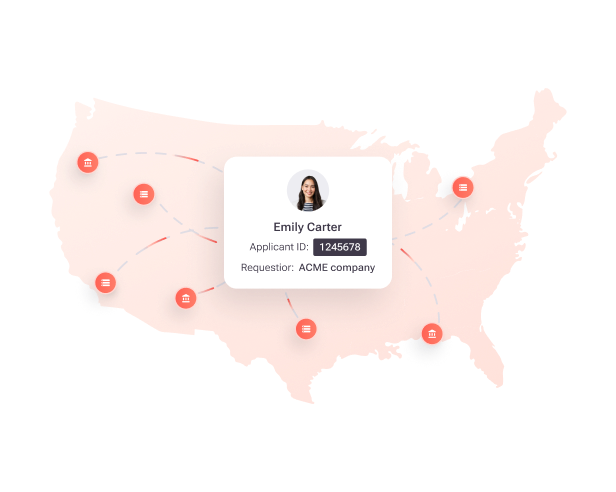
Florida law allows a condominium board to consider criminal history as part of a resident screening decision when the criteria are objective, consistently applied, and documented in the governing documents or a board-adopted policy. HUD guidance on the Fair Housing Act requires that criminal-history screening policies be individualized, use look-back periods proportionate to the offense, and avoid acting as a proxy for protected-class discrimination.
The following objective criteria matrix reflects defensible screening standards for Florida condominium boards:
| Criteria Category | Recommended Standard | Look-Back Period |
|---|---|---|
| Felony convictions (violent or drug-related) | Denial permitted, with individualized assessment | 7 years from release |
| Sex offender registry listing | Denial permitted under most governing documents | No look-back limit |
| Misdemeanor convictions | Case-by-case, documented in policy | 5 years from conviction |
| Prior evictions | Denial permitted if within look-back period | 5 years |
| Credit score | Minimum threshold set in governing documents or board resolution | Current report |
| Occupancy limits | Must comply with HUD occupancy guidelines | N/A |
Every denial based on criminal history should be documented with the specific policy provision applied, the look-back period used, and evidence that the same standard was applied to all applicants. Inconsistent application of criminal-history criteria remains one of the most common sources of fair housing complaints against Florida condominium associations.
Level 2 Screening: FCRA Consent and Adverse Action
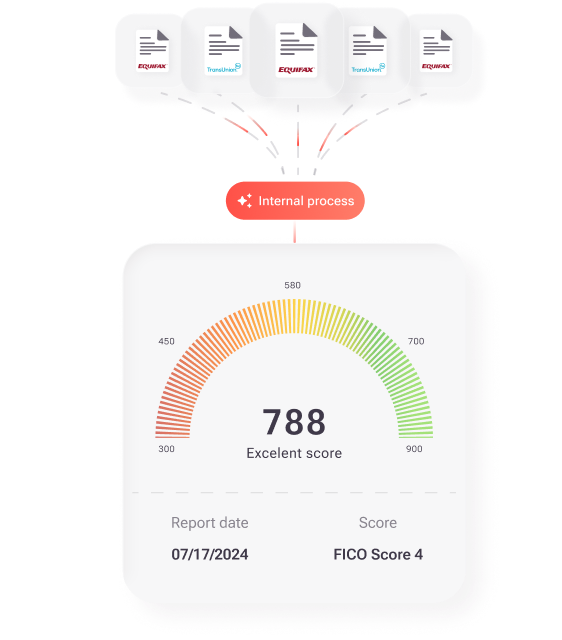
When a Florida condominium association uses a consumer report, including a credit report or criminal background check, to make a housing decision, the Fair Credit Reporting Act (FCRA) governs the entire workflow. Non-compliance by a unit owner exposes the owner to fines of up to $100 per violation, with a $1,000 aggregate maximum levied by a Florida condominium association, plus prevailing-party attorney’s fees in litigation.
The FCRA workflow for Florida condo associations includes the following required steps:
- Permissible purpose disclosure. Before ordering a consumer report, the association must disclose in writing that a report will be obtained and must obtain the applicant’s written consent.
- Consent documentation. Consent must appear in a standalone document and cannot be buried in the lease or application form.
- Pre-adverse action notice. If the board intends to deny or take adverse action based on the report, a pre-adverse action notice must be sent to the applicant along with a copy of the report and the Summary of Rights under the FCRA.
- Waiting period. The applicant must receive a reasonable time, typically five business days, to dispute inaccuracies before the final adverse action is issued.
- Final adverse action notice. The notice must identify the consumer reporting agency used, state that the agency did not make the decision, and provide the applicant’s right to obtain a free copy of the report within 60 days.
- Audit trail retention. All consent forms, notices, and decision records must be retained for the association’s audit file.
TenantEvaluation is a direct reseller of TransUnion and Equifax data, not a third-party scraper, and its platform automates the entire FCRA consent and adverse-action workflow, including timestamped audit trails for every application. ApplyCheck and Verify Screening Solutions use the white-labeled TazWorks platform without native applicant interaction or automated adverse-action workflows. TenantEvaluation instead builds FCRA compliance into the foundation of every screening decision.
Board Dashboard and QuickApprove Workflow
QuickApprove is TenantEvaluation’s accelerated approval workflow built for CAMs, boards, and property management teams. It moves resident applications from submission to decision faster inside one connected platform while preserving control, compliance, and visibility.

QuickApprove delivers the following capabilities to Florida condo boards:
- Real-time application tracking with status visibility for managers, boards, and applicants.
- A board-ready approval process with a dedicated voting panel and AI-generated applicant summaries.
- Automated communication support that reduces manual follow-ups during peak application seasons.
- Customized approval letters and a personalized welcome package generated inside the platform.
- A single connected workflow that replaces email chains and spreadsheets.
For boards that currently receive application packets by email and vote by reply-all thread, QuickApprove replaces that process with a structured, auditable decision environment designed for community association governance.
Schedule a demo today and see QuickApprove’s board voting panel in action.
Standardizing 55+ Communities Verification
Florida condominium associations operating as age-restricted communities under HOPA must maintain specific documentation to preserve their qualified status. TenantEvaluation’s 55+ Communities Verification addresses these HOPA documentation requirements by automating age verification, standardizing the application workflow, and creating consistent audit records for Florida condos and HOAs.

Unlike generic tenant screening vendors, this capability aligns with the real workflows of Florida associations. It replaces fragmented manual processes involving emails, PDFs, and manual follow-ups with a more structured and consistent workflow built directly into TenantEvaluation.
Lease Tracking and Occupancy Visibility
TenantEvaluation’s Lease Tracking delivers centralized, real-time lease visibility and lifecycle control from application to occupancy. It connects resident onboarding, unit data, approvals, and lease documentation into one streamlined, audit-ready workflow and replaces spreadsheets and scattered email chains.
Key capabilities include real-time lease status visibility for active, pending, expired, or missing leases, automated lease document collection during onboarding, and unit-level tracking tied to occupancy records. A searchable digital history of lease records and resident activity gives boards a clearer operational picture of occupancy across the community without manual status checks from the management office.
TEpayments by Zinc: Connected Payment Workflow
TEpayments by Zinc is a connected payment workflow inside TenantEvaluation that collects application fees and deposits during resident onboarding. Each association defines what is collected and at which stage. Payments move directly from the applicant to the association’s designated account, and TenantEvaluation never holds the funds.
For Florida condo associations subject to the statutory fee cap under § 718.112(2)(i), TEpayments by Zinc enforces the configured fee amount at the point of collection and creates a consistent, documented record for every transaction. Boards receive traceable payment records and operational clarity without chasing confirmations through email or phone calls.
Frequently Asked Questions
Can a Florida condo association charge more than $100 for an application fee?
The 2021 amendment to § 718.112(2)(i) increased the previous $100 cap on the application fee per applicant. The statute applies regardless of what the governing documents say, and it supersedes any inconsistent provision in the Declaration or Bylaws. Associations that collect fees above the statutory maximum face refund liability and potential regulatory action.
What happens if a Florida condo board denies an applicant without following FCRA adverse-action procedures?
A board that uses a consumer report to support a denial and fails to follow FCRA adverse-action procedures can face liability. Non-compliance exposes the unit owner to the fines described earlier, up to $100 per violation with a $1,000 aggregate maximum, plus prevailing-party attorney’s fees in litigation. The required steps include sending a pre-adverse action notice with a copy of the report and the applicant’s Summary of Rights, allowing a reasonable dispute period, and then issuing a final adverse action notice that identifies the consumer reporting agency. Skipping any step, even when the denial itself is substantively justified, creates liability.
Do Florida condo governing documents need to be amended to authorize resident screening?
Yes. When the current Declaration or Bylaws do not contain explicit language authorizing the board to screen applicants and collect application fees, the association does not have that authority. A board resolution alone is generally insufficient to create screening authority where the governing documents are silent. Associations in this situation should work with association counsel to amend the governing documents through the proper member-vote process before implementing a screening program.
How should a Florida condo board document its criminal-history screening decisions to avoid fair housing liability?
The board’s written screening policy should specify the criminal offenses that trigger denial, the look-back periods applied to each offense category, and the individualized-assessment process used when an applicant’s record falls within a look-back period. Every denial based on criminal history must be documented with the specific policy provision applied and evidence that the same standard was applied consistently to all applicants. HUD guidance requires that criminal-history policies not function as a proxy for race or national origin, so blanket lifetime bans on any criminal record remain legally vulnerable.
What makes TenantEvaluation different from ApplyCheck or Verify Screening Solutions for Florida condo associations?
ApplyCheck and Verify Screening Solutions both use the white-labeled TazWorks platform, which was not designed specifically for community association screening and lacks native applicant interaction, automated document review and redaction, or built-in adverse-action workflows. TenantEvaluation is built exclusively for community associations and management companies, with FCRA compliance as the foundation rather than an afterthought. It is a direct reseller of TransUnion and Equifax data, automates the full FCRA consent and adverse-action workflow, provides a dedicated board voting panel through QuickApprove, and connects screening, approvals, lease tracking, and payment collection into one platform. No other platform in this space offers that combination for Florida condo associations.
Conclusion: Bringing Your Process Up to 2026 Standards
Florida condominium associations face a clear compliance framework in 2026. Governing-document authority must exist before screening begins, the application fee limit under § 718.112(2)(i) as amended in 2021 is non-negotiable, FCRA consent and adverse-action procedures apply to every consumer report used in a housing decision, and denial criteria must be objective, documented, and consistently applied. Manual, fragmented processes such as email chains, spreadsheets, paper applications, and informal board votes create compounding risk across each of these requirements.
TenantEvaluation is the only platform built specifically for Florida community associations that automates the entire workflow from application intake through board vote and record retention, with FCRA compliance as the foundation. With 5,000+ communities, 100,000+ applications processed annually, and partnerships with FirstService Residential, Campbell Property Management, and Associa, TenantEvaluation is the established, proven alternative to generic screening vendors and manual processes.
Schedule a demo today and see how TenantEvaluation brings your association’s screening process into full 2026 compliance automatically.
