Written by: Luis Teran, Co-founder, CEO, TenantEvaluation | Last updated: August 13, 2026
Key Takeaways for Florida Condo Credit Screening
- Florida law does not set a statewide minimum credit score for condominium applicants. Each association sets its own criteria through governing documents under Chapter 718.
- Boards must apply credit screening thresholds uniformly and follow FCRA adverse action procedures whenever a consumer report influences a denial.
- Documented policies, written applicant authorization, and audit-ready records reduce fair housing and FCRA liability exposure.
- Technology-supported workflows that embed adverse action notices and maintain timestamped audit trails help associations stay compliant while accelerating approvals.
- Associations can standardize credit screening and lease tracking with TenantEvaluation at TenantEvaluation.
Why Credit Screening Matters for Florida Condos in 2026
Florida’s condominium landscape has grown more complex heading into 2026. Boards and Licensed Community Association Managers (LCAMs) face simultaneous pressure from legislative updates, rising identity fraud, and heightened enforcement expectations around fair housing. Credit screening now functions as a documented risk-management tool that, when handled correctly, protects the association from selective-enforcement claims, FCRA liability, and financial loss from non-paying residents.
The administrative burden of manual screening compounds these risks. Associations that rely on paper applications, email chains, and disconnected spreadsheets create audit gaps that increase liability. A technology-supported, FCRA-first workflow closes those gaps, accelerates approvals, and generates revenue for the community.
See how TenantEvaluation standardizes credit screening for Florida community associations.
What Credit Score Is Needed for a Condo in Florida
Given this complex regulatory landscape, the most common question boards and CAMs ask is whether Florida sets a minimum credit score threshold. No single number applies statewide. The threshold is set by each association’s declaration, bylaws, or rules and regulations. Florida condominium associations may include credit screening as part of the buyer-approval process, and the same authority extends to rental applicants where the governing documents permit screening.
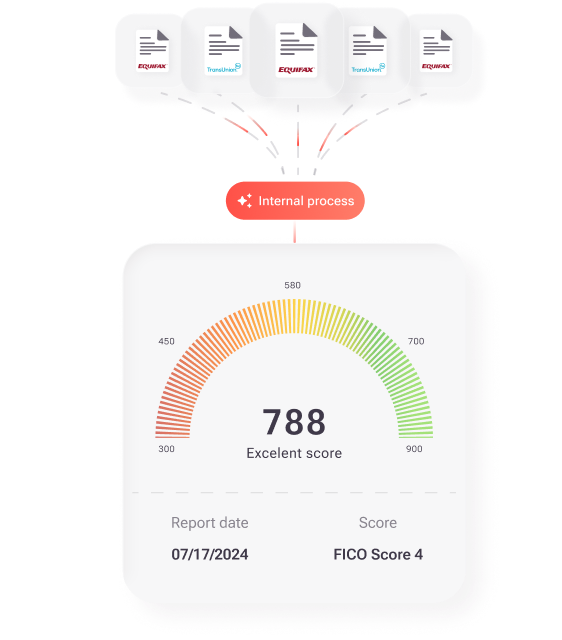
Credit score thresholds vary among Florida associations. The table below shows how different community types typically approach credit screening so boards can compare their own practices to common patterns across the state.
Comparison Table: Common Credit Score Bands by Community Type
| Community Type | Typical Score Range | Common Additional Criteria | Notes |
|---|---|---|---|
| Standard Condo / HOA | Varies by association | Income verification, rental history | Threshold set in governing documents, no statewide floor |
| Mid-Range / Suburban | Varies by association | Background check, references | Common across many Florida associations |
| Luxury / High-Rise | Varies by association | Income multiples, asset verification | Higher thresholds often reflect community risk profile |
| 55+ Age-Restricted | Varies by association | Age documentation, credit, background | Age verification adds a separate documentation layer |
These thresholds reflect common practice, not statutory mandates. Each association must document its chosen threshold in its governing instruments and apply it uniformly to every applicant.
When a Florida Condo Board Can Deny a Rental Over Credit
A Florida condo board can deny a rental applicant over credit when it has documented authority and uses that authority consistently. Florida condominium declarations may grant associations the right to approve future purchasers or occupants, with good cause provisions that typically include creditworthiness, criminal history, or history of disruptive behavior. However, the right to withhold consent cannot be exercised arbitrarily. The right to withhold consent for a transfer or lease cannot be for any or no reason at all unless the association has a corresponding obligation to purchase or procure a purchaser at fair market value, per Aquarian Foundation, Inc. v. Sholom House, Inc., 448 So. 2d 1166 (Fla. 3d DCA 1984).
When a denial is based on a consumer report, the FCRA requires a written adverse action notice. If an applicant is denied, required to use a co-signer, or charged a higher deposit because of information in a consumer report, the association must provide a written adverse action notice that identifies the screening agency, states that the agency did not make the decision, and informs the applicant of the right to dispute the report and obtain a free copy within the applicable time period.
Chapter 718 Rules That Shape Credit Screening
Under Section 718.104(5), Florida Statutes, the declaration of condominium may include covenants and restrictions regarding the transfer of units permitted by law. This provision forms the statutory foundation for credit-based approval criteria. Chapter 718 does not prescribe a minimum score. It delegates that authority to the association’s governing documents.
Key Chapter 718 compliance obligations for credit screening include:
- Screening criteria must be documented in the declaration, bylaws, or rules adopted by the board.
- Criteria must be applied uniformly to all applicants, because selective enforcement creates fair housing exposure.
- Transfer or screening fees are capped at $100 per applicant under the Florida Condominium Act, with spouses and dependents counted as one.
- Written adverse action notices are required when a consumer report contributes to a denial.
- A permissible purpose and written applicant authorization are required before pulling a credit report.
New Florida HOA and Condo Laws in 2026 That Affect Screening
Florida’s 2026 legislative session continued the trend of increased association accountability. Florida condo laws in 2026 and new HOA laws in Florida for 2026 reflect ongoing legislative attention to transparency, financial reserves, and governance standards following high-profile structural and financial failures in the state. Florida condos and HOAs face compounding challenges in 2026 that make documented, technology-supported screening workflows more operationally necessary than in prior years.
Boards and CAMs should treat 2026 as a year to audit existing screening policies, confirm that credit thresholds are codified in governing documents, and verify that adverse action workflows meet current FCRA standards. That audit begins with understanding what a compliant policy structure looks like.
How Florida Boards Build and Enforce Credit Policies
A defensible credit policy follows a structured adoption and enforcement path. The process does not end with a single vote. It requires ongoing documentation, consistent application, and periodic review.
- Review governing documents to confirm the board has authority to screen applicants, because any criteria set without authority will be unenforceable.
- Determine the credit score threshold appropriate for the community’s risk profile, based on the authority confirmed in step 1.
- Adopt the threshold formally through a board resolution or amendment to rules and regulations, since informal or verbal policies create enforcement gaps.
- Publish the criteria in listing materials and application instructions before any applicant applies, so every applicant sees the same requirements.
- Obtain written authorization from each applicant before pulling a consumer report, which satisfies FCRA consent and supports audit trails.
- Apply the threshold uniformly to every applicant without exception, to avoid selective enforcement and fair housing claims.
- Issue FCRA-compliant adverse action notices for every denial influenced by a consumer report, documenting how the decision relied on the report.
- Retain all application records, screening reports, and adverse action notices in an audit-ready format, so the association can prove compliance if challenged.
Common Pitfalls: Selective Enforcement, 55+ Rules, and Manual Risk
Florida fair housing law requires objective screening criteria to be applied equally to every applicant. Selective enforcement, which means applying the credit threshold to some applicants but not others, remains one of the most common sources of fair housing complaints and FCRA liability.
Age-restricted communities carry an additional documentation layer. TenantEvaluation’s 55+ Communities Verification standardizes how age-restricted requirements are handled across applications. This approach reduces manual work, improves documentation consistency, and strengthens operational efficiency and control for Florida condos and HOAs, while still preserving the role of legal guidance.

Manual processes amplify every risk. Willful FCRA violations can expose associations to actual damages or statutory penalties up to $1,000 per instance. Associations that cannot produce a complete audit trail for every application decision face compounded liability exposure.
Best Practices for FCRA-Compliant Screening Workflows
The FCRA requires a permissible purpose for the consumer report and written authorization from the applicant before the report is pulled. Beyond that baseline, a compliant workflow uses connected steps that protect both the association and the applicant.
- Use a direct credit bureau reseller, not a gray-market or offshore data source, to protect data integrity and bureau-rule compliance.
- Embed adverse action notice generation into the screening platform so no denial is processed without the required disclosure.
- Maintain timestamped, searchable audit trails for every application, decision, and communication to support investigations and audits.
- Separate the decision-making role, which belongs to the association, from the data-provision role, which belongs to the screening platform.
- Verify applicant identity before authorization to prevent synthetic identity fraud from entering the screening pipeline.
TenantEvaluation is a legitimate reseller of TransUnion and Equifax data, with data accessed under strict bureau rules, regular compliance reviews, and no gray-market sources. IDVerify strengthens permissible-purpose validation by confirming identity through AI-powered liveness detection, government ID authentication, and biometric facial matching before screening authorization. This process reinforces FCRA-aligned workflows and audit defensibility.

See TenantEvaluation’s FCRA-first screening workflow in action.
Board Decision Checklist for Credit Policy and Records
The checklist below turns these policy and workflow requirements into a clear, phase-by-phase action plan that boards and CAMs can use to confirm their screening process meets current standards.
| Phase | Action Item | Responsible Party | Documentation Required |
|---|---|---|---|
| Policy Adoption | Confirm board authority in governing documents | Board / Legal Counsel | Declaration, bylaws, or board resolution |
| Policy Adoption | Set and formally adopt credit score threshold | Board | Board resolution or rules amendment |
| Applicant Notification | Publish criteria before application opens | CAM / Property Manager | Listing materials, application instructions |
| Applicant Notification | Obtain written authorization before pulling report | CAM / Screening Platform | Signed FCRA authorization form |
| Applicant Notification | Issue adverse action notice for every credit-based denial | CAM / Screening Platform | Written adverse action notice with agency identification |
| Record Retention | Retain all applications, reports, and notices | CAM / Screening Platform | Timestamped, searchable digital records |
| Record Retention | Maintain audit trail for board votes and decisions | Board / CAM | Board voting records, approval or denial documentation |
TenantEvaluation’s QuickApprove accelerates resident approvals with real-time application tracking, a board-ready approval process, automated communication support, customized approval letters, and a personalized welcome package, all inside one connected platform without losing control, compliance, or visibility. Lease Tracking then connects resident onboarding, unit data, approvals, and lease documentation into one centralized, real-time, audit-ready workflow that replaces spreadsheets and scattered email chains from application to occupancy.

Frequently Asked Questions
Is there a statewide minimum credit score for condo applicants in Florida?
No. Florida law does not set a statewide minimum credit score for condominium or HOA applicants. Associations may establish their own screening criteria through their governing documents, including the declaration, bylaws, or board-adopted rules, under the authority granted by Chapter 718, Florida Statutes. Credit score requirements vary, and some communities set higher thresholds. Boards must document the criteria formally and apply them uniformly to every applicant.
Can a Florida condo board deny a buyer or renter based on credit score alone?
A board may deny an applicant based on credit score if the governing documents grant that authority and the denial is applied consistently. The denial cannot be arbitrary, because Florida courts have held that the right to withhold consent for a transfer or lease must be grounded in documented good cause, which creditworthiness qualifies as when properly codified. Any denial influenced by a consumer report triggers the FCRA adverse action requirements described earlier in this article.
What FCRA obligations apply to Florida community associations conducting credit screening?
Florida community associations that pull consumer credit reports are subject to the Fair Credit Reporting Act. Core obligations include obtaining a permissible purpose and written applicant authorization before pulling any report, issuing a written adverse action notice for every denial or materially adverse decision influenced by the report, and maintaining audit-ready records of every application and decision. Willful violations can result in statutory penalties up to $1,000 per instance. Using a direct credit bureau reseller, rather than a gray-market data source, and embedding automated adverse action workflows into the screening platform are reliable ways to meet these obligations consistently.
How should a Florida association document and enforce its credit policy to reduce liability?
The policy must be adopted formally through a board resolution or amendment to the association’s rules before it is applied to any applicant. Criteria should be published in listing materials and application instructions so every applicant sees the requirements before submitting. Written authorization must be collected before any report is pulled. The threshold must be applied identically to every applicant regardless of protected class. All applications, screening reports, board votes, and adverse action notices must be retained in a searchable, timestamped format. Technology platforms that automate these steps and generate built-in audit trails significantly reduce the manual error risk that creates liability exposure.
What makes TenantEvaluation different from generic tenant screening tools for Florida associations?
TenantEvaluation is built specifically for community associations and management companies, with FCRA compliance as the foundation, not an afterthought. It is a direct reseller of TransUnion and Equifax data, meaning credit reports are accessed under strict bureau rules with no gray-market sources. The platform includes automated adverse action workflows, built-in audit trails for every application, biometric identity verification through IDVerify, a board-ready approval dashboard through QuickApprove, centralized lease lifecycle visibility through Lease Tracking, and a connected payment workflow through TEpayments by Zinc. Generic tenant screening tools are not designed for the governance structure, compliance requirements, or board-involvement workflows that Florida condominium and HOA communities require.
Conclusion: Standardize Credit Screening and Workflow for 2026
Florida associations that treat credit screening as an informal, case-by-case judgment call carry unnecessary legal and operational risk in 2026. The framework is clear. Governing documents set the threshold, Chapter 718 authorizes the screening, the FCRA governs the process, and fair housing law requires uniform application. Documentation, consistency, and an audit-ready workflow separate compliant associations from exposed ones.
TenantEvaluation provides the end-to-end infrastructure to operationalize that framework, from biometric identity verification with IDVerify and accelerated board approvals with QuickApprove to centralized lease visibility and connected payments through TEpayments by Zinc. All of this rests on direct TransUnion and Equifax reseller relationships and FCRA-first design. Across 5,000+ communities and 100,000+ applications processed annually, TenantEvaluation has already generated $150M for communities by turning the screening process into a compliant, controlled, revenue-generating workflow.
See how Florida’s leading screening platform can standardize your credit policy and reduce liability in 2026.
