Written by: Luis Teran, Co-founder, CEO, TenantEvaluation
Key Takeaways
- Florida condo lease compliance is an ongoing operational obligation that covers intake, screening, approval, lease execution, monitoring, and enforcement.
- Chapter 718 governs rental restrictions, board approval authority, owner disclosure obligations, and tenant notice requirements for 2026 operations.
- Associations may enforce rental caps, minimum lease durations, frequency limits, and board approval rules only when governing documents clearly authorize them.
- Real-time lease tracking, centralized records, and well-documented files are essential to avoid violations and defend decisions during audits or disputes.
- TenantEvaluation gives Florida CAMs and boards tools for lease tracking, board approvals, and compliance workflows built for associations.
2026 Florida Condo Statutes That Shape Lease Compliance
Florida’s legislative environment for condominium governance continues to evolve after the structural safety reforms that began in 2021. CAMs and boards managing rental activity in 2026 must account for how recent statutory amendments affect owner obligations, association approval authority, and record-keeping standards. The table below summarizes the key statutory areas that drive day-to-day lease compliance work as of June 2026.
| Statutory Area | Chapter 718 Reference | Operational Impact | CAM Action Required |
|---|---|---|---|
| Association Approval Authority | §718.112 | Associations may require board approval of tenants if authorized by declaration or bylaws | Confirm governing documents authorize approval, then document every decision |
| Rental Restriction Amendments | §718.110(13) | Rental restrictions adopted after a unit owner’s purchase date do not apply to that owner without consent | Maintain unit-level records showing which restrictions apply based on acquisition date |
| Owner Disclosure Obligations | §718.111(12) | Owners must provide the association with lease and tenant information | Automate lease document collection at onboarding and track submission status |
| Tenant Notice Requirements | §718.303 | Associations may issue notices to tenants for rule violations, and tenants are bound by association rules | Maintain searchable occupancy records tied to current lease status |
Boards that have not compared their governing documents to current Chapter 718 language face the highest exposure. Restriction applicability now varies by unit acquisition date, so precise unit-level records are a core operational requirement in 2026.
Chapter 718 Lease Restrictions CAMs Enforce Daily
Under Chapter 718, Florida condominium associations may impose several categories of lease restrictions when the declaration or bylaws clearly authorize them:
- Minimum lease duration: Many communities require minimum lease terms of 30 days, six months, or one year, as stated in their governing documents.
- Frequency-of-rental limits: Governing documents may cap how many times a unit may be rented in a calendar year, often one or two rentals, to prevent short-term rental activity.
- Board approval requirements: When the declaration grants this authority, associations may require prospective tenants to submit applications and receive board approval before occupancy.
- Rental cap percentages: Associations may limit the total percentage of units that may be rented at the same time, subject to the grandfathering rules in §718.110(13).
Any restriction that the governing documents do not expressly authorize is unenforceable. CAMs need to cross-reference every restriction against the current recorded declaration before applying it to an application.
Florida Condo Rental Cap Rules and Operational Controls
Among the most operationally complex restrictions associations enforce are rental caps. Rental caps define the maximum percentage of units within a condominium that may be leased at any one time. Thresholds in Florida declarations vary, and the specific percentage comes from the governing documents, not a statewide statutory default.
Enforcement of rental caps requires three operational components that work together to create a defensible system:
- Real-time occupancy tracking: The association must know, at any moment, how many units are actively leased versus owner-occupied. Without this visibility, CAMs cannot tell when the cap is reached, and manual spreadsheets create blind spots that increase the risk of violations.
- Waitlist management: Once real-time tracking shows the cap has been reached, the association must maintain a documented waitlist and apply it consistently to reduce fair housing exposure.
- Record-keeping standards: Occupancy tracking decisions and waitlist placements must be documented with timestamps and retained for audit purposes. §718.111(12) requires associations to maintain official records that owners can access.
Associations that operate without centralized lease status visibility, including real-time insight into active, pending, expired, or missing leases, cannot reliably enforce rental caps or prove compliance during an audit.
From Statute to Practice: Application Intake and Screening
Having established the statutory framework, the next step is translating those rules into daily workflows. The compliance lifecycle starts at application intake, and every step in the screening workflow must align with Chapter 718 approval authority and the federal Fair Credit Reporting Act (FCRA). A compliant intake workflow follows this sequence:
- The applicant receives the community’s property code and completes a 100% online application.
- Smart form logic collects only the documents required by that community’s governing profile, such as the executed lease, government-issued ID, financial disclosures, and any community-specific items.
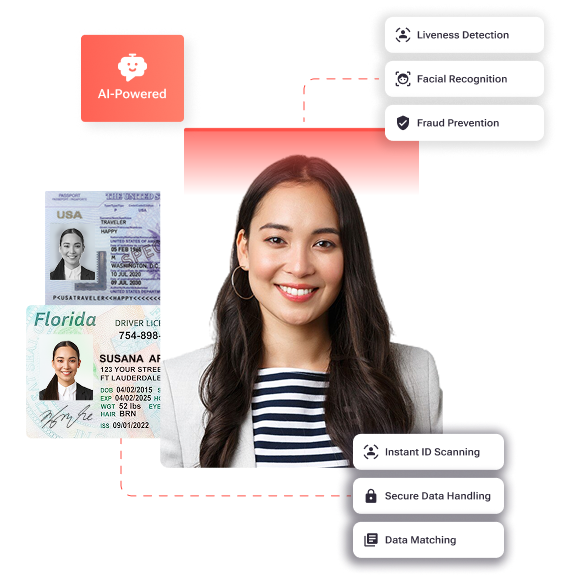
- IDVerify runs biometric identity verification, including government ID validation, AI-powered liveness detection, and facial biometric matching, so the applicant’s identity is confirmed before board review.
- Background screening, credit, income verification, and reference checks are completed through FCRA-compliant channels using direct TransUnion and Equifax data.
- The completed file routes to the board dashboard for review and decision.
QuickApprove accelerates resident approvals for CAMs, boards, and management teams. It provides real-time application tracking, reduces manual follow-ups, supports a board-ready approval process, automates communication, and generates customized approval letters and welcome packages while preserving control and visibility.
Board Review and Approval with Documented Decisions
When governing documents authorize board approval of tenants, the review process must stay consistent, documented, and defensible. QuickApprove provides a dedicated board dashboard inside TenantEvaluation where board members access AI-generated applicant summaries, cast timestamped votes, and trigger approval letters. This replaces email chains and spreadsheets with a structured approval process.
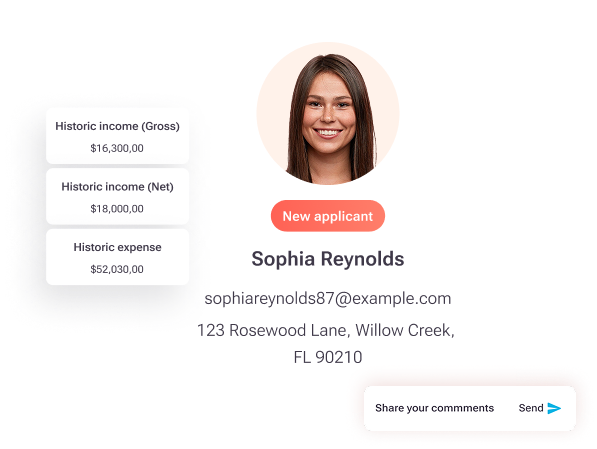
Every decision appears in a complete audit trail that supports the association’s official records obligations. Boards gain clarity on how and when each application was handled, which reduces disputes over inconsistent treatment.
Lease Execution and Tracking After Approval
Board approval ends the screening phase but not the compliance lifecycle. Once a tenant is approved, the association must collect the executed lease, store it, and connect it to the unit’s occupancy record. Fragmented manual processes at this stage create some of the highest compliance risks.
TenantEvaluation’s Lease Tracking gives CAMs centralized, real-time lease visibility and lifecycle control from application through occupancy. It connects resident onboarding, unit data, approvals, and lease documentation in a single workflow that reduces manual follow-ups, spreadsheets, and scattered email threads.
Lease Tracking provides:
- Real-time lease status for every unit, including active, pending, expired, or missing
- Automated lease document collection during onboarding
- Unit-level tracking with a searchable digital history
- Digital lease records that can be produced quickly during reviews or disputes
For CAMs managing multiple associations, this structure removes the blind spots that appear when lease data lives across inboxes, folders, and disconnected spreadsheets.
Ongoing Occupancy Monitoring in 55+ Communities
For Florida condominiums that operate as age-restricted communities under the Housing for Older Persons Act (HOPA), ongoing occupancy monitoring adds another documentation layer. TenantEvaluation’s 55+ Communities Verification reduces manual work, standardizes application handling, and supports consistent documentation across every application cycle.

The solution is built for Florida condos and HOAs and designed for Community Association Managers. It improves operational efficiency and strengthens internal processes, creating a more structured, scalable workflow for age-restricted communities while leaving legal guidance to association counsel.
Common Florida Condo Lease Compliance Violations
The following violations appear frequently in Florida condominium lease compliance operations:
- Unauthorized occupancy: A tenant occupies a unit before board approval or before the executed lease is on file with the association.
- Rental cap breach: A unit is leased after the association has already reached its maximum permitted rental percentage because real-time occupancy tracking was missing.
- Minimum duration violation: A lease is executed for a term shorter than the minimum permitted by the declaration.
- Frequency violation: A unit is rented more times per year than the governing documents allow.
- Missing lease copy: The association cannot produce an executed lease for an occupied unit during an audit or dispute.
- Inconsistent approval application: The board approves or denies applications without documented, consistent criteria, which increases fair housing exposure.
Under §718.303, associations may levy fines and suspend use rights for rule violations. Notice requirements in Chapter 83 apply when violations involve the landlord-tenant relationship. Proper notice, clear documentation, and a complete audit trail are prerequisites for enforceable action.
Enforcement, Documentation, and Audit Readiness
The table below outlines a practical compliance checklist for CAMs and boards that manage lease-related enforcement and prepare for audits.
| Compliance Area | Required Action | Documentation Standard | Platform Support |
|---|---|---|---|
| Rental cap monitoring | Track active versus owner-occupied units in real time | Timestamped occupancy records per unit | Lease Tracking real-time status dashboard |
| Lease document collection | Collect executed lease at onboarding and store digitally | Searchable digital copy tied to the unit record | Automated lease document collection |
| Board approval documentation | Record every vote with timestamp and rationale | Audit trail per application consistent with official records rules | QuickApprove board voting panel |
| Identity verification | Confirm applicant identity before approval | Biometric match result and redacted ID copy | IDVerify+ verification report |
| Violation notice issuance | Issue written notice under §718.303 before fining | Dated notice with delivery confirmation | Centralized violation records in TenantEvaluation |
| Lease expiration tracking | Monitor and flag upcoming expirations proactively | Unit-level expiration dates with status alerts | Lease Tracking expiration and missing-lease flags |
| FCRA adverse action | Issue adverse action notice when denial relies on screening data | Documented adverse action workflow | Built-in FCRA-compliant adverse action tools |
Schedule a demo today to see TenantEvaluation’s enforcement and documentation workflows in action.
How Lease Tracking Changes Daily CAM Workflows
TenantEvaluation’s Lease Tracking acts as a centralized operational layer that uses the same environment as application intake, screening, and board approval. From the moment an application is submitted, lease documentation is collected automatically during onboarding and linked to the correct unit.
Once approved, the executed lease is stored at the unit level with a searchable digital history that connects the resident’s application, approval record, and occupancy status. This centralized visibility removes the friction CAMs face when they must reconcile spreadsheets with email attachments just to confirm which units have current leases on file.
Boards gain a clearer picture of occupancy and resident activity, and CAMs can respond quickly to owner requests, regulatory reviews, or disputes. The result is lease management that reflects the operational reality of Florida community associations rather than a generic rental workflow.
TenantEvaluation vs. Generic Screening and Property Tools
Generic screening platforms and broad property management software focus on multifamily rental markets, not Florida condominium associations. They usually lack association-specific workflows that Chapter 718 compliance requires, such as a dedicated board voting dashboard, unit-level lease tracking tied to onboarding, 55+ community documentation tools, and FCRA-compliant adverse action workflows tailored to associations instead of landlords.
Platforms such as AppFolio, RealPage, and RentSpree offer screening and property management features. They do not combine QuickApprove for board-ready approvals, IDVerify for biometric identity confirmation, 55+ Communities Verification for age-restricted documentation, and Lease Tracking for real-time lifecycle visibility in a single association-focused workflow. TenantEvaluation uses direct TransUnion and Equifax data rather than gray-market aggregators, which reduces liability exposure tied to unreliable consumer reports.
Conclusion: Turning Statutory Rules into Daily Processes
Florida condo lease compliance in 2026 functions as an operational discipline rather than a simple paperwork task. The frameworks in this guide, from Chapter 718 restriction mapping and rental cap enforcement to intake workflows, board approval documentation, and structured lease tracking, describe the baseline operational standard for CAMs and boards that manage rental activity across Florida condominiums.
Manual, fragmented processes create measurable compliance exposure at every stage of the lease lifecycle. CAMs and boards reviewing their current workflows should ask whether their tools provide real-time lease status visibility, biometric identity verification, board-ready approval documentation, and reliable records, or whether those functions still live in spreadsheets, email chains, and disconnected systems.
TenantEvaluation is built specifically for community associations and management companies, with FCRA compliance as a core design requirement. With 5,000+ communities and approximately 100,000 applications processed annually, TenantEvaluation delivers an integrated resident screening and onboarding platform that includes QuickApprove, IDVerify, 55+ Communities Verification, and Lease Tracking in a coordinated system.
Frequently Asked Questions
What does Florida Chapter 718 require for condo lease approvals?
Chapter 718 of the Florida Statutes governs condominium associations and permits associations to require board approval of prospective tenants when the declaration or bylaws grant that authority. When approval authority exists, the association must apply its criteria consistently across all applicants, document every decision with a clear audit trail, and retain records in line with official records requirements in §718.111(12). Associations must also issue required notices before imposing fines or suspending use rights for lease-related violations under §718.303. Screening criteria, minimum lease durations, rental frequency limits, and rental cap percentages come from each community’s governing documents rather than a single statewide default.
How do Florida condo rental cap rules work in practice?
A rental cap limits the percentage of units within a condominium that may be leased at the same time, and the declaration sets the specific percentage. In practice, enforcement requires real-time visibility into which units are actively leased, owner-occupied, pending approval, or have an expired or missing lease on file. When the cap is reached, the association must maintain a documented waitlist and apply it consistently. Associations that rely on manual spreadsheets for occupancy tracking often discover cap violations only during audits or owner disputes. Centralized lease tracking that shows real-time status across every unit has become the practical standard for reliable rental cap enforcement.
What are the most common lease compliance violations in Florida condominiums?
Common violations include unauthorized occupancy before board approval, rental cap breaches caused by missing real-time tracking, leases with terms shorter than the minimum allowed, units rented more frequently per year than governing documents permit, missing executed lease copies in association records, and inconsistent application of approval criteria. Each violation carries potential enforcement consequences under §718.303, including fines and suspension of use rights, and each requires proper written notice before action. Maintaining complete, searchable records for every application and lease is the primary defense against enforcement challenges and owner disputes.
How does FCRA compliance apply to Florida condo tenant screening?
The Fair Credit Reporting Act applies whenever a community association uses a consumer report, including credit, background, or eviction history, as part of a tenant screening decision. FCRA requirements include obtaining written consent from the applicant before ordering a report, using the report only for a permissible purpose, and issuing an adverse action notice to any applicant who is denied based in whole or in part on information in the consumer report. Associations that use non-compliant screening vendors or fail to issue adverse action notices face direct liability exposure. TenantEvaluation is built with FCRA compliance as a foundation and operates with direct TransUnion and Equifax data, along with automated adverse action workflows and built-in audit trails for every application.
What records must Florida condo associations keep for lease compliance audits?
Under §718.111(12), Florida condominium associations must maintain official records that are accessible to unit owners. These records include executed leases for currently leased units, board meeting minutes that document approval decisions, and correspondence related to rule violations and enforcement. For audit readiness, associations should keep timestamped records of every application received, every board vote cast, every approval or denial with its stated basis, every adverse action notice sent, and every executed lease stored at the unit level with its current status. Records that exist only in email inboxes, paper files, or scattered spreadsheets are difficult to produce on demand and create significant exposure during owner disputes, regulatory reviews, or litigation.
