Written by: Luis Teran, Co-founder, CEO, TenantEvaluation
Key Takeaways for Florida Condo Investors
- Florida condo boards hold broad authority over rental approvals, caps, and financing eligibility through governing documents and state statutes.
- Investors should review declarations, bylaws, and statutory disclosures for rental caps, owner-occupancy ratios, and right-of-first-refusal provisions before purchase.
- 2026 FHA and VA financing rules require majority owner-occupancy, so exceeding rental thresholds can eliminate financing options and reduce resale value.
- Boards face FCRA and fair-housing compliance obligations when screening tenants, which makes consistent, auditable processes essential.
- See how TenantEvaluation handles Florida investor screening with full compliance built in from the start.
Core Rental and Approval Terms for Florida Condo Investors
Rental cap. A rental cap is a ceiling on the percentage or number of units that may be leased simultaneously. Under Florida Statute 718.110(13), a condominium association may adopt an amendment prohibiting rentals entirely or imposing special limits such as minimum lease terms or caps on the number of times a unit may be rented in a given period. Such an amendment binds only owners who consent and buyers who purchase after the amendment’s effective date.
Owner-occupancy clause. An owner-occupancy clause requires a minimum percentage of units to be owner-occupied. Associations adopt these clauses partly to satisfy lender guidelines and partly to stabilize property values. Mortgage lenders and insurance providers frequently review the ratio of rented units in a condominium community, prompting associations to adopt rental caps to remain compliant with lending guidelines.
Right of first refusal (ROFR). A right of first refusal is a contractual right allowing the association, or other unit owners, to match a third-party purchase offer before the sale proceeds to the original buyer. Some Florida condominium declarations give the association or other unit owners a right of first refusal to match the purchase price; if exercised, the sale to the original buyer cannot proceed.
Board tenant screening rights. Associations may require prospective tenants to submit applications, undergo background checks, and pay screening fees. Condominium associations may require prospective tenants to submit applications, undergo background checks, or participate in interviews, with boards retaining the right to approve or deny tenants based on community criteria. These terms form the building blocks of condo board authority and feed directly into the approval process described below.
How Florida Condo Rules Translate into Final Board Approval
- Declaration of Condominium. The declaration is the foundational document. It establishes whether the association holds ROFR rights, sets any hard rental caps, and defines the scope of board approval authority over leases and sales.
- Bylaws and Rules. The bylaws and rules supply the operational detail. Minimum lease terms, short-term-rental prohibitions, application timelines, and fee schedules typically appear here.
- Statutory Disclosure Package. Florida Statute 718.503(2)(a) mandates that the seller provide the association’s declaration, bylaws, and rules, documents that commonly contain rental caps, owner-occupancy ratios, lease duration limits, and right-of-first-refusal provisions, making the statute a key due-diligence checkpoint for investors.
- Board Application Review. The investor or tenant submits a completed application package. The board or its designated manager reviews documents, background reports, and identity verification against the criteria encoded in the governing documents.
- Approval, Conditional Approval, or Denial. The board issues a decision within the timeline specified by the governing documents. ROFR decisions, if applicable, must be made within the window the documents prescribe. If the association fails to act within the required time or manner, it may waive or lose the right for that transaction.
Florida Investor Landscape and 2026 Financing Pressures
Rising investor concentration in Florida condominium communities has intensified board scrutiny of rental applications. When too many units are tenant-occupied, the financing environment for all owners deteriorates. FHA guidelines require that a majority of units in a condominium project be occupied by owners or sold to buyers who intend to occupy the units for project approval. VA loans generally require at least 50 percent of units in a condominium project to be owner-occupied.
When a community’s rental ratio pushes past these thresholds, FHA and VA financing disappears for future buyers. The resale pool shrinks and unit values often soften. Boards are responding by tightening enforcement of existing caps and demanding more verifiable applicant data at the screening stage. For contracts entered into after December 31, 2024, Florida Statute 718.503(2)(e) requires conspicuous disclosure of whether the association has completed a milestone inspection, a turnover inspection report, or a structural integrity reserve study. This requirement adds another layer of pre-closing due diligence for investors.
Explore how TenantEvaluation manages investor applications with FCRA compliance automated from intake through approval.
Everyday Board Rules Florida Investors Commonly Face
- Rental-percentage limits. Once a rental cap is reached, additional owners may be placed on a waiting list until another rental unit becomes available, which directly delays income generation for investors who purchased expecting immediate rental use.
- Minimum lease terms. Many condominium associations require minimum lease terms of six months or one year and prohibit short-term rentals or vacation-style leasing to promote community stability.
- Short-term-rental bans. Short-term rental bans are increasingly common in condominium communities focused on long-term residential stability, with associations defining and prohibiting leases shorter than a specified minimum number of days.
- Security deposits from tenants. A Florida condominium association may collect a security deposit from a prospective tenant capped at one month’s rent if authorized by the governing documents, in addition to the landlord’s deposit, to protect common elements.
- Typical documents requested. Boards often request a government-issued photo ID, an executed lease agreement, a completed association application, background check authorization, and proof of income or financial references. Many Florida condo associations also require prospective buyers to submit an application with personal and financial information, pass a background and credit check, and pay an application fee, so investors should expect both deposit rules and document lists during onboarding.
Compliance, Risk, and Governance for Florida Condo Screening
Associations that conduct tenant screening carry FCRA obligations. Background check data must be obtained for a permissible purpose, adverse action notices must be issued when a denial is based on consumer report information, and audit trails must be maintained. Fair-housing law prohibits applying screening criteria inconsistently across protected classes. Florida condominium associations must maintain proper records to demonstrate that any rental cap is applied consistently and uniformly across owners.
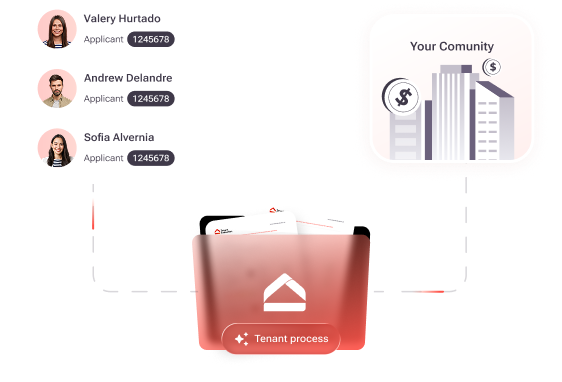
A critical governance principle is the separation between data provision and decision-making. The association, not the screening platform, makes the approval decision. TenantEvaluation is built specifically for community associations and management companies, with FCRA compliance as the foundation, not an afterthought. As a direct reseller of TransUnion and Equifax data, TenantEvaluation operates under strict bureau rules, with automated adverse action workflows and built-in audit trails that protect associations from liability exposure. Under Florida Statute 718.111(12)(c)5.b, information obtained by a condominium association in connection with the approval of a lease, sale, or other transfer of a unit is not accessible to unit owners, which reinforces the need for a platform that controls data access by role.
Common Closing Roadblocks for Florida Condo Investors
- Incomplete applications. Missing executed leases, unsigned authorizations, or unverified IDs trigger manual follow-up cycles that add days or weeks to timelines.
- Inconsistent documentation standards. When each community uses a different checklist, realtors and applicants submit wrong or partial packages repeatedly.
- Board availability gaps. Without a structured review dashboard, board members rely on email chains and spreadsheets, which creates bottlenecks during peak seasons.
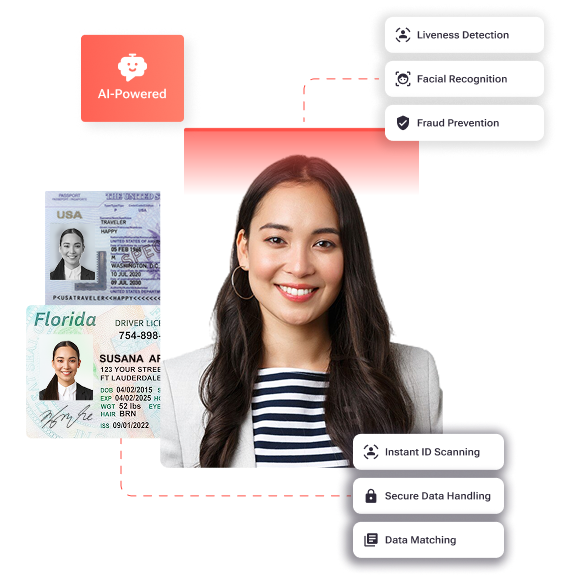
- Identity fraud exposure. Traditional document-upload screening cannot reliably detect impersonation or synthetic identities, which increases liability for associations that approve fraudulent applicants.
Effective mitigation steps include standardizing application intake through a single digital platform, using intelligent form logic to reject incomplete submissions before they reach the board, and using biometric identity verification, such as IDVerify, to confirm applicant identity before the application proceeds to review.
Best Practices for Streamlined Florida Investor Applications
- Standardized document checklists configured per community profile, so investors and their agents know exactly what to submit before the application opens.
- Defined approval timelines communicated upfront, which reduces realtor inquiries and applicant uncertainty.
- Biometric identity verification embedded in the workflow, not bolted on afterward, so communities move from document-based review to verified physical identity confirmation.
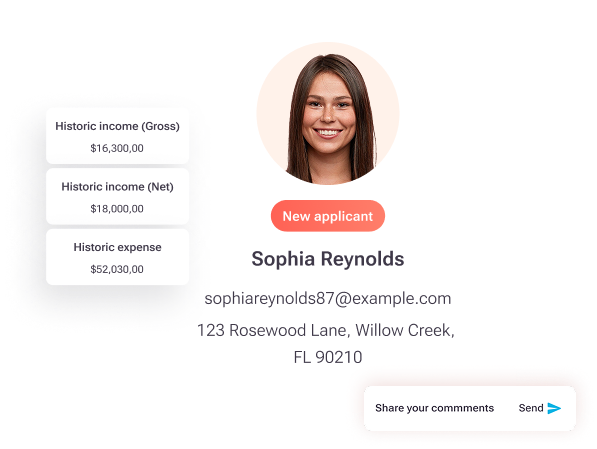
- Board-ready dashboards that give directors real-time application status, AI-generated summaries, and a structured voting workflow, replacing disconnected email approvals.
- Accelerated approval workflows like QuickApprove, which accelerates resident approvals inside one connected platform, with real-time application tracking, automated communication support, customized approval letters, and a personalized welcome package, built for high-volume seasons and communities with complex onboarding requirements, without losing control, compliance, or visibility.
See how board-ready workflows reduce closing delays for investor applications across Florida communities.
Key Criteria for Evaluating Screening and Onboarding Solutions
Boards and managers can use a clear set of criteria when comparing screening and onboarding platforms for Florida investor applications.
- Compliance readiness. Confirm whether the platform is a direct credit bureau reseller and whether it automates adverse action notices and maintains FCRA-aligned audit trails.
- Operational efficiency. Look for tools that eliminate paper applications, automate document collection, and reject incomplete submissions before manual review begins.
- Transparency. Ensure that boards have real-time visibility into application status without relying on email updates from managers.
- Scalability. Verify that the platform can handle high-volume application seasons and multiple communities under a single management portfolio.
- Risk controls. Prioritize biometric identity verification, auto-redaction of sensitive PII, PCI Level 1 data security, and role-based data access.
- Florida-specific configuration. Confirm that the platform can match each community’s governing documents, rental caps, and screening criteria, rather than functioning as a generic rental tool.
Frequently Asked Questions
Does the condo board approve renters?
In Florida, a condominium board’s authority to approve or deny renters depends entirely on the governing documents. If the declaration or bylaws grant the board tenant approval rights, the board may review applications, conduct background checks, and approve or deny prospective tenants based on criteria defined in those documents. The board cannot apply criteria inconsistently or in a manner that violates fair-housing law. When approval authority exists, investors must factor board review timelines, typically two to four weeks, into their leasing schedules. Associations using a platform like TenantEvaluation can standardize this process, give boards a structured review dashboard, and reduce the back-and-forth that extends timelines.
What documents do investors need for board approval in Florida?
The specific package varies by community, but the document package described in the “Day-to-Day Board Practices” section represents the baseline. Additionally, investors must obtain the statutory disclosure package under Florida Statute 718.503, which includes the declaration, bylaws, rules, annual budget, financial statements, and applicable inspection reports before closing. Investors should review this statutory disclosure package for rental caps, owner-occupancy ratios, and ROFR provisions before executing a purchase contract.
How do rental caps affect FHA financing?
FHA project approval requires that at least 51 percent of units be owner-occupied, with HUD field offices authorized to raise that threshold to 70 percent. When a condominium community’s rental ratio approaches or exceeds these thresholds, the project may lose FHA approval status, which eliminates FHA-backed financing for future buyers. This shift directly affects an investor’s exit strategy because a smaller buyer pool often means longer days on market and potential price concessions. VA financing carries a similar 50 percent owner-occupancy requirement, so investors should verify the community’s current rental ratio and confirm whether the project holds active FHA or VA approval before closing.
Can a Florida condo board exercise right of first refusal on an investor purchase?
A Florida condominium board can exercise a right of first refusal only if the declaration or bylaws expressly grant that right. When ROFR exists, the usual trigger is a signed purchase contract between the seller and a third-party buyer. The association then has a fixed window, defined by the governing documents, to either match the deal on identical price and terms or waive the right. If the association fails to act within that window, it typically loses the right for that transaction. In practice, many Florida associations routinely waive ROFR, but investors must calendar the decision window and plan for the possibility of a delayed or disrupted closing. Overly restrictive transfer provisions can also contribute to a project being deemed non-warrantable, which limits conventional financing options.
Structural Takeaways for Florida Investors and Boards
Florida condo board approval processes for investors follow a layered framework. State statutes set the outer limits, governing documents define the specific rules, and board practices determine day-to-day enforcement. Rental caps, owner-occupancy ratios, ROFR provisions, and minimum lease terms directly affect rental income, financing availability, and resale liquidity. Investors who review the statutory disclosure package before signing a purchase contract, confirm the community’s current rental ratio against FHA and VA thresholds, and understand the board’s screening workflow will encounter fewer surprises at closing.
On the association side, the screening workflow itself carries compliance obligations that manual processes struggle to meet consistently. Associations need a platform that automates document collection, enforces FCRA-aligned adverse action workflows, provides biometric identity verification through IDVerify, and gives boards a structured approval dashboard through QuickApprove. This approach reduces the administrative burden that stalls investor applications and exposes associations to liability.
Request your personalized platform walkthrough to see how TenantEvaluation delivers the compliance, speed, and transparency Florida boards and investors require.
