Written by: Luis Teran, Co-founder, CEO, TenantEvaluation | Last updated: August 20, 2026
Key Takeaways for Florida HOA Occupancy Compliance
- Compliance occupancy reporting for Florida HOAs requires real-time tracking of owners versus tenants, lease status, and rental caps to satisfy governing documents and statutes.
- Manual spreadsheets create audit risk by missing rental cap triggers, lease renewal deadlines, and enforcement documentation needs.
- Centralized lease tracking connects every application directly to unit-level occupancy records, eliminating blind spots and ensuring audit-ready data on demand.
- Florida CAMs and boards benefit from automated workflows that standardize lease collection, 55+ verification, and board approvals while maintaining FCRA compliance.
- Replace spreadsheets with TenantEvaluation’s centralized, real-time lease tracking platform to achieve audit-ready compliance occupancy reporting for Florida HOAs, and see how it works for your community.
The Problem: Spreadsheet-Based HOA Occupancy Reporting Fails Florida Audits
A substantial portion of Florida’s residential units are governed by HOAs, and, including condominium associations, a significant share of the state’s housing stock is subject to mandatory community association governance. That scale means occupancy errors compound quickly across portfolios.
Manual spreadsheet tracking creates three categories of risk for Florida CAMs and boards:
- Rental cap blind spots. Florida HOA and condominium declarations hold independent legal authority over rental restrictions, including caps on the total number of rentals permitted per year and mandatory minimum lease terms. A spreadsheet updated weekly cannot confirm in real time whether a new lease pushes the community past its cap.
- Tenant registration gaps. A Chapter 720 HOA renewal process may require an executed lease extension, updated tenant registration, vehicle records, or written approval even when the same tenant remains, depending on the recorded governing documents and current association rules. Manual systems miss these triggers.
- Enforcement vulnerability. Florida associations reduce liability risk by treating enforcement of occupancy and rental rules as a systematic, documented process rather than handling violations on an ad-hoc basis. Scattered email chains and disconnected spreadsheets undermine that structure.
Centralized, real-time lease visibility closes these gaps by connecting every lease record directly to the unit and the onboarding workflow that created it.
How Florida HOAs Limit Occupants per House
Florida HOAs and condominium associations can restrict occupancy through their recorded governing documents. Common restrictions in Florida HOA and condo declarations include minimum lease terms of 30 or 90 days, caps on the total number of rentals permitted per year, and mandatory guest screening and approval processes, with violations subject to fines or suspension of amenity access.
Florida Statutes section 720.303 addresses official records that property managers review to confirm current lease-approval or tenant-registration procedures before any renewal. Rental cap tracking remains reliable only when lease records connect to unit-level occupancy data in real time, not when staff reconstruct them from folders and inboxes after the fact.
Rental restrictions in Florida HOAs, including limits on short-term rentals, are enforceable only if they appear in the recorded Declaration of Covenants; rules appearing solely in unrecorded bylaws or board policies are unenforceable. Confirming which restrictions are recorded, and tracking compliance against them, requires a searchable, audit-ready lease record system instead of a spreadsheet.
These accurate, connected records become especially critical during compliance inspections, when associations must prove that their occupancy data is both current and defensible.
HOA Compliance Inspections and Occupancy Records in Florida
An HOA compliance inspection is a structured review of whether units and their occupants conform to the community’s governing documents, including occupancy limits, lease registration requirements, and any applicable age restrictions. In Florida, inspections trigger enforcement sequences governed by statute.
Florida HOAs document rental or occupancy violations to support enforcement actions under Chapter 720. Real-time occupancy records make this documentation retrievable on demand rather than assembled under pressure after a violation is identified.
Florida HOAs follow a standard enforcement sequence for occupancy and rental violations: violation identification through inspections or complaints, written notice citing the specific governing document provision, a cure period, a hearing before the board or impartial fining committee if uncured, imposition of fines or other discipline, and potential escalation to liens or legal action. Each step in that sequence depends on accurate, timestamped occupancy records that exist before the process begins.
HOA Lease Tracking Best Practices for 2026
The shift from spreadsheet-based HOA occupancy reporting to centralized lease tracking has become mandatory for Florida communities that manage rental caps, age restrictions, and audit cycles. Real-time data synchronization in automated lease platforms removes lag from manual updates and creates a single source of truth for lease terms, occupancy status, and payment records across integrated systems.
TenantEvaluation Lease Tracking is the only platform that connects resident applications directly to live occupancy records with built-in compliance controls. Built for CAMs, Boards, Property Management Companies, and community operations teams, it delivers centralized, real-time lease visibility and lifecycle control from application to occupancy. Key capabilities include:

- Real-time lease status visibility, including active, pending, expired, or missing, at the unit level
- Automated lease document collection during resident onboarding
- Searchable digital history of leases, resident activity, and document trails
- Audit-ready digital lease records connected to the approval workflow
- Unit-level tracking tied directly to occupancy records
55+ Community Occupancy Verification in Florida
Manual verification processes that rely on emailed PDFs, follow-up phone calls, and disconnected spreadsheets create documentation gaps that surface during audits and disputes. Age status in a 55+ community is established through the recorded governing documents and the community’s published age-verification policies. Inconsistent documentation across applicants weakens that framework.
TenantEvaluation’s 55+ Communities Verification is a built-in capability that reduces manual work, standardizes application handling, supports documentation consistency, and strengthens internal processes. Built for Florida Condos and HOAs and designed for Community Association Managers, it improves operational efficiency by replacing fragmented manual workflows with a structured, scalable process for age-restricted communities, while still leaving room for legal guidance.
The 7-Step Occupancy Reporting Process Inside TenantEvaluation
The following process replaces spreadsheet-based HOA occupancy reporting with a repeatable, audit-ready workflow inside TenantEvaluation.

- Configure governing document rules. Map the community’s recorded Declaration, bylaws, and current rules, including rental caps, minimum lease terms, and age restrictions, into TenantEvaluation’s custom setup. Florida Statutes section 720.303 addresses official records that relate to lease-approval procedures.
- Collect lease documentation during onboarding. TenantEvaluation’s automated lease document collection captures executed leases at the point of application submission, not weeks later via email follow-up, and connects the lease directly to the unit record.
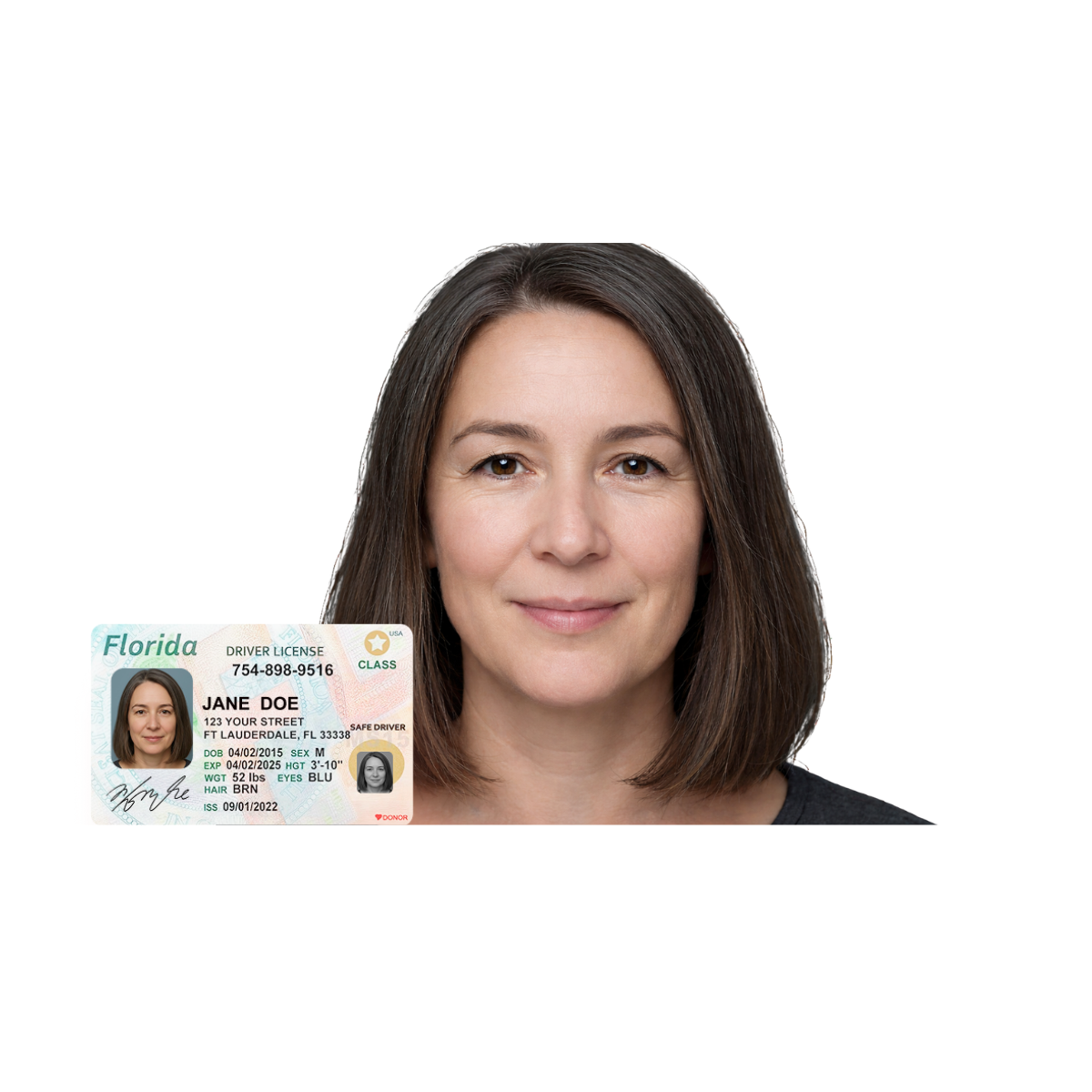
- Verify occupant identity with biometric confirmation. IDVerify validates government-issued ID, confirms physical presence through AI-powered liveness detection, and performs biometric selfie-to-ID comparison before the application proceeds to review.
- Run 55+ age verification where applicable. For age-restricted communities, TenantEvaluation’s 55+ Communities Verification standardizes documentation collection across applicants, reduces manual work, and improves consistency.
- Route applications through board approval. QuickApprove moves applications from submission to board decision faster, with real-time application tracking, a board-ready approval process, automated communication support, and fewer manual follow-ups, while preserving control, compliance, and visibility.
- Activate real-time lease status tracking. Once approved, the lease record becomes live inside TenantEvaluation with status visible as active, pending, expired, or missing. The system flags expirations automatically and keeps occupancy records current without manual intervention.
- Generate audit-ready occupancy reports on demand. Automated lease tracking maintains detailed records of lease start and end dates, renewal options, and historical changes while automatically flagging upcoming expirations and occupancy trends. TenantEvaluation’s searchable digital history makes every record retrievable for inspections, audits, or enforcement proceedings.
Ready-to-Use Annual Occupancy Report Template for Florida CAMs
The table below provides a field-level template for Florida CAMs conducting annual compliance occupancy reporting. Each field maps to a data point that TenantEvaluation Lease Tracking maintains in real time.
| Field | Data Point | Source |
|---|---|---|
| Unit Number | Unit identifier tied to occupancy record | TenantEvaluation unit-level tracking |
| Owner Name | Recorded owner of unit | Governing document records |
| Occupancy Type | Owner-occupied / Tenant-occupied / Vacant | TenantEvaluation lease status |
| Tenant Name(s) | All registered occupants per lease | TenantEvaluation application record |
| Lease Start Date | Executed lease commencement | TenantEvaluation lease document |
| Lease End Date | Scheduled lease expiration | TenantEvaluation lease document |
| Lease Status | Active / Pending / Expired / Missing | TenantEvaluation real-time status |
| 55+ Verification Status | Verified / Pending / Not Applicable | TenantEvaluation 55+ Communities Verification |
| Rental Cap Count | Unit counted toward community rental cap (Y/N) | Governing document rules + lease status |
| Last Updated | Date of most recent record change | TenantEvaluation audit trail |
| Board Approval Date | Date of board vote on application | TenantEvaluation QuickApprove record |
| Notes / Flags | Open violations, missing documents, renewal triggers | TenantEvaluation workflow flags |
Florida 2026 Enforcement Checklist with Due-Process Language
Florida HOA enforcement of occupancy and rental rules follows a statutory sequence under Florida Statutes § 720.305 and § 720.303. The checklist below integrates due-process language at each step.
- Step 1 — Identify the violation. Confirm the specific section of the recorded Declaration or Rules that has been breached. Cite the exact section before any penalty is imposed. Retrieve the current lease record from TenantEvaluation to confirm occupancy status.
- Step 2 — Document the violation. Record the date, time, nature of the violation, photos or other evidence, and all contact with the owner. Export the relevant lease and occupancy record from TenantEvaluation as supporting documentation.
- Step 3 — Issue written notice. The notice must cite the specific rule or covenant violated, describe the conduct at issue, and provide a reasonable cure period before escalation to a hearing. Due-process language: “You are hereby notified that [specific conduct] on [date] constitutes a violation of [Declaration Section X]. You have [X] days to cure this violation before further action is taken.”
- Step 4 — Provide hearing notice. Florida HOAs must provide at least 14 days’ written notice before holding a fining hearing, and the notice must describe the violation along with the hearing’s date. Due-process language: “You are entitled to appear and be heard before an independent committee on [date] at [time] at [location].”
- Step 5 — Conduct the independent committee hearing. The hearing must be conducted before an independent committee of at least three members who are not officers, directors, employees of the association, or related to any of them, and the committee must affirmatively vote to approve any fine or suspension.
- Step 6 — Issue the written decision. The written decision must be provided to the owner within 7 days of the hearing. Fines are capped at $100 per violation and $1,000 in the aggregate for a continuing violation.
- Step 7 — Escalate if uncured. If the violation continues, escalate to suspension of privileges and, where applicable, legal action. Florida Statutes § 720.311 may require mandatory pre-suit mediation before an HOA sues over use-of-property or rule-enforcement disputes. Maintain the complete enforcement record inside TenantEvaluation for audit defensibility.
Consistency requirement: Selective enforcement of rules such as occupancy limits exposes Florida HOAs to legal challenges; associations must enforce covenants uniformly or risk losing enforceability. TenantEvaluation’s audit trail documents every enforcement action with timestamps, supporting consistent application across all units.
Frequently Asked Questions
What is compliance occupancy reporting for an HOA?
Compliance occupancy reporting is the process of systematically collecting, storing, and auditing records that confirm who actually occupies each unit in a community association. For Florida HOAs and condominiums, this includes distinguishing owner-occupied from tenant-occupied units, tracking active lease agreements, monitoring rental caps established in the recorded Declaration, and maintaining documentation that supports enforcement and audit readiness. A reliable compliance occupancy reporting system connects lease records directly to unit data and the resident onboarding workflow, so occupancy status remains current and retrievable without manual reconstruction from spreadsheets or email chains.
What are the tenant registration requirements for Florida HOAs?
Tenant registration requirements in Florida HOAs are defined by each community’s recorded governing documents, including the Declaration, bylaws, and current rules, rather than by a single statewide standard. Depending on those documents, a tenant may need to submit an application, provide an executed lease, complete a background screening, register vehicles, and obtain written board approval before occupying a unit. Some communities require re-registration at each lease renewal, even when the same tenant remains. Florida Statutes § 720.303 identifies the governing documents that establish these procedures, and property managers must confirm the current requirements before processing any new or renewal application.
How does Florida HOA rental cap tracking work in practice?
Rental cap tracking requires a community to maintain a real-time count of how many units are currently leased to non-owner occupants and compare that count against the cap established in the recorded Declaration. When a new lease application is submitted, the CAM or board must confirm that approving it would not push the community past its cap before granting approval. Manual spreadsheets fail at this task because staff update them retroactively and they do not reflect pending applications. A centralized lease tracking system that connects applications to live occupancy records, and shows active, pending, expired, and missing leases at the unit level, makes rental cap tracking accurate and audit-ready in real time.
What documentation is required for 55+ community occupancy verification in Florida?
Under the Fair Housing Act’s housing-for-older-persons exemption, a 55+ community must verify that at least 80% of occupied units are occupied by at least one person aged 55 or older, and the community must actually operate a verification process to qualify for the exemption. Required documentation typically includes government-issued identification confirming the qualifying occupant’s date of birth, a completed age-verification form consistent with the community’s published policy, and records maintained in a format that staff can produce during an audit or dispute. The governing documents, including the Declaration, CC&Rs, bylaws, and the community’s published age-verification policy, define the specific documentation requirements for each community. Standardizing this process across all applicants, rather than handling it case by case, reduces documentation gaps and improves operational consistency.
Who is responsible for HOA occupancy reporting compliance, the CAM, the board, or both?
Both the Community Association Manager and the board of directors share responsibility for HOA occupancy reporting compliance, though their roles differ. The CAM typically manages the operational workflow, including collecting lease documentation, maintaining occupancy records, tracking lease expirations, and initiating the enforcement sequence when violations are identified. The board handles governance decisions, including approving or denying applications, authorizing enforcement actions, and ensuring that the community’s policies align with the recorded governing documents and applicable Florida statutes. Effective compliance occupancy reporting requires both parties to have real-time visibility into the same centralized records, which makes a connected platform that gives CAMs operational control and boards a clear approval and oversight workflow more reliable than separate spreadsheets and email chains.
Conclusion: Moving Florida HOA Occupancy Reporting Beyond Spreadsheets
Manual spreadsheets and scattered email chains make compliance occupancy reporting HOA unreliable and audit-vulnerable. Florida CAMs and boards that manage rental caps, tenant registration requirements, age restrictions, and enforcement sequences under Florida Statutes §§ 720.303, 718.112(2)(k), and 720.305 need occupancy records that are accurate, current, and retrievable on demand, not reconstructed after the fact.
As the only platform built with FCRA compliance at its core, TenantEvaluation delivers the audit-ready occupancy records Florida CAMs need. From automated lease document collection during onboarding to real-time lease status visibility, unit-level tracking, and audit-ready digital records, it replaces every spreadsheet and disconnected email chain with one centralized, real-time workflow built for Florida community associations. Serving 5,000+ communities and processing 100,000+ applications annually, TenantEvaluation gives CAMs, boards, and property management companies a compliance occupancy reporting system they can defend.
