Written by: Luis Teran, Co-founder, CEO, TenantEvaluation | Last updated: August 14, 2026
Key Compliance Points for Florida 55+ Communities
- Florida 55+ communities must maintain at least 80% age-qualified occupancy under HOPA to preserve their familial-status exemption.
- A repeatable 7-step verification process covers initial applications, biennial surveys, and long-term record retention.
- Accepted documents include government-issued photo IDs, passports, birth certificates, and signed affidavits when primary documents are unavailable.
- Change-of-occupancy events such as sales, new leases, or the departure of a qualifying occupant trigger immediate re-verification.
- TenantEvaluation’s 55+ Communities Verification standardizes workflows and reduces manual work for CAMs and boards.
The 7-Step Age Verification Workflow for Florida 55+ Communities
The following 7-step procedure covers the full verification lifecycle from initial application through biennial renewal. Apply it consistently to every new application and every two-year survey cycle so each step builds a complete, defensible audit trail.
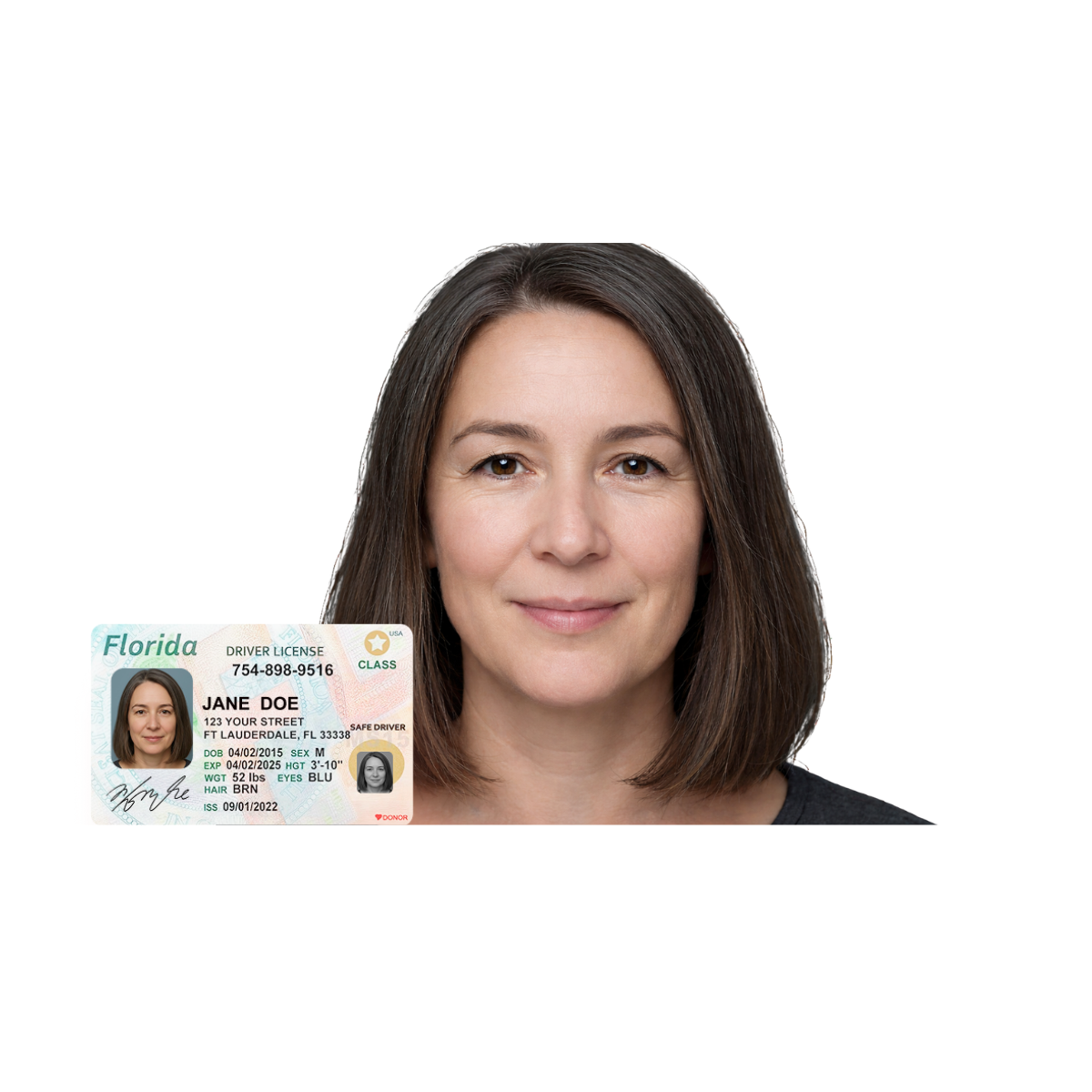
- Collect proof of age at application. Require at least one qualifying occupant aged 55 or older to submit a government-issued photo ID, passport, birth certificate, or signed affidavit before the application advances to review.
- Confirm the 80/20 threshold before approval. Update your occupancy log with the prospective unit and verify that approving the application will not push the community below 80% age-qualified occupancy.
- Record and file the verification document. Attach the proof-of-age document to the unit record and note the document type, issue date, and the name of the staff member who reviewed it.
- Issue a written acknowledgment. Provide the applicant with written confirmation that age-restricted requirements have been met and retained on file.
- Log the unit in the occupancy tracker. Mark the unit as age-qualified in your occupancy log, including the qualifying occupant’s name, date of birth, document type, and verification date.
- Schedule the biennial survey trigger. Set a calendar reminder no later than 24 months from the verification date to re-verify the unit as part of the community-wide survey.
- Retain records for public inspection. Store all verification documents and the occupancy summary in an audit-ready format that can be produced on demand if a familial-status complaint is filed.
The following occupancy log table illustrates the minimum fields every 55+ community should maintain per unit:
| Unit | Qualifying Occupant | Date of Birth | Document Type | Verification Date | Next Survey Due |
|---|---|---|---|---|---|
| 101 | Jane Doe | 03/14/1958 | Driver’s License | 01/10/2025 | 01/10/2027 |
| 102 | John Smith | 07/22/1961 | Passport | 03/05/2025 | 03/05/2027 |
| 103 | Maria Lopez | 11/30/1955 | Birth Certificate | 06/18/2024 | 06/18/2026 |
A sample biennial survey form should capture the following fields for each occupied unit:
| Field | Example Entry |
|---|---|
| Unit Number | 204 |
| Owner / Resident Name | Robert Chen |
| Date of Birth of Qualifying Occupant | 09/01/1960 |
| Document Type Submitted | Government-Issued Photo ID |
| Signature of Resident | Robert Chen |
| Date Completed | 08/01/2026 |
| Reviewed By (CAM) | CAM Initials + Date |
See how a guided demo of TenantEvaluation’s 55+ Communities Verification standardizes this workflow across your entire portfolio.
The 80/20 Rule Explained with a Calculation Example
Under 24 CFR § 100.305, at least 80 percent of occupied units in a 55+ community must be occupied by at least one person aged 55 or older. Vacant units do not count in the denominator, so only occupied units factor into the calculation.
The formula is straightforward. Divide the number of occupied units with at least one resident aged 55 or older by the total number of occupied units. The result must equal or exceed 0.80.
Example 1: 100-unit community. If 100 units are occupied, at least 80 must have one resident aged 55 or older. The remaining 20 units may be occupied by residents of any age without jeopardizing the exemption.
Example 2: 28-unit community. With all 28 units occupied, the community must ensure the number of age-qualifying units meets or exceeds 80 percent of occupied units.
A community may adopt a stricter internal policy, such as requiring 90% age-qualified occupancy. It still cannot legally allow more than 20% of occupied units to go without a qualifying resident and claim the age-restricted exemption under HOPA. If the community falls below 80%, it immediately reverts to standard Fair Housing Act rules and loses the ability to refuse residents of any age.
Accepted Documents for Age Verification
Communities rely on reliable documentation to verify resident ages for HOPA compliance. The table below summarizes document types and practical CAM notes:
| Document Type | Accepted For | CAM Notes |
|---|---|---|
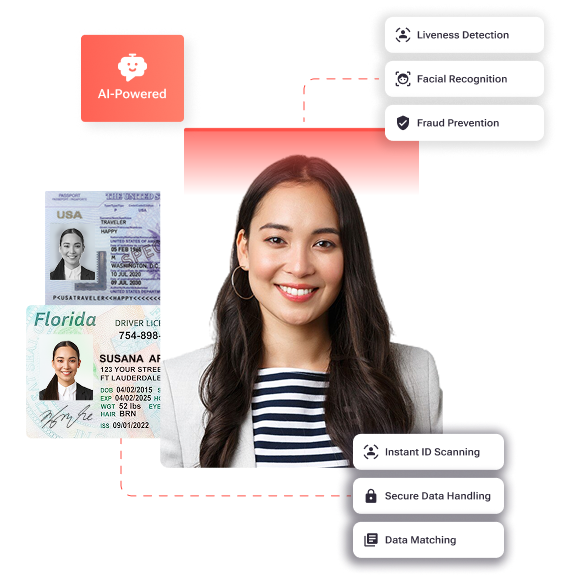
| Government-Issued Photo ID (Driver’s License, State ID) | New applications and biennial surveys | Most common, confirm expiration date and legibility |
| U.S. Passport or Passport Card | New applications and biennial surveys | Acceptable even if expired, date of birth is permanent |
| Birth Certificate | New applications and biennial surveys | Certified copy preferred, retain a legible photocopy |
| Signed Affidavit / Certification | Biennial surveys when primary document unavailable | Must be signed by a household member aged 18+, retain original |
Comparing New-Application and Biennial-Survey Workflows
New applications and biennial surveys follow related workflows, but each has its own triggers, timing, and record-keeping rules. Treat them as connected processes that feed the same occupancy log instead of separate spreadsheets.
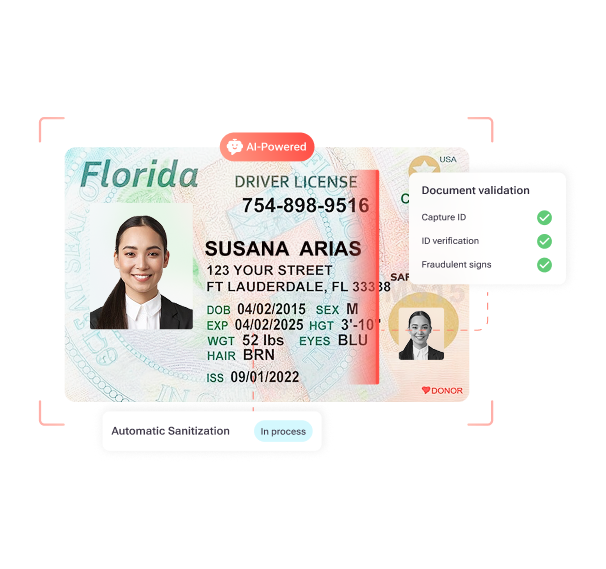
New-application workflow. This workflow triggers every time a unit changes occupancy through a sale, new lease, or addition of a qualifying occupant. Every new lease in a HOPA-qualified 55+ community requires proof of age for at least one resident, which must be filed and retained. The CAM collects the document before approval, updates the occupancy log, and confirms the 80/20 threshold is maintained.
Biennial-survey workflow. This workflow triggers on a fixed two-year cycle for all occupied units, regardless of whether occupancy has changed. HOPA requires communities to update occupancy data at least once every two years using reliable surveys or affidavits. The CAM distributes survey forms to all units, collects completed forms with supporting documents, reconciles the occupancy log, and retains a public-inspection summary.
The record-keeping headaches multiply when these two workflows live in separate spreadsheets. A unit verified at application in 2024 still needs a biennial survey form by 2026, and manual tracking rarely catches that gap reliably. Beyond the biennial cycle, certain occupancy changes create immediate verification obligations that CAMs must track in real time.
Change-of-Occupancy Triggers That Require Re-Verification
Age verification functions as an ongoing obligation, not a single checkpoint at move-in. Communities must rebuild leasing, screening, and record-keeping processes around biennial surveys and change-of-occupancy triggers. The following events require immediate re-verification:
- Ownership transfers. When a unit is sold, the new owner must submit proof of age for at least one qualifying occupant before or at closing approval.
- New leases. Any new rental agreement, including lease renewals with a new tenant, triggers a fresh verification requirement.
- Adult children moving in. An adult child under 55 moving into a unit does not automatically disqualify the unit, provided the existing qualifying occupant aged 55 or older remains in residence. The CAM must document the change and confirm the 80/20 threshold is unaffected.
- Minors moving in. A minor moving into a unit does not disqualify it if a qualifying occupant aged 55 or older remains. The occupancy log must be updated to reflect the household composition change.
- Death or departure of the qualifying occupant. If the sole qualifying occupant leaves the unit, the community must determine whether the remaining occupants meet the age requirement or whether the unit will count against the 20% allowance.
Record Retention and Audit Readiness for 55+ Communities
HOPA requires communities to retain a public-inspection summary on file to defend against potential familial-status discrimination complaints. Communities should retain age-verification documents and occupancy survey records long enough to support compliance and audit readiness.
HUD’s guidance states that communities without a current occupancy survey have no defense if a rejected family with children files a familial-status complaint. Audit readiness means every unit record is complete, every document is legible, and the occupancy summary can be produced on demand.
Florida’s 2026 condo law updates, including provisions introduced under HB 913, reinforce the importance of organized, accessible association records. CAMs and boards managing 55+ communities should treat age-verification documentation as part of the broader records-management obligation now codified under updated Florida statutes.
Explore how TenantEvaluation’s tools and its 55+ Communities Verification feature support documentation consistency and strengthen internal processes for Florida Condos and HOAs.
Handling Adult Children and Minors in 55+ Households
Adult children and minors can often live in 55+ communities, but their presence affects how units count toward the 80/20 threshold. The key factor is whether a qualifying occupant aged 55 or older still resides in the unit.
Under HOPA, the remaining 20 percent of occupied units may be occupied by residents of any age unless the community adopts a stricter internal rule. An adult child under 55 may reside in a unit where at least one occupant is 55 or older without disqualifying that unit from the 80% count. If the adult child becomes the sole occupant, such as after the qualifying parent passes away, the unit no longer counts toward the 80% threshold and must be tracked accordingly.
Minors follow the same logic. A minor residing with a qualifying occupant aged 55 or older does not disqualify the unit. The CAM’s obligation is to document the household composition accurately and confirm the community-wide 80/20 ratio remains intact after any occupancy change.
Why Age Verification Workarounds in Florida 55+ Communities Fail
Search forums sometimes promote ideas for avoiding age verification in Florida 55+ communities. No lawful mechanism exists to bypass HOPA’s verification requirements.
Under 24 CFR § 100.305, a community that fails to maintain the 80% threshold or current verification records loses its legal exemption from the Fair Housing Act’s familial-status protections. A community that stops verifying ages does not become more permissive, it becomes legally exposed. Any occupant, applicant, or rejected family with children can file a HUD complaint, and without a current occupancy survey on file, the community has no defense.
The practical answer for CAMs and boards is that a consistent, documented verification process provides protection. Workarounds do not.
What Documents Are Accepted for 55+ Verification?
Practical CAM tips for document collection:
Start with quality control and always retain a legible copy, because blurry scans are not defensible in an audit. Beyond the document itself, note the document type and the date it was reviewed in the unit record, since this metadata shows you followed procedure. For biennial surveys, a signed affidavit is acceptable when a resident cannot produce a primary document, but treat it as a last resort and clearly mark it as such in the file. Apply the same collection process to every unit, because inconsistency creates its own audit risk and a single exception can weaken your compliance position. Finally, store documents in a centralized, searchable system rather than individual email threads or shared drives so any auditor or board member can locate a specific record quickly.
Implementation: Standardizing Age-Restricted Applications with TenantEvaluation
Manual surveys, record-keeping headaches, and fragmented email chains remain the operational reality for many Florida 55+ communities. TenantEvaluation’s 55+ Communities Verification is a built-in capability within TenantEvaluation that reduces manual work, standardizes application handling, supports documentation consistency, and improves operational efficiency for Florida Condos and HOAs.
Unlike generic tools or fragmented email-and-PDF processes, this capability is built for Florida Condos and HOAs and designed for Community Association Managers. It creates a more structured process for age-restricted communities and strengthens internal processes without replacing legal guidance. The result is a scalable, consistent workflow that replaces the patchwork of spreadsheets, follow-up emails, and disconnected PDF files that currently create audit risk.
TenantEvaluation’s all-in-one platform connects 55+ Communities Verification with resident screening, IDVerify biometric identity verification, QuickApprove accelerated approval workflows, and centralized Lease Tracking. CAMs and boards gain a single operational layer from application submission through occupancy, with audit-ready records at every stage.
Frequently Asked Questions
What is the 80/20 rule in a Florida 55+ community?
The 80/20 rule requires that at least 80 percent of occupied units in a HOPA-qualified 55+ community have at least one resident aged 55 or older. The remaining 20 percent of occupied units may be occupied by residents of any age, unless the community adopts a stricter internal policy. Vacant units are excluded from the calculation. If a community falls below the 80% threshold, it loses the exemption detailed in the 80/20 Rule section above and can no longer restrict residency based on age.
How often does a Florida 55+ community need to conduct age verification?
HOPA requires communities to verify the ages of residents using reliable documentation at least once every two years. This biennial survey obligation applies to all occupied units, not just those where occupancy has recently changed. In addition to the biennial cycle, verification is also required whenever a change-of-occupancy event occurs, such as a new lease, ownership transfer, or a new occupant moving into a unit. Communities that do not maintain a current occupancy survey have no documented defense if a familial-status complaint is filed with HUD.
Who is responsible for conducting age verification in a Florida condo or HOA?
The Community Association Manager (CAM) or the board of directors is responsible for implementing and maintaining the age-verification process. This responsibility includes collecting proof-of-age documents at application, maintaining an accurate occupancy log, distributing and collecting biennial survey forms, and retaining all records in an audit-ready format. Many communities delegate the day-to-day administration to the CAM, while the board retains oversight responsibility for ensuring the 80/20 threshold is maintained and records are current.
What do Florida’s 2026 condo law updates mean for 55+ community record-keeping?
Florida’s 2026 condo law updates, including provisions introduced under HB 913, reinforce the importance of organized, accessible association records across all community types. For 55+ communities, this means age-verification documentation, including occupancy logs, biennial survey forms, and proof-of-age documents, should be treated as part of the broader records-management obligation now codified under updated Florida statutes. CAMs and boards should ensure that age-verification records are stored in a centralized, searchable system that can be produced on demand, rather than scattered across email inboxes, shared drives, or paper files.
Can a resident under 55 live in a Florida 55+ community?
Residents under 55 can live in a Florida 55+ community under specific conditions tied to the 80/20 rule. HOPA allows up to 20 percent of occupied units to be occupied by residents who do not meet the 55-or-older requirement, provided the community’s overall 80% threshold is maintained. An adult child under 55 may also reside in a unit where at least one occupant is 55 or older without disqualifying that unit from the 80% count. If the qualifying occupant leaves and the remaining resident is under 55, the unit no longer counts toward the 80% threshold. Communities with stricter internal policies may impose additional age requirements beyond the federal minimum.
Conclusion: Moving from Manual Tasks to a Repeatable Workflow
Manual spreadsheets, scattered follow-ups, and inconsistent documentation create audit liabilities for Florida 55+ communities. The 7-step procedure, occupancy log, biennial survey form, accepted-documents table, and change-of-occupancy triggers outlined in this article provide the operational foundation every CAM and board needs to maintain the 80/20 rule with confidence.
TenantEvaluation’s 55+ Communities Verification acts as the standardization layer that reduces manual work, standardizes application handling, supports documentation consistency, improves operational efficiency, and strengthens internal processes for Florida Condos and HOAs.
Request a walkthrough and replace your manual age-verification process with a repeatable, audit-ready workflow built for Florida’s 55+ communities.
