Written by: Luis Teran, Co-founder, CEO, TenantEvaluation | Last updated: August 22, 2026
Key Takeaways for Florida 55+ Communities
- 55+ screening software must support age-verification workflows, HOPA documentation, board review, lease tracking, and payment collection to maintain a community’s age-restricted status under federal law.
- Generic tenant-screening tools lack the structured, audit-ready documentation and age-restricted logic required for HOPA compliance, which exposes Florida associations to liability and potential loss of their exemption.
- Daily operations in 55+ communities rely on conditional form logic, government ID verification, real-time lease visibility, and board-ready dashboards to cut manual work and maintain consistent records.
- Best practices for 2026 include biometric identity verification, standardized workflows, connected payment collection, centralized lease management, and audit-ready exports that generic tools cannot provide.
- TenantEvaluation delivers purpose-built 55+ screening, board dashboards, lease tracking, and payment collection inside one FCRA-compliant platform. Schedule a demo today to see how it streamlines compliance for Florida communities.
Why Generic Tenant-Screening Tools Fall Short for Age-Restricted Communities
Generic tenant-screening platforms are built for standard rental markets. They verify credit, run background checks, and collect applications. They do not enforce age-restricted occupancy thresholds, collect HOPA-specific documentation, or give boards a structured review panel for age-qualified applicants.
In 2026, the identity-fraud landscape for resident screening is shifting toward synthetic identities, deepfake-enabled impersonation, AI-driven social engineering, and attacks that target human customer-service workflows. Generative-AI tools such as OnlyFake enable threat actors to produce high-fidelity government IDs in seconds, specifically tuned to bypass automated KYC and identity-verification controls used in housing applications. Generic tools that rely on document uploads alone have no defense against this threat vector.
Failure to produce age verification records during a fair housing complaint can cause a 55+ community to permanently lose its HOPA exemption from the Fair Housing Act. Generic screening tools do not maintain the structured, audit-ready documentation trail that HOPA requires. Generic file storage tools such as Google Drive, Dropbox, and SharePoint lack automatic document categorization, expiration alerts, semantic search, audit-ready exports with version history, and role-based access controls tailored to 55+ community governance structures.
Board liability concerns compound the problem. If a community is truly operating as age-restricted housing, the management company should be able to speak clearly about age verification, documentation workflows, policy consistency, and the difference between age-targeted and age-restricted positioning; a vague answer on these topics is a concern.
How 55+ Screening Shapes Daily Community Association Operations
These compliance and liability concerns appear as concrete operational challenges every day. In practice, 55+ screening touches every stage of the resident onboarding process. Conditional form logic determines which documents an applicant must submit based on their household composition. A purchaser, a renter, and an adult child occupant each trigger different documentation requirements. Without intelligent form logic, CAMs receive incomplete submissions and spend hours in manual follow-up.
Under HOPA, every new lease in a 55+ community requires government ID or comparable proof of age for at least one household member, and that proof must be filed and retained rather than just reviewed casually as part of the leasing and screening process. Acceptable proof of age for HOPA verification includes a government-issued photo ID, birth certificate, passport, a signed certification from a household member over 18, or any comparable official document with a birth date.

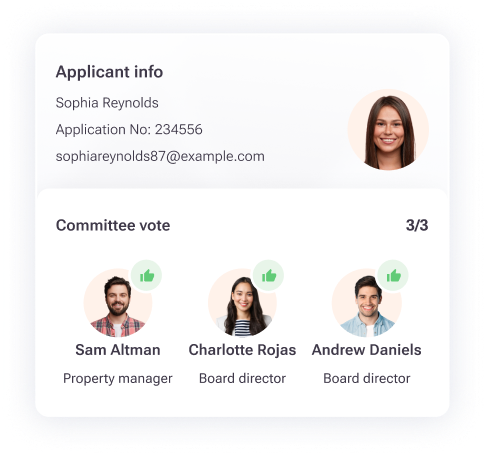
Board voting panels must give members direct access to summarized applicant information without requiring them to sort through raw document uploads. Real-time lease visibility allows operations teams to confirm occupancy status, track expirations, and maintain the unit-level records that support ongoing HOPA compliance. Each of these functions requires a platform designed around age-restricted workflows, not adapted from a generic rental tool.
Compliance Requirements for 55+ Screening in Florida
Age status for HOPA qualification in Florida community associations is established through the recorded governing documents plus the community’s published age-verification policies; a single deed clause or label alone is insufficient. Florida associations governed by Chapter 720 (HOAs) or Chapter 718 (condominiums) each maintain separate lease-approval or tenant-registration procedures that must be mapped individually.
Federal rules under HOPA require communities to conduct biennial occupancy surveys for age verification at least once every two years and keep a public-inspection summary on file. Missing a biennial age-verification survey or other HOPA requirements causes the community to lose its exemption immediately, reverting to standard fair housing rules and preventing refusal of rentals to families with children.
FCRA permissible-purpose controls govern how background and credit data are accessed and used in the screening process. Platforms that access credit bureau data through third-party scrapers rather than direct reseller relationships introduce compliance exposure that associations may not recognize until a dispute arises. Audit trails for every application decision are a structural requirement, not an optional feature.
Common Failure Points in 55+ Application Handling
The most common failure points in 55+ application handling include:
- Incomplete age documentation submitted by applicants, which requires manual follow-up cycles
- Spreadsheet-based lease tracking with no real-time status visibility or expiration alerts
- Payment collection separated from the onboarding process, which forces managers to chase confirmations by email and phone
- Lack of a centralized audit trail connecting applications, approvals, and lease records
- Paper-only age verification records vulnerable to loss, theft, or damage from natural disasters, making reconstruction of HOPA compliance nearly impossible after an incident
- Caregiver and live-in aide situations handled informally, creating inconsistent records that cannot explain what standard was applied or why one household was treated differently from another
Emerging Best Practices for 55+ Screening Workflows
98% of organizations use AI in fraud and AML workflows, with 95% confident it works. This near-universal adoption indicates a broad industry shift from static, rule-only screening toward dynamic, risk-based identity verification.
Leading practices for 55+ screening workflows in 2026 include:
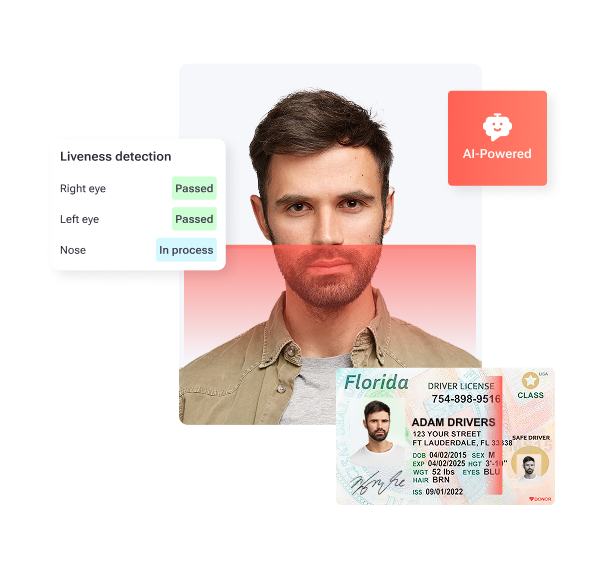
- Biometric identity verification: Moving from document-upload-only review to AI-powered liveness detection, government ID authentication, and selfie-to-ID biometric comparison embedded directly in the application workflow
- Standardized age-restricted workflows: Replacing ad hoc email and PDF processes with structured, repeatable application handling that produces consistent documentation across every applicant
- Connected payment collection: Integrating fee and deposit collection inside the onboarding process so applicants know what to pay, when to pay, and where to pay without separate follow-up
- Centralized lease lifecycle management: Connecting application intake, board approval, and lease documentation into one real-time, searchable, audit-ready system
- Board-ready dashboards: Giving board members direct access to summarized applicant reports and a structured voting workflow, which replaces email chains with a connected approval process
Schedule a demo today and see TenantEvaluation’s purpose-built 55+ workflows in action.
Evaluation Framework for Comparing 55+ Screening Approaches
When evaluating 55+ screening software, Florida CAMs and board members should assess each platform across five dimensions: Florida specificity, board-ready dashboards, documentation consistency, operational efficiency, and audit readiness. The table below demonstrates how purpose-built 55+ platforms deliver capabilities that generic tools cannot match, especially in board workflows and HOPA-aligned documentation.
| Evaluation Criterion | TenantEvaluation | Generic Tenant-Screening Tools | Notes |
|---|---|---|---|
| Florida Specificity | Built exclusively for Florida community associations, with custom setup for Chapter 718/720 workflows and age-restricted requirements | Built for general rental markets, so Florida-specific workflows require manual workarounds | TenantEvaluation serves 5,000+ Florida communities with ~100,000 applications processed annually |
| Board-Ready Dashboards | QuickApprove provides a dedicated board voting panel with summarized applicant reports and real-time application tracking inside one connected platform | No dedicated board review panel, so approvals are managed through email chains and spreadsheets | The board dashboard is a unique capability not found in most generic screening platforms |
| Documentation Consistency | 55+ Communities Verification standardizes age-restricted application handling and reduces manual work while keeping documentation consistent across every applicant | No age-restricted workflow logic, so documentation is collected ad hoc with no standardization | Structured age records support HOPA compliance during any fair housing review |
| Operational Efficiency | End-to-end automation from application intake through lease tracking and payment collection, with up to 70% reduction in processing time and up to 50 hours of staff time freed per day | Screening-only or property-management-only scope, so lease tracking and payment collection require separate systems | TenantEvaluation has generated $150M for communities through its revenue-sharing model |
| Audit Readiness | Built-in audit trails for every application, direct TransUnion and Equifax reseller relationships, FCRA-compliant adverse action workflows, and PCI Level 1 compliance | Audit trails limited to screening data, with no integrated lease or payment records and credit data often accessed through third-party intermediaries | A 55+ community without a current occupancy survey has no defense if a rejected family with children files a familial status complaint |
Frequently Asked Questions
What does 55+ screening software do that generic tenant screening does not?
Generic tenant screening platforms verify credit, run background checks, and collect standard rental applications. They are not designed to enforce age-restricted occupancy thresholds, collect HOPA-specific age documentation, or maintain the structured audit trails that Florida 55+ communities need to defend their exemption status. Purpose-built 55+ screening software incorporates conditional form logic that adjusts application requirements based on household composition, standardizes age verification documentation across every applicant, connects board review and voting to the application workflow, and maintains centralized lease records from onboarding through occupancy, all inside one platform. TenantEvaluation’s 55+ Communities Verification is specifically designed for Florida condos and HOAs, which reduces manual work, standardizes application handling, and strengthens documentation and operational control in ways that generic tools cannot match.
How does HOPA affect the screening workflow for Florida 55+ communities?
Under the Housing for Older Persons Act, at least 80% of occupied units in a qualifying community must have at least one resident aged 55 or older. That threshold must be actively maintained through ongoing age verification, not just stated in governing documents. Every new lease requires government-issued proof of age for at least one household member, and that documentation must be filed and retained in auditable condition. Communities must also conduct biennial occupancy surveys and keep a public-inspection summary on file. Missing a survey or failing to produce age verification records during a fair housing complaint can cause the community to permanently lose its HOPA exemption. A screening workflow that does not account for these requirements through structured document collection, organized record storage, and audit-ready exports creates ongoing operational and legal exposure for the association.
What should Florida CAMs look for when evaluating 55+ screening platforms?
Florida CAMs should evaluate platforms across five dimensions. First, Florida specificity: the platform should be built for Chapter 718 and Chapter 720 workflows, not adapted from a generic rental tool. Second, board-ready dashboards: board members need direct access to summarized applicant reports and a structured voting workflow, not email chains. Third, documentation consistency: the platform should standardize age-restricted application handling across every applicant so that records are complete and consistent. Fourth, operational efficiency: the platform should connect application intake, age verification, board approval, lease tracking, and payment collection inside one workflow rather than requiring separate systems. Fifth, audit readiness: the platform should maintain built-in audit trails, FCRA-compliant adverse action workflows, and organized digital lease records that can be produced on demand.
How does biometric identity verification apply to 55+ community screening?
Identity fraud is an increasing concern for Florida community associations. Synthetic identities, deepfake-enabled impersonation, and AI-generated government IDs are now capable of bypassing document-upload-only screening processes. Biometric identity verification addresses this by confirming that the person submitting an application is physically present and matches the government-issued ID they provided. TenantEvaluation’s IDVerify embeds this capability directly into the screening workflow using AI-powered liveness detection, government ID authentication, and selfie-to-ID biometric comparison, without redirecting applicants to external portals. For 55+ communities, this adds a meaningful layer of protection before approval decisions are made, which strengthens board confidence and reduces liability exposure.
Can TenantEvaluation handle lease tracking and payment collection alongside 55+ screening?
Yes. TenantEvaluation connects all three functions inside one platform. Lease Tracking provides centralized, real-time lease visibility and lifecycle control from application submission through occupancy, with real-time lease status (active, pending, expired, or missing), automated lease document collection during onboarding, unit-level tracking, and searchable audit-ready digital records, which replaces spreadsheets and scattered email chains. TEpayments by Zinc is a connected payment workflow integrated into the platform that collects application fees, deposits, and other required resident payments within the onboarding process associations already use. Payments go directly from the applicant to the Association’s designated account; TenantEvaluation organizes the workflow but never holds the funds. Both capabilities operate alongside 55+ Communities Verification and the board approval workflow inside one connected system.
Why TenantEvaluation Fits Florida 55+ Screening Needs
TenantEvaluation was founded in 2007 by property managers, board members, and software engineers with over 50 years of combined experience. It is built specifically for Florida community associations, not adapted from a generic rental platform. With 5,000+ communities served and approximately 100,000 applications processed annually, TenantEvaluation operates at a scale that reflects the depth of its Florida-specific design.
The platform’s core capabilities for 55+ communities work as a connected system:
- 55+ Communities Verification: A built-in capability that reduces manual work, standardizes application handling, supports documentation consistency, improves operational efficiency, and strengthens internal processes for Florida condos and HOAs managing age-restricted requirements.
- QuickApprove: An accelerated approval workflow built for CAMs, boards, and property management teams that delivers real-time application tracking, a board-ready approval process, automated communication support, customized approval letters, and a personalized welcome package inside one connected platform, without losing control, compliance, or visibility.
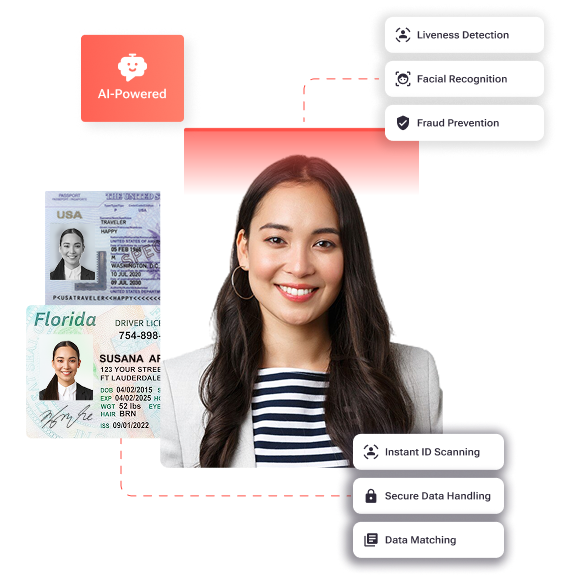
- IDVerify: Biometric identity verification embedded directly into the screening workflow, combining government ID validation, AI-powered liveness detection, and biometric facial matching to move communities from document-based review to verified physical identity confirmation.
- Lease Tracking: Centralized, real-time lease visibility and lifecycle control that connects resident onboarding, unit data, approvals, and lease documentation into one streamlined, audit-ready workflow from application to occupancy.
- TEpayments by Zinc: A connected payment workflow inside TenantEvaluation that collects application fees, deposits, and other required resident payments within the onboarding process. Payments go directly to the Association’s designated account. TenantEvaluation never holds the funds, so teams stop chasing payments.
TenantEvaluation is a direct reseller of TransUnion and Equifax data, not a third-party scraper, with strict permissible-purpose controls, automated adverse action workflows, and built-in audit trails for every application. FCRA compliance is the foundation, not an afterthought. The revenue-sharing model means associations generate income from the application process rather than paying upfront subscription fees, and TenantEvaluation has already generated $150M for communities it serves.
Conclusion: Selecting the Right 55+ Screening Partner
Florida’s 55+ community market is the largest in the country, featuring many of the nation’s most popular active-adult communities. The administrative and operational demands on CAMs, LCAMs, property managers, and board members managing these communities are substantial and increasing. Generic tenant-screening tools were not designed for this environment. They lack age-restricted workflows, HOPA-aligned documentation structures, board voting panels, connected lease tracking, and integrated payment collection.
TenantEvaluation is the only platform built specifically for Florida 55+ communities, combining 55+ Communities Verification, QuickApprove, IDVerify, Lease Tracking, and TEpayments by Zinc inside one connected, FCRA-compliant platform. With its proven scale across thousands of Florida communities, it gives associations a practical way to cut manual work, keep records consistent, and protect their HOPA status.
Schedule a demo today and see why TenantEvaluation is the definitive 55+ screening platform for Florida community associations.
