Written by: Luis Teran, Co-founder, CEO, TenantEvaluation
Key Takeaways for Florida 55+ Screening
- Florida 55+ communities must comply with HOPA’s 80/20 rule to preserve age-restricted status, supported by consistent documentation and record-keeping.
- The seven-step screening framework covers application intake, age verification, identity checks, background screening, red flag review, board decisions, and audit trails.
- Automation cuts manual screening work by roughly 70–90% across key steps, often saving more than 50 staff hours each week.
- High-risk red flags include falsified age documents, fraud-related criminal history, poor credit, prior evictions, and identity fraud aimed at seniors.
- TenantEvaluation’s platform combines specialized 55+ verification, biometric IDVerify, and QuickApprove for Florida HOAs so you can see how these tools work together in a personalized demo.
Why Resident Screening Matters for Florida 55+ Communities
HOPA sets the legal foundation for age-restricted housing and requires ongoing compliance with the 80/20 rule, where at least 80% of occupied units include one resident who is 55 or older. HOAs in 55+ housing communities can deny purchases when buyers do not meet age restrictions under HOPA, which prevents underage investors from weakening the Act’s intent. Florida’s 55+ communities also face growing fraud risks, with seniors in retirement communities frequently targeted by scams. Manual screening increases exposure through inconsistent documentation, slow approvals, and weak verification steps. Automated screening systems reduce overall processing time by up to 70% and create standardized workflows that protect residents and associations from compliance and fraud issues.
The 7-Step Resident Screening Process for 55+ Communities
Effective screening in 55+ communities follows a clear, repeatable process that balances speed with strict compliance. The seven steps below give CAMs and board members a practical framework they can apply across every application.
1. Application Intake and Fee Collection
Prospective residents submit applications through secure online portals that collect fees and required documents in one place. Digital intake replaces paper packets and email chains while keeping data consistent across all applicants.
2. Age Qualification Verification
Communities verify 80/20 rule compliance by reviewing birth certificates, government IDs, and household composition records. Teams track these details carefully so the community maintains the required percentage of age-qualified residents over time.
80/20 Rule Explained
The 80/20 rule mandates that at least 80% of occupied units in a 55+ community must house at least one person who is 55 years of age or older. Communities maintain detailed records such as move-in dates, resident ages, and unit occupancy status to prove compliance. Losing this ratio can jeopardize age-restricted status and expose the association to legal challenges.

3. Identity and Biometric Verification
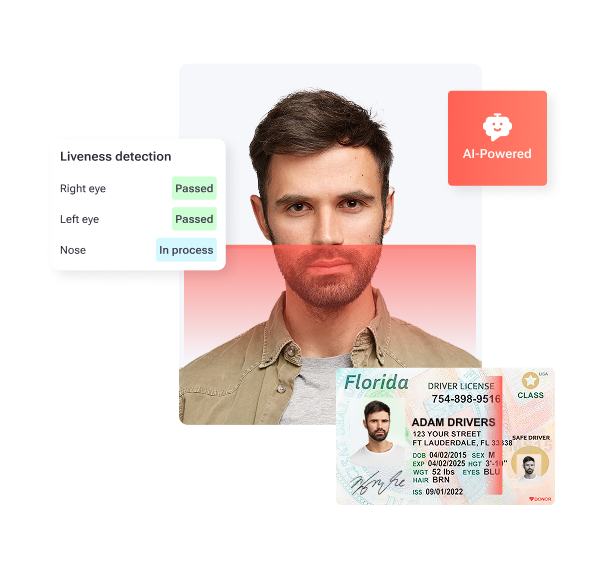
Advanced identity tools confirm that each applicant is who they claim to be through government ID validation, AI-based liveness checks, and biometric facial matching. IDVerify delivers multi-layer fraud prevention tailored to community association risk profiles.
4. Background, Credit, and Income Verification
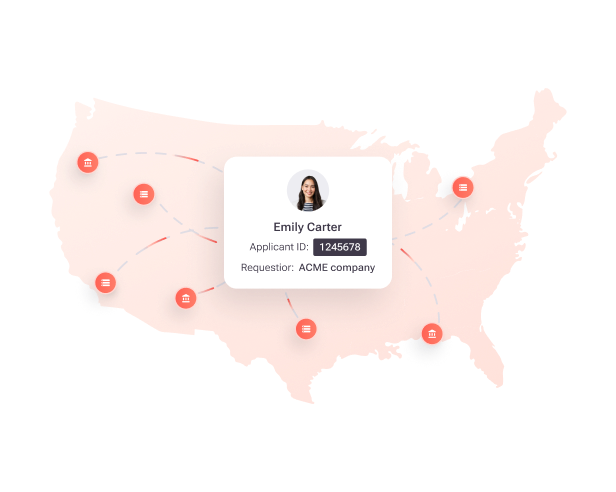
Thorough screening covers criminal background checks, credit analysis, eviction history, and income verification with direct employer contact when needed. FCRA-compliant workflows protect the association legally while giving boards a complete picture of each applicant.
5. Red Flag Identification and Risk Assessment
Teams review potential disqualifiers such as serious criminal history, financial instability, prior evictions, and failures to meet age requirements. Standardized criteria keep decisions consistent and defensible across all applications.
Red Flags in 55+ Screening
Common red flags include applicants under 55 attempting to bypass age rules, incomplete or falsified age documentation, criminal history involving fraud or violence, poor credit scores that suggest financial instability, previous evictions from age-restricted communities, and inconsistent employment or income information. See how automated screening catches these red flags in real time, before they become costly problems for your community.
6. Board Review and Voting Process
QuickApprove dashboards give board members a single view of application summaries, screening reports, and voting panels. This setup replaces scattered email threads and keeps the decision process transparent and easy to follow.

7. Approval Documentation and Audit Trail
Final approvals create complete audit trails that include screening results, board votes, and supporting compliance documents. These records support future audits and legal reviews and clearly show how and why each decision was made.
The following table shows how automation reshapes each major step, highlighting the time savings that make thorough screening realistic even for small CAM teams:
| Process Step | Manual Time | Automated Time | Efficiency Gain |
|---|---|---|---|
| Application Review | 2-3 days | 2-4 hours | 75% reduction |
| Document Collection | 5-7 days | 1-2 hours | 85% reduction |
| Background Verification | 3-5 days | 30 minutes | 90% reduction |
| Board Approval | 7-14 days | 1-2 days | 80% reduction |
Florida-Specific 55+ Verification Challenges and TenantEvaluation Solutions
Florida’s 55+ communities often struggle with fragmented manual workflows, scattered email and PDF communication, incomplete documentation that increases audit risk, and administrative workloads that strain CAM teams. These issues usually arise because communities rely on generic tools that do not match Florida’s specific compliance and workflow needs. TenantEvaluation’s 55+ Communities Verification addresses each pain point by reducing manual work through automation, standardizing application handling with structured workflows, and supporting documentation consistency through centralized records. The platform is built for Florida condos and HOAs, giving Community Association Managers scalable tools that strengthen internal processes and improve day-to-day operations. Request a walkthrough of the 55+ Communities Verification workflow to see how it removes the fragmented processes and documentation gaps described above.
Key Screening Report Details and Critical Red Flags
What Shows Up on a 55+ Tenant Screening Report?
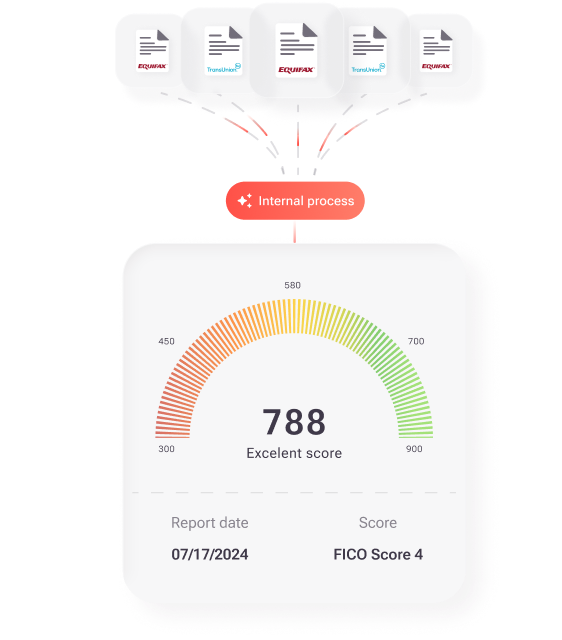
Comprehensive screening reports typically include criminal background checks across national and international databases, credit scores from TransUnion and Equifax, eviction history and rental references, and employment verification with income analysis. Reports also confirm identity through government ID validation and document age qualification for each household member. Many reports highlight potential HOPA compliance issues, prior violations in age-restricted communities, and inconsistencies in the documents applicants provide.
Critical red flags for 55+ communities include underage applicants attempting to purchase or rent, falsified birth certificates or IDs, criminal history involving elder abuse or financial crimes, multiple recent evictions from similar communities, income that does not meet community standards, and patterns that suggest fraud or misrepresentation.
Why Choose TenantEvaluation for 55+ Screening
TenantEvaluation operates as an all-in-one FCRA platform built specifically for Florida community associations and relies on direct TransUnion and Equifax reseller relationships that keep data quality and compliance aligned from the source. This strong foundation supports specialized features that generic screening tools cannot match, including IDVerify+ for biometric identity checks, QuickApprove for streamlined board decisions, and dedicated 55+ Communities Verification for age-restricted properties. These capabilities have delivered measurable impact across more than 5,000 communities, generating $150 million in value through over 100,000 applications processed each year and producing documented annual savings of $240,000 for Florida management companies, backed by a 4.8/5 Google rating. Strategic partnerships with industry leaders such as RealManage further confirm the platform’s enterprise-grade performance. The following comparison shows how TenantEvaluation’s Florida-specific features and processing speed create clear advantages over generic screening platforms:
| Feature | TenantEvaluation | ApplyCheck | Verify Screening | AppFolio |
|---|---|---|---|---|
| Processing Time | 2-4 hours | 2-3 days | 3-5 days | 1-2 days |
| Florida 55+ Support | Yes | No | No | Limited |
| Board Dashboard | Yes | No | No | Basic |
| Biometric Verification | Yes | No | No | No |
Compliance and Practical Screening Best Practices
FCRA compliance depends on direct credit bureau relationships, clear permissible purpose controls, and automated adverse action workflows. TenantEvaluation holds legitimate reseller status with TransUnion and Equifax, which allows data access under strict bureau rules and ongoing compliance audits. Best practices start with biometric verification to block identity fraud at the first touchpoint. Once identity is confirmed, communities should maintain comprehensive audit trails for every screening decision so they can defend outcomes if challenged. These records need to reflect standardized age-qualification criteria to ensure consistent treatment across all applicants. Clear separation between data provision and decision-making authority then protects communities legally, since the platform supplies information while the board retains full control over approvals. Legal experts specializing in community associations recommend automated systems that create defensible documentation and reduce manual processing risk.
Frequently Asked Questions
What is the 80/20 rule for 55+ communities?
The 80/20 rule, explained in detail above, requires communities to maintain at least 80% age-qualified occupancy to preserve age-restricted status. Associations keep detailed records such as resident ages, move-in dates, and unit occupancy to demonstrate compliance. This federal HOPA requirement allows limited exceptions for younger residents while still protecting the community’s senior-focused character.
What are the most common red flags in 55+ resident screening?
The red flags discussed in the screening section fall into three main groups. Age-qualification issues include underage applicants and falsified or incomplete age documentation. Financial risks include poor credit, previous evictions, and income inconsistencies. Security concerns involve fraud-related criminal history and identity misrepresentation. The most serious cases usually involve attempts to bypass age rules or patterns that suggest elder-targeted fraud.
What documents are required for Florida 55+ community applications?
Most Florida 55+ communities request government-issued photo IDs, birth certificates for all residents, Social Security cards, employment verification letters, recent pay stubs or tax returns, bank statements, and rental history or mortgage information. Applicants also complete community-specific application forms with signatures. Some associations request additional items such as marriage certificates, divorce decrees, or forms that clarify household composition and age qualification.
How does automation improve ROI for 55+ community screening?
Automation shortens processing timelines across the seven-step workflow described earlier, often delivering 70–90% time savings at individual steps and eliminating up to 50 hours of weekly manual work. Communities report the kinds of savings described earlier, exceeding $240,000 annually, through lower administrative costs, faster approvals, and stronger compliance documentation. Automated workflows also reduce liability by enforcing consistent processes and creating complete audit trails, which frees CAMs to focus on higher-value responsibilities.
Why is biometric verification important for 55+ communities?
Biometric verification helps stop identity fraud, which increasingly targets older adults in retirement and 55+ communities. Advanced tools confirm physical presence through liveness checks, validate government ID authenticity, and match facial biometrics to ID photos. This layered approach protects communities from fraudulent applications while allowing legitimate residents to complete verification quickly and securely.
Conclusion: Turning Manual 55+ Screening into a Reliable Workflow
The resident screening process for 55+ communities works best when the seven core steps run in a consistent, automated sequence that covers intake, age verification, identity confirmation, background checks, red flag review, board decisions, and final documentation. Florida CAMs and board members who adopt this automated approach achieve the 70% time savings outlined in the process analysis while maintaining HOPA compliance and reducing fraud exposure. TenantEvaluation’s specialized platform, proven across more than 5,000 communities, gives associations a practical way to replace manual tasks with efficient, compliant operations. Take the next step and book a personalized consultation to map your current screening workflow against TenantEvaluation’s automated process and calculate your specific time and cost savings.
