Written by: Luis Teran, Co-founder, CEO, TenantEvaluation | Last updated: July 29, 2026
Key Takeaways for Florida Community Associations
- Manual tenant screening workflows expose Florida community associations to FCRA liability at every stage, with enforcement accelerating after the FTC’s $2.25 million penalty against RentGrow in July 2026.
- A repeatable seven-stage workflow covering standalone disclosure, permissible-purpose certification, uniform criteria, automated adverse-action handling, biometric identity verification, board-ready audit trails, and four-year record retention supports FCRA compliance while accelerating approvals.
- Each stage must be documented and reproducible. Skipping any step creates independent willful violations carrying $100–$1,000 statutory damages per incident plus actual damages and attorney’s fees.
- TenantEvaluation automates all seven stages with direct credit bureau reseller relationships, built-in adverse action automation, IDVerify biometric verification, QuickApprove board dashboards, and centralized Lease Tracking while keeping decision authority with the association.
- See how TenantEvaluation automates all seven stages to replace fragmented manual processes with one connected, audit-ready workflow on the only platform purpose-built for community associations.
Seven-Stage FCRA-Compliant Workflow at a Glance
| Stage | Required Action | Responsible Party | Documentation / Audit Trail Created | Compliance Risk if Skipped |
|---|---|---|---|---|
| 1. Standalone Disclosure | Deliver a separate, single-purpose FCRA disclosure document before ordering any report | CAM / Platform | Timestamped delivery record; signed applicant acknowledgment | Willful violation under FCRA §1681b(b)(2)(A); $100–$1,000 statutory damages per incident |
| 2. Permissible-Purpose Certification | Certify permissible purpose to the CRA before report is ordered | CAM / Platform | Certification record logged with CRA; stored in applicant file | Unauthorized report pull; civil penalty exposure up to $3,500 per violation |
| 3. Uniform Criteria | Apply written, consistent screening standards to every similarly situated applicant | Board / CAM | Written criteria document; per-applicant decision rationale | Fair Housing Act disparate-impact liability; FCRA inconsistency claims |
| 4. Automated Adverse-Action Handling | Issue pre-adverse notice with report and Summary of Rights, wait ≥5 business days, then issue final adverse notice | Platform / CAM | Timestamped pre-adverse and final adverse notices; delivery confirmation | Most commonly violated FCRA requirement; actual damages plus statutory damages per incident |
| 5. Biometric Identity Verification | Validate government ID, liveness, and biometric match before approval | Platform (IDVerify+) | ID authenticity result; liveness status; biometric match result; redacted ID copy | Synthetic identity fraud; wrong-person screening; undetectable impersonation |
| 6. Board-Ready Audit Trails | Record all review, voting, and approval actions with timestamps in a centralized dashboard | Board / CAM / Platform | Timestamped board votes; AI-summarized applicant reports; complete decision log | Undefendable decisions; email-chain disputes; no reconstruction path for regulators |
| 7. Record Retention | Retain complete applicant file for a minimum of four years | CAM / Platform | Searchable digital archive; audit-ready lease and application records | Inability to defend against FCRA or Fair Housing complaints filed years after screening |
Stage 1: Standalone Disclosure Requirements
Under FCRA Section 1681b(b)(2)(A), the disclosure that a consumer report will be obtained must appear in a standalone document containing no liability waivers, nondisclosure agreements, references to policies, or state-level disclosure content. The document must be provided as a separate piece of paper or, if delivered online, as a screen entirely separate from the application itself.
Clear and conspicuous disclosure sits at the core of FCRA requirements. TenantEvaluation delivers the standalone disclosure as a dedicated step in the digital application. The platform stores a timestamped delivery record and signed applicant acknowledgment automatically in the applicant file.
Stage 2: Permissible-Purpose Certification Details
Compliant certification language reads: “[Association Name] certifies that this consumer report is requested for the permissible purpose of evaluating a residential application under 15 U.S.C. §1681b, that the applicant has provided written authorization, and that the report will not be used for any other purpose.”
TenantEvaluation is a direct reseller of TransUnion and Equifax data, operating under strict bureau rules with regular compliance reviews. Permissible-purpose certification is embedded in the platform’s account configuration, logged with the CRA, and stored in every applicant file. This structure eliminates the risk of an unauthorized report pull that carries civil penalties up to $3,500 per violation.
Stage 3: Uniform Screening Criteria Setup
A defensible tenant-screening process requires landlords to set written criteria for income, credit, rental history, and criminal history before advertising the unit and apply the identical process and standards to every applicant. Inconsistent application of criteria creates both FCRA inconsistency claims and Fair Housing Act disparate-impact liability.
TenantEvaluation configures each community’s specific governing documents, credit score thresholds, income verification requirements, and custom document checklists directly into the platform. Every applicant in the same category receives the same screening package. The platform’s intelligent form logic enforces that consistency automatically and produces a per-applicant decision rationale stored alongside the application.
Stage 4: Automated Adverse-Action Handling Steps
The two-step process is mandatory. Pre-adverse action notice language: “We have received a consumer report that may affect your application. Enclosed are a copy of the report and ‘A Summary of Your Rights Under the Fair Credit Reporting Act.’ You have five business days to dispute any inaccuracies before a final decision is made.”
After the waiting period, the final adverse action notice must state: “Adverse action has been taken based in whole or in part on information in a consumer report. The consumer reporting agency is [CRA Name, Address, Phone]. The agency did not make this decision and cannot provide specific reasons for it. You have the right to dispute the report’s accuracy and to obtain a free copy of the report within 60 days.”
Each missed step in the FCRA sequence constitutes an independent willful violation carrying $100–$1,000 per occurrence plus actual damages and attorney’s fees. TenantEvaluation automates both notices, enforces the five-business-day waiting period, and stores timestamped delivery confirmations in the applicant file.
Stage 5: Biometric Identity Verification with IDVerify
Synthetic identity fraud, constructed from a real Social Security number paired with fabricated name, date of birth, and address, defeats standard credit, eviction, and criminal checks because the resulting credit file shows clean payment history. It is detectable only through identity verification that cross-references the SSN against SSA death records and credit bureau identity match databases.
IDVerify moves communities from document-based review to biometric-confirmed identity verification. Applicants complete a guided step inside TenantEvaluation, uploading a government-issued ID and completing a selfie verification, while automated biometric validation runs natively within the same workflow. CAMs receive an embedded result showing ID authenticity confirmation, liveness verification status, biometric match result, and a redacted ID copy for compliance documentation. No external portals and no workflow disruption.
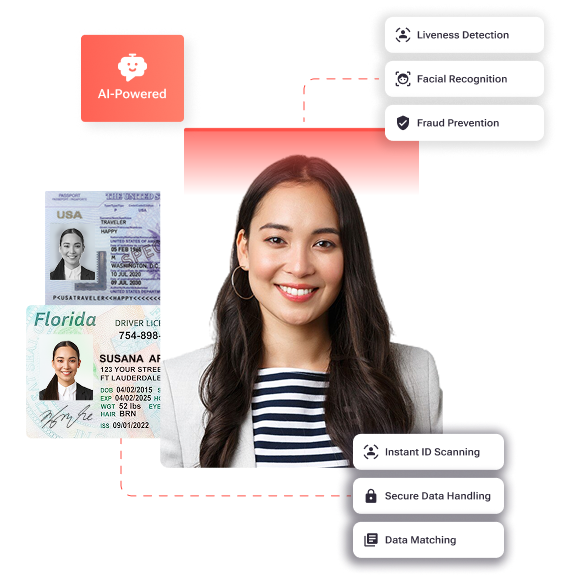
IDVerify also strengthens permissible-purpose validation by ensuring identity confirmation occurs prior to screening authorization. This alignment reinforces FCRA-focused workflows and audit defensibility.
Stage 6: Board-Ready Audit Trails with QuickApprove
TenantEvaluation’s QuickApprove board dashboard gives Board Members direct, real-time access to application status, AI-generated applicant summaries, and a dedicated voting panel. This structure replaces email chains and spreadsheets with a connected, auditable approval process. Every board vote, review action, and approval decision is timestamped and stored, creating a complete, reconstructable decision record that supports defensibility against FCRA or Fair Housing complaints.
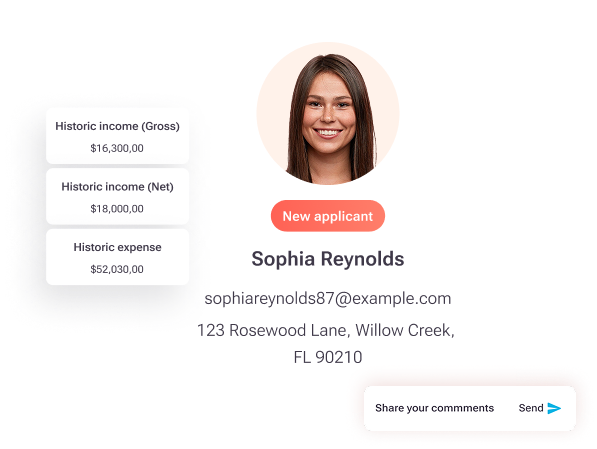
See the QuickApprove board dashboard in action and discover how real-time voting and AI-summarized reports replace email chains with audit-ready approval workflows.
Stage 7: Record Retention and Lease Tracking
TenantEvaluation’s Lease Tracking capability connects resident onboarding, unit data, approvals, and lease documentation into one centralized, real-time, audit-ready workflow. Every record is searchable, with real-time lease status visibility (active, pending, expired, or missing), automated lease document collection, and unit-level tracking tied to occupancy records. Incomplete records remain one of the most common reasons associations cannot defend against complaints filed years after screening occurred.
Manual vs. Automated Workflow Comparison
The following comparison shows how automation cuts processing time, reduces common compliance errors, and converts scattered records into audit-ready documentation.
| Metric | Manual Workflow | Automated Workflow (TenantEvaluation) | Source |
|---|---|---|---|
| Processing Time | 5–10 days per application | 5–10 minutes per application | TenantEvaluation platform data |
| Adverse Action Error Rate | High, adverse action notice is the single most commonly violated FCRA requirement | Low, notices generated, timed, and delivered automatically | ManageCasa / TenantEvaluation |
| Audit Readiness | Scattered across email chains, folders, and spreadsheets, difficult to reconstruct | Centralized, timestamped, searchable, and audit-ready from application to occupancy | TenantEvaluation platform data |
| Board Visibility | Limited, decisions made via email with no structured voting record | Real-time board dashboard with timestamped votes and AI-summarized applicant reports | TenantEvaluation platform data |
Florida-Specific Screening Considerations
Florida community associations operating age-restricted communities under the Housing for Older Persons Act (HOPA) face additional documentation requirements that intersect with the FCRA screening workflow. TenantEvaluation’s 55+ Communities Verification is a built-in capability that helps Florida Condos and HOAs standardize how age-restricted requirements are handled across applications. It reduces manual work, supports documentation consistency, and improves operational efficiency without replacing legal guidance.

Florida boards also carry specific voting obligations under condominium and HOA statutes. TenantEvaluation’s QuickApprove board dashboard supports a structured, documented voting process inside the platform. Boards gain a board-ready approval process with real-time application tracking and automated communication support without losing control, compliance, or visibility.
Additionally, the CFPB issued an October 2025 interpretive rule adopting a broader view of FCRA preemption under 15 U.S.C. §1681t(b)(1), which may limit certain state-level protections affecting rental information and tenant screening reports. Florida CAMs should work with qualified legal counsel to monitor how this preemption interpretation affects their specific community’s screening policies.
Frequently Asked Questions
Is a tenant background search FCRA compliant?
A tenant background search is FCRA compliant only when it is conducted through a legitimate consumer reporting agency, preceded by a standalone written disclosure and signed authorization from the applicant, used for a certified permissible purpose, and followed by the required adverse action process if the results influence an unfavorable decision. Using a background search without these steps, regardless of the data source, creates FCRA liability for the association. TenantEvaluation is a direct reseller of TransUnion and Equifax data, operating under strict bureau rules, with every required step embedded in the platform workflow.
How do you become FCRA compliant in tenant screening?
FCRA compliance in tenant screening requires a repeatable, documented process that covers seven core stages. These stages include delivering a standalone disclosure before ordering any report, certifying permissible purpose to the consumer reporting agency, applying written, uniform screening criteria consistently across all similarly situated applicants, executing the two-step adverse action process with required notices and waiting periods, verifying applicant identity to prevent fraud and wrong-person screening, maintaining board-ready audit trails for every decision, and retaining the complete applicant file for a minimum of four years. Each stage must be documented and reproducible to avoid statutory penalties and litigation exposure. TenantEvaluation automates all seven stages while keeping decision authority with the association.
What are the key FCRA requirements for community associations?
The key FCRA requirements for community associations conducting tenant screening are:
- A standalone disclosure document, separate from the application, informing the applicant that a consumer report will be obtained
- Written authorization from the applicant before any report is ordered
- Certification of permissible purpose to the consumer reporting agency
- Consistent application of written screening criteria across all similarly situated applicants
- A pre-adverse action notice including a copy of the consumer report and the FTC Summary of Rights, with a minimum five-business-day response window
- A final adverse action notice naming the CRA, stating the agency did not make the decision, and informing the applicant of their right to dispute and obtain a free copy of the report within 60 days
- Retention of the complete applicant file for at least four years
Community associations are users of consumer reports under the FCRA and bear direct liability for violations at every stage of this process.
What is an FCRA compliant background check?
An FCRA compliant background check is one conducted by a legitimate consumer reporting agency under a certified permissible purpose, following a standalone written disclosure and signed authorization from the applicant, with results used only for the stated purpose and accompanied by the required adverse action process if the results influence any unfavorable decision. The background check must also meet accuracy standards. Recent FTC enforcement actions have focused on accuracy standards, and screening companies must maintain reasonable procedures to ensure maximum possible accuracy of consumer reports. TenantEvaluation’s direct credit bureau reseller relationships with TransUnion and Equifax, combined with built-in adverse action automation and audit trails, support a defensible, FCRA compliant background check process for community associations.
Conclusion: Moving from Manual Risk to Connected Compliance
The fragmented nature of manual screening creates compliance exposure at every touchpoint, from missing standalone disclosures to incomplete adverse action notices to undefendable board decisions stored in email chains. The workflow outlined here provides a repeatable, documented structure covering disclosure, certification, criteria, adverse action, identity verification, audit trails, and retention. Each stage supports both compliance and operational efficiency.
TenantEvaluation is the only platform purpose-built for community associations that automates every stage of this workflow while keeping all decision authority with the association. With 5,000+ communities and 100,000+ applications processed annually, TenantEvaluation delivers the complete compliance infrastructure described throughout this article, from biometric identity verification through board-ready audit trails to centralized lease tracking.
Build your FCRA compliant tenant screening workflow on the only platform designed for community associations, then schedule your demo and see all seven stages in action.
