Written by: Luis Teran, Co-founder, CEO, TenantEvaluation | Last updated: June 29, 2026
Key Takeaways for Florida Associations
- FCRA compliance is mandatory for Florida HOAs and condos that use consumer reports for resident screening, and violations create direct civil liability.
- Manual screening with paper, email, and spreadsheets creates growing risks, including delays, compliance gaps, and exposure to synthetic identity fraud.
- Effective FCRA-compliant screening relies on documented permissible purpose, automated adverse action notices, biometric identity checks, and centralized audit trails.
- Specialized association platforms outperform generic tools by embedding board voting, 55+ documentation, and Florida-specific workflows into one automated process.
- Associations can cut compliance risk and administrative work by adopting purpose-built platforms such as TenantEvaluation.
FCRA Rules Florida HOAs Must Follow During Tenant Screening
The FCRA sets non-negotiable rules for any association that uses consumer reports in housing decisions. Permissible purpose must exist before a consumer report is ordered, which means the applicant provides written authorization and the association has a legitimate screening reason. When an adverse action occurs based on report data, such as a denial or conditional approval, the association must send a compliant adverse action notice that lists the consumer reporting agency’s contact information and explains the applicant’s right to dispute.
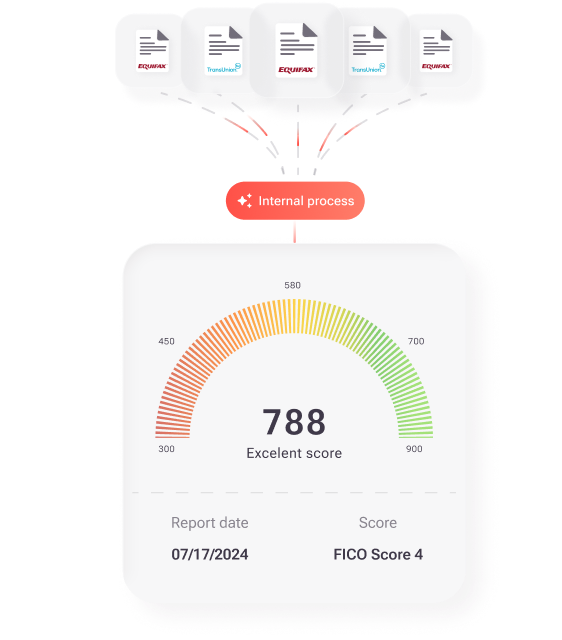
Audit trails carry equal weight. Associations must show, on demand, that every screening decision followed a documented and lawful process. The separation between data provision and decision-making is a structural requirement. The screening platform supplies the report, and the association makes the decision. When these roles blend, liability increases.
The Current Industry Landscape for Florida HOAs and Condos
Despite clear FCRA requirements, most Florida community associations still manage resident onboarding with paper applications, email follow-ups, and manual document review. Lease copies sit in scattered folders and inboxes. Teams track expirations in spreadsheets. Boards approve applications through email chains that leave no reliable audit record.
This fragmented approach creates three connected risks: operational delay, compliance exposure, and higher fraud vulnerability. Larger management portfolios are moving toward biometric verification and automated workflows. Many small and mid-size associations, however, still lack access to purpose-built tools and rely on generic national platforms that do not reflect HOA or condo governance structures.
How Screening Actually Works Inside Florida Association Operations
A typical Florida HOA or condo screening workflow involves several stakeholders, including the applicant, the realtor or owner, the CAM, and the board. The CAM usually receives and reviews the application, checks documentation, orders the background report, and then routes the file to the board for a vote. Each manual handoff adds time and introduces opportunities for error.
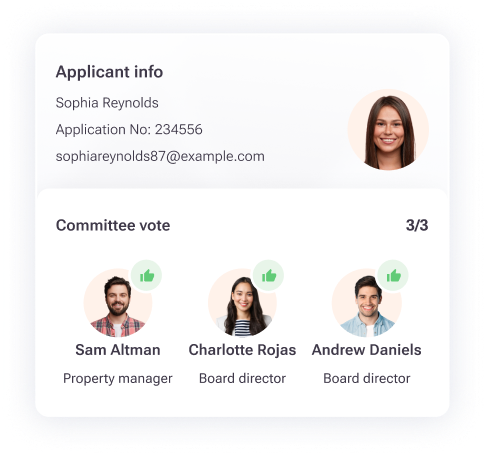
Timing affects resident experience and risk. Florida communities often face peak seasons when application volume surges and manual processes struggle to keep up. Boards may not see real-time application status, which creates approval bottlenecks. When adverse action notices are required, they must go out within specific timeframes, and manual workflows frequently miss or mishandle this step.
Compliance, Risk, and Governance Priorities for Boards and CAMs
Strong recordkeeping sits at the center of FCRA compliance. Every application, consent form, background report, and adverse action notice must be stored and easy to retrieve. Data security carries the same weight. Sensitive personal information, including Social Security numbers, financial data, and government IDs, must stay protected against unauthorized access and breaches.
The structural separation between the association as decision-maker and the screening provider as data provider must appear in both process and documentation. When associations blur this line, for example by having staff interpret raw credit data instead of using a structured report, they increase FCRA exposure and move closer to the role of a consumer reporting agency. A compliant platform keeps this separation in place by design and does not rely only on manual procedures.
Common Screening Pain Points in Florida HOAs and Condos
- Incomplete applications: Applicants submit missing documents, which triggers manual follow-up cycles and delays approvals by several days.
- Lack of board visibility: Boards receive application summaries by email with no structured review screen, voting record, or reliable audit trail.
- Fragmented lease management: Teams track active, expired, and missing leases in disconnected systems, which creates occupancy blind spots.
- Synthetic identity fraud: Document-only screening cannot confirm physical presence or biometric identity, so communities remain exposed to impersonation attempts.
- Adverse action gaps: Manual workflows often skip or mishandle required adverse action notices, which creates direct FCRA liability.
Best Practices for FCRA-Compliant Screening in Florida Communities
- Direct credit bureau relationships: Use a platform that acts as a legitimate reseller of TransUnion or Equifax data, not a third-party aggregator, to support data accuracy and bureau-rule compliance. This relationship forms the base for defensible screening data.
- Automated adverse action workflows: Building on accurate data, the platform should generate and send compliant adverse action notices automatically when a denial decision is recorded, which removes the manual step where many FCRA violations occur.
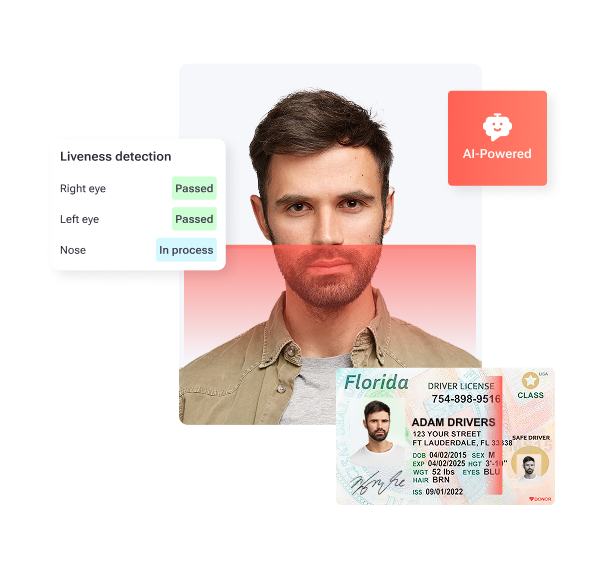
- Biometric identity verification: Beyond credit data accuracy, layer government ID validation, AI-powered liveness checks, and biometric facial matching on top of document review to address synthetic identity risk that credit checks alone miss.
- Standardized 55+ documentation: Age-restricted communities need consistent handling of eligibility documentation across all applications, using structured fields and repeatable workflows.
- Centralized lease records: Connect lease documentation to the onboarding workflow so every lease stays searchable, status-tracked, and audit-ready from application through occupancy.
- Automatic PII redaction: Configure automatic redaction of sensitive data instead of manual edits to reduce breach exposure and keep data handling consistent.
Evaluation Framework for Selecting Screening Providers
Florida CAMs and boards can evaluate screening platforms across five clear dimensions.
- Compliance readiness: Confirm that the platform has direct bureau relationships, automated adverse action workflows, and built-in audit trails.
- Operational efficiency: Check whether it automates document collection, application review, and board communication inside a single workflow.
- Transparency: Verify that boards receive real-time visibility into application status and a structured voting interface.
- Scalability: Ensure the platform can handle peak seasons and complex onboarding requirements without adding staff.
- Auditability: Confirm that all actions are timestamped, stored, and easy to retrieve for regulatory review.
How Leading Screening Platforms Serve Florida Community Associations
The table below compares TenantEvaluation with ApplyCheck, Verify Screening Solutions, and TurboTenant on criteria that matter to Florida HOA and condo operations. Platform capability descriptions come from publicly available product information and company context.
| Criteria | TenantEvaluation | ApplyCheck / Verify Screening Solutions | TurboTenant |
|---|---|---|---|
| Board Dashboard & Voting | Dedicated board review panel with real-time application tracking, AI-generated summaries, and timestamped voting through QuickApprove | No dedicated board dashboard, so approval communication happens outside the platform | No board-specific dashboard, since the product targets individual landlords or multifamily users |
| Revenue Sharing | Pay-per-application model with revenue sharing, where application fees are rebated to the association after service fee deduction, with no upfront cost | Fee structures vary, and no documented revenue-sharing model exists for associations | Subscription and per-screening fees, with no revenue-sharing model |
| Florida HOA/Condo Customization | Florida-specific workflows, 55+ Communities Verification, custom governing document configuration, and biometric verification through IDVerify | White-labeled TazWorks platform with limited HOA-specific customization and no 55+ workflow | Generic rental platform with no HOA or condo configuration and no 55+ support |
| End-to-End Automation | Full lifecycle coverage, including application intake, document collection, biometric ID verification, background check, board approval, adverse action, and centralized Lease Tracking | Background-check focused, with limited applicant interaction and automated document review | Covers screening and payments but does not offer end-to-end onboarding automation for associations |
ApplyCheck and Verify Screening Solutions both run on the TazWorks white-label platform, which is not designed specifically for tenant screening workflows or community association governance. TurboTenant focuses on individual landlords and multifamily rentals, so its feature set does not address board voting, 55+ documentation, or HOA-specific compliance needs.
Frequently Asked Questions
What are the most common FCRA violations in tenant screening?
The most frequent violations involve the three core requirements discussed earlier. Associations often miss proper written authorization, which means permissible purpose is not documented before the report is pulled. Many also fail to send compliant adverse action notices when a denial or conditional approval relies on report data. Others keep incomplete records and cannot produce consent forms, reports, or notices during a review. Platforms that embed these steps into the workflow reduce the likelihood of each violation type.
How does biometric identity verification work for HOAs and condos?
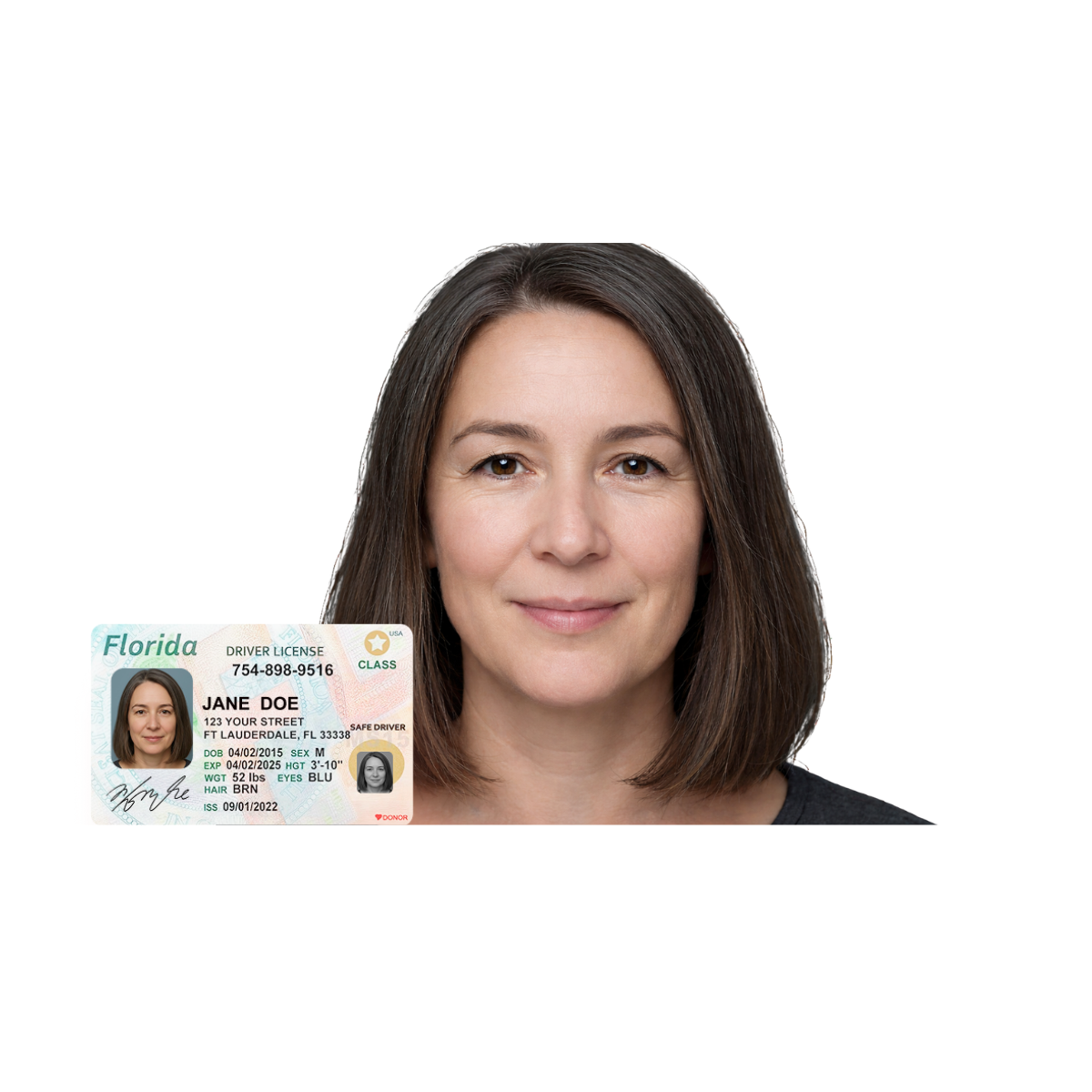
Biometric identity verification adds a physical confirmation layer on top of standard document review. In TenantEvaluation’s IDVerify workflow, applicants upload a government-issued ID and complete a guided selfie step. The platform then authenticates the ID, runs AI-powered liveness detection to confirm physical presence, and performs biometric facial matching between the selfie and the ID photo. Results appear directly in the screening report visible to the CAM, which moves communities from document-only review to biometric-confirmed identity before any approval decision.
What lease visibility practices reduce compliance risk for community associations?
Lease-related compliance risk usually comes from incomplete records, manual expiration tracking, and disconnected documentation. Strong practices include centralizing all lease records in one platform tied to the onboarding workflow and using real-time lease status tracking so active, pending, expired, and missing leases are visible at a glance. Associations also benefit from automating lease document collection during the application process and keeping searchable, audit-ready digital records that staff can retrieve quickly. Replacing spreadsheets and email chains with a centralized lease lifecycle system reduces operational blind spots and documentation gaps during audits or disputes.
How do specialized platforms differ from generic screening tools for Florida HOAs?
Generic screening tools focus on individual landlords or multifamily operators and usually cover only credit and criminal background checks. These tools rarely address the governance structures, documentation rules, or regulatory workflows that Florida community associations must follow. Specialized platforms such as TenantEvaluation are configured for HOA and condo operations from the start, including board voting dashboards, 55+ age-restricted documentation, Florida-specific application logic, automated adverse action workflows, and direct credit bureau reseller relationships. With specialized tools, compliance and governance live inside the workflow instead of sitting in separate manual processes.
Action Checklist for Florida CAMs and Boards
- Confirm that your current process documents permissible purpose, sends adverse action notices, and maintains complete audit trails.
- Review whether your screening tool supports biometric identity verification or still relies only on document review.
- Assess board visibility into application status and voting records to identify approval bottlenecks and audit gaps.
- Evaluate your lease tracking system to ensure centralized, real-time visibility into all active and expired leases.
- Verify that your provider has direct credit bureau reseller relationships instead of using third-party data aggregators.
- Analyze whether a revenue-sharing model could convert application processing into a compliant income stream.
Next Steps: Evaluate Your Current Screening Process
Florida CAMs and board members can use the evaluation framework in this guide to compare their current screening workflow against five criteria: compliance readiness, operational efficiency, board transparency, scalability, and auditability. Associations that rely on manual processes, generic national tools, or platforms without board dashboards, biometric verification, or automated adverse action workflows carry measurable compliance and operational risk.
TenantEvaluation is built for community associations and management companies, with FCRA compliance as the foundation rather than an add-on feature. With direct TransUnion and Equifax reseller relationships, IDVerify biometric verification, QuickApprove board-ready approval workflows, 55+ Communities Verification, and centralized Lease Tracking, TenantEvaluation delivers an end-to-end platform tailored to Florida HOAs and condos. The platform currently serves more than 5,000 communities and processes about 100,000 applications each year.
Request a workflow audit to identify compliance gaps in your current screening process.
