Written by: Luis Teran, Co-founder, CEO, TenantEvaluation | Last updated: June 28, 2026
Key Takeaways for Florida CAMs and Boards
- Florida community associations juggle FCRA compliance, state governance rules, and high-volume application seasons at the same time, which creates real operational strain for CAMs and Boards.
- Identity fraud risks, including synthetic identities, now require biometric verification and stronger identity controls beyond traditional document-based screening.
- Manual workflows for application intake, document collection, and board review create recurring compliance gaps, data security vulnerabilities, and operational delays that grow with portfolio size.
- Purpose-built association platforms that embed FCRA controls, biometric verification, board workflows, and lease tracking into one system outperform portable reports and generic landlord tools for Florida condos and HOAs.
- TenantEvaluation delivers a purpose-built platform that meets every compliance and operational criterion for Florida associations, and it streamlines both screening and lease management.
The 2026 Screening and Compliance Landscape in Florida
Identity fraud has become a material operational risk for Florida condos and HOAs. Identity theft reports filed with the FTC have remained at elevated levels, and synthetic identity fraud, where fraudulent applicants combine real and fabricated data, is increasingly appearing in residential community applications. Traditional document-based screening cannot reliably detect synthetic identities or impersonation attempts.
Applicant expectations have shifted toward fast, digital experiences. Prospective residents now expect mobile-accessible application processes with quick turnaround. Associations that still rely on paper submissions, email chains, and manual document review face competitive disadvantage and operational bottlenecks that slow board decisions and delay revenue collection.
Regulatory scrutiny of data-handling practices has also intensified. The FTC’s guidance for landlords using consumer reports reinforces that permissible-purpose controls, adverse action notices, and data security obligations apply fully to community associations, not just traditional landlords. Florida associations that treat FCRA compliance as a secondary concern rather than a foundational requirement carry disproportionate legal exposure.
How Screening Challenges Show Up in Daily CAM and Board Work
Screening friction points in associations follow a familiar pattern. Application intake often produces incomplete submissions, such as missing executed leases, unverified IDs, or absent income documentation. These gaps trigger manual follow-up cycles that consume hours of staff time per application. Document collection usually relies on email attachments and physical drop-offs, which creates version-control problems and security gaps when sensitive personal information is transmitted without encryption.
Board review often stalls because application materials arrive in fragmented formats across multiple channels. Board members lack a centralized view of application status, so managers field repeated status inquiries and spend time chasing updates. Once an application is finally approved, the operational challenges continue. Lease tracking after approval is typically handled through disconnected spreadsheets, with no direct connection between the approved application and the active lease record. When an audit or dispute arises, reconstructing a complete application-to-occupancy record from scattered files is time-intensive and error-prone.
For 55+ communities, the documentation burden grows even heavier. Age-restricted communities must maintain consistent eligibility records across every application. Manual processes often produce inconsistent documentation that creates risk exposure during audits or disputes.

Compliance, Risk, and Governance Requirements for Associations
The FCRA establishes that consumer reports may only be accessed for a permissible purpose. For community associations, this means a legitimate housing evaluation need. Associations that access or retain consumer report data beyond that purpose, or that fail to issue proper adverse action notices when declining an applicant, face civil liability under 15 U.S.C. § 1681 et seq.
Data-handling obligations extend beyond the screening decision itself. Associations must store, transmit, and dispose of consumer report data securely. Manual paper-based processes and unencrypted email transmission create breach exposure that associations are ill-equipped to manage without purpose-built infrastructure. Board oversight responsibilities also require that approval decisions be documented, timestamped, and retrievable. Informal email-based workflows cannot reliably satisfy those expectations. A complete audit trail covering application intake, document collection, screening authorization, board vote, and adverse action, where applicable, now represents the operational standard that defensible governance requires.
Common Failure Points with Traditional Screening Workflows
Traditional CRA-based screening, when layered onto manual association workflows, produces several recurring failure modes. The incomplete application problem described earlier becomes more serious when these files advance to board review without required documents, which forces rework. Manual follow-up with applicants, realtors, and owners then expands the cycle and consumes disproportionate staff time. Sensitive applicant data, including Social Security numbers and financial statements, is transmitted and stored without the encryption controls required to limit breach liability.
For 55+ communities, inconsistent documentation of age-eligibility requirements creates audit vulnerability. Lease records after approval often remain disconnected from the application record, which leaves managers without centralized occupancy visibility. When lease expirations are tracked manually, communities face gaps in occupancy accuracy that affect both operations and compliance readiness. These failure points do not occur in isolation. They compound across high-volume application seasons and create operational stress that scales with portfolio size.
Principle-Based Screening Practices and Emerging Standards
Workflow standardization now serves as the core principle for modern association screening. Every application should follow an identical intake sequence, including digital submission, automated document validation, identity verification, screening authorization, board review, and decision documentation, regardless of applicant type or community. Deviation from a standardized workflow is where compliance gaps usually originate.
Within that standardized workflow, stronger identity verification has moved from optional enhancement to operational necessity. Biometric verification, which combines government ID validation, AI-powered liveness detection, and facial biometric matching, addresses the identity fraud risks discussed earlier that document-only review cannot catch. Once identity is confirmed and screening is complete, automated adverse action processes remove the manual notification step that is most frequently missed in traditional workflows. Finally, centralized digital recordkeeping, with searchable audit trails connecting every application event to a timestamped record, ensures that the entire standardized workflow can be reconstructed on demand for compliance audits.

Neutral Evaluation Framework for Comparing Screening Solutions
CAMs and Boards evaluating FCRA-compliant screening alternatives can use a seven-part framework to compare options. Compliance readiness covers permissible-purpose controls, adverse action automation, and direct credit bureau data sourcing. Operational efficiency addresses application cycle time, manual follow-up reduction, and staff hour savings. Transparency includes applicant-facing communication, board visibility into application status, and audit trail completeness.
Scalability measures whether the solution handles high-volume seasons without added headcount. User experience covers digital accessibility for applicants, mobile availability, and multilingual support. Auditability requires searchable, timestamped records from intake through occupancy. Risk controls encompass data encryption, auto-redaction of sensitive information, biometric identity verification, and breach liability mitigation.
Solutions that address all seven criteria within a single platform reduce integration complexity and remove the data-handoff risks that arise when multiple disconnected tools are stitched together. One example of a purpose-built platform designed specifically for Florida community associations is TenantEvaluation, which addresses each layer of the evaluation framework described above.
Objective Comparison of FCRA-Compliant Screening Alternatives
Three categories of FCRA-compliant alternatives to traditional CRA screening currently serve community associations.
Portable or applicant-paid reports allow applicants to initiate their own consumer report and share it across multiple applications. This model reduces per-application cost for associations and shifts some data-handling responsibility to the applicant. The limitation for community associations is that portable reports are typically point-in-time snapshots without the permissible-purpose documentation trail that association governance requires. Board workflows and audit trails are not embedded in portable report platforms, and lease tracking is entirely absent.
Non-report verification methods, such as income verification without a credit report, employment confirmation, and reference checks, address specific applicant attributes without triggering full FCRA consumer report obligations. These methods work well as supplemental layers but do not replace the comprehensive screening that association bylaws typically require. Biometric identity verification as a standalone service confirms physical identity but does not integrate with application intake, board approval workflows, or lease recordkeeping.
Specialized association platforms are purpose-built to embed screening, compliance controls, board workflows, and lease management into a single operational environment. This category addresses the full evaluation framework, including compliance readiness, operational efficiency, transparency, scalability, user experience, auditability, and risk controls, within one system. The tradeoff is that purpose-built platforms require configuration to each community’s governing documents and screening criteria, which generic landlord tools do not accommodate.
TenantEvaluation: Platform Example for Florida Community Associations
TenantEvaluation is built specifically for community associations and management companies, with FCRA compliance as the foundation rather than an afterthought. Founded in 2007 and serving more than 5,000 communities with approximately 100,000 applications processed annually, the platform addresses each layer of the evaluation framework described above.
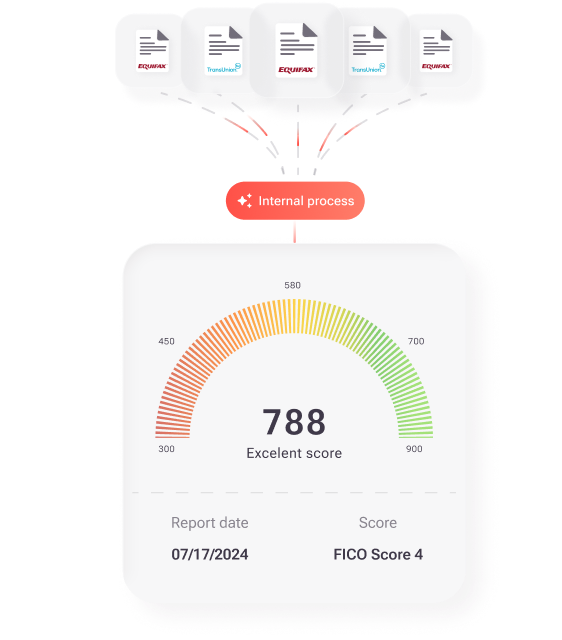
As a direct reseller of TransUnion and Equifax data, TenantEvaluation accesses consumer report data under strict bureau rules with regular compliance reviews. This approach removes the gray-market data sourcing risks associated with third-party scraping. Permissible-purpose controls, automated adverse action workflows, and built-in audit trails appear in every application workflow, not as optional modules.
IDVerify introduces biometric identity verification directly inside the screening workflow. It combines government ID validation, AI-powered liveness detection, and biometric selfie-to-ID comparison, which moves communities from document-based review to biometric-confirmed identity verification before approval decisions are made. QuickApprove accelerates resident approvals inside one connected platform, with real-time application tracking, a board-ready approval process, automated communication support, customized approval letters, and a personalized welcome package, while preserving control, compliance, and visibility. 55+ Communities Verification standardizes age-restricted application handling across Florida condos and HOAs, reduces manual work, supports documentation consistency, and improves operational efficiency for CAMs and Boards managing age-restricted communities.

Lease Tracking connects resident onboarding, unit data, approvals, and lease documentation into one centralized, real-time workflow. It delivers real-time lease status visibility, including active, pending, expired, or missing leases, automated lease document collection, unit-level tracking, and audit-ready digital records that replace spreadsheets and scattered email chains from application to occupancy.
Frequently Asked Questions
How can I run tenant screening on myself?
Any consumer can request their own consumer report directly from the major credit bureaus, including TransUnion, Equifax, and Experian, or through AnnualCreditReport.com. Requesting your own report does not trigger a hard inquiry and does not affect your credit score. Some applicant-paid or portable screening platforms allow prospective residents to initiate a full background and credit report that they then share with associations. For community association applications specifically, self-initiated reports must still meet the association’s permissible-purpose documentation requirements, and the association’s screening criteria, such as credit score thresholds, income ratios, and background check standards, still apply regardless of who initiates the report.
When is a tenant background search FCRA compliant?
A tenant background search is FCRA compliant when a Consumer Reporting Agency conducts it under FCRA data-handling standards, when the requesting party has a documented permissible purpose, and when the association follows adverse action notification requirements if the result negatively affects the applicant. Not all background search services qualify as CRAs under the FCRA definition. Some aggregate data from public sources without the compliance infrastructure that FCRA requires. Community associations should verify that any screening vendor they use is a recognized CRA, sources data from direct bureau relationships rather than third-party scraping, and provides automated adverse action support. Using a non-compliant vendor exposes the association to civil liability even if the association did not intend to violate the law.
What tenant screening approach works best for community associations?
The most effective tenant screening approach for community associations combines FCRA-compliant consumer report access, permissible-purpose controls, board-ready approval workflows, biometric identity verification, and centralized lease tracking within a single platform configured to the association’s governing documents. Generic landlord screening tools address individual screening steps but do not embed the board oversight, audit trail requirements, 55+ documentation handling, or lease lifecycle visibility that Florida condos and HOAs require. Purpose-built platforms designed exclusively for community associations, rather than adapted from multifamily or single-family rental tools, address the full operational and compliance scope that CAMs and Boards face.
Can income be verified without pulling a credit report?
Income verification without a credit report is possible through direct employer contact, review of pay stubs, bank statement analysis, tax return review, and third-party income verification services. These methods confirm an applicant’s financial capacity without triggering a full FCRA consumer report pull. For community associations, income verification without a credit report is often used as a supplemental layer alongside a full background and credit check, or in cases where an applicant’s credit history is limited. Some platforms offer dedicated income verification tools, such as TenantEvaluation’s IncomeEV, that go beyond self-reported data by contacting employers directly and provide a more reliable income confirmation than document review alone.

What does biometric identity verification mean for rentals?
Biometric identity verification for rentals is a process that confirms an applicant’s physical identity using biological markers rather than relying solely on document uploads. In a residential screening context, this typically involves government-issued ID validation, AI-powered liveness detection to confirm the applicant is physically present during verification, and facial biometric matching that compares a live selfie to the photo on the submitted ID. This layered approach addresses synthetic identity fraud and impersonation attempts that traditional document-based screening cannot detect. For community associations, biometric verification embedded directly in the application workflow, rather than redirected to an external portal, maintains workflow continuity and produces a verification result that is documented within the application’s audit trail.
Key Takeaways and Practical Next Steps
Florida community associations face a screening environment where FCRA compliance, identity fraud risk, board governance requirements, 55+ documentation obligations, and lease lifecycle management all need to operate within a single coherent framework. Traditional CRA-based screening layered onto manual workflows creates compounding failure points across each of those dimensions.
FCRA-compliant alternatives, including portable reports, non-report verification methods, and purpose-built association platforms, each address different parts of the problem. The evaluation framework presented here, which covers compliance readiness, operational efficiency, transparency, scalability, user experience, auditability, and risk controls, provides a neutral basis for assessing which approach fits a given association’s needs.
CAMs and Boards can now audit their current screening process against each criterion in that framework, identify the gaps, and evaluate whether their current vendor addresses the full scope of association governance requirements or only a subset of them.
