Written by: Luis Teran, Co-founder, CEO, TenantEvaluation | Last updated: July 31, 2026
Key Takeaways for Florida Landlords
- An FCRA-compliant tenant screening process uses written consent, licensed CRA reports, consistent criteria, and timely adverse action notices to create a defensible audit trail.
- Florida landlords must use a standalone disclosure form separate from the rental application before ordering any consumer report, with specific CRA identification and applicant authorization.
- Adverse action notices are mandatory when denying applications based on consumer reports, with strict requirements for CRA identification, credit score disclosure, and free-report rights to avoid per-violation liability.
- Consistent written screening criteria must be applied uniformly, including the four HUD factors for criminal history assessments to prevent Fair Housing Act violations.
- TenantEvaluation automates the entire FCRA workflow for Florida landlords, from consent forms to adverse action notices, ensuring compliance without manual burden. See how TenantEvaluation handles every step automatically in a live demo.
Step 1 — Florida Tenant Screening Consent Form Requirements
Landlords must give applicants a standalone written FCRA disclosure before ordering any consumer report. The FCRA requires a standalone written disclosure, separate from the rental application, that identifies the consumer reporting agency, states the report’s purpose, and carries the applicant’s signature. Authorization must be clear, conspicuous, and signed by the applicant.
Florida landlords must also obtain written consent specifically to check credit history. No separate permission is required for eviction or criminal history checks under Florida guidance, although FCRA permissible-purpose rules still apply to every report.
| Field | Required Language |
|---|---|
| Document title | Disclosure and Authorization to Obtain Consumer Report |
| Purpose statement | In connection with your rental application for the property at [Address], [Landlord Name] may obtain one or more consumer reports, including credit, criminal background, and eviction history, from [CRA Name, Address, Phone] for the purpose of evaluating your tenancy. |
| CRA identification | [Consumer Reporting Agency Name] · [Street Address] · [City, State, ZIP] · [Toll-Free Phone] |
| Non-decision statement | The consumer reporting agency did not make any rental decision and cannot explain the specific reasons for any action taken. |
| Copy-on-request notice | You may request a copy of any consumer report obtained about you. |
| Applicant authorization | By signing below, I authorize [Landlord Name] to obtain consumer reports as described above. This authorization is valid for the duration of my tenancy, including any renewals. |
| Signature block | Applicant Printed Name: _____________ Signature: _____________ Date: _____________ |
TenantEvaluation embeds this disclosure directly into its digital application workflow. The platform captures e-signatures and timestamps consent before any report is ordered, which closes the most common FCRA procedural gap for small landlords.
Step 2 — Florida Application Fee Limits 2026
Florida has no statewide statutory cap on residential rental application fees for general landlords. A proposal addressing certain screening fees for reusable tenant screening reports did not become law, so no new statewide fee cap applies in 2026.
Florida Statute §83.425 (effective July 1, 2023) preempts local governments, including Orange County, Hillsborough County, Orlando, and Tampa, from imposing their own application-fee caps or screening restrictions on top of state law.
Landlords still face practical limits on what they can charge. Condominium and HOA associations may set their own limits on screening or transfer fees, although these caps apply only to the association’s fee and remain separate from any landlord application fee. Market expectations also create informal ceilings, and typical application fees in Orlando and Tampa range from $30 to $50 per adult, so significantly higher fees may discourage qualified applicants.
Application fees are generally non-refundable because landlords spend them quickly on third-party screening services. Landlords must keep collected fees in a separate account from rent and security deposits. TenantEvaluation’s TEpayments by Zinc collects application fees within the onboarding workflow, and payments go directly from the applicant to the Association’s designated account while TenantEvaluation never holds the funds.
Step 3 — Florida Landlord Adverse Action Notice Template
Once you collect the application fee and order the screening report, the next critical compliance step occurs when you make your decision. Under 15 U.S.C. §1681m, landlords who deny a rental application based at least in part on a consumer report must send an adverse action notice that contains specific required elements. Willful violations expose landlords to statutory damages of $100–$1,000 per violation, plus punitive damages and attorneys’ fees.
| Section | Required Content |
|---|---|
| Header | Notice of Adverse Action — [Date] |
| Applicant identification | Applicant Name: _____________ Property Address: _____________ |
| Action taken | Your rental application has been [denied / conditionally approved with the following terms: _____________] based in whole or in part on information contained in a consumer report. |
| CRA identification | [Consumer Reporting Agency Name] · [Street Address] · [City, State, ZIP] · [Toll-Free Phone] |
| Non-decision statement | The consumer reporting agency did not make this decision and cannot provide the specific reasons for it. |
| Free-report right | You have the right to obtain a free copy of the consumer report used in this decision by contacting the agency above within 60 days of receiving this notice. |
| Dispute right | You have the right to dispute the accuracy or completeness of any information in the report directly with the consumer reporting agency. |
| Credit score disclosure (if used) | Credit score used: [Score] · Score range: [Low–High] · Score date: [Date] · Score provided by: [Entity Name] · Principal factors that adversely affected the score: (1) ___ (2) ___ (3) ___ (4) ___ |
| FCRA rights summary | A copy of “A Summary of Your Rights Under the Fair Credit Reporting Act” is enclosed or available at ftc.gov. |
| Landlord signature block | Landlord/Agent Name: _____________ Signature: _____________ Date: _____________ |
TenantEvaluation automates adverse action workflows and generates compliant notices with pre-populated CRA data and credit score disclosures. This automation removes manual drafting risk that can expose small landlords to per-violation liability.
Step 4 — Applying Consistent Screening Criteria in Practice
Written screening criteria that you apply the same way to every applicant create a defensible process. Standard benchmarks often include income of 2.5–3 times monthly rent, a minimum credit score threshold, and verifiable rental history. Document these criteria before advertising the unit and then apply them without exception.
For criminal history, HUD’s 2016 guidance requires landlords to document four specific factors before denying tenancy based on criminal history:
- Nature and severity of the offense
- Time elapsed since the offense or completion of sentence
- Evidence of rehabilitation (present or absent)
- Nexus between the specific offense and a genuine, articulable tenancy risk at the property
All four factors must be documented in writing in the applicant’s screening file before any denial decision is finalized. A generic note such as “safety concern” does not satisfy HUD guidance. Blanket “no criminal history” policies have a disparate impact on protected classes and violate the Fair Housing Act. Arrest records that did not lead to conviction must never be considered.
Step 5 — Record Retention and Data Security for Florida Landlords
Landlords should retain tenant screening documents long enough to cover relevant statutes of limitations under the Fair Housing Act and FCRA. The appropriate period can vary by document type and by the specific claims that might arise.
At the end of the retention period, the FCRA Disposal Rule (16 C.F.R. Part 682) requires businesses to take reasonable measures to dispose of consumer information to protect against unauthorized access, with illustrative (non-mandatory) examples including shredding paper or erasing electronic media. Simply moving files to the trash and emptying it does not adequately destroy electronic records. Consumer information from screening reports must remain confidential, stored securely, and used only for the screening purpose.
TenantEvaluation’s platform is PCI Level 1 compliant and uses end-to-end encryption with automatic redaction of sensitive PII, including Social Security numbers. These controls create a built-in audit trail that satisfies FCRA requirements without manual file management.
Step 6 — Mini-FCRA Status and 7-Year Look-Back Rules
Florida does not have a state-level “mini-FCRA” statute that adds consumer report obligations beyond the federal FCRA. The federal FCRA governs all consumer reports used in Florida tenant screening, including credit, criminal background, and eviction history reports.
The federal FCRA’s 7-year look-back rule limits most negative information (such as civil suits, judgments, arrests, and paid tax liens) to 7 years from the date of entry, while bankruptcies are limited to 10 years. Criminal convictions are not subject to the 7-year limit under federal law. However, best practice limits look-back periods to 5–7 years for felonies and 3–5 years for misdemeanors to reduce disparate-impact exposure under HUD guidance. Florida has not enacted a shorter look-back period by statute, so federal FCRA timelines apply statewide.
As of July 1, 2025, Florida landlords and tenants may agree in writing to handle all official notices via email. This change affects how you can deliver adverse action notices and other required communications.
Step 7 — Electronic Signatures and Final Workflow Checklist
Electronic signatures on FCRA consent and disclosure forms are valid under the federal Electronic Signatures in Global and National Commerce Act (E-SIGN Act, 15 U.S.C. §7001) and Florida’s Electronic Signature Act (Fla. Stat. §668.50). The applicant must affirmatively consent to electronic delivery, and the signature must be attributable to the signer. TenantEvaluation captures timestamped e-signatures within its application workflow, which satisfies both statutes without extra landlord steps.
Use this one-page printable screening-criteria worksheet as a gated asset to confirm every step is complete before issuing a decision:
| Step | Action Item | Complete? |
|---|---|---|
| 1 | Standalone FCRA disclosure delivered and signed by applicant before report ordered | ☐ |
| 2 | Application fee disclosed, collected in separate account, and consistent with applicable limits | ☐ |
| 3 | Consumer report ordered through licensed CRA with permissible purpose confirmed | ☐ |
| 4 | Written screening criteria applied consistently (income, credit, rental history) | ☐ |
| 5 | Criminal history assessed using all four HUD factors; documented in writing | ☐ |
| 6 | Adverse action notice issued with CRA identification, credit score disclosure, and free-report right if denial is based on report | ☐ |
| 7 | Screening file retained securely for an appropriate period; disposal plan documented per the FCRA Disposal Rule | ☐ |
Schedule a demo today to see how TenantEvaluation automates every item on this checklist inside one connected platform.
Why TenantEvaluation Fits Florida Small Landlords
Generic tenant screening vendors and background-check platforms such as ApplyCheck and Verify Screening Solutions provide report delivery but do not automate the FCRA workflow around those reports. Landlords must then manually draft consent forms, track adverse action deadlines, and maintain their own audit trails. TenantEvaluation is built specifically for Florida community associations and owner-operators, with FCRA compliance as the foundation rather than an afterthought.
Key differentiators that no generic platform matches:
- Direct credit bureau reseller status: TenantEvaluation is a legitimate reseller of TransUnion and Equifax data accessed under strict bureau rules, with regular compliance reviews and no gray-market or offshore data sources, which protects community associations from liability exposure.
- Automated adverse action workflows: Compliant notices with pre-populated CRA data and credit score disclosures are generated automatically, which removes per-violation risk.
- Built-in audit trails: Every application action is timestamped and audit-ready, satisfying the 5-year retention requirement without manual file management.
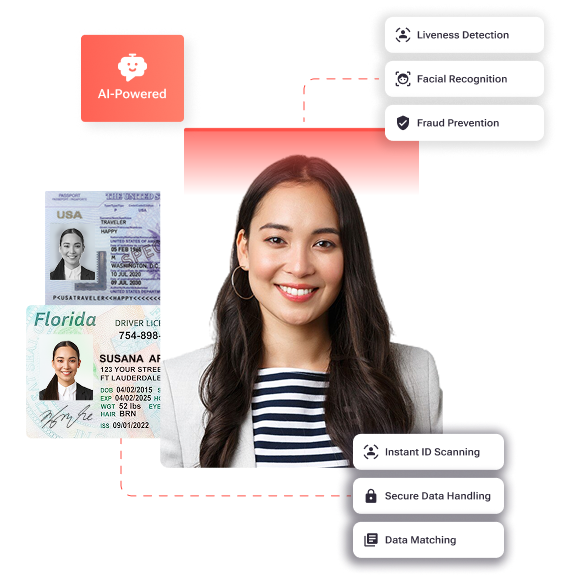
- Biometric identity verification via IDVerify: Government ID validation, AI-powered liveness detection, and biometric facial matching confirm applicant identity before screening authorization and reinforce FCRA-aligned permissible-purpose workflows.
- Accelerated approvals via QuickApprove: Moves applications from submission to decision faster with real-time tracking, automated communication support, customized approval letters, and a board-ready review process while preserving control, compliance, and visibility.
- 55+ community support via 55+ Communities Verification: Standardizes age-restricted application handling across Florida condos and HOAs, which reduces manual work and improves documentation consistency.
- Centralized Lease Tracking: Connects resident onboarding, unit data, approvals, and lease documentation into one real-time, audit-ready workflow that replaces spreadsheets and scattered email chains from application to occupancy.
- Connected payment workflow via TEpayments by Zinc: Collects application fees and deposits within the onboarding process, and payments go directly from the applicant to the Association’s designated account while TenantEvaluation never holds the funds.
TenantEvaluation has processed more than 100,000 applications annually across over 5,000 communities and generated $150M for those communities. This scale reflects a platform built for production rather than experimentation.
Frequently Asked Questions
Does Florida have a mini-FCRA?
No. As explained in Step 6, Florida has not enacted a mini-FCRA statute. The federal FCRA alone governs all consumer reports used in tenant screening. Some states, such as California and New York, have stricter state-level requirements, but Florida landlords need only comply with federal FCRA rules, including standalone disclosure, written authorization, permissible purpose, and adverse action notice.
What is the 7-year look-back rule for tenant screening in Florida?
The federal FCRA’s 7-year look-back rule limits most negative information (such as civil suits, judgments, arrests, and paid tax liens) to 7 years from the date of entry, while bankruptcies are limited to 10 years. Criminal convictions are not subject to the 7-year federal limit, so they can appear on a background check indefinitely. However, HUD’s 2016 fair housing guidance recommends that landlords limit look-back periods to 5–7 years for felonies and 3–5 years for misdemeanors to reduce disparate-impact exposure under the Fair Housing Act. Florida has not enacted a shorter look-back period by statute, so federal FCRA timelines govern statewide. Arrest records that did not result in a conviction must never be used as a basis for denial.
Are electronic signatures valid for FCRA consent forms?
Yes. Electronic signatures on FCRA disclosure and authorization forms are legally valid under the federal E-SIGN Act (15 U.S.C. §7001) and Florida’s Electronic Signature Act (Fla. Stat. §668.50), provided the applicant affirmatively consents to electronic delivery and the signature is attributable to the signer. The applicant must agree to conduct the transaction electronically, the e-signature must be linked to the signer in a verifiable way, and the landlord must retain a timestamped record of the signed document. As of July 1, 2025, Florida landlords and tenants may also agree in writing to handle all official notices, including adverse action notices, via email, which supports a fully digital screening workflow.
How long must Florida landlords keep tenant screening records?
Landlords should retain tenant screening records long enough to cover statutes of limitations for the Fair Housing Act and FCRA. The appropriate period can vary depending on the type of record. At the end of the retention period, the FCRA Disposal Rule (16 C.F.R. Part 682) requires businesses to take reasonable measures to dispose of consumer information to protect against unauthorized access, with illustrative (non-mandatory) examples including shredding paper or erasing electronic media. Simply deleting electronic files may not be sufficient.
Conclusion: Implement a Defensible Process Today
A compliant tenant screening process for small Florida landlords uses seven documented steps. These steps include a standalone FCRA consent form, fee transparency within applicable limits, a licensed CRA with permissible purpose, consistent written criteria, individualized criminal-record assessment using the four HUD factors, a timely adverse action notice with credit score disclosure, and secure retention of screening records governed by the FCRA Disposal Rule. Each step carries its own liability exposure when handled manually, and most generic screening platforms leave landlords to manage that exposure alone.

TenantEvaluation is built specifically for Florida community associations and owner-operators, with FCRA compliance as the foundation rather than an afterthought. As a direct credit bureau reseller with automated adverse action workflows, built-in audit trails, and biometric identity verification via IDVerify, TenantEvaluation delivers an all-in-one platform that makes every step of this checklist defensible from day one.
Schedule a demo today and implement a defensible FCRA-compliant screening process before your next application arrives.
