Written by: Luis Teran, Co-founder, CEO, TenantEvaluation | Last updated: August 24, 2026
Key Takeaways for Florida 55+ Communities
- Florida 55+ communities must balance FCRA’s 7-year eviction reporting limit with HOPA’s 80% occupancy and biennial age-verification requirements.
- Manual screening processes create fragmented documentation, inconsistent application handling, and audit exposure for CAMs and boards.
- Structured digital workflows standardize age verification, eviction screening, and board approvals while maintaining FCRA and HOPA compliance.
- Key practices include using FCRA-compliant screening providers, biometric identity verification, centralized lease tracking, and automated occupancy survey reminders.
- TenantEvaluation’s 55+ Communities Verification platform helps Florida condos and HOAs reduce manual work and strengthen compliance, so you can explore the platform in more detail.
Core Compliance Terms for Florida 55+ Screening
Clear definitions give CAMs and boards a shared foundation for building a defensible screening workflow. Four concepts anchor compliance for Florida 55+ communities:
- FCRA 7-Year Reporting Limit: Under 15 U.S.C. § 1681c, consumer reporting agencies may not include eviction records, including civil suits and judgments, in a tenant screening report if those records predate the report by more than seven years, generally measured from the date of judgment. The limit applies to the screening report, while the underlying court record usually remains a permanent public record unless sealed or expunged under state law.
- HOPA 80% Occupancy Rule: Under HOPA, at least 80% of occupied units in a qualifying 55+ community must have at least one resident aged 55 or older, the community must publish written policies stating its intent to serve older residents, and it must follow HUD rules for verifying occupancy, as codified in 24 CFR Part 100 Subpart E.
- Eviction Records as Civil Filings: Eviction records are civil court filings, not criminal records. Under the FCRA, most negative items in tenant screening reports, including eviction filings and lawsuits, can remain for up to seven years. An academic study (not a CFPB study) of over 3.6 million eviction court records from 12 states found that, on average, 22% contained ambiguous information on case resolution. That statistic highlights the need for accurate, source-verified data.
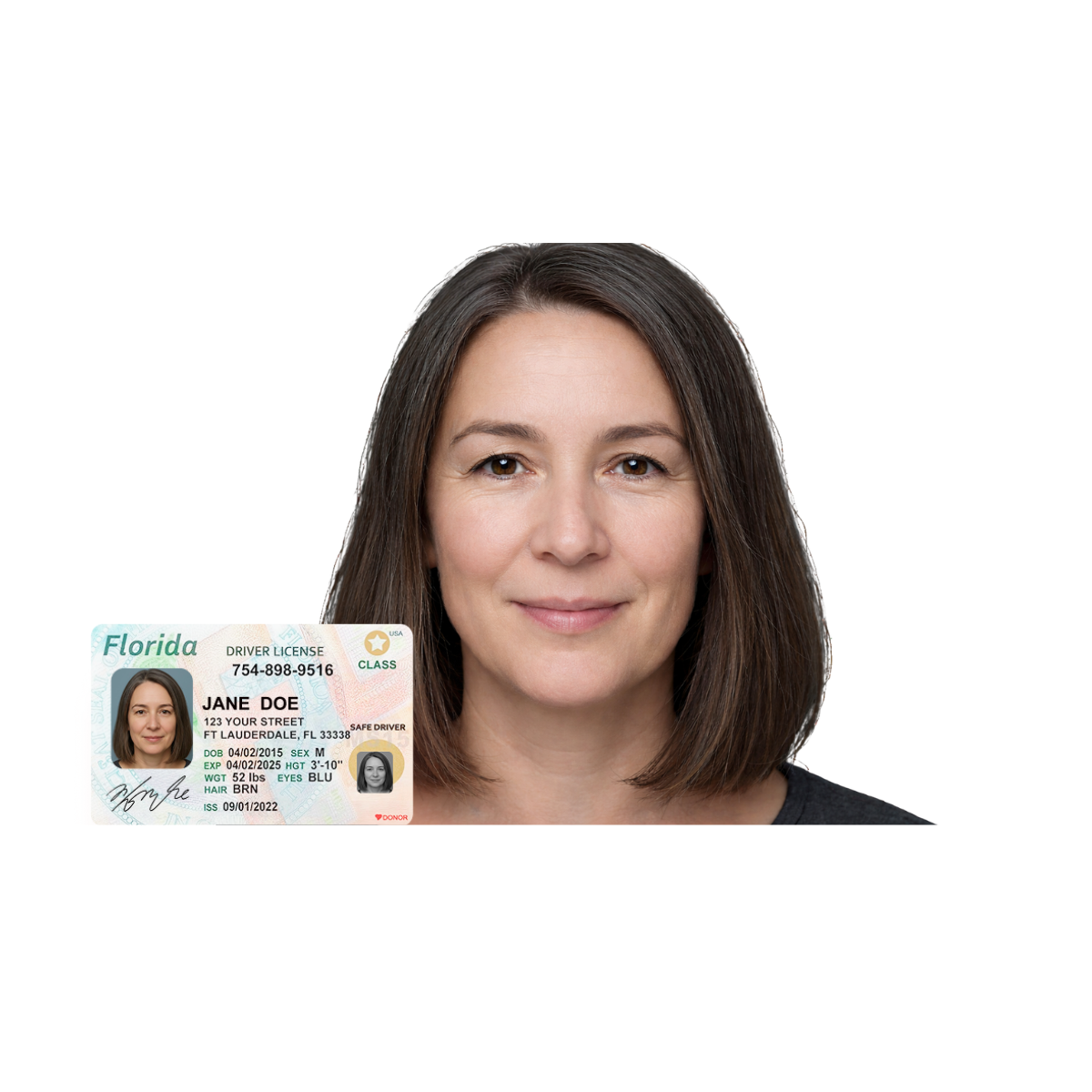
- Age-Restricted Eligibility Documentation: Acceptable proof of age under federal rules includes a birth certificate, passport, or any comparable official document showing a birth date, with verification updates required at least once every two years. These records support the HOPA 80% occupancy requirement in practice.
The Current Landscape in Florida 55+ Communities
These regulatory requirements create real operational pressure for Florida’s 55+ communities. The sector is experiencing challenges from multiple directions as CAMs work to maintain compliance while managing daily operations. Disputes over age restrictions in 55+ HOAs are becoming increasingly common as homeowners age and pass properties to younger relatives, which creates enforcement scenarios that demand precise documentation.
Special assessments sought by HOAs to fund litigation against non-compliant residents show the financial stakes of weak occupancy records. A key operational risk under HOPA is failing to keep occupancy records current or applying verification procedures inconsistently, which can jeopardize the 55+ exemption and expose the community to Fair Housing Act scrutiny. At the same time, Florida CAMs face pressure to modernize workflows, reduce administrative overhead, and produce audit-ready records on demand.
This combination of regulatory complexity and manual processes creates a gap that structured digital workflows can close. Communities that standardize screening and documentation gain clearer records, faster decisions, and stronger defenses in disputes.
Where Eviction Checks and Age Verification Fit in Daily Work
For a CAM managing a 55+ community, the application lifecycle includes several connected steps where eviction screening and age verification both matter:
- Application Intake: Collect the completed application, consent for background checks, and age-eligibility documentation for all prospective occupants.
- Eviction History Review: Order a FCRA-compliant screening report from a permissible-purpose provider. Confirm that reported eviction records fall within the 7-year window and that the data source is a licensed consumer reporting agency.
- Age Verification: Confirm that at least one occupant in the unit is 55 or older using acceptable documentation. Log the document type, issue date, and verification date in a consistent format.
- Board Review and Voting: Present a complete application package, including screening results and age-eligibility confirmation, to the board for a documented approval or denial decision.
- Record Retention: Retain all application materials, screening reports, age-verification documents, and board decisions in an organized, searchable format for future audits or dispute defense.
Manual execution of this workflow across multiple applicants and units creates friction. Documents arrive through email, PDFs, and physical mail. Verification steps live in spreadsheets. Board communications happen in separate email chains with no centralized audit trail.
Compliance, Risk, and Governance Requirements
Florida CAMs and boards carry specific obligations when they conduct eviction history checks and age verification. A structured governance approach addresses each requirement clearly:
- Establish Permissible Purpose: Obtain written applicant consent before ordering any consumer report. Permissible purpose under the FCRA is a prerequisite, not a formality.
- Apply the 7-Year FCRA Limit: The FCRA generally prohibits consumer reporting agencies from reporting eviction records older than seven years, ensuring that outdated information does not unfairly impact housing opportunities. Screening reports must reflect this limit consistently.
- Preserve Dispute Rights: Applicants have the right to dispute inaccurate information in their consumer reports. Boards and CAMs need a documented process for handling adverse action notices and dispute referrals.
- Maintain HOPA Occupancy Records: Maintain current occupancy surveys as required under the HOPA recordkeeping rules discussed earlier. HUD’s 2016 Federal Register notice on HOPA recordkeeping states that communities must maintain current occupancy surveys or affidavits to defend against familial status discrimination complaints, as a community without such records has no defense if a rejected family with children files a complaint.
- Apply Verification Consistently: Florida community associations must maintain published age-restricted occupancy policies, age-verification logs, and policy documents proving HOPA adherence, while training staff on compliant inquiries and anti-discrimination practices. Consistent application reduces claims of unequal treatment.
- Retain Complete Audit Trails: Document every application decision, including approvals, denials, and deferrals, with timestamps, supporting materials, and board vote records.
Common Pain Points with Manual Screening
Manual screening workflows in 55+ communities create predictable failure points that accumulate over time:
- Fragmented Documentation: Age-verification documents, eviction screening reports, and board decisions sit in separate systems such as email inboxes, shared drives, and physical files, with no unified record.
- Inconsistent Application Handling: Different CAMs or board members apply verification steps differently across applicants, which creates inconsistency that is difficult to defend in an audit or dispute.
- Missing or Outdated Records: Occupancy surveys and age-verification logs are not updated on the required two-year cycle, leaving communities exposed if a familial status complaint is filed.
- Difficulty Confirming Multi-Occupant Eligibility: Units with multiple occupants require verification for each household member, and manual tracking across a portfolio is error-prone.
- No Centralized Audit Trail: When a dispute arises, reconstructing the documentation history from scattered emails and spreadsheets is time-consuming and often incomplete.
Best Practices for Compliant 55+ Screening Workflows
Structured workflows reduce documentation gaps and lower compliance exposure. The following practices build on each other to create a reliable process for Florida 55+ communities:
- Use a FCRA-compliant screening provider with direct credit bureau reseller relationships, not third-party data aggregators, to ensure eviction records are sourced accurately and within the 7-year reporting window. This accurate data foundation makes later verification steps meaningful.
- Build on that foundation by standardizing the age-verification step as a required application component, not an optional follow-up. Use a defined list of acceptable documents and a consistent logging format for every unit.
- Strengthen the age-verification process by implementing biometric identity verification, such as IDVerify, to confirm that the applicant presenting documentation is the same individual whose identity is being verified. This step reduces impersonation risk.
- Centralize lease tracking so that occupancy records, lease status, and age-verification documentation connect in a single, searchable system rather than across folders and inboxes. Centralization supports faster responses to board and legal requests.
- Establish a board approval workflow with a dedicated review panel, timestamped votes, and documented decision rationale for every application. This structure creates a clear decision history.
- Schedule occupancy survey updates on a calendar cycle aligned with the two-year HOPA requirement, with automated reminders and centralized record storage. Regular updates keep the 80% occupancy documentation current.
- Retain all application materials, screening reports, and board decisions in an audit-ready format that authorized personnel can access without manual reconstruction. This final layer completes the compliance picture.
See how TenantEvaluation automates these workflows for CAMs and boards and reduces manual follow-up across your portfolio.
Evaluation Framework for Screening Systems
When assessing a screening platform for a Florida 55+ community, evaluate candidates across seven dimensions. Score each criterion as “meets requirement,” “partially meets,” or “does not meet” before making a selection decision:
- Compliance Readiness: Does the platform operate as a licensed consumer reporting agency or direct credit bureau reseller, and are FCRA adverse action workflows built in rather than added manually?
- Operational Efficiency: Does the platform reduce manual steps for CAMs across application intake, document collection, eviction screening, and age verification?
- Documentation Consistency: Does the platform enforce a standardized documentation structure across all applicants and units, or does it allow ad hoc variation?
- Auditability: Are all application actions, board votes, and document submissions timestamped and retrievable in a searchable audit trail?
- Scalability: Can the platform handle high application volume during peak seasons without adding administrative headcount?
- Risk Controls: Does the platform include identity verification, permissible-purpose controls, and automatic redaction of sensitive personal information?
- Florida-Specific Configuration: Is the platform configurable to Florida HOA and condo governing documents, or is it a generic rental screening tool adapted for community associations?
Frequently Asked Questions
How far back can eviction records be checked under FCRA for 55+ communities?
Under the Fair Credit Reporting Act, consumer reporting agencies may not include eviction records in a tenant screening report if those records are more than seven years old, generally measured from the date of judgment. This limit applies to the screening report itself. The underlying court record, which is the actual civil filing, usually remains a permanent public record unless a court seals or expunges it under applicable state law.
For Florida 55+ communities, a screening report ordered through a FCRA-compliant provider will not surface eviction judgments older than seven years. A manual public records search could still return older filings. Using a licensed consumer reporting agency with direct bureau relationships is the sound operational approach because it applies the FCRA limit automatically and consistently across every applicant.
Can evictions be expunged for senior housing applications in Florida?
Florida does not provide a general statutory process for expunging civil eviction records from court files. Criminal records have defined expungement pathways under Florida law, but civil eviction filings usually remain in the court record indefinitely unless a court order specifically seals or vacates the record based on case-specific circumstances.
The FCRA’s seven-year reporting limit means that a FCRA-compliant screening report will not include eviction judgments older than seven years, although the court record itself is not erased. For applicants to a 55+ community, older evictions will not appear on a compliant screening report, while recent evictions within the seven-year window will. Boards and CAMs should evaluate eviction history within the context of the full application and in line with their community’s written screening criteria.
How does 55+ verification integrate with eviction history screening?
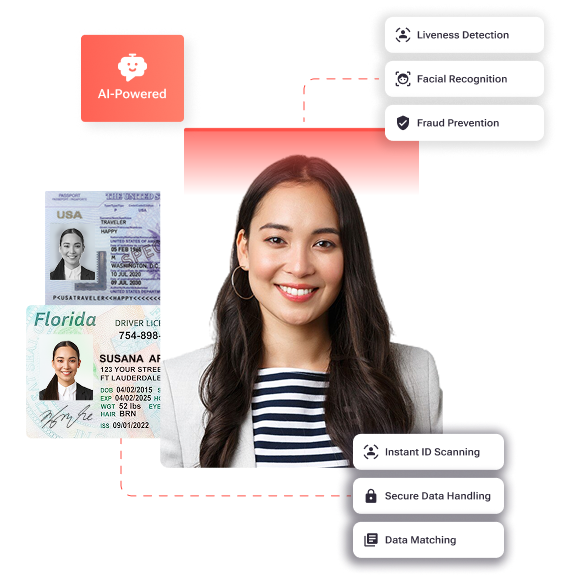
Age verification and eviction history screening are separate compliance requirements that occur within the same application workflow. Age verification confirms that at least one occupant in the unit meets the 55-or-older threshold required under HOPA, using acceptable documentation such as a government-issued photo ID, birth certificate, or passport.
Eviction history screening is a FCRA-governed process that requires permissible purpose, applicant consent, and a compliant consumer report from a licensed provider. In a well-structured workflow, both steps occur during the application intake process, with documentation for each retained in a centralized, audit-ready record.
TenantEvaluation’s 55+ Communities Verification standardizes how age-restricted requirements are handled across applications, which reduces manual work and improves documentation consistency. The platform’s FCRA-first screening infrastructure handles eviction history checks through direct credit bureau reseller relationships with TransUnion and Equifax.
What documentation do Florida boards need to retain for HOPA and FCRA compliance?
For HOPA compliance, Florida 55+ communities must retain published written policies stating the community’s intent to serve older residents, age-verification records for at least one occupant per unit updated at least every two years, and occupancy surveys or affidavits demonstrating that the 80% threshold is maintained. These records show that the community qualifies for the HOPA exemption.
For FCRA compliance, communities must retain applicant consent forms authorizing the background check, copies of adverse action notices sent to denied applicants, and records of the screening reports used in the decision. Board vote records, timestamped approval or denial decisions, and the application materials supporting each decision should also be retained.
The combination of these records forms the audit trail that a community needs to defend against a familial status complaint, a fair housing investigation, or an applicant dispute. Centralized digital storage, rather than scattered email chains and spreadsheets, is the practical approach for maintaining this documentation at scale.
How TenantEvaluation’s 55+ Communities Verification Supports CAMs and Boards
TenantEvaluation is built specifically for community associations and management companies, with FCRA compliance as the foundation, not an afterthought. As a direct reseller of TransUnion and Equifax data, TenantEvaluation accesses credit and eviction history under strict bureau rules, with no gray-market or offshore data sources. Every eviction record surfaced in a TenantEvaluation screening report reflects the FCRA 7-year limit, applied automatically and consistently across every application.
TenantEvaluation’s 55+ Communities Verification is a built-in capability that helps Florida condos and HOAs standardize how age-restricted requirements are handled across applications. It reduces manual work, improves documentation consistency, and strengthens internal controls by replacing fragmented email chains, PDFs, and manual follow-ups with a structured workflow designed for Florida community associations.
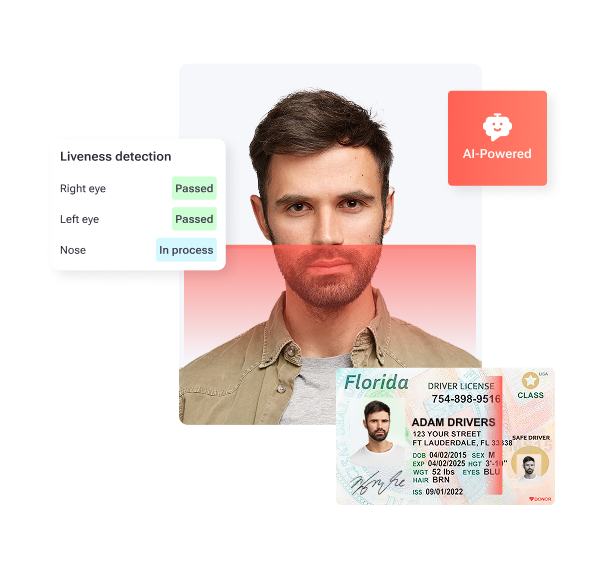
The platform’s IDVerify biometric identity verification layer confirms applicant identity using AI-powered liveness detection, government ID authentication, and selfie-to-ID biometric comparison. Communities move from document-only review to verified physical identity confirmation before the application proceeds to board review.
The QuickApprove accelerated approval workflow gives boards a dedicated review and voting dashboard with real-time application tracking, automated communication support, and customized approval letters. Centralized Lease Tracking connects resident onboarding, unit data, approvals, and lease documentation into one audit-ready workflow, giving CAMs real-time lease status visibility from application to occupancy.
TenantEvaluation serves more than 5,000 communities and processes approximately 100,000 applications per year. Built-in audit trails for every application, strict permissible-purpose controls, and automated adverse action workflows support consistent, compliant decisions. The platform is designed for community associations and configured for Florida-specific HOA and condo governing documents.
Conclusion: A Repeatable Workflow for Florida 55+ Communities
Manual eviction history checks and age verification in Florida 55+ communities often produce the same outcome: inconsistent documentation, administrative burden, and compliance exposure that remains hidden until a dispute or audit appears. The regulatory framework, which combines FCRA’s 7-year reporting limit with HOPA’s 80% occupancy and biennial verification requirements, calls for a structured, audit-ready workflow instead of a patchwork of spreadsheets and email chains.
TenantEvaluation’s 55+ Communities Verification provides a built-for-Florida approach that standardizes application handling, reduces manual work, improves documentation consistency, and strengthens internal controls for CAMs and boards. Combined with FCRA-first screening infrastructure, direct credit bureau reseller relationships, biometric identity verification, and a board-ready approval workflow, TenantEvaluation delivers the operational control that Florida 55+ communities require.
Request a personalized walkthrough of how 55+ Communities Verification can support your Florida community and see the full workflow in action.
