Written by: Luis Teran, Co-founder, CEO, TenantEvaluation | Last updated: July 16, 2026
Key Takeaways for Florida HOA Digital Consent
- Florida HOAs and condos must retain consent records for seven years and produce them within ten business days under Chapters 718 and 720. Paper-based workflows will fall out of compliance once the 2025–2026 digital portal mandates take effect.
- FCRA requires standalone, signed consent forms with clear permissible-purpose disclosure. Verbal consent and combined lease documents do not satisfy Florida requirements.
- Effective digital consent platforms provide ESIGN/UETA-compliant audit trails with IP addresses, timestamps, cryptographic hashes, and immutable storage so records hold up under legal scrutiny.
- Biometric identity verification, automated adverse-action notices, Florida-resident data storage, and centralized lease tracking reduce fraud, support statutory compliance, and remove manual workflow bottlenecks.
- TenantEvaluation delivers an end-to-end FCRA-first platform with built-in IDVerify, QuickApprove, 55+ verification, and Lease Tracking tailored for Florida associations. See the platform in action to understand how it streamlines compliance.
Fraud Pressure and Daily Workflow Strain for CAMs and Boards
Identity fraud now represents a measurable and growing cost center for community associations. The National Apartment Association estimates that rental fraud costs the U.S. property management industry $16 billion annually, driven by synthetic identities, income falsification, and application fraud rings. Fraudulent tenancies often create major losses from unpaid rent, eviction actions, and property damage.
At the operational level, CAMs who rely on paper or email-based consent workflows face document collection delays and constant manual follow-ups with applicants and realtors. Lease copies go missing, and teams lack real-time visibility into application status. These bottlenecks intensify during peak application seasons and across portfolios with multiple communities and different governing documents. The move from spreadsheets and email chains to centralized digital platforms now functions as a statutory and operational requirement for Florida associations subject to the 2025–2026 digital portal mandates.
Core Compliance and Governance Rules for Digital Consent
FCRA permissible-purpose controls require that a community association obtain written, standalone consent before pulling any consumer report. The disclosure cannot be combined with or buried within a lease or rental application. It must appear as a separate document that clearly identifies the scope of the background check. Verbal consent is insufficient under Florida law, so the authorization must be signed and dated.
For electronic signatures to satisfy ESIGN and UETA, three elements must be present: the signer's intent to sign, agreement by both parties to transact electronically, and attribution of the signature to a specific person. A court-ready audit trail must log the signer's email address, IP address, timestamps for each action, and a cryptographic hash of the signed document. When associations miss any of these technical requirements, the gaps show up later as operational failures and legal exposure.
Common failure points in Florida HOA consent workflows include:
- Incomplete submissions where required documents or signatures are missing
- Missing or outdated lease copies disconnected from the application record
- Inconsistent age-verification documentation in 55+ communities
- Weak identity verification that relies only on uploaded document images
- Audit trails that lack IP addresses, timestamps, or cryptographic hashes
- Records stored outside Florida or in formats that cannot be produced within the ten-business-day statutory window
When an application is denied based on a consumer report, FCRA requires delivery of an adverse action notice that includes the name, address, and contact information of the consumer reporting agency, along with the applicant's right to obtain a free copy and dispute inaccuracies. Digital workflows that automate this step reduce risk and administrative effort.
Best Practices for Modern HOA Digital Consent Workflows
Associations that move from manual processes to digital consent platforms should anchor their rollout on several concrete practices.
- Standardized, standalone consent forms that satisfy FCRA's standalone disclosure requirement and are version-controlled with a unique document identifier in the audit trail. These forms create the legal foundation for screening but do not address identity fraud by themselves.
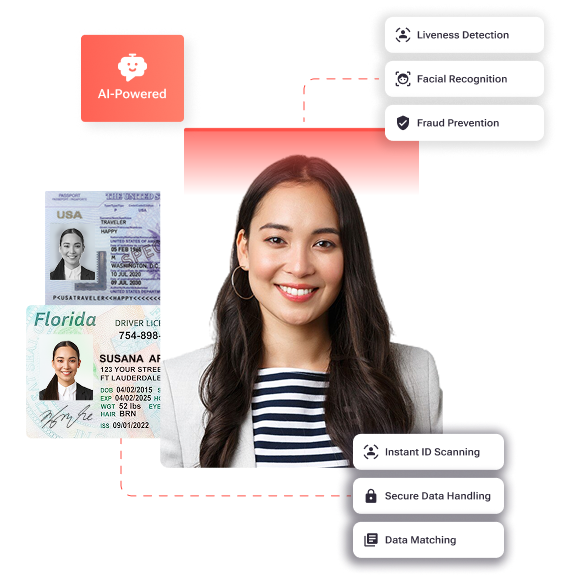
- Biometric identity confirmation prior to screening authorization, using government ID validation, AI-powered liveness detection, and selfie-to-ID biometric comparison to move beyond document-based review. This step closes the fraud gap that remains after legal consent is captured.
- Centralized lease visibility that connects onboarding, unit data, approvals, and lease documentation into one real-time workflow with active, pending, expired, and missing status indicators. CAMs and boards gain a single source of truth instead of scattered files.
- Automated adverse-action workflows that trigger the required FCRA notices without manual intervention, with timestamped delivery records stored in the audit trail. This automation reduces errors and supports consistent compliance.
- Tamper-evident audit logs using append-only storage with cryptographic hash chaining, where each event record includes a hash of the previous record and write access is restricted to a single service. These controls protect the integrity of consent records.
- Florida-resident data storage that confirms the primary data center or SLA guarantees storage within Florida to satisfy the statutory “inside Florida” requirement under Chapters 718 and 720. This alignment keeps records accessible and compliant.
Decision Matrix for Comparing Digital Consent Platforms
The following decision matrix maps key evaluation criteria against platform capability tiers. The table highlights a consistent pattern: generic e-signature tools lack FCRA and HOA-specific controls, broad screening platforms provide partial coverage, and TenantEvaluation delivers native Florida-focused capabilities across all criteria. Associations can use this framework when assessing any digital consent tool for Florida HOA or condo use.
| Evaluation Criterion | Generic E-Signature Tools | Broad Screening Platforms | TenantEvaluation |
|---|---|---|---|
| FCRA permissible-purpose controls | Not built in, requires manual configuration | Partial, varies by vendor | Built in as platform foundation, direct credit bureau reseller of TransUnion and Equifax data |
| ESIGN/UETA audit trail (IP, timestamp, hash) | Varies, many lack cryptographic hashing | Partial, not always HOA-specific | Full audit trail on every application, satisfies §668.50 attribution and integrity requirements |
| Biometric identity verification | Not available | Rarely included natively | IDVerify: government ID validation, AI liveness detection, biometric selfie-to-ID comparison, native to platform |
| Board approval dashboard | Not available | Not available | QuickApprove: dedicated board voting panel with real-time application tracking and automated communication support |
| 55+ documentation standardization | Not available | Not available | 55+ Communities Verification: built for Florida condos and HOAs, reduces manual work and improves documentation consistency |
| Chapters 718/720 seven-year record retention | Requires external configuration | Not Florida-specific | Centralized, audit-ready digital records with real-time lease status visibility inside one connected platform |
| Automated adverse-action workflow | Not available | Partial | Built in, clear separation between association decision-making and TenantEvaluation data provision |
How TenantEvaluation Aligns With Florida-Specific Rules
TenantEvaluation is built specifically for community associations and management companies, with FCRA compliance as the foundation rather than an add-on. Founded in 2007 and serving 5,000+ communities with approximately 100,000 applications processed annually, the platform covers every layer of the Florida compliance stack inside one ecosystem.
Direct credit bureau reseller status. TenantEvaluation operates as a legitimate reseller of TransUnion and Equifax data, accessed under strict bureau rules with regular compliance reviews and audits. The platform avoids gray-market and offshore data sources, which protects community associations from liability tied to impermissible data access.
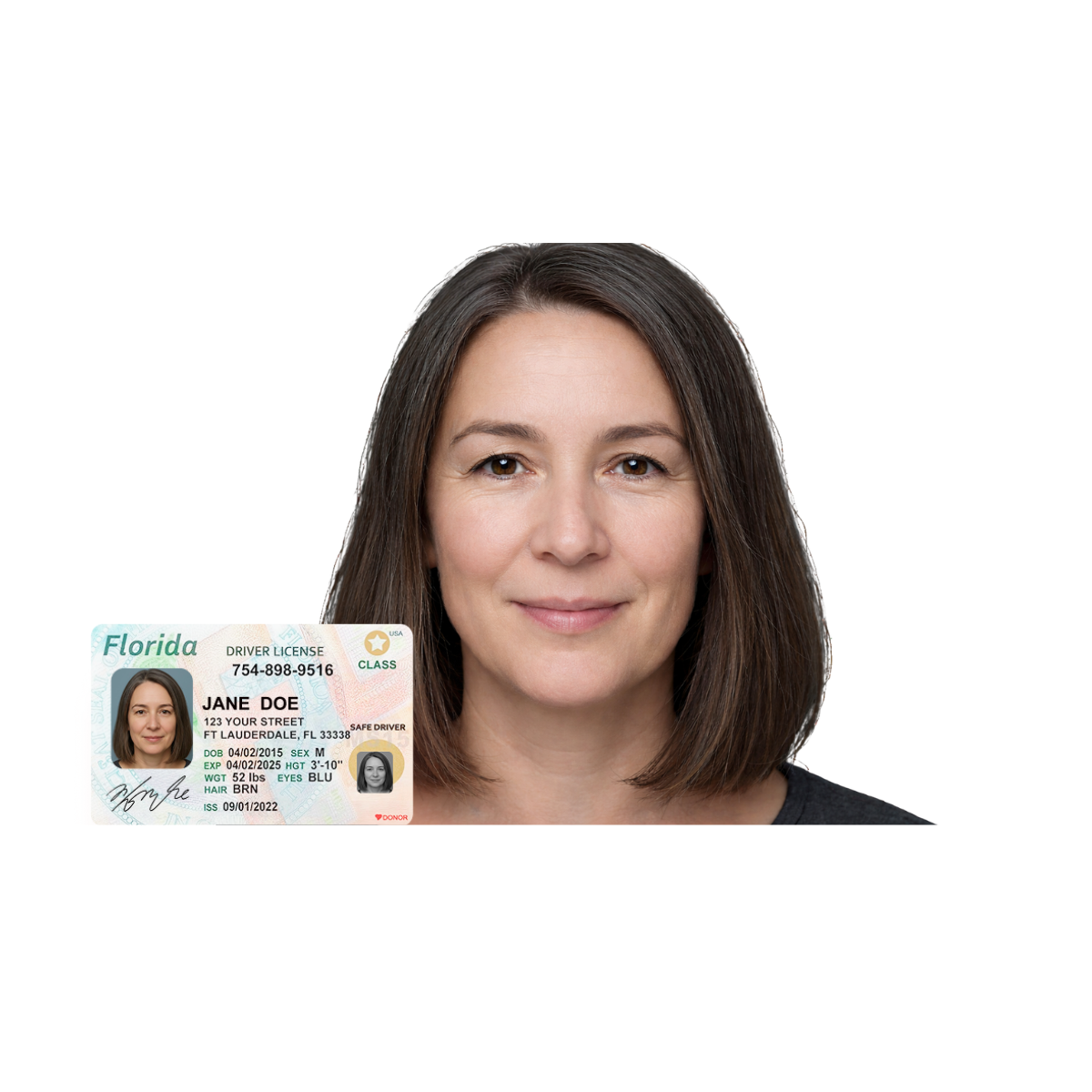
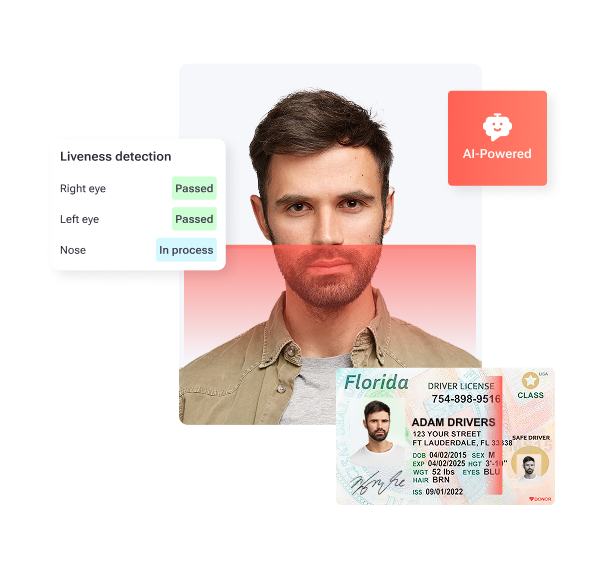
IDVerify biometric layer. Traditional screening methods that rely on document uploads verify data rather than confirming the applicant is the actual person. IDVerify integrates government-issued ID validation, AI-powered liveness detection, and biometric selfie-to-ID comparison directly inside the TenantEvaluation workflow. No external portals or extra logins are required. Identity confirmation occurs before screening authorization, which reinforces FCRA-aligned permissible-purpose controls and strengthens audit defensibility.
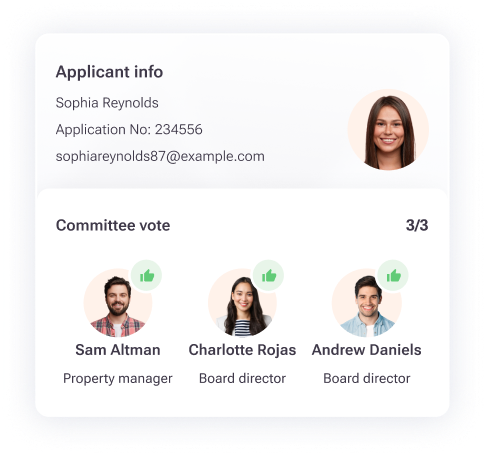
QuickApprove board workflow. QuickApprove accelerates resident approvals inside one connected platform. CAMs, boards, and property management teams gain real-time application tracking, automated communication support, customized approval letters, and a board-ready voting dashboard. The workflow supports high-volume seasons and communities with complex onboarding requirements while preserving control, compliance, and visibility.
55+ Communities Verification. This built-in capability helps Florida condos and HOAs standardize how age-restricted requirements are handled across applications. It reduces manual work, improves documentation consistency, and strengthens operational control for CAMs and boards that manage age-restricted communities.
Lease Tracking. Lease Tracking provides centralized, real-time lease visibility and lifecycle control from application through occupancy. It connects resident onboarding, unit data, approvals, and lease documentation into one streamlined workflow with real-time lease status indicators for active, pending, expired, or missing leases. The feature automates lease document collection during onboarding, supports unit-level tracking, and maintains audit-ready digital lease records. Spreadsheets, scattered email chains, and blind spots give way to one searchable, audit-ready system inside TenantEvaluation.
Frequently Asked Questions
How long must Florida HOAs and condos retain digital consent records?
Under Florida Statutes §718.111(12)(b) for condominiums and §720.303(4) for HOAs, most official records, including consent forms, application documents, and screening authorizations, must be retained for at least seven years. Associations that use cloud or digital storage must confirm that records are stored within Florida or that their service-level agreement guarantees Florida-resident storage to satisfy the statutory “inside Florida” requirement. Records must be producible in legible form within ten business days of a written owner request. TenantEvaluation maintains centralized, audit-ready digital records inside one connected platform, which supports both the retention period and the production timeline.
What biometric verification is appropriate for HOA and condo applications?
Biometric verification suitable for community association applications combines three layers. The workflow starts with government-issued ID authentication to confirm document validity. It then applies AI-powered liveness detection to confirm physical presence and rule out deepfakes or pre-recorded video. Finally, it uses biometric facial matching that compares a real-time selfie to the ID photo. This layered approach moves communities from document-based review, which cannot reliably prevent impersonation or synthetic identity fraud, to biometric-confirmed identity verification.
TenantEvaluation's IDVerify+ delivers all three layers natively inside the screening workflow, with results embedded directly in the screening report for CAMs. The report includes ID authenticity confirmation, liveness verification status, biometric match result, and a redacted ID copy for compliance documentation. IDVerify+ can be enabled per condo or HOA and configured per property portfolio.
How do 55+ communities standardize consent workflows under Florida law?
Age-restricted communities operating under the Housing for Older Persons Act (HOPA) face documentation requirements that generic screening tools rarely support. Fragmented manual processes that rely on emails, PDFs, and repeated follow-ups create inconsistent documentation, incomplete records, and unnecessary administrative burden for CAMs and boards. TenantEvaluation's 55+ Communities Verification provides a built-in capability that standardizes how age-restricted requirements are handled across applications. It improves documentation consistency, reduces manual work, and creates more structured records for internal operational control. The feature is designed specifically for Florida condos and HOAs and supports documentation and consistency while leaving legal guidance to association counsel.
What audit-trail elements satisfy ESIGN, UETA, and Chapters 718/720 for HOA consent forms?
A defensible audit trail for Florida HOA digital consent forms must capture the signer's verified email address, IP address, and an ISO 8601 timestamp with timezone for each action, including document sent, opened, signed, and completed. It must also record the authentication method used, a unique signature ID that links the trail to the embedded signature, and a cryptographic hash of the signed document that proves it was not altered after signing. Under Florida Statutes §668.50, the three core ESIGN/UETA elements outlined earlier, intent, electronic agreement, and attribution, must all be demonstrable from the audit record.
Audit logs must be stored immutably using append-only storage with cryptographic chaining so no party can edit or delete entries after creation. Signed documents and their audit trails must be stored together in an accessible, non-platform-dependent format for the full seven-year retention period required under Chapters 718 and 720. TenantEvaluation maintains built-in audit trails on every application, with clear separation between association decision-making and TenantEvaluation's data provision role.
Conclusion: Selecting a Florida-Ready Digital Consent Platform
Florida's 2025–2026 digital portal mandates under Chapters 718 and 720, combined with FCRA permissible-purpose requirements and ESIGN/UETA audit-trail standards, create a compliance framework that generic e-signature tools and broad screening platforms rarely meet. The operational costs of manual consent workflows, including document collection delays, missing leases, weak identity verification, and board approval bottlenecks, increase this regulatory exposure.
TenantEvaluation functions as a Florida-native, end-to-end platform that combines direct credit bureau reseller status, IDVerify+ biometric identity verification, QuickApprove accelerated board workflows, 55+ Communities Verification documentation standardization, and Lease Tracking real-time lease visibility inside one FCRA-first system built for Florida community associations and management companies. With the scale and track record described earlier, plus a 4.8/5 Google rating, TenantEvaluation delivers the statutory alignment and operational efficiency Florida CAMs and boards need in 2026.
